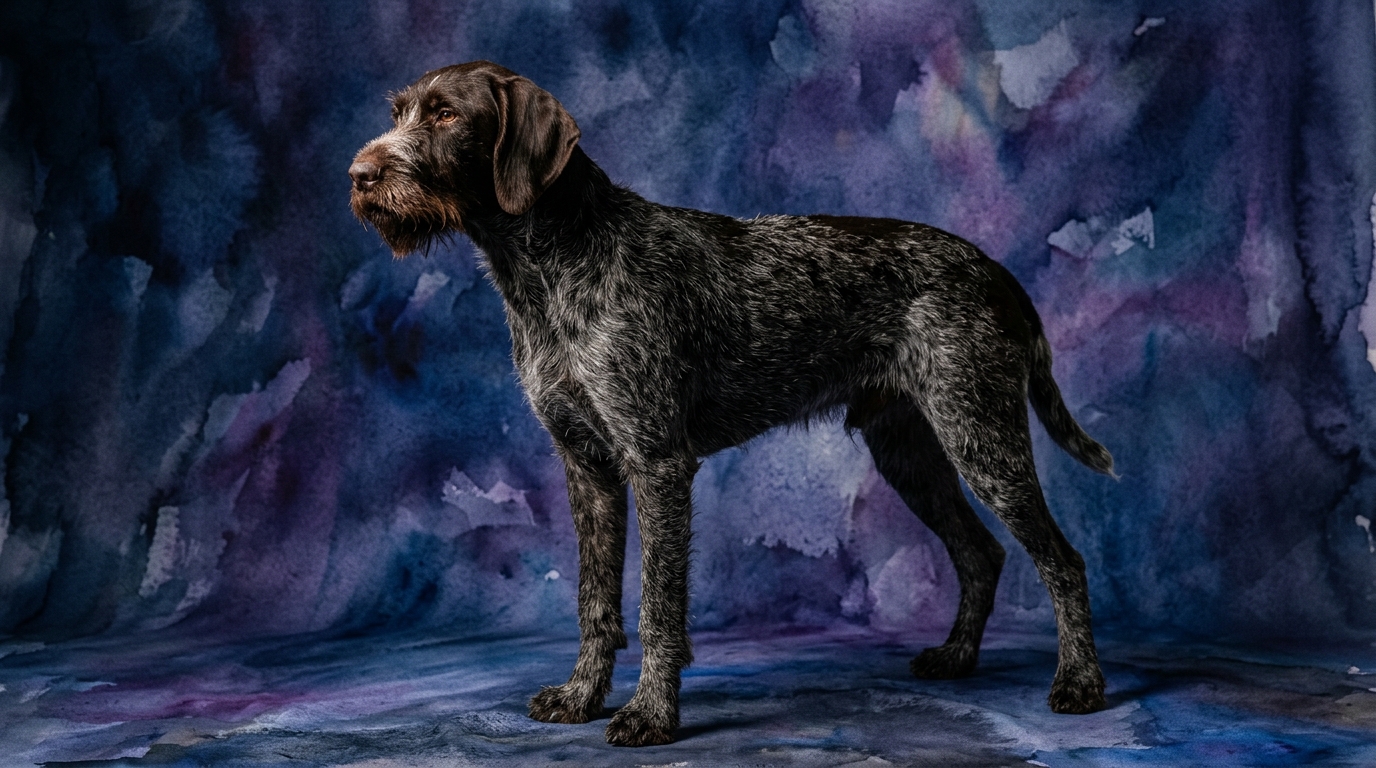
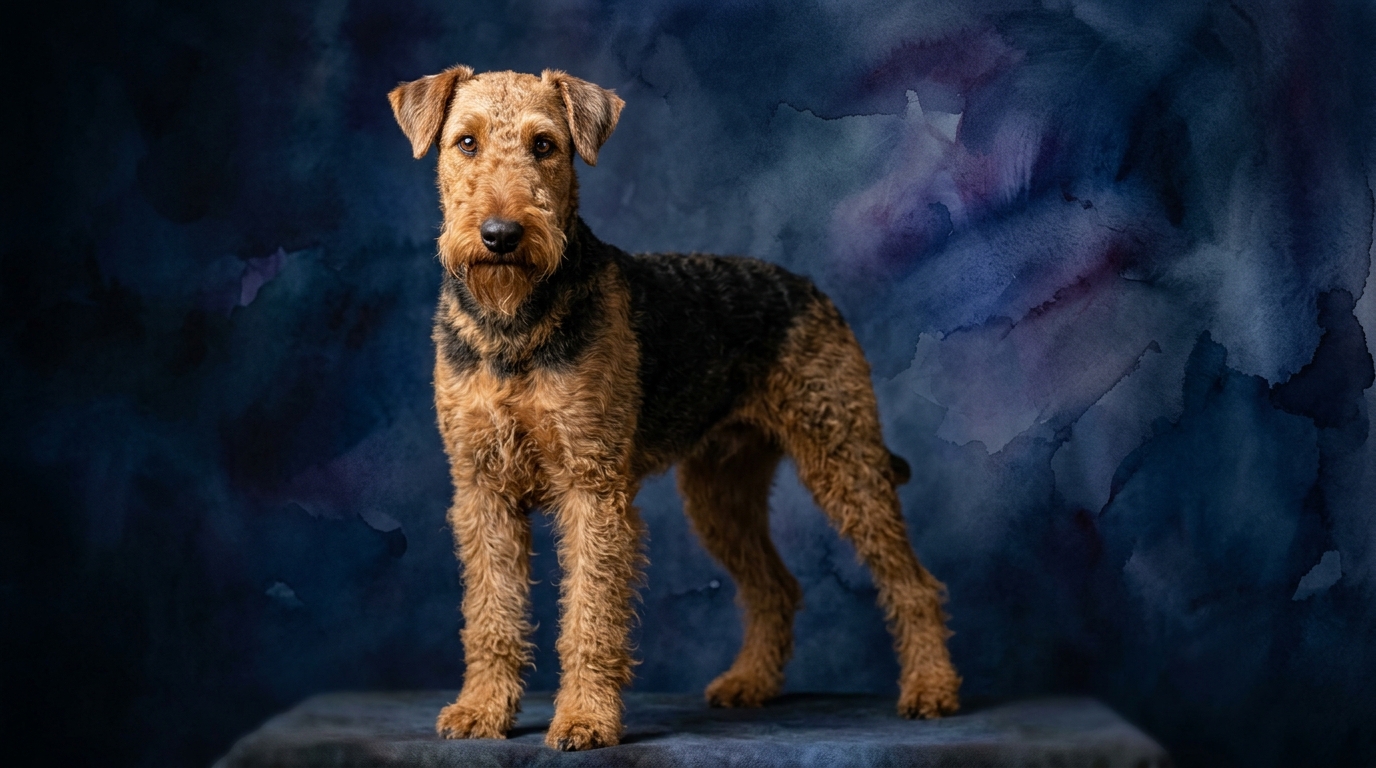
Side-by-Side IQ Profile: Precision in Cognition
The Cosmic Pet Pet IQ Lab's assessment reveals an almost uncanny alignment in cognitive dimensions for both the German Wirehaired Pointer (GWP) and the Airedale Terrier. Each breed scores 4/5 in Problem Solving, indicating an impressive capacity to navigate novel situations and devise effective strategies. For the GWP, this often manifests in their methodical approach to scent work and complex retrieve scenarios, where they must assess terrain and wind conditions to locate game efficiently. The Airedale, conversely, applies this problem-solving prowess to its tenacious pursuit of quarry, often requiring independent thought to overcome obstacles or outmaneuver prey.
Both breeds also achieve a 4/5 in Training Speed, suggesting a quick grasp of new commands and routines. This rapid learning ability, however, is channeled differently by their inherent dispositions. Their Social Intelligence is rated at 3/5, signifying a good understanding of human cues and a capacity for connection, yet without the intense people-pleasing drive seen in some other breeds. This score reflects a balanced independence, where they are responsive but also possess a strong sense of self. Furthermore, an Instinctive Drive of 3/5 highlights a significant, yet manageable, inherent motivation linked to their historical roles, while a Memory score of 4/5 underscores their ability to retain information over time, whether it be training commands, spatial layouts, or the location of hidden objects.
Where the German Wirehaired Pointer Wins Cognitively
While their raw IQ scores are identical, the German Wirehaired Pointer's cognitive edge often emerges in scenarios demanding sustained, cooperative field work. Their 4/5 Problem Solving, paired with their Sporting group heritage, means they excel at intricate tasks like quartering a field systematically, remembering multiple bird locations, and executing complex retrieves across varied terrain. This isn't just about finding a bird; it's about optimizing the search pattern, remembering where a scent trail was lost, and adapting their strategy based on handler signals—all requiring a sophisticated blend of spatial reasoning and memory recall. Their wire coat also suggests a cognitive resilience in harsh conditions, allowing them to maintain focus and apply their intellect when other breeds might falter due to discomfort.
The GWP's 4/5 Memory shines in its ability to recall specific training sequences or the location of hidden objects over extended periods, making them particularly adept at advanced obedience and field trials where precision and consistency are paramount. Their cooperative nature, though their Social Intelligence is 3/5, often means they are more inclined to integrate their problem-solving directly into a partnership with their handler, making them exceptional team players in pursuit of a common goal. This cooperative problem-solving, driven by their pointing and retrieving instincts, provides a distinct advantage in structured, collaborative tasks.
Where the Airedale Terrier Wins Cognitively
The Airedale Terrier's identical 4/5 Problem Solving score manifests distinctively in its independent, tenacious approach to challenges. As a member of the Terrier group, their intellect is honed for self-reliance and persistence, often requiring them to devise their own solutions to get to their objective. This might involve clever strategies to navigate tight spaces, outsmarting small prey, or figuring out how to access a desired item, showcasing a robust capacity for independent thought and execution. Their problem-solving isn't just about following directions; it's about initiating and seeing a task through with determination.
The Airedale's 4/5 Memory supports their ability to retain complex sequences of actions and locations, crucial for tasks requiring repeated, self-directed efforts. This memory, combined with their 3/5 Instinctive Drive, means they are adept at remembering where they might have encountered a 'problem' (like a burrow or a stubborn toy) and applying past solutions or refining new ones. Their 3/5 Social Intelligence, while not indicating a strong desire to please, enables them to understand human expectations while maintaining a strong sense of self, which can be advantageous in roles requiring boldness and independent decision-making, such as historical police work or guarding. Their cognitive strength lies in their ability to operate effectively and cleverly, even when direct human guidance is minimal.
Which is Easier to Train and Why
Both the German Wirehaired Pointer and the Airedale Terrier score 4/5 in Training Speed, indicating they learn new commands quickly. However, the 'ease' of training them diverges due to how their 3/5 Instinctive Drive and 3/5 Social Intelligence interact with their breed purpose. The GWP, bred for cooperative hunting, generally possesses a stronger innate desire to work *with* a handler. Their drive is often channeled towards collaboration, making them typically more amenable to following direction in a team context. While they are not overly eager to please, their historical role as a versatile gun dog means they are often receptive to human guidance in the field, making them highly trainable for tasks requiring precision and partnership. Their problem-solving is often applied to fulfilling a shared goal.
The Airedale Terrier, on the other hand, was developed for independent vermin control, demanding a self-reliant and often stubborn resolve. While they grasp commands quickly (4/5 Training Speed), their 3/5 Instinctive Drive is geared towards independent action and often translates into a 'what's in it for me?' attitude. Their problem-solving is frequently directed at achieving their *own* objectives. This means an Airedale might understand a command perfectly but choose not to comply if it perceives a more interesting or pressing task at hand. Training an Airedale requires consistency, creativity, and a knack for convincing them that your agenda is mutually beneficial, or at least more rewarding than their own independent pursuits. While equally capable of learning, their independence means they often require a more nuanced and patient approach to solidify consistent obedience.
Which Suits Active Owners vs. Relaxed Owners
For active owners, both breeds present compelling options, but with different nuances. The German Wirehaired Pointer is an exceptional fit for owners who enjoy vigorous outdoor activities, particularly those involving extensive walking, hiking, or field sports. Their high physical stamina and mental engagement, driven by their pointing and retrieving instincts, mean they thrive on purposeful activity that simulates their working heritage. Owners who appreciate a dedicated, enduring partner for long excursions and who can provide consistent training and mental challenges related to scent work or retrieving will find the GWP an ideal match. They are best suited for lifestyles that offer regular opportunities for their cognitive and physical energies to be channeled into collaborative tasks.
The Airedale Terrier also requires an active lifestyle, but one that caters to its independent spirit and cleverness. Owners who enjoy engaging with a dog that possesses a strong personality, a mischievous streak, and a need for varied mental stimulation will find the Airedale rewarding. They thrive on activities that challenge their problem-solving skills, such as agility, advanced obedience, or even scent work that allows for more independent 'sleuthing.' While they enjoy physical exercise, they also demand mental engagement that respects their intelligence and offers outlets for their innate tenacity. Relaxed owners, meaning those seeking a low-maintenance companion with minimal exercise or mental stimulation needs, would likely find both breeds to be too demanding. Both require significant commitment to physical activity and consistent intellectual engagement to prevent boredom and potential behavioral issues.
The Verdict: When to Choose Each
The Verdict
Choose the German Wirehaired Pointer if you seek a highly cooperative, enduring companion for consistent field work, long hikes, and collaborative training that channels their impressive problem-solving and memory into a shared purpose.
Opt for the Airedale Terrier if you appreciate a self-assured, clever, and persistent partner who thrives on independent mental challenges, requires creative training approaches, and excels in activities that allow for their tenacious problem-solving to shine.
🧠 Find Your Pet's IQ Score
Our Pet IQ Lab assessment covers 25+ tests across 5 cognitive dimensions — personalized to your breed.
Take the Full IQ Test →Frequently Asked Questions
Do German Wirehaired Pointers bark a lot?
GWP's can be vocal, particularly if under-exercised or left alone for extended periods, as their instinctive drive and energy need outlets. They may use barking to alert or communicate, but consistent training can help manage excessive vocalization.
Are Airedale Terriers good with children?
Airedale Terriers can be good with children, especially if raised with them, due to their robust nature and playful spirit. However, their independent streak and terrier exuberance mean supervision is always wise, and they benefit from early socialization to ensure respectful interactions.
Which breed is better for first-time dog owners?
Neither breed is typically recommended for first-time dog owners without significant commitment to training and understanding breed-specific needs. Both possess substantial energy, strong drives, and require consistent, knowledgeable handling to thrive.