Side-by-Side Cognitive Profiles
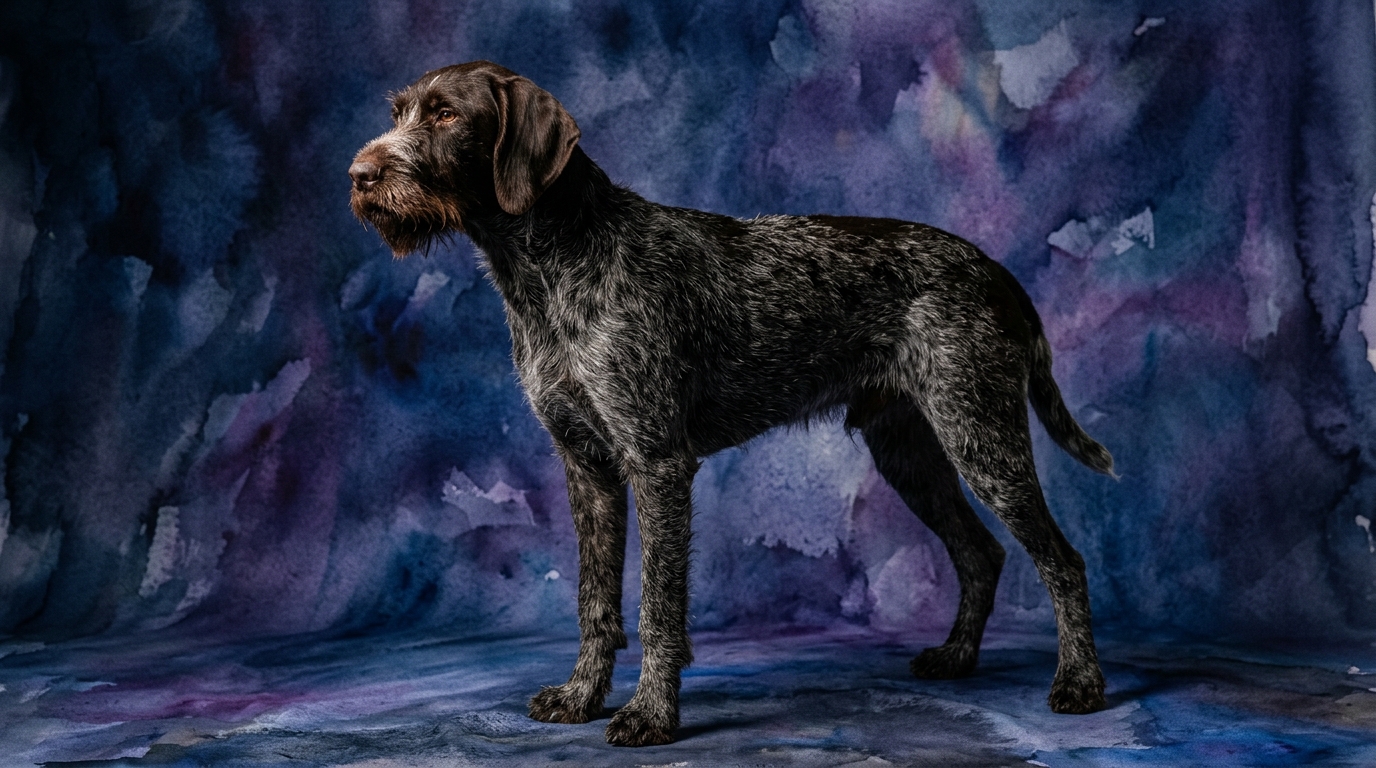
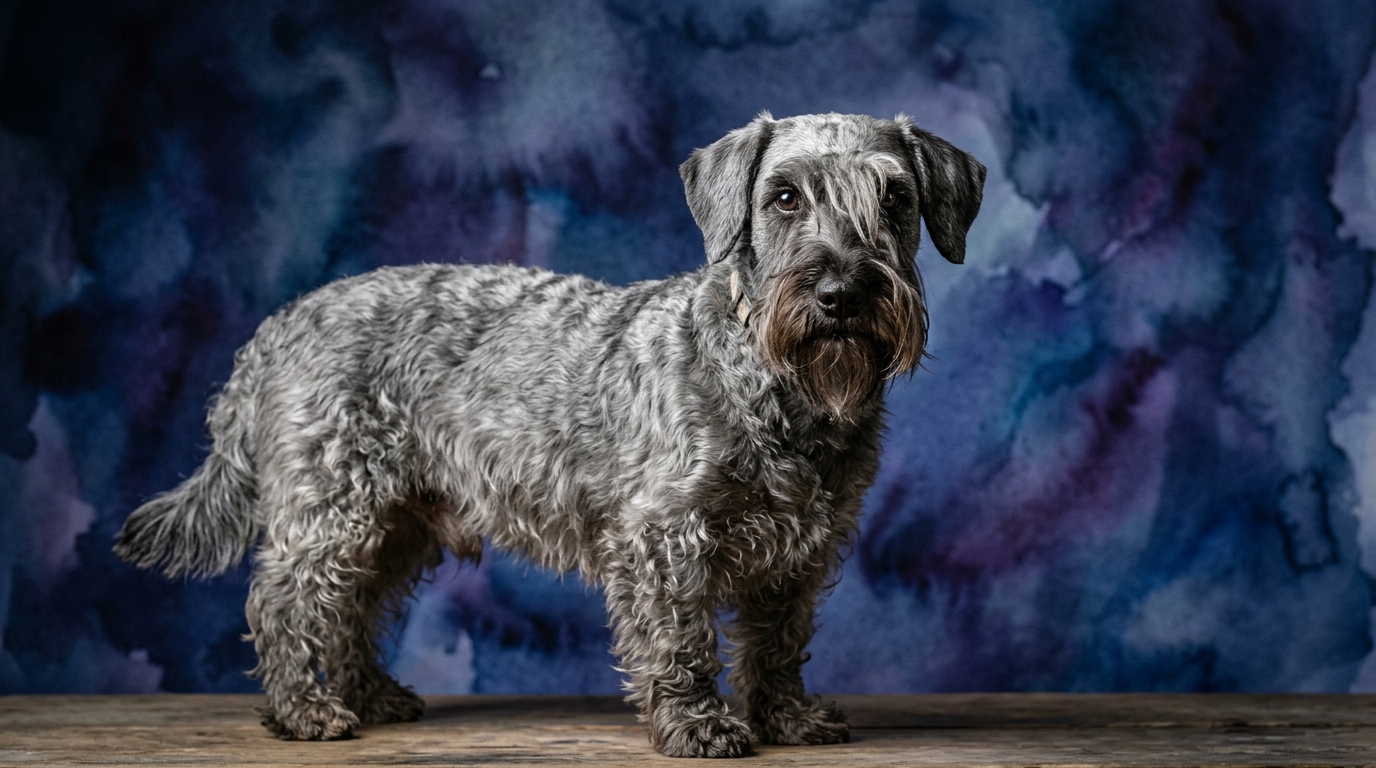
The Cosmic Pet Pet IQ Lab employs a multi-dimensional framework to assess canine intelligence, moving beyond single scores to reveal a richer picture of a breed's cognitive strengths. While the German Wirehaired Pointer holds a notable position at #28 in Coren's ranking for working and obedience intelligence, the Cesky Terrier, though not Coren-ranked, offers a distinct set of mental aptitudes that warrant closer examination.
For the German Wirehaired Pointer, problem-solving and memory both score an impressive 4 out of 5, indicating a breed that can navigate complex situations and retain learned information effectively over time. Their training speed also registers a 4 out of 5, suggesting a quick grasp of new commands and routines. Social intelligence and instinctive drive, while still competent, stand at 3 out of 5, reflecting a balanced yet purpose-driven nature often seen in sporting breeds.
The Cesky Terrier presents a more uniform cognitive profile, with problem-solving, training speed, social intelligence, instinctive drive, and memory all rated at 3 out of 5. This consistent scoring across dimensions points to a well-rounded but perhaps less specialized cognitive toolkit compared to its sporting counterpart. Their moderate scores suggest a capable learner and companion, without the extreme peaks in specific areas that might define other breeds.
Where the German Wirehaired Pointer Excels Cognitively
The German Wirehaired Pointer's superior scores in problem-solving (4/5) and memory (4/5) are direct reflections of their heritage as versatile hunting dogs. This breed was developed to independently track, point, and retrieve game across varied terrains and conditions, tasks demanding significant cognitive flexibility and retention. For instance, a GWP can quickly learn to navigate a new scent trail, remembering specific landmarks or diversions, and adapt its approach if the scent is lost, showcasing adaptive problem-solving rather than just rote memorization.
Their elevated training speed (4/5) further underscores this cognitive advantage. GWPs are often observed picking up complex multi-step commands and sequences with fewer repetitions than many other breeds. This rapid assimilation of information is invaluable for field work, where precise and immediate responses to handler cues, often under pressure, are paramount. Their ability to quickly link actions with outcomes facilitates efficient learning, making them responsive partners in structured activities.
Where the Cesky Terrier Shows Distinct Cognitive Strengths
While the Cesky Terrier's individual cognitive scores are consistently 3 out of 5, this balanced profile itself represents a strength. Their moderate instinctive drive (3/5) allows them to engage with their surroundings without being overwhelmingly driven by a single, all-consuming urge, as might be seen in some high-drive working breeds. This balance contributes to their adaptability as family companions, making them less prone to single-minded pursuits that might conflict with a household environment.
The Cesky's consistent social intelligence (3/5) suggests a capacity for appropriate interaction within a family unit and with familiar individuals, without the intense focus on human partnership sometimes seen in breeds developed for close, cooperative work. Their moderate problem-solving and memory indicate a dog capable of learning routines and understanding household rules, even if they might not devise novel solutions to complex puzzles as readily as a GWP. This predictability can be a cognitive advantage for owners seeking a stable, agreeable companion rather than a constant intellectual challenge.
Training Dynamics: GWP vs. Cesky Terrier
Training efficiency presents a notable divergence between these two breeds. The German Wirehaired Pointer, with its 4/5 training speed, tends to be a highly receptive student, quickly forming associations between commands and actions. Their strong memory and problem-solving skills mean they often require fewer repetitions to master a new skill and can generalize learned behaviors to new situations with relative ease. This makes them excellent candidates for advanced obedience, field trials, and intricate canine sports, where precision and rapid learning are prized.
In contrast, the Cesky Terrier's training speed of 3/5 suggests a capable but perhaps more deliberate learner. While they are certainly trainable, owners might find that the Cesky requires more consistent repetition and patience to solidify new commands. Their moderate instinctive drive means they might be less inherently compelled to work in close partnership, sometimes displaying a more independent streak typical of terriers. This doesn't imply difficulty, but rather a need for engaging, positive reinforcement methods that keep their attention and reinforce their desire to cooperate, rather than relying solely on their inherent drive to please.
Tailoring to Lifestyles: Active vs. Relaxed Owners
For the active owner, particularly one with an interest in outdoor pursuits, the German Wirehaired Pointer is often an ideal match. Their strong instinctive drive (3/5), combined with superior problem-solving and memory, equips them for demanding activities such as hiking, hunting, or competitive canine sports. These dogs thrive when given a 'job' that engages both their physical and mental capacities, requiring owners who can commit to providing consistent stimulation and opportunities for them to utilize their impressive cognitive toolkit in practical applications.
The Cesky Terrier, with its balanced cognitive profile and moderate drives, is generally better suited for more relaxed owners or those seeking a companion for less intense, though still regular, activity. While they certainly enjoy walks and playtime, their overall cognitive and physical demands are typically lower than the GWP's. They are adaptable to various living situations, provided they receive consistent, positive engagement and mental enrichment appropriate for a terrier, such as puzzle toys or short training sessions. Their consistent social intelligence also makes them suitable for family life, offering a loyal presence without requiring constant, high-level mental engagement.
The Verdict
Choose the German Wirehaired Pointer if you seek a highly capable, driven partner for demanding outdoor activities or advanced dog sports, valuing rapid learning and problem-solving.
Opt for the Cesky Terrier if you desire a balanced, adaptable companion for a less intense lifestyle, appreciating a dog with consistent, moderate cognitive demands and a stable temperament.
🧠 Find Your Pet's IQ Score
Our Pet IQ Lab assessment covers 25+ tests across 5 cognitive dimensions — personalized to your breed.
Take the Full IQ Test →Frequently Asked Questions
Does Coren ranking directly reflect overall intelligence?
Coren's ranking primarily assesses working and obedience intelligence, focusing on a dog's ability to learn and respond to human commands. It doesn't encompass all facets of canine cognition, such as social problem-solving or independent thought, which our IQ Lab metrics aim to capture more broadly.
Can a Cesky Terrier participate in dog sports despite its moderate training speed?
Absolutely. While a Cesky Terrier might take longer to master new skills compared to a GWP, their consistent cognitive abilities mean they can still excel in various dog sports with patient, consistent training and positive reinforcement. Their balanced drives can even make them more adaptable to different sport environments.
How does 'instinctive drive' differ between these breeds?
The GWP's instinctive drive, while rated 3/5, is specifically tailored for hunting, manifesting as strong scenting abilities and an urge to work. The Cesky Terrier's 3/5 instinctive drive is more broadly terrier-focused, involving a natural curiosity and a propensity for digging or chasing small prey, but generally less intense or specialized than a sporting breed's.