Side-by-Side Cognitive Profiles: GWP vs. Miniature Poodle
The Cosmic Pet Pet IQ Lab assesses canine cognition across five crucial dimensions, offering a nuanced view beyond simple rankings. While Dr. Stanley Coren's work places the Miniature Poodle at an impressive rank #2 and the German Wirehaired Pointer at #28, our granular breakdown reveals distinct strengths and applications for their respective cognitive architectures.
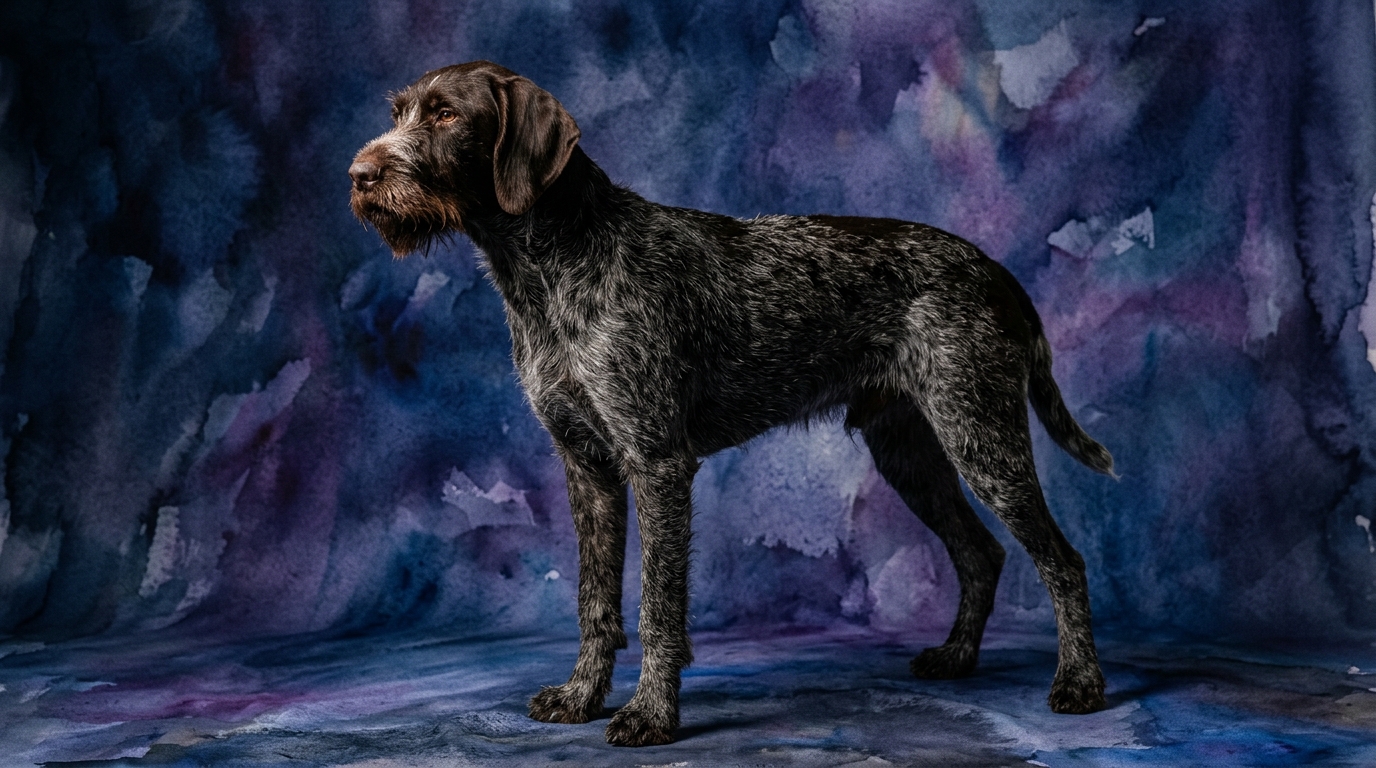
The German Wirehaired Pointer, a Sporting breed, exhibits a robust cognitive profile tailored for demanding field work. Its Problem Solving score of 4/5 indicates a strong capacity to navigate complex environments, such as locating fallen game in dense cover or figuring out how to retrieve objects from challenging terrains. Training Speed, also at 4/5, reflects its ability to grasp new commands and sequences with considerable efficiency, particularly when those tasks align with its working heritage. Social Intelligence, rated 3/5, suggests an understanding of human cues and pack dynamics, though its focus might often be task-oriented rather than solely on nuanced social interaction. The Instinctive Drive, at 3/5, highlights its pronounced natural inclination for hunting activities, including scent tracking and retrieving. Finally, its Memory score of 4/5 demonstrates a reliable ability to retain learned behaviors, routes, and the locations of targets over time.
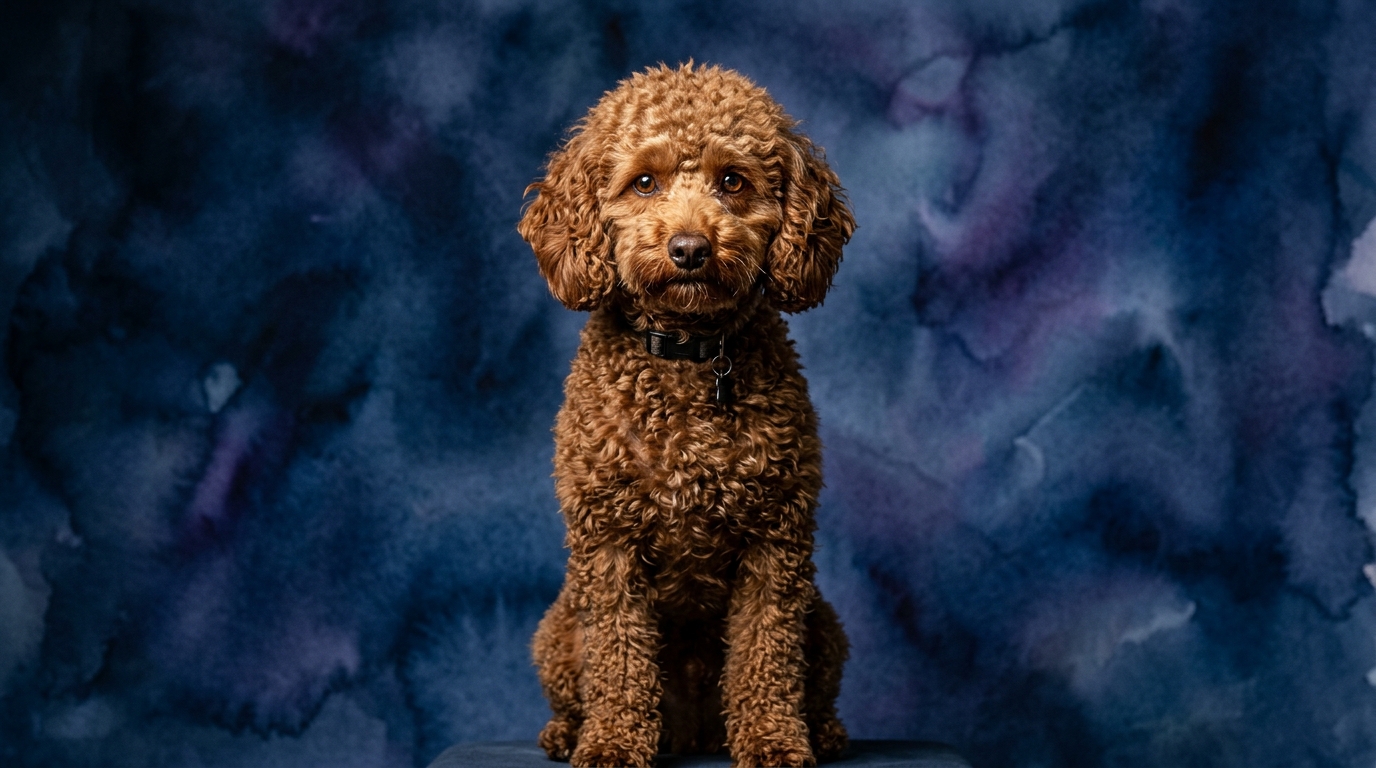
In contrast, the Miniature Poodle, a Non-Sporting breed, presents a profile marked by exceptional mental agility. Its Problem Solving ability earns a perfect 5/5, showcasing a remarkable aptitude for abstract thought, complex puzzles, and devising creative solutions to novel challenges. An equally impressive Training Speed of 5/5 means the Miniature Poodle often picks up new commands and tricks in remarkably few repetitions, demonstrating an eagerness and capacity for rapid learning across various disciplines. Its Social Intelligence, also rated 3/5, indicates an awareness of human emotions and intent, often manifesting as a desire to engage and cooperate, making it a responsive companion. The Instinctive Drive, at 3/5, acknowledges its historical roots as a water retriever, with inherent retrieving instincts often channeled into play or competitive dog sports rather than traditional hunting. Its Memory score of 5/5 underscores an extraordinary capacity for long-term recall of commands, routines, and experiences, making it highly dependable in retaining vast repertoires of learned information.
Where the German Wirehaired Pointer Excels Cognitively
The German Wirehaired Pointer’s cognitive strengths are deeply rooted in its purpose as a versatile hunting dog. Its 4/5 Problem Solving score shines brightest in dynamic, unpredictable outdoor environments. Unlike a breed that might rely solely on human direction, the GWP can independently assess a situation, such as how to best quarter a field to find a scent cone or navigate thick brush to flush game. This isn't about solving a puzzle box in a living room; it's about making real-time, critical decisions in a complex, ever-changing natural landscape. Its robust memory (4/5) isn't just for rote commands; it's for recalling the precise location of a downed bird from twenty minutes ago, or remembering a specific scent trail it picked up earlier in the hunt. This breed's specific type of intelligence is about grit, perseverance, and practical application in challenging situations, often requiring sustained focus over long periods.
Furthermore, the GWP’s 4/5 Training Speed, while not a perfect 5, is exceptionally high for tasks requiring both physical prowess and mental endurance. It learns multi-step commands for retrieving, pointing, and tracking with remarkable efficiency, demonstrating an ability to link complex actions to specific environmental cues. This breed's cognitive architecture is designed for a partnership where the dog often takes initiative within a defined framework, making it an invaluable asset to a hunter. Its instinctive drive, though rated 3/5, is channeled with singular purpose towards its working heritage, lending a determination and unwavering focus that allows it to push through fatigue or distraction in pursuit of a goal that few other breeds can match.
Where the Miniature Poodle Shines Cognitively
The Miniature Poodle's cognitive superiority, particularly its perfect 5/5 scores in Problem Solving, Training Speed, and Memory, positions it as a remarkably versatile and adaptable canine. Its problem-solving acumen extends to abstract challenges; this is a dog that can figure out how to unlatch a crate, open a child-proof gate, or systematically work through a complex food puzzle. This isn't just about instinct; it's about applying learned principles and understanding cause-and-effect with a high degree of sophistication. The Poodle's ability to generalize learning is exceptional, meaning a concept learned in one context can often be applied to a completely new situation, a hallmark of advanced cognition. Its exceptional memory (5/5) means it retains a vast repertoire of commands, tricks, and routines over its lifetime, making it a consistent and reliable performer in any discipline.
The Miniature Poodle’s 5/5 Training Speed is perhaps its most defining cognitive trait. It picks up new commands and behaviors with astonishing rapidity, often requiring only a handful of repetitions to solidify a concept. This quick uptake isn't just about obedience; it allows for the teaching of incredibly complex tricks, intricate agility courses, or demanding scent detection tasks. Its eagerness to engage and its capacity for understanding nuanced human communication make it a willing and responsive student. While its instinctive drive is rated 3/5, similar to the GWP, the Poodle's historical retrieving instincts are often easily channeled into modern dog sports, demonstrating its ability to apply its cognitive gifts to a wide array of activities beyond its original purpose, showcasing its profound mental flexibility.
Ease of Training: Behavioral Differences
When considering ease of training, the Miniature Poodle generally holds an advantage due to its perfect 5/5 scores in both Training Speed and Problem Solving, coupled with its outstanding memory. Its inherent desire to please, combined with a quick grasp of new concepts, means it often learns new cues and behaviors in fewer repetitions and retains them more reliably. Poodles tend to be highly motivated by positive reinforcement and are less likely to be distracted by strong external stimuli unless specifically trained for it. Their cognitive flexibility allows them to adapt to a wide variety of training methods and environments, making them suitable for everything from advanced obedience to complex trick training with relative ease.
The German Wirehaired Pointer, with its 4/5 scores in Training Speed and Memory, is still an exceptionally trainable dog. However, its strong instinctive drive (3/5) and independent problem-solving nature, honed for hunting, can present different training challenges. While it learns quickly, its focus might be more readily diverted by scents or movement in the environment. Training a GWP often requires channeling its inherent drive into desired behaviors, rather than merely teaching a command in isolation. For instance, teaching a recall might be more challenging if a strong scent is present. Owners must understand and work with its ingrained hunting behaviors, providing outlets for its energy and mental stimulation that align with its natural inclinations, which can sometimes require more specialized or persistent training approaches compared to the Poodle's general eagerness to comply.
Suitability for Active vs. Relaxed Owners
The German Wirehaired Pointer is undeniably a breed for active owners. Its robust instinctive drive, combined with its capacity for sustained focus and problem-solving in dynamic environments, means it thrives with consistent physical and mental engagement. Owners who enjoy long hikes, hunting, field trials, or rigorous dog sports like canicross or skijoring will find a dedicated and tireless partner in a GWP. A relaxed owner who cannot provide at least an hour or two of vigorous exercise daily, coupled with mental challenges, will likely find their GWP becomes restless, potentially exhibiting destructive behaviors or excessive vocalization. This breed requires an owner who embraces outdoor adventure and understands the commitment to channeling a working dog's energy and intellect into productive activities.
The Miniature Poodle, conversely, offers greater versatility in suiting different owner lifestyles. While its high cognitive scores mean it excels in active pursuits like agility, obedience, and rally, it can also adapt well to a more relaxed home environment, provided it receives sufficient mental stimulation. A Miniature Poodle isn't content to be merely a couch potato; its keen mind needs regular engagement through training sessions, puzzle toys, or interactive play. However, it doesn't typically possess the same relentless physical drive as a GWP. An owner who enjoys daily walks, regular training sessions, and indoor games can keep a Miniature Poodle content. This breed is suitable for active owners seeking a highly capable partner for competitive sports, but equally for those who prefer a more sedate lifestyle, as long as they commit to enriching their Poodle's brilliant mind with consistent intellectual challenges.
The Verdict
Choose the German Wirehaired Pointer if you are an active, outdoors-oriented individual seeking a dedicated, independent working partner for hunting or demanding field sports, appreciating a dog that can problem-solve robustly in natural environments.
Opt for the Miniature Poodle if you desire a highly versatile, quick-learning companion capable of excelling in diverse activities from complex tricks to advanced obedience, valuing a dog with exceptional memory and adaptability for a variety of lifestyles.
🧠 Find Your Pet's IQ Score
Our Pet IQ Lab assessment covers 25+ tests across 5 cognitive dimensions — personalized to your breed.
Take the Full IQ Test →Frequently Asked Questions
Is the German Wirehaired Pointer truly less adaptable than the Miniature Poodle?
While the GWP is exceptionally adaptable within its working niche, its strong instinctive drives can make it less flexible for roles outside of demanding physical and mental tasks. The Miniature Poodle's high cognitive scores in problem-solving and training speed allow it to adapt to a wider array of activities and lifestyles, from competitive sports to companion roles, with relative ease.
Does the Miniature Poodle's high training speed mean it's suitable for first-time dog owners?
The Miniature Poodle's rapid training speed certainly makes it a rewarding student, and it can be a good fit for first-time owners who are committed to consistent positive reinforcement. However, its intelligence also means it requires mental stimulation to prevent boredom and potential behavioral issues, so a new owner must be prepared to engage its keen mind regularly.
How do their instinctive drives manifest differently in a home environment?
The German Wirehaired Pointer's instinctive drive for scenting and retrieving often manifests as a strong desire to explore, track smells, and retrieve objects, requiring active outdoor outlets. The Miniature Poodle's historical retrieving instincts are typically channeled more into playful retrieving games or focused agility work, making it less prone to independent 'hunting' excursions within a domestic setting, though it still enjoys interactive play.