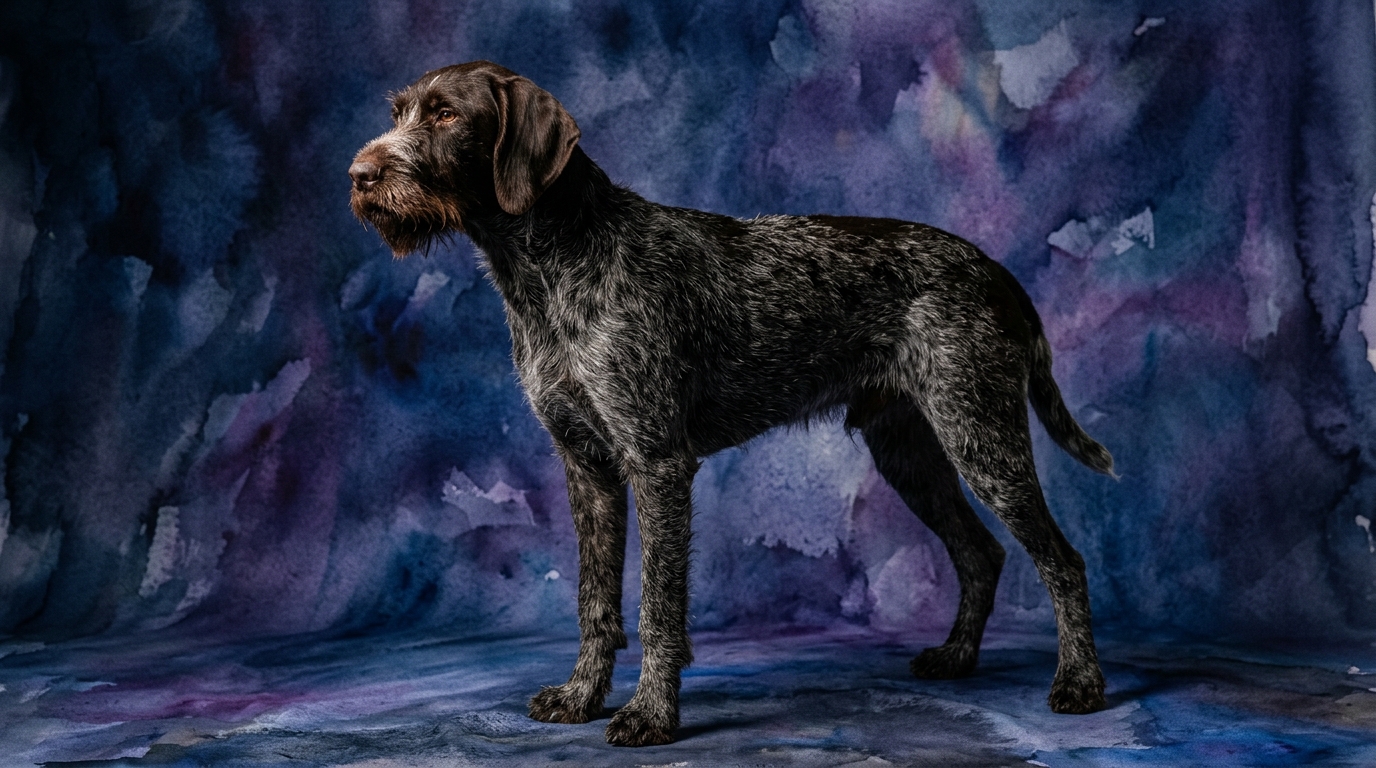
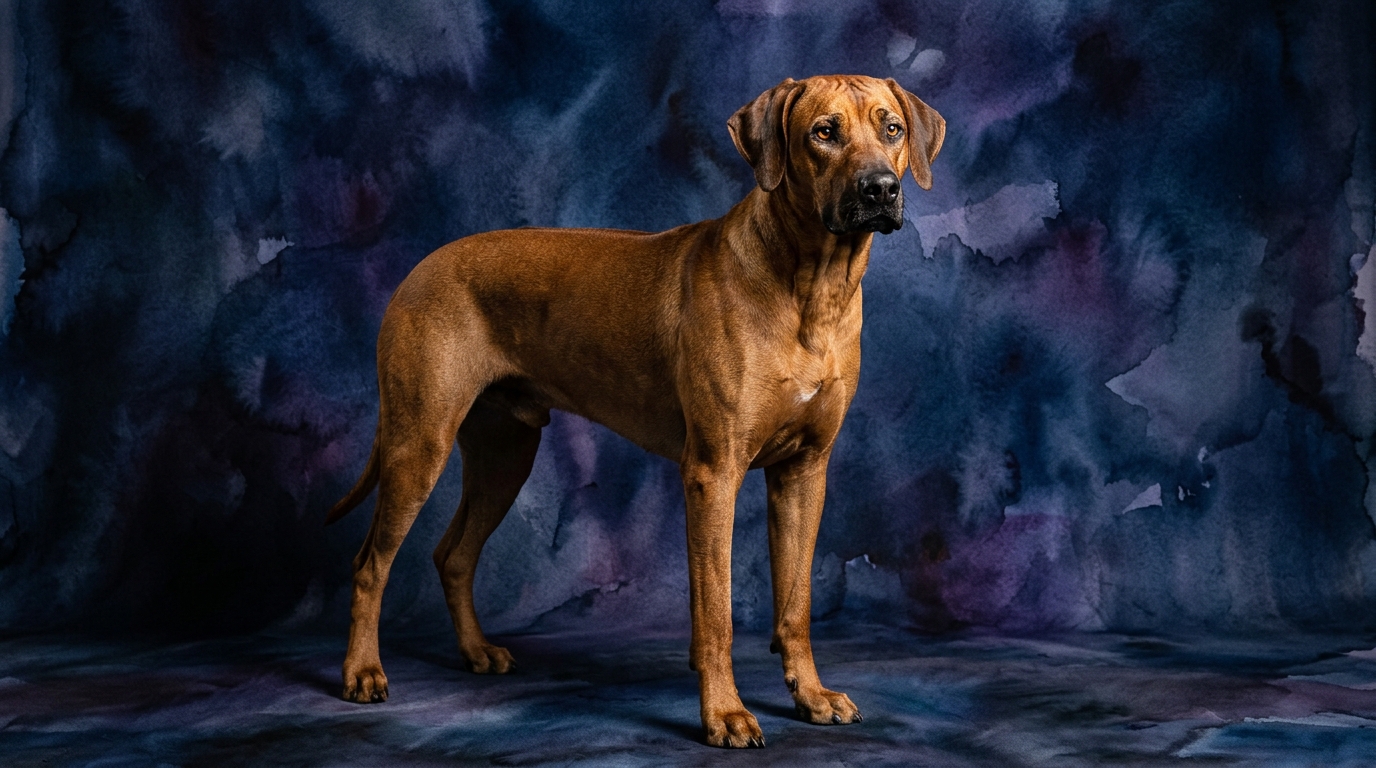
Side-by-Side Cognitive Profiles
The Cosmic Pet Pet IQ Lab assesses canine intelligence across five key dimensions: Problem Solving, Training Speed, Social Intelligence, Instinctive Drive, and Memory. These metrics allow for a nuanced understanding of a breed's cognitive strengths, moving beyond simplistic notions of 'smartness' to appreciate their specific mental architecture.
The German Wirehaired Pointer (GWP), ranked #28 by Coren, demonstrates a profile geared for versatile field work and handler cooperation. Their Problem Solving is rated at 4/5, indicating an aptitude for navigating complex tasks and adapting to varied hunting scenarios with thoughtful approaches. Training Speed, also 4/5, reflects their eagerness and capacity to quickly grasp and retain new commands and routines, a crucial trait for a working dog requiring precise direction. Social Intelligence sits at 3/5, suggesting they form strong bonds with their family but might be reserved with strangers, while their Instinctive Drive, at 3/5, underscores their inherent desire to hunt, point, and retrieve. Memory, scoring 4/5, highlights their ability to recall complex sequences and past experiences, which is vital for remembering game locations or intricate obedience patterns.
In contrast, the Rhodesian Ridgeback (RR), holding Coren's #52 rank, presents a cognitive makeup shaped by its history as a big-game tracker and protector. Their Problem Solving is rated 3/5, indicating an ability to assess situations and act independently, often with a focus on self-preservation or territorial defense rather than handler-directed puzzles. Training Speed, also 3/5, suggests they learn at a steady pace but might require more consistent motivation, often due to an independent streak. Social Intelligence, at 3/5, mirrors the GWP in its family loyalty but manifests as a more reserved and discerning demeanor towards outsiders, reflecting their protective heritage. Instinctive Drive, 3/5, is strong and focused on tracking, scenting, and guarding, demanding outlets for their inherent predatory and protective urges. Memory, at 3/5, indicates a solid ability to recall experiences and learn from them, though perhaps not with the same precision for intricate, handler-led sequences as the GWP.
Where the German Wirehaired Pointer Excels Cognitively
The German Wirehaired Pointer's cognitive strengths are particularly evident in its superior Problem Solving (4/5 vs. 3/5), Training Speed (4/5 vs. 3/5), and Memory (4/5 vs. 3/5) compared to the Rhodesian Ridgeback. This breed's mental architecture is finely tuned for interactive, cooperative work, making them adept at processing and executing multi-step commands quickly. Their higher problem-solving score reflects an ability to analyze novel situations within a structured context, such as figuring out how to retrieve game from difficult cover or adjusting their strategy based on handler cues.
The GWP's elevated Training Speed is a direct asset for owners seeking a responsive partner in various dog sports or advanced obedience. They absorb new information with impressive rapidity, making the learning process a collaborative and often swift endeavor. This cognitive nimbleness is not just about rote memorization but also about understanding the 'why' behind a command and applying it consistently. Furthermore, their superior Memory ensures that once a lesson is learned, it is deeply ingrained, allowing for reliable performance even after periods of inactivity or in new environments. This retention is crucial for complex hunting patterns or advanced trick training, where recalling precise actions is paramount.
Distinct Cognitive Strengths of the Rhodesian Ridgeback
While the Rhodesian Ridgeback's numerical scores for Problem Solving, Training Speed, and Memory are slightly lower than the GWP, their cognitive profile reveals distinct strengths rooted in their history. Their 3/5 score in Problem Solving, for instance, often manifests as a pronounced independence in decision-making, particularly in situations requiring self-reliance rather than immediate handler direction. This problem-solving involves assessing environmental threats or navigating complex outdoor spaces with a focus on safety and territory, drawing on an innate self-sufficiency that was vital for their original purpose.
The Ridgeback's Social Intelligence, rated 3/5, while numerically equal to the GWP, expresses itself through a profound, discerning loyalty to their family. They possess a keen ability to differentiate between welcomed guests and potential intruders, demonstrating a nuanced understanding of their social hierarchy and territory. Similarly, their Instinctive Drive, also 3/5, is characterized by immense courage and tenacity, allowing them to pursue and hold large game with unwavering focus, a cognitive strength demanding intense concentration and physical endurance in challenging environments.
Training Dynamics: Which is Easier and Why?
Comparing training ease, the German Wirehaired Pointer, with its 4/5 Training Speed, generally presents a smoother path for most owners. GWPs are typically eager to please, attentive to their handlers, and possess a strong desire for cooperation, traits that stem from their role as a hunting partner working closely with humans. They tend to respond well to positive reinforcement and clear, consistent direction, quickly forging associations between commands and actions. Their inherent focus and pattern recognition make them excellent candidates for advanced obedience, agility, and field trials, where rapid learning and precise execution are prized.
The Rhodesian Ridgeback, with a 3/5 Training Speed, often requires a more patient, consistent, and creative approach. Their independent nature and historical role of making autonomous decisions mean they are less inherently inclined to blindly follow commands without understanding the perceived value or logic behind them. Owners might find that Ridgebacks need more convincing and motivation, often responding best to training that taps into their innate drives, such as scent work or activities that allow for some degree of self-directed problem solving. Their training journey can be incredibly rewarding, fostering a strong bond built on mutual respect, but it demands an owner who is firm, fair, and understands the breed's unique blend of independence and loyalty.
Matching Breeds to Lifestyles: Active vs. Relaxed Owners
For owners with an active, outdoors-oriented lifestyle, the German Wirehaired Pointer is an exceptional fit. Their substantial energy levels and cognitive need for engagement mean they thrive in environments where they receive ample physical exercise combined with mental challenges. These dogs are happiest when they have a job to do, whether it's hunting, participating in dog sports like agility or dock diving, or going on long hikes. Their cooperative nature and desire to work alongside their human make them ideal companions for individuals or families committed to incorporating their dog into a dynamic, engaging routine. A GWP left without sufficient mental and physical stimulation is likely to invent its own 'work,' which might not align with household rules.
The Rhodesian Ridgeback, while also requiring significant exercise to prevent boredom and destructive behaviors, can adapt to a slightly more relaxed home environment *after* their daily needs are met. They possess a powerful athletic build and a strong desire for vigorous activity, but they are also known for their ability to settle down and be calm indoors once adequately exercised. This duality means they can suit owners who are active but also appreciate periods of quiet companionship. However, 'relaxed' does not mean 'sedentary'; Ridgebacks demand consistent, structured exercise to manage their powerful physical and mental drives, combined with strong, consistent leadership to guide their independent spirit. Owners who appreciate a dog with a discerning personality and who are prepared to meet their exercise requirements will find a deeply devoted companion.
The Verdict
Choose the German Wirehaired Pointer if you seek an enthusiastic, highly trainable, and cooperative partner for active outdoor pursuits and dog sports, valuing quick learning and a strong desire to please. They thrive with consistent mental challenges and physical activity alongside their human.
Opt for the Rhodesian Ridgeback if you appreciate a discerning, independent, and deeply loyal companion who requires firm, consistent leadership and significant exercise, but also offers periods of calm companionship and a protective presence.
🧠 Find Your Pet's IQ Score
Our Pet IQ Lab assessment covers 25+ tests across 5 cognitive dimensions — personalized to your breed.
Take the Full IQ Test →Frequently Asked Questions
Which breed is better for first-time dog owners?
The German Wirehaired Pointer is generally more forgiving for first-time owners due to its higher training speed and eagerness to please, making the learning process smoother. The Rhodesian Ridgeback's independent nature and strong will require more experience and consistency in training.
Do German Wirehaired Pointers or Rhodesian Ridgebacks require more exercise?
Both breeds require substantial daily exercise, but the GWP typically demands more consistent, high-intensity mental and physical engagement throughout the day. The RR needs vigorous exercise but can be more content with periods of calm indoors once their energy is adequately expended.
Are either of these breeds good with children?
Both breeds can be good with children when properly socialized and raised, though supervision is always advised. GWPs tend to be boisterous and playful, while RRs are often patient but can be reserved, requiring children to understand and respect their boundaries.