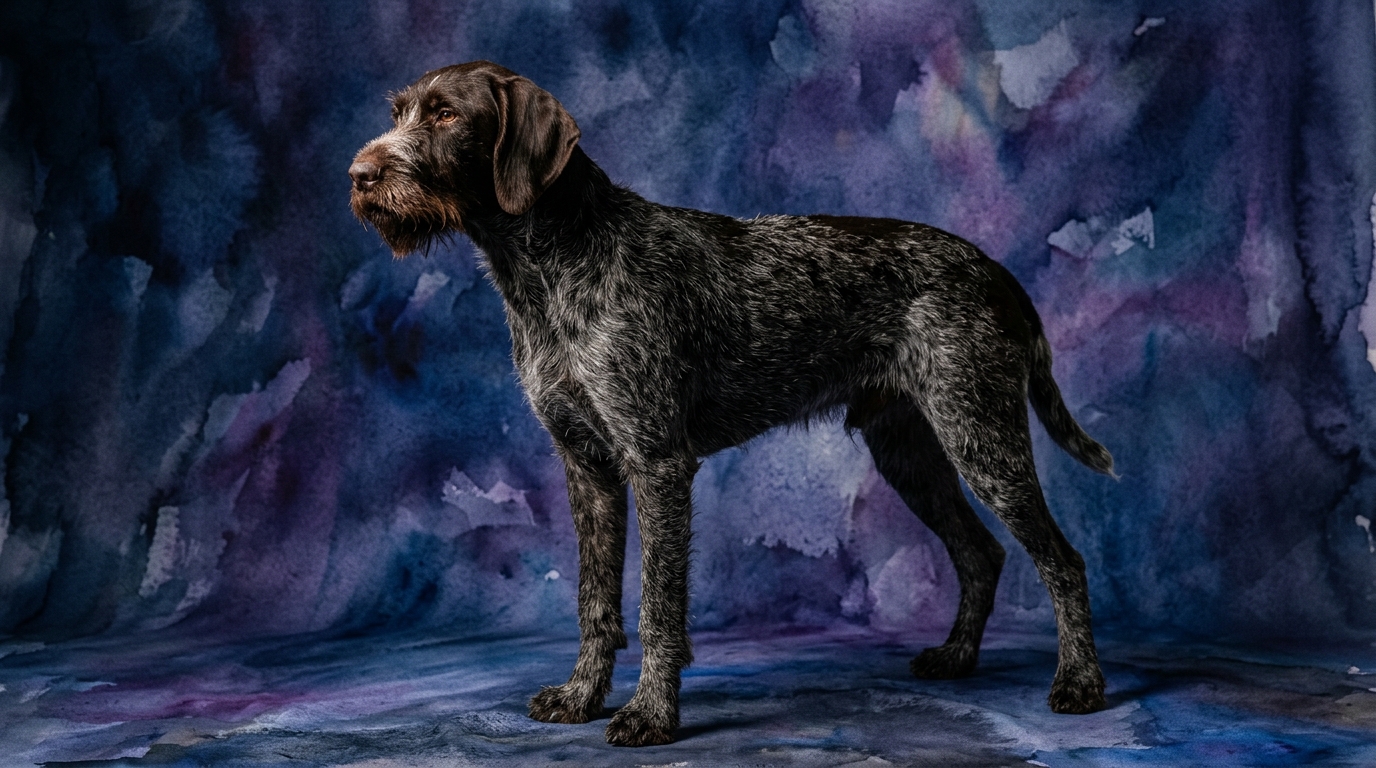
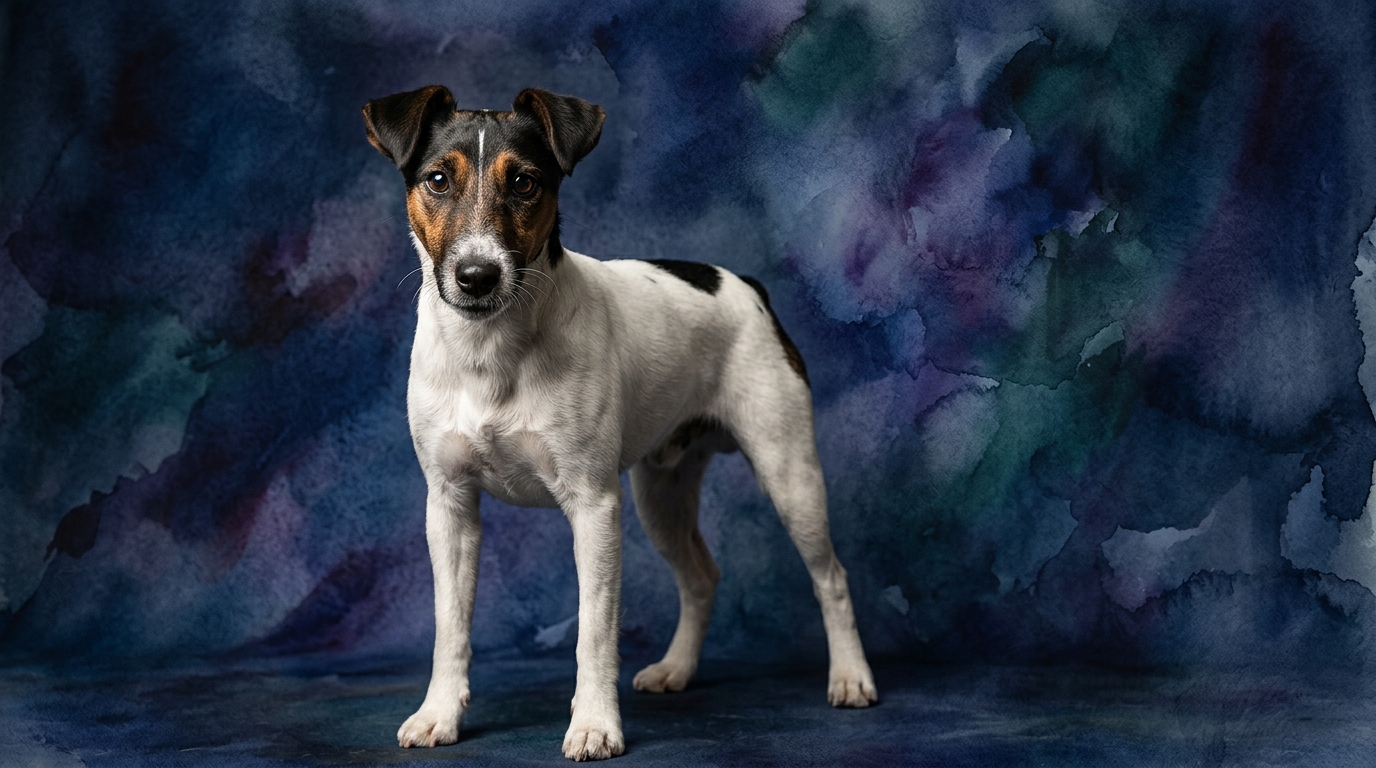
Side-by-Side IQ Profile: German Wirehaired Pointer vs. Smooth Fox Terrier
The Cosmic Pet Pet IQ Lab employs a five-dimensional framework to assess canine intelligence, offering a nuanced view beyond simple obedience. Let's examine how the German Wirehaired Pointer and the Smooth Fox Terrier stack up.
**German Wirehaired Pointer (Sporting Group, Coren Rank #28):** This breed showcases a robust cognitive profile, reflecting its heritage as a versatile hunting companion. Its **Problem Solving (4/5)** ability means it adeptly figures out complex tasks, such as locating hidden game or navigating tricky terrain, often adapting strategies when initial attempts fail. **Training Speed (4/5)** is a notable strength; they grasp new commands and routines quickly, often requiring fewer repetitions due to their eagerness to cooperate and link actions with desired outcomes. **Social Intelligence (3/5)** indicates a moderate understanding of human cues and pack dynamics, forming strong bonds but perhaps not always intuiting subtle emotional shifts. Their **Instinctive Drive (3/5)** is a focused hunting drive for pointing and retrieving, strong in its purpose but not an overwhelming, unfocused predatory instinct. Finally, **Memory (4/5)** is excellent, ensuring strong retention for learned commands, routines, and the locations of familiar objects or hunting grounds.
**Smooth Fox Terrier (Terrier Group, Not Coren-Ranked):** The Smooth Fox Terrier brings a different set of cognitive strengths to the table, rooted in its tenacious terrier spirit. Its **Problem Solving (3/5)** capacity is practical, particularly for tasks involving accessing interesting scents or digging opportunities, often relying on persistence and clever manipulation. **Training Speed (3/5)** is respectable; they learn at a fair pace but might require more consistent, engaging methods due to their independent streak, understanding commands but sometimes choosing when to execute them. **Social Intelligence (3/5)** allows them to engage well within a family unit, understanding hierarchies and communicating needs, though they can be less inclined to defer to human authority without clear motivation. Their **Instinctive Drive (3/5)** is a strong, persistent prey drive focused on small vermin, often translating into a desire to dig, chase, and explore, which can sometimes override learned behaviors. **Memory (3/5)** is adequate, retaining learned information and experiences, but they might need refreshers, especially if a command conflicts with a strong instinctual urge.
Where the German Wirehaired Pointer Wins Cognitively
The German Wirehaired Pointer's cognitive edge is evident in its capacity for sophisticated learning and application of knowledge within structured environments. Their Coren ranking of 28 reflects a superior ability to quickly grasp and reliably execute complex commands, even amidst distractions inherent to field work. They demonstrate advanced problem-solving in tasks requiring memory, sequential understanding, and adaptive strategies for locating game or navigating varied terrains. This breed's strength lies in its collaborative intelligence, actively seeking and processing human direction to achieve shared objectives. Their ability to generalize learned behaviors across different situations and maintain focus on a task, even when distractions are present, highlights a cognitive advantage in obedience and working intelligence.
Where the Smooth Fox Terrier Wins Cognitively
The Smooth Fox Terrier's cognitive strengths shine in situations demanding independent thought and tenacious resourcefulness, particularly when their innate terrier instincts are engaged. They excel at figuring out how to access tight spaces, outwit small prey, or persistently work at a problem until a solution, often a clever one, is found. This isn't about following a human's multi-step command sequence, but about improvising and adapting to achieve a self-directed goal, a form of practical intelligence honed over generations of pest control. Their cleverness often manifests as an ability to outmaneuver or outlast obstacles, demonstrating a unique problem-solving style driven by sheer will and ingenuity rather than strict adherence to human instruction.
Which Is Easier to Train and Why
The German Wirehaired Pointer generally presents a more straightforward training experience due to its higher training speed (4/5) and innate desire to work alongside humans. Bred for cooperation, they readily absorb new commands and retain them effectively, thanks to their strong memory (4/5). Their problem-solving acumen (4/5) allows them to understand the 'why' behind tasks, leading to quicker generalization of learned behaviors. This breed thrives on clear direction and positive reinforcement, often eager to please, which significantly streamlines the training process for tasks ranging from basic obedience to intricate field work. They are built to be responsive partners in a working relationship.
Conversely, training a Smooth Fox Terrier demands a more nuanced and patient approach. While they possess a respectable training speed (3/5), their independent nature and powerful instinctive drive (3/5) often mean they understand a command but may choose whether or not to obey, especially if a compelling scent or chase opportunity presents itself. Their problem-solving (3/5) is geared towards self-serving goals rather than human-directed tasks. Successful training with a Smooth Fox Terrier relies on making the process incredibly engaging, leveraging their playful spirit, and consistently proving that compliance is more rewarding than following their independent whims. Owners must be prepared for a dog that will consistently test boundaries with a charming, yet stubborn, resolve.
Suited for Active vs. Relaxed Owners
For owners seeking a highly engaged and cooperative partner for structured activities, the German Wirehaired Pointer is an excellent choice. Their robust physical and mental needs demand consistent outlets for their problem-solving and instinctive drives. Owners who enjoy extensive hiking, hunting, competitive dog sports like agility or obedience, or long, purposeful walks will find a GWP a rewarding companion. They thrive on having a 'job' and require an owner who can provide ample mental stimulation and physical exercise to keep them content and well-behaved.
The Smooth Fox Terrier also requires active owners, though their activity often takes a less structured form. They thrive on exploration, digging, and chasing, driven by their strong prey instinct. Owners who enjoy varied adventures, are prepared for spontaneous bursts of energy, and can provide secure, stimulating environments will suit a Smooth Fox Terrier. Their mental stimulation comes from investigating, scenting, and 'problem-solving' their environment independently. They are not suited for truly relaxed owners seeking a sedentary companion; their persistent energy and need for engagement require an owner who can channel their spirited nature effectively.
The Verdict
If you seek a highly trainable, cooperative companion for structured activities like hunting, competitive obedience, or field trials, and you can provide consistent physical and mental engagement, the German Wirehaired Pointer will be an exceptional partner.
If you appreciate a spirited, tenacious dog with an independent streak, a clever mind for practical challenges, and are prepared for a consistent training approach to channel their robust terrier instincts, the Smooth Fox Terrier might be your ideal match.
🧠 Find Your Pet's IQ Score
Our Pet IQ Lab assessment covers 25+ tests across 5 cognitive dimensions — personalized to your breed.
Take the Full IQ Test →Frequently Asked Questions
Are German Wirehaired Pointers good family dogs?
Yes, German Wirehaired Pointers can be excellent family dogs, forming strong bonds and being protective. However, their high energy and need for mental stimulation mean they thrive best with families who can incorporate them into active lifestyles and provide consistent training.
Do Smooth Fox Terriers bark a lot?
Smooth Fox Terriers can be vocal, often using barking to alert their owners to new sights or sounds, or to express excitement. Consistent training from a young age can help manage excessive barking, but their alert nature means some vocalization is inherent to the breed.
What is the main difference in problem-solving between these two breeds?
The German Wirehaired Pointer typically excels at solving complex, multi-step problems presented by humans, showing adaptability in structured tasks. The Smooth Fox Terrier, conversely, demonstrates problem-solving through tenacious, independent efforts to satisfy its strong prey drive, often involving clever manipulation of its environment to achieve its goals.