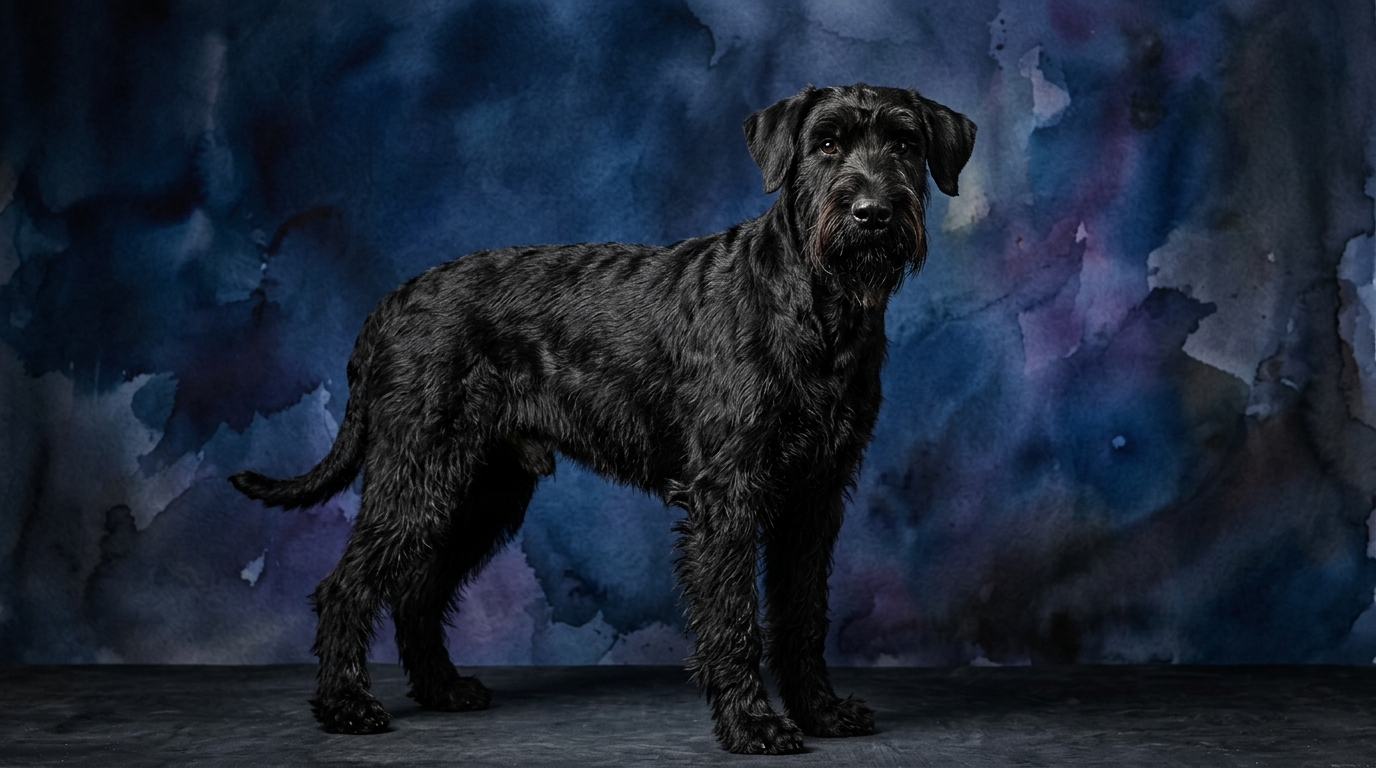
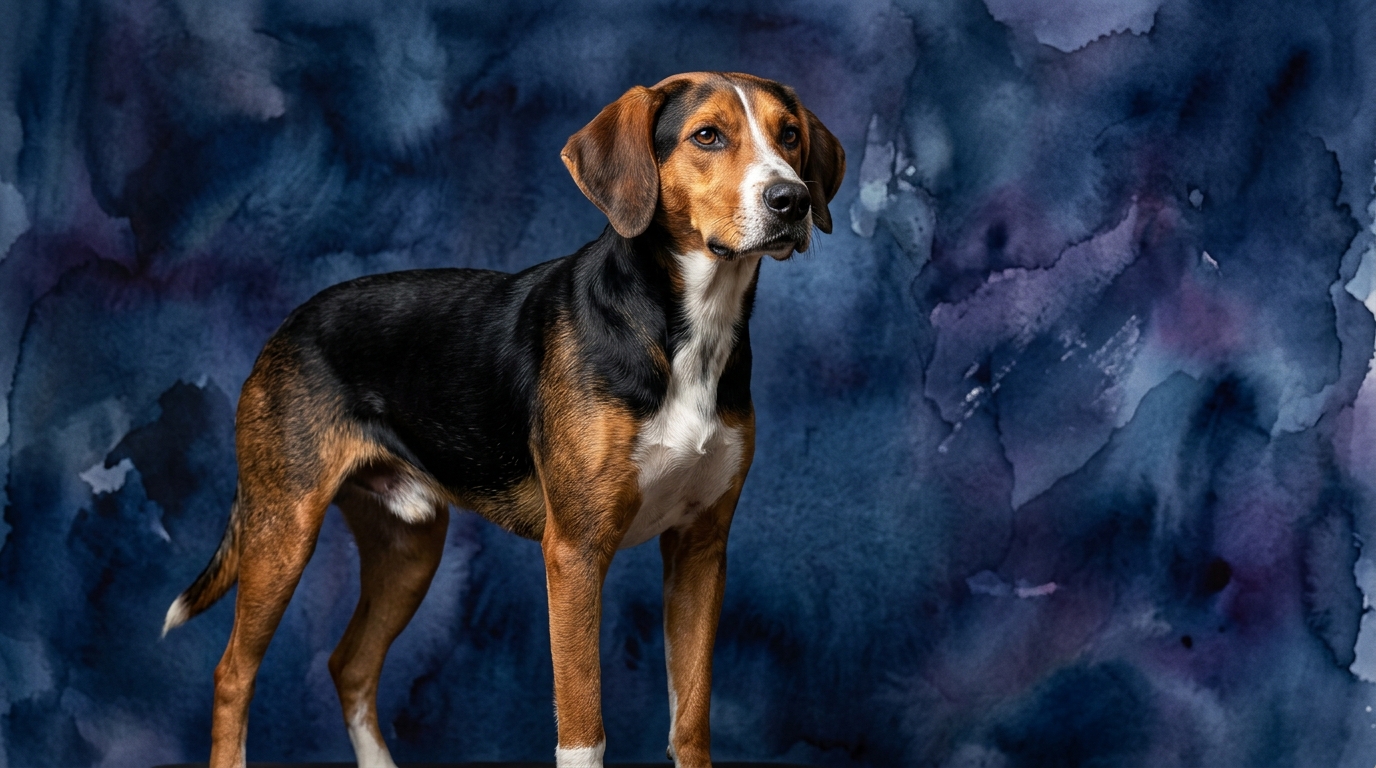
Side-by-Side IQ Profile: Giant Schnauzer vs American Foxhound
The Cosmic Pet Pet IQ Lab provides a nuanced look at canine cognition, evaluating breeds across five key dimensions. For the Giant Schnauzer, a member of the Working group, their Coren rank of #28 signals a significant capacity for understanding and obeying commands. Our IQ Lab data further refines this: their Problem Solving is rated 4/5, indicating a strong ability to navigate complex situations and independently figure out solutions. Training Speed also scores 4/5, reflecting their eagerness and aptitude for learning varied tasks and commands with efficiency. Social Intelligence sits at 3/5, meaning they can understand and react to human cues, though perhaps not with the subtle finesse of some companion breeds. Their Instinctive Drive is 3/5, channelled towards guarding and herding, requiring outlets for these natural tendencies. Finally, Memory is a solid 4/5, enabling them to retain learned behaviors and routines effectively over time.
As a quintessential Hound breed, the American Foxhound is not listed in Coren's ranking, which often emphasizes obedience and working intelligence over independent hunting skills. The Cosmic Pet IQ Lab's assessment provides insight into their distinct cognitive makeup: Problem Solving is rated 3/5, indicating competence in navigating their primary domain – the hunt – but perhaps less inclination for abstract puzzles. Training Speed is 3/5, suggesting they learn at a moderate pace, often requiring patience and consistent motivation, especially when their powerful instincts are at play. Social Intelligence also scores 3/5; they are sociable pack animals, forming strong bonds within their family unit, though their focus can be primarily outward-bound on scent. Their Instinctive Drive is 3/5, overwhelmingly dedicated to tracking and trailing, a deeply ingrained motivation. Memory is rated 3/5, sufficient for recalling scent trails and familiar hunting grounds and territories.
Where the Giant Schnauzer Wins Cognitively
The Giant Schnauzer’s cognitive profile clearly excels in areas demanding structured thought and rapid learning. Their Problem Solving score of 4/5 indicates a breed that actively engages with its environment, seeking to understand and manipulate it. This manifests in their ability to quickly learn intricate sequences of actions, whether it's navigating an agility course, mastering complex obedience commands, or even figuring out how to open child-proof latches. Coupled with a Training Speed of 4/5, they are remarkably receptive to instruction, processing new information and associating it with actions efficiently. This combination makes them excellent candidates for advanced training disciplines, such as protection work, search and rescue, or competitive obedience, where a dog must not only learn quickly but also apply that learning to novel situations. Their 4/5 Memory further solidifies these strengths, allowing them to build a vast repertoire of learned behaviors and recall them reliably, even after extended periods. This cognitive architecture is designed for active partnership and executing multi-step tasks alongside a human handler.
Where the American Foxhound Wins Cognitively
While not scoring higher than the Giant Schnauzer in any single dimension, the American Foxhound demonstrates a specialized cognitive strength that is paramount to its purpose: unparalleled focus and endurance driven by instinct. Their Instinctive Drive, rated 3/5, is singularly concentrated on scent detection and pursuit, an ancient and highly refined cognitive pathway. This isn't just a physical drive; it's a mental state of intense concentration where external distractions fade in favor of following a trail. Their Problem Solving, also 3/5, shines in the context of overcoming environmental challenges during a hunt – navigating dense undergrowth, crossing varied terrain, or deciphering faint scent patterns. This requires a persistent, goal-oriented form of intelligence rather than abstract reasoning. The Foxhound's Memory, at 3/5, is particularly effective for retaining complex scent profiles and remembering vast territories. They excel in what could be termed “olfactory mapping” and recall, a distinct cognitive advantage for their specialized role. Their social intelligence, also 3/5, manifests as a strong pack mentality, enabling them to work cooperatively within a group during a hunt, understanding their role and communicating through vocalizations and body language unique to their breed.
Which is Easier to Train and Why
When considering ease of training, the Giant Schnauzer generally presents a more straightforward path for most owners. Their Training Speed of 4/5 means they grasp new commands and concepts with relative swiftness, often eager to please their handler and engage in structured learning sessions. This aptitude, combined with their 4/5 Problem Solving, allows them to process complex instructions and generalize learned behaviors to different contexts. They typically thrive on positive reinforcement and consistent guidance, forming a strong working partnership with their human. The American Foxhound, with a Training Speed of 3/5, requires a different approach. Their powerful 3/5 Instinctive Drive, primarily focused on scent, means that once a compelling odor is detected, their attention can become singularly fixated, making it challenging to redirect them. While they are capable of learning, their independent nature and deep-seated hunting instincts can make them less inclined to follow human commands when a more interesting scent trail calls. Training an American Foxhound often demands immense patience, creativity to make training more rewarding than a scent, and a deep understanding of their hound mentality, focusing on recall and impulse control from a young age in varied environments.
Suitability for Active vs. Relaxed Owners
Both breeds are undeniably active, but the nature of their activity requirements differs significantly, influencing their suitability for various lifestyles. The Giant Schnauzer, with its working background, suits active owners who are prepared to provide both rigorous physical exercise and consistent mental stimulation. These dogs thrive on having a “job,” whether it's advanced obedience, agility, protection sports, or even complex puzzle toys. They enjoy structured activities and a clear routine, forming a close bond through shared tasks. Owners who appreciate a dog that is an active participant in their daily lives, requiring engagement and direction, will find a strong match. The American Foxhound, conversely, suits owners who can provide extensive, often independent, physical outlet, particularly opportunities to run and explore scents in secure environments. Their energy is boundless, and they are built for endurance. While they appreciate companionship, their primary activity need is often less about structured tasks and more about covering ground and following their nose. They are better suited for owners who enjoy long runs, hikes, or have access to large, fenced properties where the dog can safely burn off energy without constant direct human intervention in their exploratory endeavors. They are not a breed for relaxed, sedentary owners, as their pent-up energy can lead to destructive behaviors if not adequately addressed.
The Verdict
Choose the Giant Schnauzer if you desire a highly trainable, engaged partner for structured activities, dog sports, and a dog that thrives on consistent mental challenges and a clear working relationship.
Choose the American Foxhound if you are an exceptionally active owner who values an independent spirit, can provide vast opportunities for running and scent exploration, and appreciates a dog driven by ancient, specialized instincts.
🧠 Find Your Pet's IQ Score
Our Pet IQ Lab assessment covers 25+ tests across 5 cognitive dimensions — personalized to your breed.
Take the Full IQ Test →Frequently Asked Questions
Is the Giant Schnauzer easy to live with for first-time dog owners?
The Giant Schnauzer's high training speed and problem-solving make them capable learners, but their substantial energy and need for consistent mental engagement mean they are best suited for owners who are prepared for dedicated training and socialization. Their assertive nature requires a confident and experienced handler.
Can an American Foxhound be a good family pet despite its strong hunting drive?
Yes, American Foxhounds can be affectionate family pets, especially when raised with children and other animals. However, their strong hunting drive and need for extensive exercise mean they require secure fencing and careful supervision around smaller pets, alongside dedicated outlets for their natural instincts.
How do these breeds compare in terms of adaptability to different living situations?
The Giant Schnauzer can adapt to various living situations, including apartments, provided their significant exercise and mental stimulation needs are met daily. The American Foxhound, due to its immense energy and strong desire to roam and follow scents, is generally better suited to homes with large, securely fenced yards or owners committed to providing extensive daily outdoor activity.