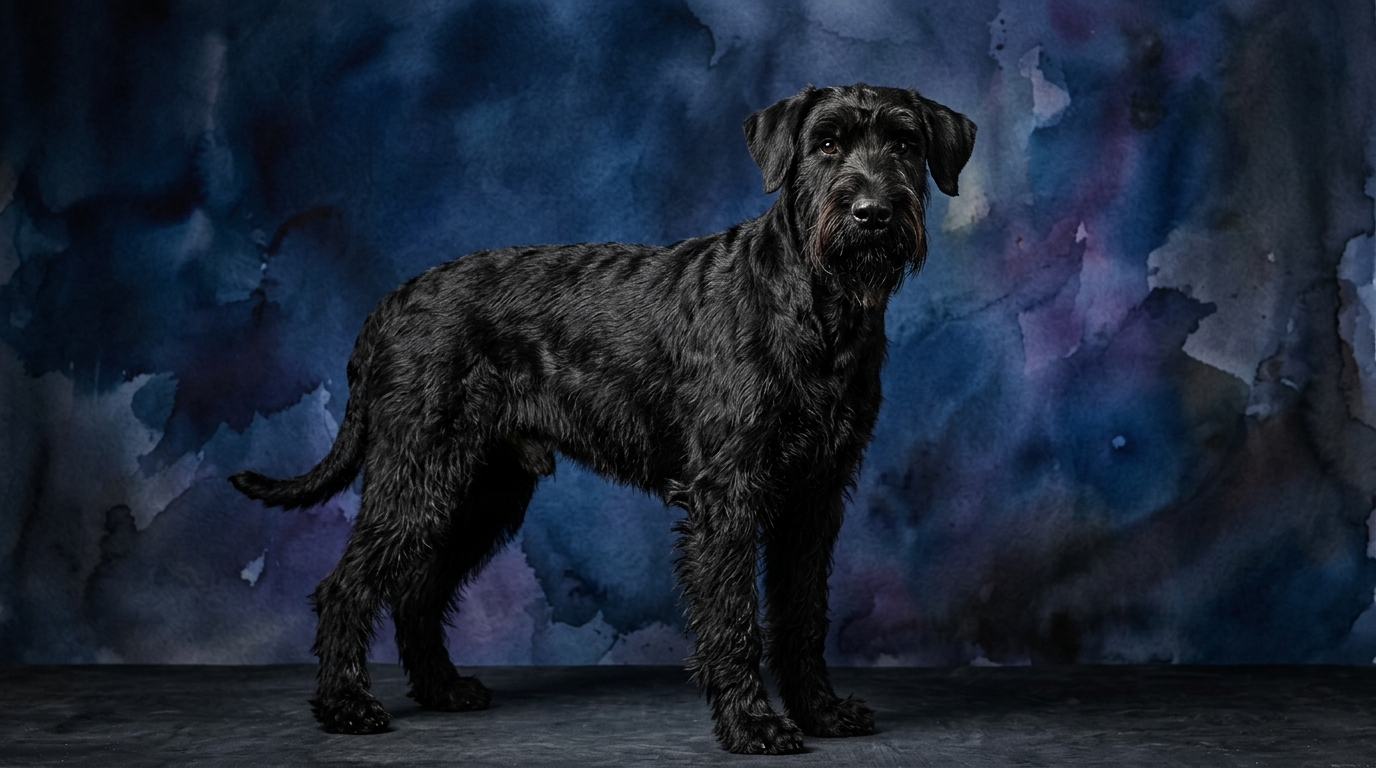
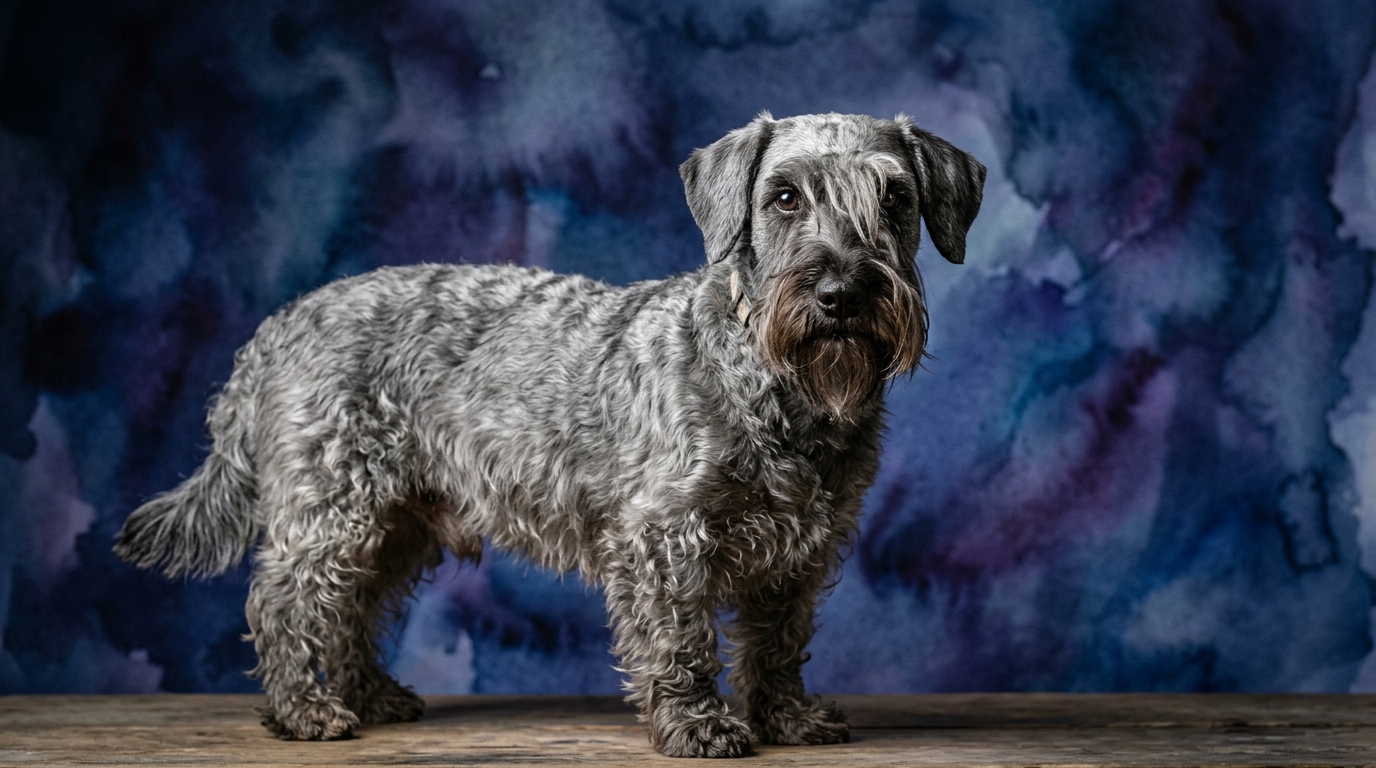
Side-by-Side IQ Profile: Giant Schnauzer vs. Cesky Terrier
Our Cosmic Pet Pet IQ Lab analysis offers a detailed breakdown of cognitive strengths, allowing us to compare the Giant Schnauzer and Cesky Terrier across five key dimensions. The Giant Schnauzer, a Working Group dog, registers a Coren rank of #28, indicating a strong capacity for understanding and executing commands. Its Problem Solving score of 4/5 reflects an aptitude for navigating complex situations, often involving multiple steps or novel challenges, a trait honed by its historical roles in guarding and herding. Training Speed, also at 4/5, points to a rapid grasp of new commands, often requiring fewer repetitions than many other breeds. Social Intelligence at 3/5 suggests a discerning nature; they are observant of human cues and form deep bonds with their chosen family but may not extend the same effusiveness to strangers. An Instinctive Drive of 3/5 highlights their protective instincts and a drive for purpose, rather than an overwhelming prey or herding intensity. Finally, a Memory score of 4/5 means they retain learned behaviors, routines, and associations over extended periods, making for a reliable companion once a lesson is ingrained.
The Cesky Terrier, a Terrier Group dog, does not feature on Coren's ranking, which is common for breeds developed for specialized, independent work rather than broad obedience. Its Problem Solving score of 3/5 indicates a practical intelligence, particularly adept at tasks related to its terrier instincts, such as figuring out how to access a hidden toy or navigate a tight space. They might approach problems with a more direct, persistent method rather than abstract reasoning. Training Speed, also at 3/5, suggests a steady learning pace; they are capable of learning but can sometimes exhibit the characteristic terrier independence, requiring consistent, engaging methods to maintain their interest. Social Intelligence at 3/5, much like the Schnauzer, points to a strong bond with their immediate family, being attuned to their emotions, but often reserved or cautious with new acquaintances. Their Instinctive Drive, also 3/5, is strongly focused on prey drive, scenting, and persistent pursuit, reflecting their heritage as hunting companions. A Memory score of 3/5 means they remember commands and routines, but might benefit from more frequent refreshers or stronger positive associations to solidify complex lessons compared to a breed with higher retention scores.
Where the Giant Schnauzer Wins Cognitively
The Giant Schnauzer demonstrates clear cognitive advantages in areas demanding abstract thought and sustained focus on human-directed tasks. Their Problem Solving score of 4/5, coupled with a 4/5 in Memory, means they excel at understanding and executing multi-step commands and can apply learned principles to new, similar situations. This breed shows a greater capacity for generalization of behaviors, meaning a command learned in one environment is more readily performed in another. Their working dog background, reflected in their Coren ranking, means they are often more inclined to collaborate on complex obedience sequences, agility courses, or protection work, where understanding the handler's intent is paramount. They possess a higher bandwidth for processing and retaining varied information, making them adept at learning extensive vocabularies or intricate routines. This makes them particularly suited for roles requiring consistent, predictable performance based on learned cues, rather than purely instinctive responses.
Where the Cesky Terrier Wins Cognitively
The Cesky Terrier's cognitive strengths lie in their tenacious independence and practical resourcefulness, deeply rooted in their terrier heritage. While their Problem Solving score of 3/5 is lower than the Schnauzer's, it is often expressed through a focused, persistent determination when faced with challenges related to their natural drives. They excel at figuring out how to achieve a specific goal, particularly if it involves scent work, finding hidden objects, or navigating physical obstacles – tasks where their instinctive drive (3/5) comes into play. Their cognitive profile suggests a remarkable ability to work autonomously, making independent decisions in the absence of a handler, a crucial trait for a dog bred to hunt independently. This isn't about complex abstract thought, but rather an efficient, single-minded approach to practical problems. They display a resilience and adaptability in diverse environments, often showing a 'can-do' attitude when faced with novel situations, using their innate curiosity and persistence to explore and overcome.
Training Dynamics: Which is Easier and Why?
When it comes to ease of training, the Giant Schnauzer generally holds an advantage due to its cognitive makeup and working dog history. Their Training Speed of 4/5 means they typically grasp new commands quickly, often with minimal repetition. This is complemented by their 4/5 Memory, ensuring lessons are retained over time. Giant Schnauzers often possess a natural eagerness to please and thrive on having a 'job,' making them highly receptive to structured training sessions. Their higher problem-solving capacity also allows them to understand and execute complex sequences of commands more readily. They respond well to consistent, positive reinforcement and clear communication, often enjoying the mental engagement that training provides, leading to a more straightforward and often faster learning curve.
In contrast, the Cesky Terrier, with a 3/5 Training Speed and 3/5 Memory, presents a different training experience. While certainly capable of learning, their terrier independence means they might not always be as immediately compliant or eager to please as a Giant Schnauzer. They require a more patient, creative, and highly motivating approach. Training sessions need to be engaging and feel like a game, as Ceskys can quickly lose interest if bored or if they perceive no immediate benefit to themselves. Their strong instinctive drive can also be a factor; a captivating scent or the sight of a small animal might momentarily override learned commands. Owners must understand that 'stubbornness' in a Cesky is often a manifestation of their independent nature and a strong will, necessitating consistent boundaries, positive reinforcement, and a deep understanding of terrier psychology to achieve reliable obedience.
Matching Breeds to Lifestyles: Active vs. Relaxed Owners
The Giant Schnauzer is undeniably suited for active owners who are prepared to provide substantial mental and physical engagement. Their 4/5 Problem Solving and 4/5 Memory mean they require more than just physical exercise; they need a consistent 'job' or structured activities to keep their minds occupied. Without adequate mental stimulation, their cognitive capacity can lead to self-directed activities that might not align with owner preferences, such as excessive patrolling or finding their own 'problems' to solve. They thrive in environments where they can participate in advanced obedience, agility, protection sports, or even scent work, all of which provide outlets for their cognitive strengths and desire for purpose. An owner who enjoys structured training and consistent challenges will find a deeply rewarding partnership with a Giant Schnauzer.
The Cesky Terrier can adapt to various lifestyles, but they are best suited for owners who appreciate their unique terrier blend of charm and independence. While not as physically demanding as a Giant Schnauzer, they certainly aren't content as pure couch potatoes. Their instinctive drive and curiosity mean they require daily walks, opportunities for exploration, and regular mental stimulation through puzzle toys, scent games, or engaging training sessions. They can adapt to apartment living if their exercise and mental needs are consistently met. Owners who understand and enjoy the spirited, sometimes mischievous, nature of a terrier, and are prepared to engage their dog's mind with creative play and patient training, will find the Cesky Terrier to be a delightful and loyal companion. They suit owners who are active in a more casual sense, enjoying walks and interactive play, rather than requiring intense, structured athletic pursuits.
The Verdict: When to Choose Each Breed
Choosing between a Giant Schnauzer and a Cesky Terrier comes down to aligning their distinct cognitive profiles with your lifestyle and expectations. If you seek a highly trainable, engaged partner for structured activities, willing to invest in consistent mental and physical challenges, and appreciate a discerning but deeply loyal companion that excels in complex tasks, the Giant Schnauzer is an excellent choice.
Conversely, if you admire a resilient, charmingly independent spirit, are prepared for creative and patient training that respects a terrier's innate drives, and enjoy a companion with a strong individual character and natural curiosity for practical exploration, the Cesky Terrier will be a wonderfully fulfilling addition to your life.
The Verdict
Choose the Giant Schnauzer if you desire a highly trainable, engaged partner for structured activities, willing to invest in consistent mental and physical challenges, and appreciate a discerning but deeply loyal companion.
Choose the Cesky Terrier if you admire a resilient, charmingly independent spirit, are prepared for creative and patient training, and enjoy a companion with a strong individual character and natural curiosity.
🧠 Find Your Pet's IQ Score
Our Pet IQ Lab assessment covers 25+ tests across 5 cognitive dimensions — personalized to your breed.
Take the Full IQ Test →Frequently Asked Questions
Are Giant Schnauzers good with children?
Giant Schnauzers can be excellent family dogs, often protective and patient with children they've grown up with, though early socialization and consistent training are crucial to manage their size and inherent protective instincts around youngsters.
Do Cesky Terriers bark a lot?
Cesky Terriers can be vocal, especially when alerting to strangers or sounds, a trait common in terriers due to their watchfulness; consistent training can help manage this tendency, but their inherent nature means some barking is natural.
What kind of mental stimulation do Giant Schnauzers need?
Giant Schnauzers benefit from complex obedience training, agility, scent work, advanced trick learning, and problem-solving toys that actively challenge their 4/5 problem-solving and memory capacities to keep them engaged.