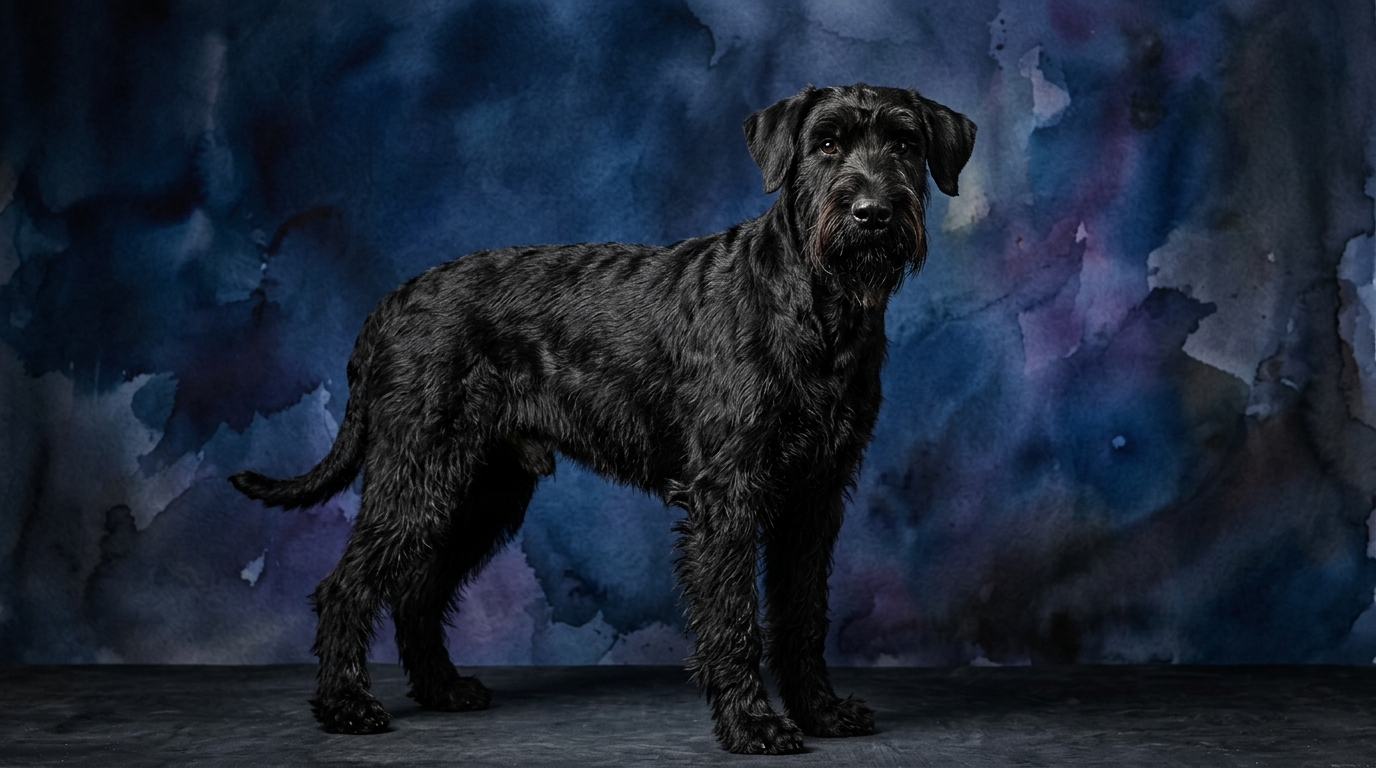
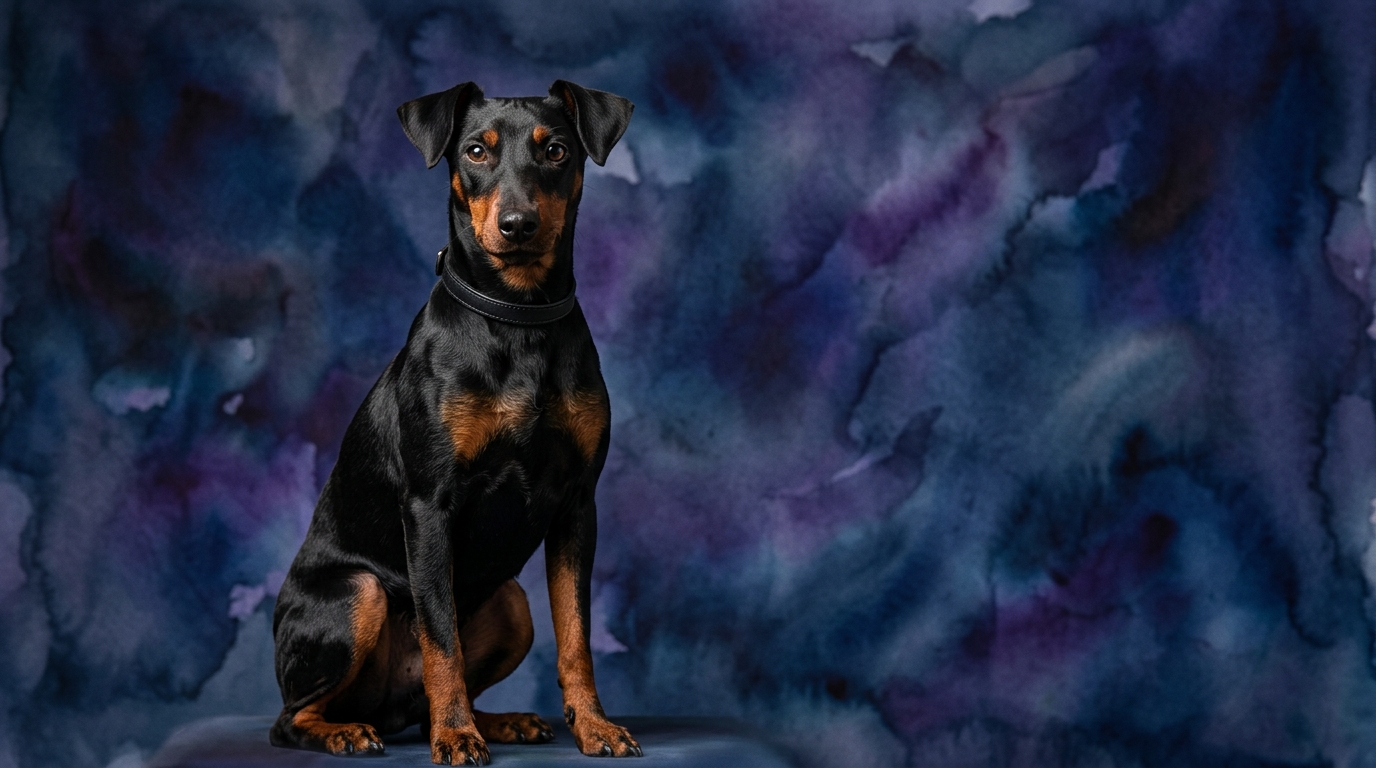
Side-by-Side IQ Profile: Working Dog vs. Agile Terrier
The Cosmic Pet Pet IQ Lab employs a multi-dimensional approach to assess canine cognition, evaluating five key areas. For the Giant Schnauzer, a robust working breed, we observe a Problem Solving score of 4/5, indicating a strong capacity for independent thought and navigating complex scenarios. Their Training Speed also rates 4/5, reflecting an eagerness to learn and retain commands efficiently. Social Intelligence stands at 3/5, suggesting a balanced awareness of human cues and pack dynamics, while Instinctive Drive, though present, is at 3/5, often channeled into protection or guarding. Memory is a notable strength at 4/5, enabling them to recall learned behaviors and experiences over extended periods.
In contrast, the Manchester Terrier, originating from the agile Terrier group, presents a slightly different cognitive blend. Their Problem Solving score is 3/5, demonstrating practical intelligence for immediate tasks, though perhaps less inclined towards abstract challenges. Training Speed is also 3/5, meaning they are capable learners but may require more consistent motivation or varied approaches to maintain engagement. Social Intelligence, like the Giant Schnauzer, is 3/5, showing a reasonable understanding of social hierarchies and interactions. Instinctive Drive is likewise 3/5, often manifesting as a keen prey drive characteristic of terriers. Their Memory score is 3/5, indicating competence in recall but potentially less retention for intricate sequences compared to their larger counterpart.
Where the Giant Schnauzer Excels Cognitively
The Giant Schnauzer's intellectual strengths are evident in its superior Problem Solving, Training Speed, and Memory scores. A 4/5 in Problem Solving signifies a breed that doesn't just react but actively processes and strategizes. This manifests in their ability to understand multi-step commands, figure out puzzle toys designed for advanced dogs, or even intuit solutions to novel environmental challenges, such as opening a complex latch. Their working heritage, requiring them to think independently and adapt to diverse situations, has honed this cognitive function. They are adept at tasks demanding sustained mental effort, making them excellent candidates for advanced obedience, protection work, or even search and rescue.
Furthermore, their 4/5 Training Speed means they typically grasp new commands and concepts with fewer repetitions than many other breeds. This rapid assimilation of information is coupled with a 4/5 Memory, allowing them to retain vast repertoires of commands, routines, and experiences. This combination makes training a Giant Schnauzer a rewarding experience for those who enjoy pushing cognitive boundaries. Owners can introduce complex sequences, rely on previously learned behaviors even after a long break, and expect their dog to apply past lessons to new, similar situations. This robust memory also contributes to their reliability in established routines, forming strong habits for desired behaviors.
Unique Cognitive Advantages of the Manchester Terrier
While the Manchester Terrier's scores are generally a point lower or equal to the Giant Schnauzer's, their cognitive profile offers distinct advantages, particularly in areas demanding focused independence and tenacious drive. Their 3/5 in Problem Solving, combined with a 3/5 Instinctive Drive, means they are often highly efficient and determined in tasks requiring specific, goal-oriented actions, such as tracking small game or navigating confined spaces to 'flush out' an object. Unlike a Giant Schnauzer who might deliberate a complex solution, a Manchester Terrier often employs direct, persistent methods, which can be a 'win' in scenarios demanding swift, decisive action rather than intricate planning. Their terrier heritage emphasizes self-reliance, giving them a cognitive edge in situations where constant human direction might be impractical or unnecessary.
Their balanced 3/5 Social Intelligence and Instinctive Drive, while matching the Giant Schnauzer, manifest differently. A Manchester Terrier’s social acumen is often leveraged for keen observation of their immediate family unit, allowing them to anticipate needs and moods within their small 'pack,' often without the broader, more overt guarding instincts of a working breed. Their instinctive drive is finely tuned for pursuit and capture, making them exceptionally focused on tasks that tap into this primal urge, such as lure coursing or precision scent work. This intense, singular focus, rather than broad problem-solving, can be a cognitive asset for owners seeking a companion with a sharp, task-specific intellect and a spirited, independent approach to challenges.
Training Efficacy: Who Learns Faster and Why?
When it comes to ease of training, the Giant Schnauzer generally holds an advantage due to its 4/5 Training Speed and robust 4/5 Memory. These dogs typically absorb new commands and routines quickly, often requiring fewer repetitions to achieve proficiency. Their working breed background has instilled a strong desire to please and a capacity for sustained focus during training sessions. Behavioral differences include their pronounced biddability and a natural inclination to work collaboratively with their handler, making them responsive to positive reinforcement and consistent instruction. They often thrive on the structure and mental engagement that advanced training provides, demonstrating a clear understanding of cause and effect in learning scenarios.
The Manchester Terrier, with a 3/5 Training Speed and 3/5 Memory, is certainly trainable, but typically requires a more patient, creative, and consistent approach. Their terrier independence means they can sometimes be more opinionated and less inherently inclined to blindly follow commands without understanding the 'why.' Owners might find that while they grasp concepts, their application can be selective, especially if a more interesting distraction arises. Real behavioral differences include a tendency towards independent thought, sometimes interpreted as stubbornness, and a strong prey drive that can make off-leash recall challenging without thorough, engaging training. Success with a Manchester Terrier often hinges on making training a fun, rewarding game and leveraging their natural tenacity, rather than relying solely on their desire to please.
Matching Canine Cognition to Owner Lifestyle
For owners with an active lifestyle who are prepared to provide significant mental and physical engagement, the Giant Schnauzer is often an excellent match. Their superior problem-solving abilities and rapid training speed mean they thrive with consistent challenges, whether it's advanced obedience, canine sports like agility or dock diving, or even protection work. These dogs benefit from a 'job' and can become bored or destructive if their cognitive needs are not met. An owner who enjoys structured training, daily rigorous exercise, and incorporating their dog into a busy, engaging routine will find the Giant Schnauzer's active mind a fulfilling companion. They are not content to be mere couch potatoes; their intelligence demands an outlet.
The Manchester Terrier, while certainly an active and spirited breed, may suit owners who appreciate a dog with a strong, independent personality and a need for focused bursts of activity rather than constant, high-level mental work. They enjoy engaging in activities like earthdog trials, lure coursing, or long walks with opportunities to explore and sniff. Their cognitive profile suggests they can adapt well to owners who prefer a dog that is self-sufficient at times but still enjoys active participation in family life. While they need regular exercise and mental stimulation to prevent boredom, their demands might be slightly less intense or differently focused than a Giant Schnauzer's, making them suitable for owners who are active but perhaps not seeking a full-time working partner, instead preferring a dog that brings lively energy and a spirited companionship to their daily routine.
The Verdict
Choose the Giant Schnauzer if you seek a highly biddable, quick-learning companion eager for complex training and a consistent 'job,' thriving on deep cognitive engagement. They excel with owners prepared for consistent mental and physical challenges, delivering remarkable reliability and problem-solving prowess.
Opt for the Manchester Terrier if you value an independent, spirited companion with sharp, task-specific intelligence and tenacious drive, perfect for focused activities. They suit owners who appreciate a dog with personality, offering a lively presence and a practical, determined approach to life's adventures.
🧠 Find Your Pet's IQ Score
Our Pet IQ Lab assessment covers 25+ tests across 5 cognitive dimensions — personalized to your breed.
Take the Full IQ Test →Frequently Asked Questions
Is the Giant Schnauzer truly 'smarter' than the Manchester Terrier?
Based on the Cosmic Pet Pet IQ Lab scores, the Giant Schnauzer generally demonstrates higher capacities in problem-solving, training speed, and memory. However, 'smarter' is contextual; the Manchester Terrier’s specific blend of independence and instinctive drive makes it exceptionally effective in tasks aligned with its terrier heritage.
Which breed is better for a first-time dog owner?
The Giant Schnauzer, with its higher training speed and biddability, might be more manageable for a first-time owner committed to consistent training and exercise. The Manchester Terrier's independent nature and strong prey drive can present more challenges for novice handlers, requiring greater patience and creativity.
Do Manchester Terriers need less mental stimulation than Giant Schnauzers?
Both breeds require mental stimulation to prevent boredom, but the *type* and *intensity* can differ. Giant Schnauzers often demand more complex, sustained cognitive tasks, whereas Manchester Terriers benefit from focused bursts of activity and opportunities to engage their keen instinctive drives, such as scent work or agility.