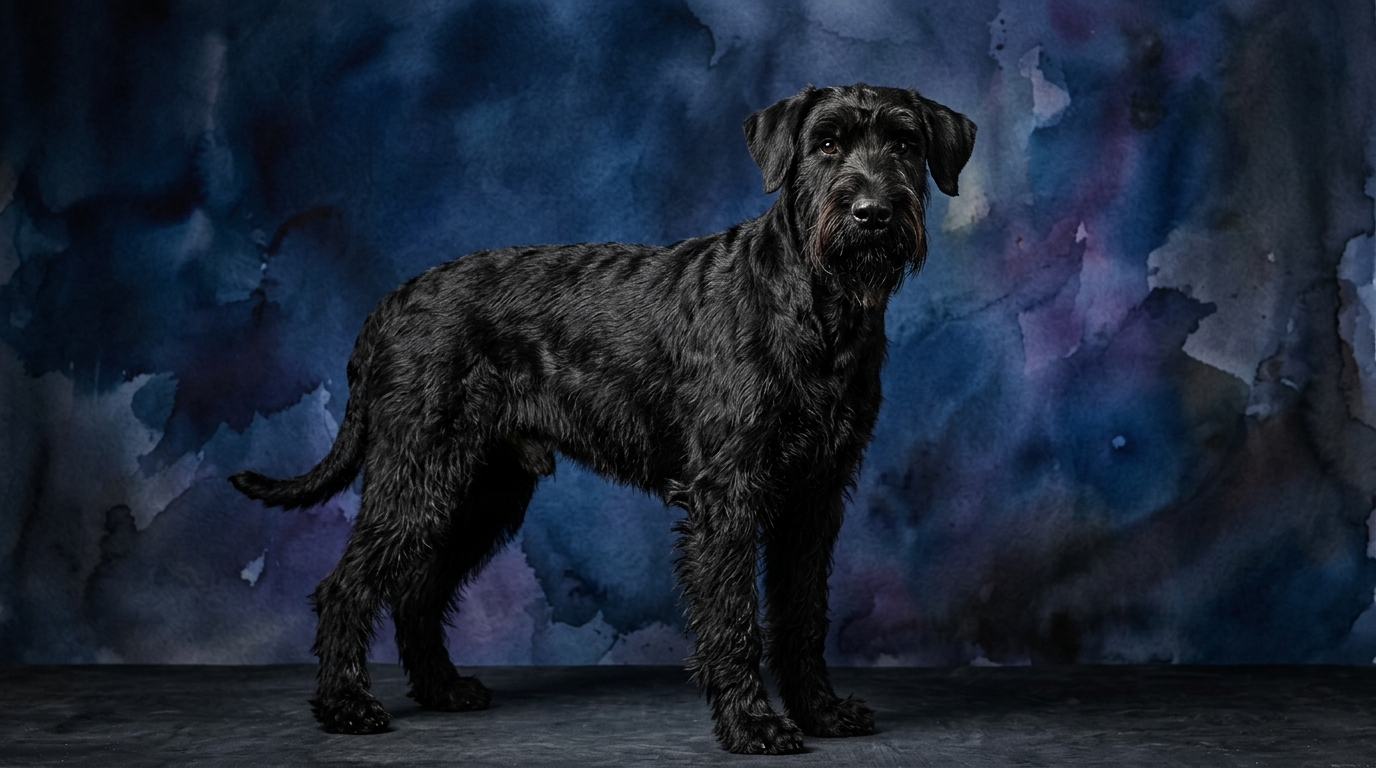
Side-by-Side IQ Profile: Giant Schnauzer
The Giant Schnauzer, a formidable member of the Working Group, presents a compelling cognitive profile marked by impressive mental acuity, evidenced by its Coren ranking of #28. Their problem-solving capabilities are rated at 4/5, indicating an excellent capacity for navigating complex scenarios, strategizing, and adapting their approaches to novel challenges, a trait honed by their historical roles as guardians and herders. This breed demonstrates a significant ability to analyze situations and devise effective solutions, often showing foresight in their actions.
When it comes to training speed, the Giant Schnauzer scores a strong 4/5, signifying rapid acquisition of new commands and concepts. They thrive on consistent, engaging training methods, quickly grasping intricate sequences and responding well to clear direction. Their social intelligence is rated at 3/5; while deeply bonded and protective of their family, they can exhibit reservation or discernment towards strangers, necessitating early and extensive socialization to channel their protective instincts appropriately. Their instinctive drive, also 3/5, manifests as a strong guarding propensity and a noticeable prey drive, demanding structured outlets for these inherent behaviors. Finally, their memory, at 4/5, ensures they retain learned behaviors, routines, and experiences over extended periods, making them reliable and consistent partners once concepts are thoroughly established.
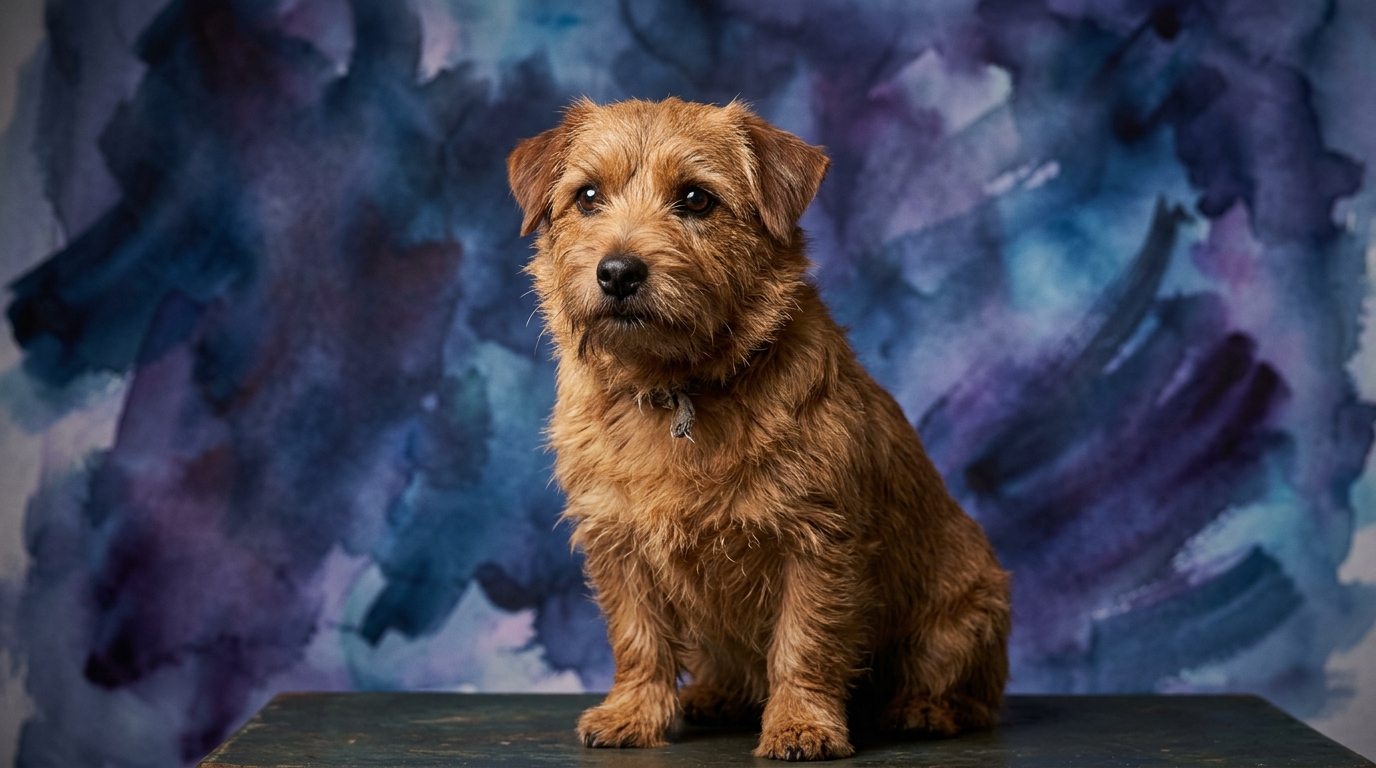
Side-by-Side IQ Profile: Norfolk Terrier
The Norfolk Terrier, a spirited member of the Terrier Group, while not Coren-ranked, possesses a distinct set of cognitive strengths tailored to its vermin-hunting heritage. Their problem-solving ability stands at 3/5, indicating competence in figuring out puzzles and overcoming obstacles, often employing a characteristic terrier persistence and ingenuity, especially when the task involves exploration or mimicry of prey. They are capable of independent thought and can find creative ways to achieve their goals, even if it takes a bit more time than some higher-scoring breeds.
In terms of training speed, the Norfolk Terrier also scores 3/5, signifying a steady learning pace. They respond effectively to positive reinforcement and engaging methods, though their independent terrier spirit means compliance is often a choice rather than an automatic response. Their social intelligence is 3/5; generally amiable and sociable with known individuals, they possess a bold assertiveness typical of terriers, which can surface in interactions with unfamiliar dogs or situations. Their instinctive drive, rated 3/5, is strongly rooted in their hunting background, manifesting as a keen prey drive, digging tendencies, and a propensity for vocalization, all requiring appropriate outlets. Their memory, also 3/5, is competent, allowing them to remember routines and learned behaviors, though consistent reinforcement may be more crucial for long-term retention of less intrinsically motivating tasks compared to breeds with higher memory scores.
Where the Giant Schnauzer Wins Cognitively
The Giant Schnauzer distinctly excels in areas requiring complex cognitive processing, a direct reflection of its higher scores in problem-solving, training speed, and memory. Their capacity for sequential task execution is notably superior; they can master intricate obedience routines, multi-step commands, and advanced canine sports with a fluidity that speaks to their robust working intellect. This breed demonstrates a more profound understanding of abstract concepts, allowing them to generalize learned behaviors to new contexts with greater ease.
Their cognitive edge is particularly evident in situations demanding strategic thinking and rapid assessment. For instance, a Giant Schnauzer in a protection role quickly evaluates threats and formulates responses, showcasing a sophisticated level of situational awareness. This ability to process information, make decisions, and execute actions with efficiency is a hallmark of their intellectual prowess, making them adept at roles requiring both physical and mental precision.
Furthermore, the Giant Schnauzer's superior memory ensures that once a lesson is learned, it is deeply ingrained. This leads to remarkable consistency in performance and a reduced need for repetitive training sessions over time, especially for foundational commands and established routines. Their capacity to recall specific instructions and past experiences makes them exceptionally reliable partners in demanding scenarios, where forgetting a command could have significant implications.
Where the Norfolk Terrier Wins Cognitively
While their raw scores might be lower in some categories, the Norfolk Terrier's cognitive profile is perfectly optimized for its specific niche, offering unique advantages. Their problem-solving ability, rated 3/5, is characterized by an unyielding tenacity and resourcefulness, particularly when tasks involve persistence, exploration, or navigating tight spaces. This translates into a remarkable ability to find hidden objects or work through puzzles that require sustained effort, a direct legacy of their vermin-hunting origins.
The independent thinking inherent in a Norfolk Terrier is another distinctive cognitive strength. Unlike breeds that might wait for explicit human direction, a Norfolk Terrier often makes quick, autonomous decisions in novel environments or during a chase, a valuable trait when immediate action without human intervention is required. This self-reliance ensures they are not easily deterred and can adapt swiftly to changing circumstances, relying on their own judgment.
Their social intelligence, while rated 3/5, often manifests as a bold yet generally adaptable demeanor in a variety of social settings. They are typically less reserved than the Giant Schnauzer with new people and other dogs, once properly socialized, making them surprisingly versatile companions despite their assertiveness. This blend of independence and adaptable sociability allows them to integrate into diverse households and social circles with characteristic terrier confidence.
Which is Easier to Train and Why
The Giant Schnauzer generally presents as the easier breed to train, primarily due to their higher scores in training speed and memory, coupled with a strong desire to engage with and please their trusted handler. They grasp new commands with remarkable alacrity and retain them over time, making advanced obedience and complex task learning a more straightforward process. Their intelligence means they thrive on consistent, engaging training methods that challenge them mentally, preventing boredom and channeling their considerable drive effectively.
However, their substantial intelligence and strong will mean that a Giant Schnauzer requires a trainer who is equally consistent and clear in their communication. If training is inconsistent or lacks structure, they are intelligent enough to develop their own agenda or test boundaries, potentially leading to stubbornness. Their protective instincts also necessitate early and precise guidance to ensure they distinguish between genuine threats and harmless situations, preventing unwanted territorial behaviors.
The Norfolk Terrier, while trainable, can present a different set of challenges rooted in their independent terrier spirit and moderate training speed. They learn effectively with positive reinforcement, but their motivation often stems from their own interests, such as chasing or exploring, rather than solely from handler praise. Training sessions need to be kept fun, engaging, and varied to hold their attention, as repetitive drills can quickly lead to disinterest. Their strong prey drive means that environmental distractions, such as squirrels or moving objects, can be significant competitors for their focus during training.
Which Suits Active Owners vs. Relaxed Owners
For owners with an active lifestyle, the Giant Schnauzer is an ideal match. This breed requires significant daily physical exercise and, perhaps more importantly, substantial mental stimulation to thrive. They are not content with mere backyard access; they flourish with structured activities like advanced obedience, agility, protection sports, long hikes, or engaging scent work. Their high intelligence and working drive demand an outlet, and owners who can provide consistent, challenging engagement will find a deeply loyal and fulfilled companion. Without sufficient mental and physical work, a Giant Schnauzer can quickly become bored, potentially leading to destructive behaviors or excessive vocalization.
Conversely, for owners who prefer a more relaxed pace, the Norfolk Terrier might be a more suitable choice. While energetic for their size and always up for an adventure, their exercise needs are generally more manageable than those of a Giant Schnauzer. Daily walks, vigorous playtime in a securely fenced yard, and engaging indoor games are usually sufficient to keep a Norfolk Terrier content. They enjoy companionship and can adapt well to apartment living, provided their physical and mental needs are met without requiring hours of structured work each day.
It is important to note that a 'relaxed' owner for a Norfolk Terrier still needs to be committed to providing mental engagement through puzzle toys, short training sessions, and opportunities for exploration. Their independent nature means they aren't constantly demanding attention in the same way some working breeds might, but they still appreciate interaction and purpose. They offer a lively presence without the intense physical demands of a larger working dog, making them a good fit for those seeking a spirited but less physically intensive companion.
The Verdict
Choose the Giant Schnauzer if you are an experienced owner seeking a highly capable, loyal companion for demanding activities, capable of providing rigorous training and ample mental stimulation, and appreciating a discerning, protective nature. This breed excels in structured environments where their intellect and drive are consistently challenged and directed.
Opt for the Norfolk Terrier if you desire a spirited, adaptable companion who enjoys daily adventures, appreciates an independent streak, and can provide consistent, engaging training without needing a dedicated 'work' partner. They thrive in homes that value their tenacity and can provide outlets for their natural terrier instincts in a loving, consistent manner.
🧠 Find Your Pet's IQ Score
Our Pet IQ Lab assessment covers 25+ tests across 5 cognitive dimensions — personalized to your breed.
Take the Full IQ Test →Frequently Asked Questions
Are Giant Schnauzers good family dogs?
Yes, with early socialization and proper training, Giant Schnauzers form deep bonds with their family, often becoming protective guardians. They thrive in active households that can meet their considerable needs for engagement and exercise, making them excellent companions for those prepared for their commitment.
Do Norfolk Terriers bark a lot?
Norfolk Terriers can be prone to barking, a remnant of their alerting and hunting instincts, often used to signal perceived threats or excitement. Consistent training from a young age can help manage this tendency, but prospective owners should be prepared for their inherent vocal nature and provide appropriate outlets for their energy.
Which breed is better for first-time dog owners?
Neither breed is typically recommended for first-time owners without a strong commitment to understanding and addressing breed-specific needs, particularly in training. However, the Norfolk Terrier, with its smaller size and slightly less demanding exercise regimen, might be marginally more manageable for a dedicated novice, provided they are prepared for the characteristic terrier tenacity and independence.