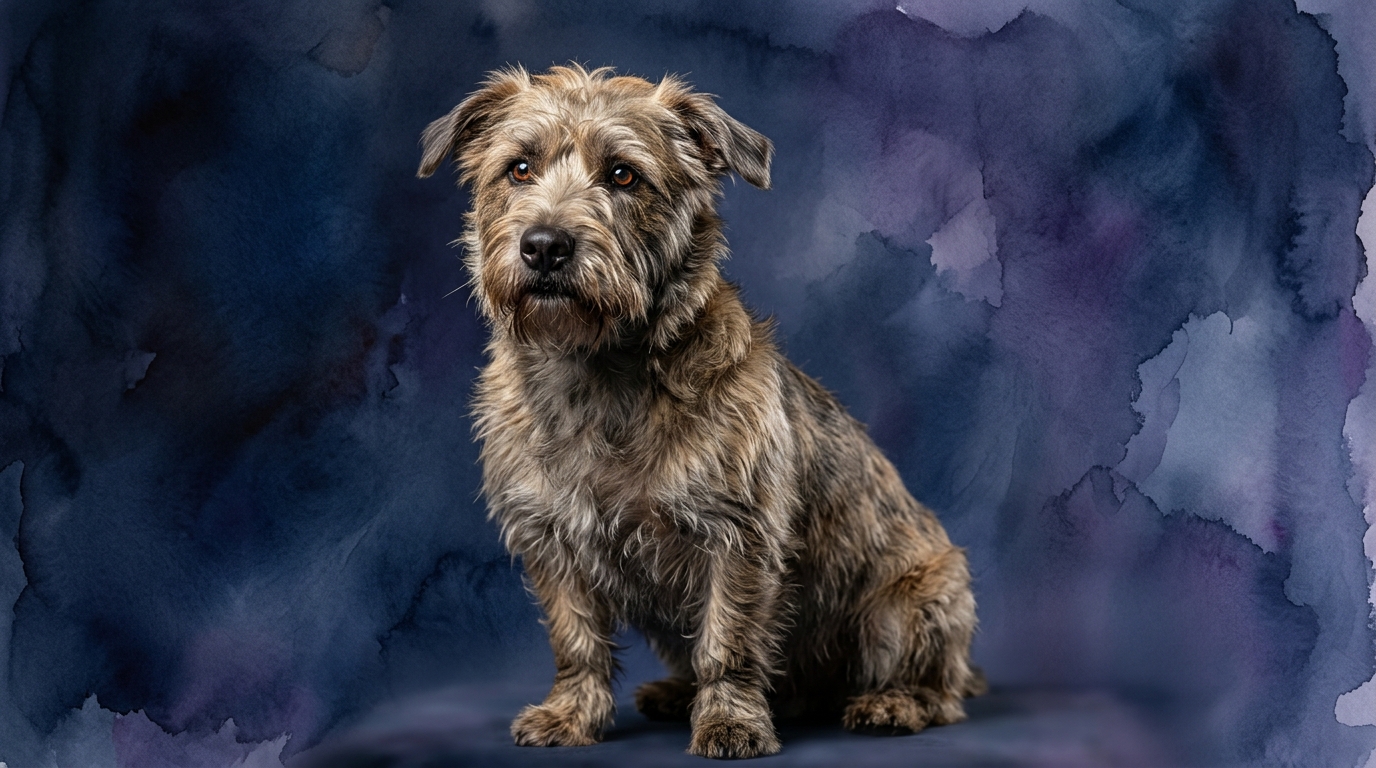

Side-by-Side IQ Profile: Unpacking the 3/5 Scores
Hailing from Ireland, the sturdy Glen of Imaal Terrier was bred for tenacity in badger and fox hunting. Their Problem Solving score of 3/5 reflects an independent, methodical approach to overcoming obstacles, often with a quiet determination rather than frantic energy. This isn't about solving complex puzzles for treats, but rather persistent digging or strategizing to flush out quarry. Training Speed at 3/5 indicates they are capable learners, absorbing commands with consistency, but their terrier independence means they might question the 'why' before complying, rather than offering immediate, eager obedience.
Social Intelligence, also 3/5, points to a loyal, affectionate bond with their inner circle, discerning of strangers, and often quite observant of human moods, though not overtly demonstrative or universally gregarious. Their Instinctive Drive, a robust 3/5, is deeply rooted in scent-work and pursuit, manifesting as a keen interest in small critters and a desire to explore, even if it's just the backyard. Memory at 3/5 means they retain commands and routines effectively, remembering past experiences and the layout of their territory with reliable accuracy.
Originating from Belgium, the Brussels Griffon began as a ratter before evolving into a cherished companion dog. Their Problem Solving at 3/5 often manifests as cleverness in navigating their human environment, figuring out how to gain attention, manipulate situations for comfort, or access forbidden spaces, all with a distinct, often comical, flair. This isn't brute force problem-solving, but rather an elegant, sometimes theatrical, approach. Training Speed, also 3/5, signifies they learn quickly, especially when positive reinforcement is engaging and consistent, but their sensitive nature means they can be easily discouraged by harsh methods and may use their charm to avoid less desirable tasks.
Social Intelligence at 3/5 is a hallmark of the breed, characterized by an almost human-like expressiveness and deep emotional connection with their primary caregivers; they are highly attuned to human emotions and often seek to be the center of their chosen person's world, though they can be aloof or anxious with strangers. Their Instinctive Drive, a 3/5, has roots in ratting but now often channels into alert barking, vigilant observation, and playful chasing games, often focused on interaction with their human. Memory at 3/5 ensures they vividly recall routines, specific people, and past interactions, holding grudges or favorites with equal clarity.
Where Glen of Imaal Terrier Wins Cognitively
The Glen of Imaal Terrier's cognitive strengths shine in areas requiring focused, independent work and physical problem-solving. Their 3/5 in Problem Solving, while numerically identical to the Griffon, is expressed through a tenacious, practical application. A Glen will meticulously work on a puzzle toy until it's solved, not out of a desire to please, but for the inherent satisfaction of the task or the reward.
This deliberate persistence, honed by generations of working alone underground, gives them an edge in tasks demanding sustained effort and minimal human intervention. Furthermore, their Instinctive Drive, though also 3/5, is geared towards a more profound engagement with environmental stimuli, making them exceptional at scent work or exploring varied terrains with purpose. They excel when given a 'job' that leverages their natural curiosity and physical capabilities, demonstrating a robust mental fortitude that thrives on overcoming tangible challenges. Their memory supports this by retaining learned sequences for physical tasks and navigation over complex landscapes.
Where Brussels Griffon Wins Cognitively
The Brussels Griffon excels in the realm of social and emotional cognition, where their 3/5 in Social Intelligence truly differentiates them. While both breeds show good social awareness, the Griffon's manifests as an almost uncanny ability to read human emotions, often anticipating needs or reacting to subtle shifts in mood with empathy or a playful distraction. Their problem-solving, also 3/5, is frequently directed towards social engineering – figuring out the optimal way to elicit attention, comfort, or a desired outcome from their human companions.
This involves a keen observation of human patterns and a willingness to experiment with different behaviors until the desired response is achieved. Their memory is particularly adept at recalling personal interactions and the emotional context of events, making them highly attuned to personal histories and preferences. This nuanced understanding of human-canine dynamics makes them masters of domestic diplomacy and charming manipulators, a distinct cognitive advantage in a companion role.
Which is Easier to Train and Why
Despite both breeds holding a 3/5 for Training Speed, their approaches to learning differ, influencing perceived ease. The Brussels Griffon, with its high social intelligence and strong desire for human connection, often appears easier to train for companion tasks, especially when positive reinforcement and engaging methods are used. They are highly motivated by praise and attention from their favorite person, and their sensitive nature means they quickly associate actions with outcomes, both positive and negative. However, their sensitivity also means they can shut down if training is harsh or inconsistent. Their problem-solving might lead them to find loopholes if rules aren't clear.
The Glen of Imaal Terrier, while equally capable of learning, approaches training with a more independent, sometimes questioning mindset. Their terrier persistence, useful in the field, can translate to stubbornness in training sessions. They require clear, consistent, and patient guidance, often needing to understand the 'point' of a command before fully committing. They might be slower to offer a behavior initially, but once learned, it's typically deeply ingrained due to their robust memory and practical problem-solving. Therefore, for an owner seeking quick results in basic obedience and trick training through positive reinforcement, the Brussels Griffon might feel more immediately responsive. For an owner valuing thoroughness and a dog that internalizes commands for life, even if it takes more initial effort, the Glen might be more rewarding.
Which Suits Active Owners vs Relaxed Owners
The cognitive and inherent drives of these two breeds naturally align with different owner lifestyles. The Glen of Imaal Terrier, with its robust instinctive drive and practical problem-solving, thrives with active owners who can provide outlets for its physical and mental energy. While not as frenetic as some terriers, a Glen needs regular opportunities for exploration, scent work, and engaging in structured activities like earthdog trials, agility, or long, interesting walks. Their memory and problem-solving benefit from varied environments and consistent challenges. A relaxed owner who cannot meet these needs might find a Glen becoming bored or channeling its intelligence into less desirable behaviors like digging.
Conversely, the Brussels Griffon, with its profound social intelligence and focus on human interaction, is an ideal fit for more relaxed owners who cherish close companionship. While they enjoy play and short walks, their primary need is to be with their people, observing and participating in daily life. Their problem-solving often involves navigating the home and their human's routines, and their memory is excellent for recalling social cues. An active owner who is frequently away or cannot offer consistent, intimate interaction might find a Griffon becoming anxious or withdrawn, as their cognitive strengths are best utilized within a close-knit domestic sphere.
The Verdict
If you are an owner who appreciates a dog with tenacious independence, a quiet but determined spirit, and a keen interest in outdoor activities or structured tasks that leverage their physical and problem-solving prowess, the Glen of Imaal Terrier is an excellent choice. They thrive with consistent guidance and opportunities to engage their natural hunting instincts in appropriate ways.
If, however, you seek a deeply empathetic, highly expressive companion who is intrinsically woven into the fabric of your daily life, thrives on intimate human connection, and excels at understanding subtle social cues, then the Brussels Griffon will likely be your perfect match. They offer charm, sensitivity, and a unique personality that enriches the home with their attentive presence.
🧠 Find Your Pet's IQ Score
Our Pet IQ Lab assessment covers 25+ tests across 5 cognitive dimensions — personalized to your breed.
Take the Full IQ Test →Frequently Asked Questions
Do Glen of Imaal Terriers get along with other pets?
Glen of Imaal Terriers can coexist with other pets, especially if introduced early and socialized well. However, their instinctive drive for small prey means caution is advised around smaller, non-canine pets, and their terrier nature might lead to squabbles with other dogs if not managed.
Are Brussels Griffons good for first-time dog owners?
Brussels Griffons can be suitable for first-time owners who are prepared for a sensitive, emotionally intelligent dog that requires consistent, positive training and thrives on companionship. Their need for close human interaction and potential for separation anxiety means they are not ideal for owners frequently absent.
How do their grooming needs compare?
Glen of Imaal Terriers require regular hand-stripping to maintain their harsh double coat, plus occasional brushing. Brussels Griffons come in smooth and rough coats; the rough coat needs occasional hand-stripping, while the smooth coat is low-maintenance but both benefit from regular brushing to prevent matting and manage shedding.