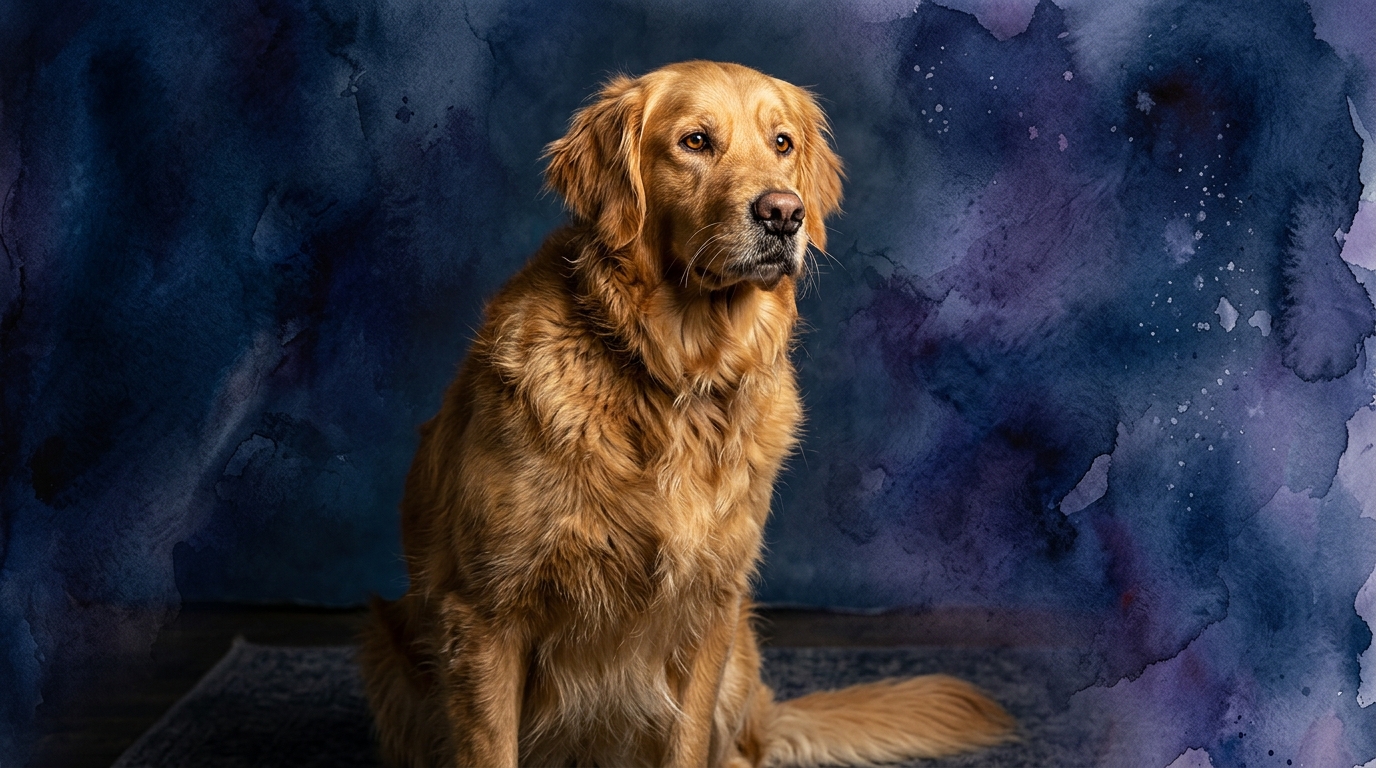

The Cosmic Pet Pet IQ Lab: Side-by-Side Cognitive Profiles
The Cosmic Pet Pet IQ Lab employs a multi-dimensional approach to assess canine intelligence, looking beyond simple trainability to encompass problem-solving, social acumen, and inherent drives. For the Golden Retriever, ranked #4 by Coren, its profile paints a picture of exceptional cognitive versatility: Problem Solving (4/5) indicates a strong capacity to figure out novel situations and adapt quickly to new challenges. Training Speed (5/5) means they learn new commands and routines with exceptional swiftness, often requiring minimal repetitions. Social Intelligence (5/5) highlights their profound ability to read human cues, respond to emotions, and integrate seamlessly into diverse family dynamics. Instinctive Drive (4/5) reflects a well-developed retrieving instinct, balanced with other cognitive functions, and Memory (4/5) suggests they retain learned behaviors and experiences effectively over time, making them reliable and consistent.
In contrast, the American Water Spaniel, with a Coren rank of #44, presents a cognitive profile tailored more specifically to its heritage. Its Problem Solving (3/5) shows a moderate ability to navigate new challenges, often relying on learned patterns rather than spontaneous innovation. Training Speed (3/5) indicates they learn at a steady pace, requiring consistent and patient instruction to master new skills effectively. Social Intelligence (3/5) suggests they form strong bonds but might be more reserved or independent compared to more overtly social breeds, interpreting human signals adequately but perhaps less acutely. Instinctive Drive (3/5) points to a focused, yet perhaps less expansive, natural drive, particularly for water retrieval tasks. Interestingly, their Memory (4/5) reveals a good capacity for retaining information, matching the Golden Retriever in this specific cognitive dimension, which is crucial for remembering complex retrieves and hunting patterns.
Where the Golden Retriever Excels Cognitively
The Golden Retriever's cognitive profile positions it as a remarkably versatile and adaptable companion, largely due to its superior scores in several key areas. Its Problem Solving score of 4/5 means a Golden can often independently figure out how to open a gate, retrieve a dropped item from an awkward spot, or navigate complex environments with relative ease, showcasing an innate resourcefulness that’s a step above many breeds. This isn't just about following commands; it's about applying understanding and ingenuity to novel situations, making them excellent companions for varied activities and unexpected challenges.
Furthermore, their Training Speed, a perfect 5/5, means they pick up new commands and routines with astonishing swiftness. A Golden Retriever typically requires fewer repetitions to solidify a behavior, making them highly responsive to various training regimes, from basic obedience to complex service dog tasks. This rapid acquisition stems from a deep eagerness to please combined with a sharp understanding of cause and effect, allowing trainers to progress quickly through curriculum. The crowning jewel of the Golden's cognitive strengths is arguably its Social Intelligence, also a 5/5. This isn't just friendliness; it's an acute ability to read human emotions, intentions, and body language. They often anticipate needs, offer comfort instinctively, and excel in roles requiring nuanced interaction, such as therapy work or guide assistance. This profound social attunement allows them to integrate into diverse family structures and understand complex social dynamics with remarkable fluidity, fostering deep, intuitive bonds.
Where the American Water Spaniel's Intelligence Shines
While the American Water Spaniel (AWS) doesn't surpass the Golden Retriever in individual cognitive scores, its intelligence shines through a distinct blend of traits perfectly tailored for its traditional role. Its Memory score of 4/5, on par with the Golden, is a significant asset, enabling the AWS to recall complex retrieving patterns, remember specific scent trails, and retain training over long periods, crucial for consistent performance in the field. This robust memory ensures that once a skill is learned, it's rarely forgotten, making them reliable partners in their specialized tasks, particularly in dynamic hunting environments.
The AWS's Instinctive Drive, rated 3/5, while not as broadly high as the Golden's, is acutely focused on its retrieving heritage, particularly in water. This isn't a generalized drive but a concentrated passion for flushing and retrieving game from challenging aquatic environments. Their cognitive makeup is geared towards efficiency and persistence in these specific scenarios, demonstrating a unique problem-solving approach within their niche – navigating reeds, strong currents, and retrieving from icy waters with tenacity and single-minded focus. Their moderate Social Intelligence (3/5) and Problem Solving (3/5) scores, when viewed in context, suggest a dog that is capable of forming strong bonds but maintains a degree of independence. This can translate into a focused working partner who isn't constantly seeking human validation, but rather trusts its own judgment in tasks, a trait often valued in specialized working breeds. They can be more self-reliant in problem-solving within their working domain, relying on their strong memory and focused drive to complete tasks effectively.
Trainability: Golden Retriever vs. American Water Spaniel
The data clearly points to the Golden Retriever as the breed that is generally easier to train. Their perfect 5/5 Training Speed means they absorb commands and routines with remarkable rapidity, often grasping new concepts in just a few repetitions. This is bolstered by their 5/5 Social Intelligence, which translates into a profound desire to connect with and please their human companions. Golden Retrievers are acutely attuned to human feedback, making them highly responsive to positive reinforcement and eager to comply, often anticipating what is expected of them. This combination means they are less likely to exhibit stubbornness or independent streaks that can complicate training, making them a joy to teach for handlers of all experience levels.
In contrast, the American Water Spaniel, with a Training Speed of 3/5 and Social Intelligence of 3/5, presents a different training dynamic. While capable of learning, they typically require more patience, consistency, and a nuanced understanding of their specific motivations. They are not as inherently driven to please as a Golden and may possess a more independent streak, a common trait in breeds developed for specialized tasks where self-reliance is valued. Training an AWS often demands a deeper understanding of their instinctive drives and a more creative approach to motivation, rather than simply relying on their desire for human approval. Their learning curve is steady, but requires more repetition and a firm, fair hand to guide their focused intelligence effectively, often responding best to task-oriented rewards rather than generalized praise.
Lifestyle Match: Active vs. Relaxed Owners
When considering lifestyle compatibility, both breeds originate from the Sporting group, implying a need for activity. However, their cognitive profiles suggest different approaches. The Golden Retriever, with its high Social Intelligence and eagerness to please, thrives on being an integrated part of family life. They require consistent physical exercise—daily walks, runs, or games of fetch—and significant mental stimulation through training, puzzle toys, and social interaction. An active owner who enjoys hiking, obedience, agility, or simply wants a companion for daily adventures will find a Golden Retriever an enthusiastic and adaptable partner. Even moderately active families can suit a Golden, provided they commit to fulfilling their physical and mental needs, as their strong social drive means they want to be involved rather than left to entertain themselves.
The American Water Spaniel, while also needing activity, has a more specialized focus driven by its Instinctive Drive (3/5). These dogs excel when given opportunities to engage their natural retrieving instincts, especially in water. An active owner for an AWS often means someone who enjoys hunting, dock diving, or regular trips to a safe swimming area where the dog can fulfill its purpose. While they can adapt to family life, their energy isn't as broadly adaptable as the Golden's; they need purposeful activity to feel truly fulfilled. A relaxed owner might struggle to provide the specific outlets an AWS needs, potentially leading to boredom or undesirable behaviors like excessive barking or destructive chewing. Their moderate social intelligence means they might not constantly seek engagement in the same way a Golden does, but they still require consistent interaction and work to feel content and well-adjusted.
The Verdict
Choose the Golden Retriever if you seek a highly adaptable, eager-to-please companion who excels in diverse training scenarios and thrives on deep social connection within a bustling family environment.
Choose the American Water Spaniel if you're an active individual or family passionate about specific outdoor activities, especially water-based retrieving, and appreciate a tenacious, focused partner with a strong independent streak and excellent memory for their tasks.
🧠 Find Your Pet's IQ Score
Our Pet IQ Lab assessment covers 25+ tests across 5 cognitive dimensions — personalized to your breed.
Take the Full IQ Test →Frequently Asked Questions
Does the Coren rank directly indicate a dog's overall 'smartness'?
Coren rank primarily measures 'working and obedience intelligence,' focusing on how quickly a dog learns commands and complies. It's a valuable metric for trainability, but doesn't encompass all facets of canine cognition like problem-solving in novel situations or social understanding, which are equally important for a dog's overall adaptability and companionship.
Can an American Water Spaniel be trained for service work like a Golden Retriever?
While an American Water Spaniel possesses a good memory and trainability, their moderate social intelligence and problem-solving scores, combined with a more focused instinctive drive, mean they may not adapt as universally to the diverse and nuanced demands of service work as readily as a Golden Retriever. Their strengths lie more in specialized tasks requiring tenacity and specific retrieving skills.
How important is social intelligence for a family dog?
Social intelligence is crucial for a family dog, as it dictates their ability to understand and respond to human emotions, cues, and household dynamics. A dog with high social intelligence, like the Golden Retriever, often integrates more smoothly, shows greater empathy, and forms deeper, more intuitive bonds with all family members, leading to a more harmonious household.