
Side-by-Side IQ Profile
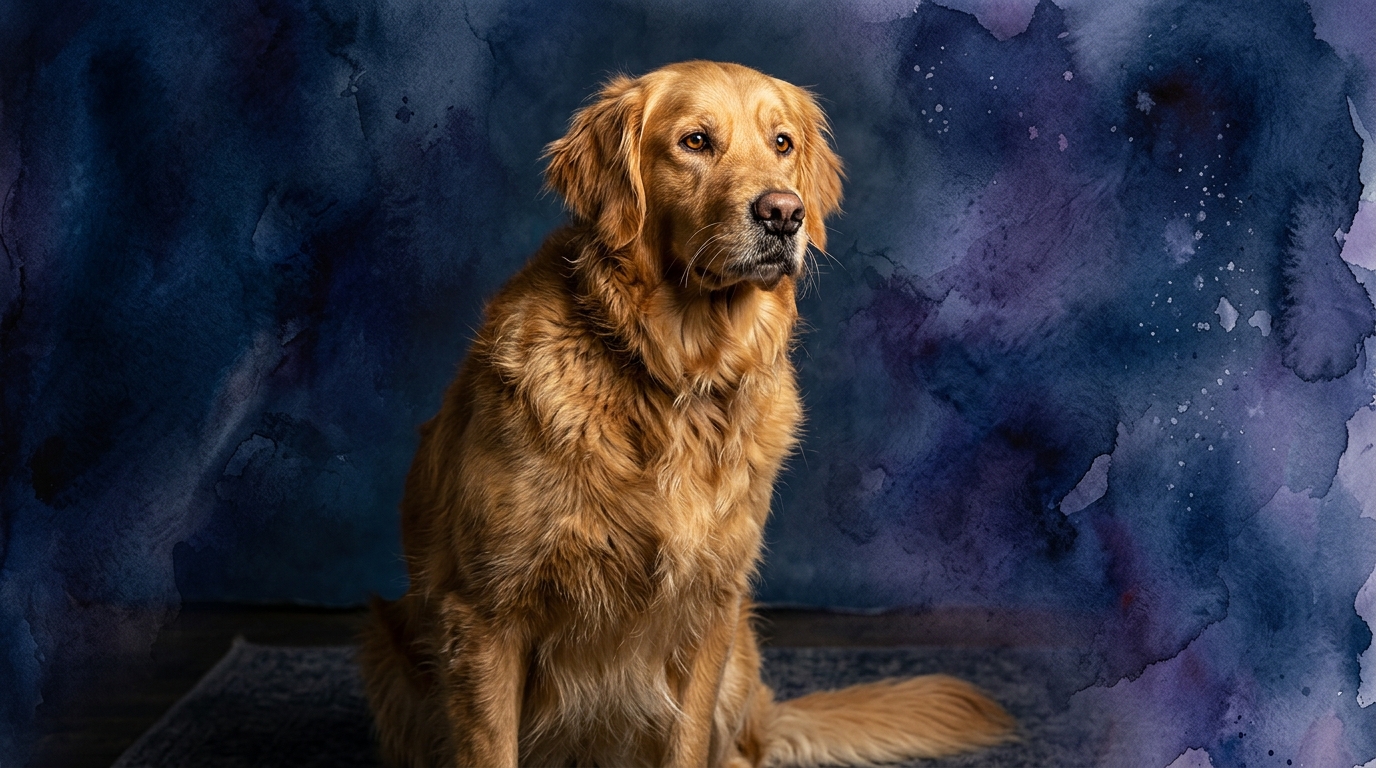
The Cosmic Pet Pet IQ Lab provides a detailed lens through which to compare these two distinct breeds. The Golden Retriever, holding a Coren rank of #4, exemplifies a breed predisposed to understanding and collaborating with humans. Their Problem Solving is rated at 4/5, indicating a strong capacity to navigate complex tasks and learn multi-step cues, often with a clear desire to achieve a human-approved outcome. A Training Speed of 5/5 highlights their exceptional ability to absorb new concepts and commands rapidly, frequently requiring only a few repetitions to solidify a new behavior. Their Social Intelligence at 5/5 underscores an acute attunement to human emotions and intentions, making them exceptionally empathetic and responsive companions. The Instinctive Drive, rated 4/5, is strongly rooted in their retrieving heritage, manifesting as a persistent motivation for tasks involving carrying objects and bringing them back, often channeling this energy into constructive activities. Finally, their Memory at 4/5 signifies a robust capacity to recall commands, routines, and past experiences, contributing to their consistent performance over extended periods.
In contrast, the Basset Hound, with a Coren rank of #71, operates on a fundamentally different cognitive framework, one deeply ingrained in their unparalleled olfactory capabilities. Their Problem Solving, rated 3/5, is primarily directed at environmental puzzles related to scent trails, such as figuring out how to follow a fading scent or navigating obstacles to reach an odor source. This is less about abstract challenges and more about sensory deduction. A Training Speed of 3/5 reflects a more deliberate learning pace; they typically require more repetition and patience, as their attention can be significantly diverted by compelling smells. Their Social Intelligence, also 3/5, indicates that while they are affectionate, they may be less attuned to subtle human cues compared to the Golden, often prioritizing their own sensory explorations. The Instinctive Drive, rated 3/5, is almost exclusively channeled into their incredible sense of smell, driving them to track and explore scents with singular focus, sometimes to the exclusion of other stimuli. Their Memory at 3/5 means they remember key routines and familiar individuals, but their recall of commands can often be overshadowed by the immediate, overwhelming draw of their olfactory environment.
Where Golden Retriever Wins Cognitively
The Golden Retriever's cognitive strengths are particularly evident in areas demanding cooperative problem-solving and rapid learning within a human-defined context. Their superior Training Speed (5/5) means they can master an extensive repertoire of commands and intricate tasks with remarkable efficiency, often grasping new behaviors in just a few repetitions. This proficiency extends beyond mere obedience; it reflects their inherent drive to understand and execute human requests. Their high Social Intelligence (5/5) allows them to keenly observe and interpret subtle human body language, vocal tones, and emotional states, making them incredibly intuitive partners in complex activities like assistance work, therapy roles, or competitive obedience. Furthermore, their Problem Solving (4/5) is exceptionally strong when the solution involves sequential steps or navigating novel situations to achieve a human-approved outcome, such as finding a specific hidden object on cue or learning to manipulate a particular type of latch. This combination of swift comprehension, profound social attunement, and adaptable problem-solving makes them exceptionally versatile in roles requiring close collaboration and sustained mental agility.
Where Basset Hound Wins Cognitively
While the Basset Hound's Coren ranking might suggest a different general cognitive profile, their unique strengths lie in their highly specialized sensory intelligence and unwavering determination. Their Problem Solving (3/5), though lower than a Golden's in human-centric tasks, is exceptionally refined when it comes to navigating the world through scent. A Basset can meticulously follow a complex, faint scent trail over varied and challenging terrain, demonstrating remarkable perseverance and an impressive spatial memory specifically for olfactory information. This isn't about solving a puzzle for a human, but rather solving the intricate puzzle of a scent trail. Their Instinctive Drive (3/5) is a powerful asset in this regard, providing an almost unshakeable focus that allows them to tune out distractions and commit entirely to their olfactory mission. This single-mindedness, often interpreted as stubbornness in conventional training, is a profound cognitive triumph in their specialized field. They exhibit a distinct form of memory (3/5) that prioritizes the recall of scent profiles and geographical locations associated with those scents, enabling them to effectively re-trace paths or locate specific odors even after a significant delay. Their cognitive 'wins' are therefore less about generalist adaptability and more about highly specialized, deep-dive sensory processing and navigational genius.
Which is Easier to Train and Why
The Golden Retriever unequivocally offers an easier and more rewarding training experience for most owners, primarily owing to their superior Training Speed (5/5) and Social Intelligence (5/5). They possess an innate eagerness to please their human companions, making them highly motivated by positive reinforcement, praise, and the opportunity for shared activity. Their ability to quickly grasp new commands, often requiring only a handful of repetitions, means that basic obedience is typically established with relative ease, and they can progress to advanced tasks rapidly. Their strong memory (4/5) ensures that once a command is learned, it is retained consistently over time. In stark contrast, the Basset Hound's training journey demands significantly more patience and a different pedagogical approach, reflecting their Training Speed of 3/5. While they are certainly capable of learning, their primary motivation is often their powerful scent drive and independent nature rather than human approval. A compelling scent can instantly override any command, making reliable recall particularly challenging in an open environment. Their problem-solving is intrinsically directed towards their olfactory world, not necessarily towards deciphering human instructions quickly. Therefore, while a Golden will actively seek to understand and comply, a Basset often needs a compelling reason from their own perspective to engage, making consistency, creative motivation, and a deep understanding of their breed instincts absolutely crucial for success.
Which Suits Active Owners vs Relaxed Owners
For active owners seeking a canine partner for adventures and structured activities, the Golden Retriever is often the quintessential match. Their high instinctive drive (4/5) for retrieving, coupled with their robust physical energy, means they thrive on regular, vigorous exercise, mental stimulation, and engagement in sports like agility, competitive obedience, or field trials. An owner who enjoys hiking, running, or actively participating in dog sports will find a Golden eager and capable of joining, benefiting from their problem-solving aptitude (4/5) in navigating new challenges and their strong memory (4/5) for routines and commands. Their exceptional social intelligence (5/5) also makes them excellent companions in diverse social settings and family environments.
Conversely, the Basset Hound, with its more moderate energy levels and distinctive cognitive focus, generally suits more relaxed owners who appreciate a slower pace but understand the breed's unique needs. While they enjoy leisurely strolls and possess surprising stamina when tracking, they are not typically candidates for high-impact sports or intense, sustained physical activity. Their instinctive drive (3/5) is almost entirely channeled into scent work; a relaxed owner who enjoys allowing their Basset to meticulously explore scents in a safe, fenced area or on a long lead will effectively satisfy this deep-seated need. They are content with a comfortable home life, often preferring a cozy nap to intense physical exertion, though regular, sniff-filled walks are essential for their mental well-being. Their independent social intelligence (3/5) means they are affectionate on their own terms, fitting well with owners who appreciate a dog with a distinct personality and less of a constant, overt need for human interaction.
The Verdict
Choose the Golden Retriever if you desire a highly cooperative, trainable companion eager for mental challenges and active engagement, thriving on a shared purpose with their human.
Opt for the Basset Hound if you appreciate a dog with a profound, specialized sensory intelligence and an independent spirit, content with a more relaxed lifestyle punctuated by dedicated scent exploration.
🧠 Find Your Pet's IQ Score
Our Pet IQ Lab assessment covers 25+ tests across 5 cognitive dimensions — personalized to your breed.
Take the Full IQ Test →Frequently Asked Questions
Is a Basset Hound truly less 'smart' than a Golden Retriever?
No, their intelligence simply manifests differently according to their evolutionary purpose. Golden Retrievers excel in human-centric problem-solving and rapid learning, while Basset Hounds possess a highly specialized, sophisticated olfactory intelligence and perseverance in tracking that surpasses many breeds. Their cognitive strengths are adapted to different ancestral roles.
Can a Basset Hound be trained for advanced tasks?
While a Basset Hound can certainly learn many commands and even advanced tasks, their training journey will require significantly more patience, repetition, and creative motivation compared to a Golden Retriever. Their strong scent drive and independent focus mean they may not achieve the same speed or precision in complex obedience, but they can be very successful in scent work or tracking sports.
How do their social needs differ?
Golden Retrievers have a high social intelligence and typically thrive on constant interaction and close family integration, often seeking to be involved in all human activities. Basset Hounds are affectionate but tend to be more independent, enjoying companionship but also content with their own explorations, especially if a good scent is involved, and may not constantly seek human validation.