
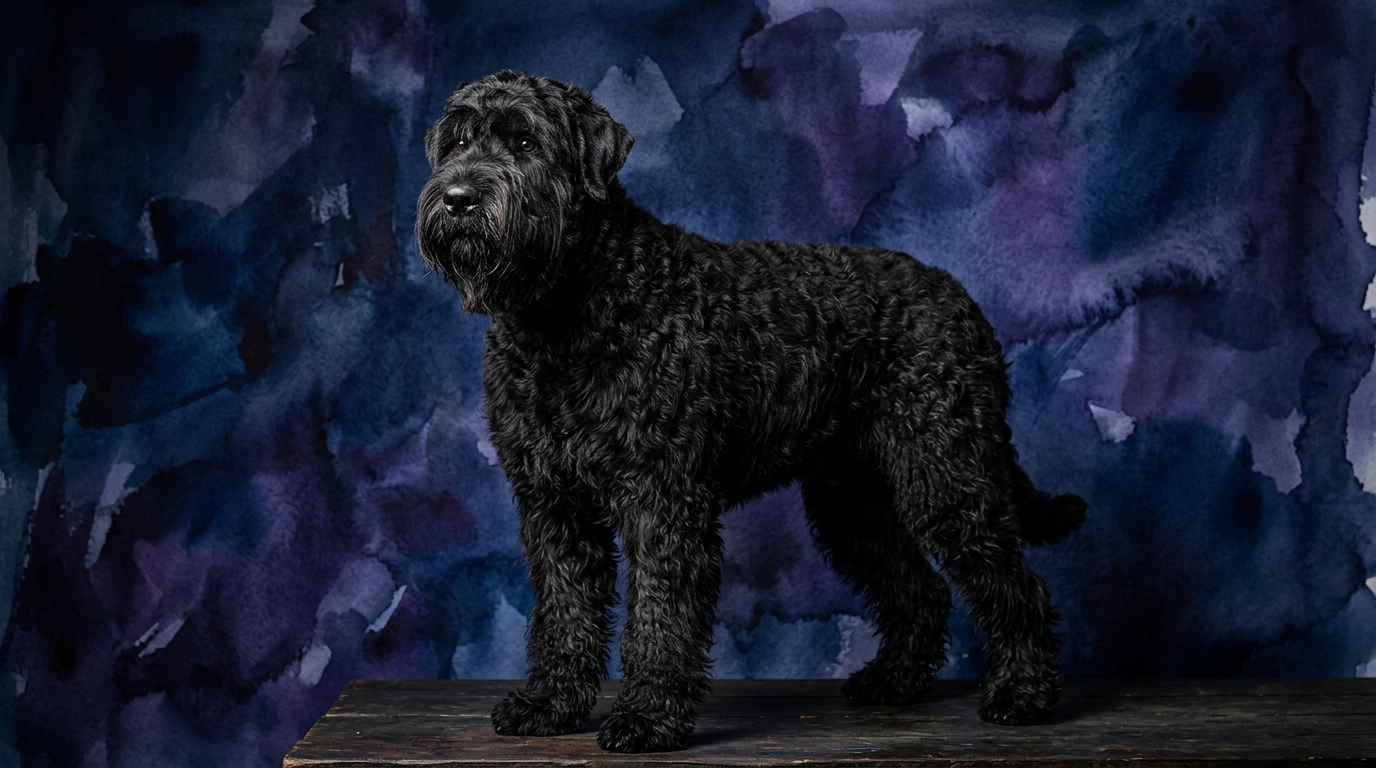
Side-by-Side IQ Profile: Golden Retriever vs. Black Russian Terrier
At The Cosmic Pet Pet IQ Lab, we analyze canine intelligence across five critical dimensions to provide a nuanced understanding of each breed's cognitive strengths. The Golden Retriever, a Sporting group dog, holds a Coren rank of #4, signifying their remarkable general working and obedience intelligence. Their cognitive profile is characterized by Problem Solving (4/5), reflecting an innate ability to figure out solutions and adapt to new situations, often with a cooperative spirit. Training Speed (5/5) is a hallmark, showcasing their rapid grasp of new commands and eagerness to comply. Social Intelligence (5/5) allows them to keenly interpret human emotions and cues, fostering profound bonds and making them highly responsive companions. Their Instinctive Drive (4/5) is strongly channeled towards retrieving and partnership, turning natural behaviors into productive actions. Finally, Memory (4/5) ensures they retain a vast repertoire of learned behaviors and recognize individuals consistently.
In contrast, the Black Russian Terrier, a Working group dog, is not Coren-ranked, which often indicates a more specialized rather than broadly compliant intelligence. Their cognitive makeup is distinct: Problem Solving (3/5) suggests a thoughtful, often independent approach to challenges, preferring to assess situations before acting, especially in protective roles. Training Speed (3/5) means they learn effectively but often require more repetition, consistency, and a strong understanding of the purpose behind a command, rather than merely pleasing their handler. Social Intelligence (3/5) is typically reserved; they form deep, protective bonds with their immediate family but are often wary and discerning with strangers, prioritizing security over widespread social engagement. Their Instinctive Drive (3/5) is powerfully geared towards guarding and territorial defense, a core aspect of their historical purpose. Memory (3/5) supports their ability to recall training and recognize potential threats, albeit with a focus tailored to their guardian responsibilities.
Where the Golden Retriever Excels Cognitively
The Golden Retriever truly shines in scenarios demanding rapid learning, enthusiastic cooperation, and sensitive social interaction. Their exceptional Training Speed (5/5) means they can master a wide array of commands and complex sequences with fewer repetitions than many other breeds, making them ideal candidates for advanced obedience, agility, and service work. This speed is fueled by their high Social Intelligence (5/5), allowing them to quickly understand what their human expects and derive satisfaction from collaboration. For instance, a Golden Retriever might quickly learn a multi-step retrieve task, not just because they understand the mechanics, but because they are attuned to their owner's encouraging tone and body language. Their Problem Solving (4/5) combined with their cooperative nature allows them to apply learned solutions to novel problems in a constructive, human-centric way, such as figuring out how to open a child-proof gate to retrieve a dropped toy for their owner, rather than simply for their own amusement.
Where the Black Russian Terrier Demonstrates Unique Cognitive Strengths
While scoring lower in some general intelligence metrics, the Black Russian Terrier possesses a specialized cognitive framework that makes them exceptionally suited for their intended role. Their Instinctive Drive (3/5) is intensely focused on protection, which translates into a cognitive strength for threat assessment and territorial awareness. A BRT's Problem Solving (3/5) might manifest as independently evaluating a strange noise or an unfamiliar person approaching their property, rather than immediately seeking human direction. This isn't a lack of problem-solving ability, but a different application—one focused on security and vigilance. Their Social Intelligence (3/5), while not broadly expressive, is acutely tuned to their immediate family's safety, allowing them to discern genuine threats versus benign interactions with remarkable precision. This selective social acuity and focused drive make them formidable protectors, capable of making independent judgments crucial for guarding, even if it means they are less inclined to perform playful tricks for strangers.
Trainability: A Tale of Two Approaches
When considering ease of training, the Golden Retriever presents a significantly more straightforward experience for most owners. Their 5/5 Training Speed and 5/5 Social Intelligence mean they are inherently eager to learn and deeply responsive to human direction and positive reinforcement. A Golden Retriever often approaches training as a collaborative game, quickly associating commands with rewards and the joy of interaction. They are generally forgiving of minor handler errors and maintain enthusiasm for repetitive tasks. This cooperative spirit makes them amenable to diverse training methods and suitable for first-time dog owners.
The Black Russian Terrier, with its 3/5 scores in Training Speed and Social Intelligence, requires a different, more nuanced training approach. They are intelligent, but their learning is often more deliberate, and they may require a stronger understanding of the 'why' behind a command. Training a BRT demands patience, unwavering consistency, and a confident, experienced handler who can establish clear leadership. They are less driven by a universal desire to please and more by a need for purpose and structure. Their independent problem-solving means they might try to find their own solutions if commands are unclear or inconsistent, requiring the trainer to be exceptionally clear and firm. Early and extensive socialization is crucial to channel their protective instincts appropriately and ensure their social intelligence develops discriminatory rather than universally suspicious tendencies.
Matching Canine Cognition to Owner Lifestyles
The cognitive profile of each breed aligns with distinct owner lifestyles. The Golden Retriever, with its high social intelligence, rapid training speed, and cooperative problem-solving, thrives with active owners who desire a highly interactive companion. They excel in environments where they are deeply integrated into family activities, participate in dog sports like agility or retrieving trials, and receive consistent mental stimulation through training and engagement. Owners who appreciate a dog that is always 'on board' for an adventure or a cuddle, and who can provide ample opportunities for social interaction and collaborative work, will find a Golden Retriever a perfectly matched partner.
The Black Russian Terrier, by contrast, is better suited for experienced owners who appreciate a dog with a strong, independent presence and a dedicated sense of purpose. Their focused instinctive drive and deliberate problem-solving mean they need structured activity, consistent training, and clear boundaries from an early age. Owners prepared to commit to ongoing socialization and who understand the breed's protective nature will thrive with a BRT. They may not demand constant interactive play in the same way a Golden Retriever does, but they require owners who can channel their substantial physical and mental energies into constructive activities, such as advanced obedience, protection work, or simply patrolling a secure property, offering a profound sense of companionship rooted in loyalty and guardianship.
The Verdict: Choosing Your Cognitive Canine Companion
The Verdict
Choose the Golden Retriever if you seek a highly cooperative, adaptable companion eager to learn, excel in diverse activities, and integrate seamlessly into an active, socially engaged family life.
Opt for the Black Russian Terrier if you are an experienced owner prepared to provide consistent leadership, structured training, and appreciate a discerning, protective companion with a strong sense of purpose.
🧠 Find Your Pet's IQ Score
Our Pet IQ Lab assessment covers 25+ tests across 5 cognitive dimensions — personalized to your breed.
Take the Full IQ Test →Frequently Asked Questions
Is the Black Russian Terrier difficult to train due to its 3/5 training speed?
The Black Russian Terrier is not inherently difficult to train, but requires a more patient and consistent approach than breeds with higher training speed scores. Their 3/5 rating indicates they learn effectively but need clear rationale and firm leadership, often questioning commands or needing to understand the 'why' behind an action.
How does the Golden Retriever's 5/5 social intelligence benefit owners?
The Golden Retriever's exceptional social intelligence (5/5) allows them to keenly read human emotions, adapt their behavior to different social contexts, and form deep, empathetic bonds. This makes them highly responsive to training cues, excellent therapy dogs, and intuitive family members who can pick up on subtle human signals.
Can a Black Russian Terrier be a good family dog despite its lower social intelligence score?
Yes, a Black Russian Terrier can be an excellent family dog, forming incredibly strong and loyal bonds with its immediate household. Their 3/5 social intelligence means they are typically reserved with strangers and highly protective, requiring early and extensive socialization to ensure they discern friends from perceived threats appropriately, focusing their deep loyalty on their family unit.