
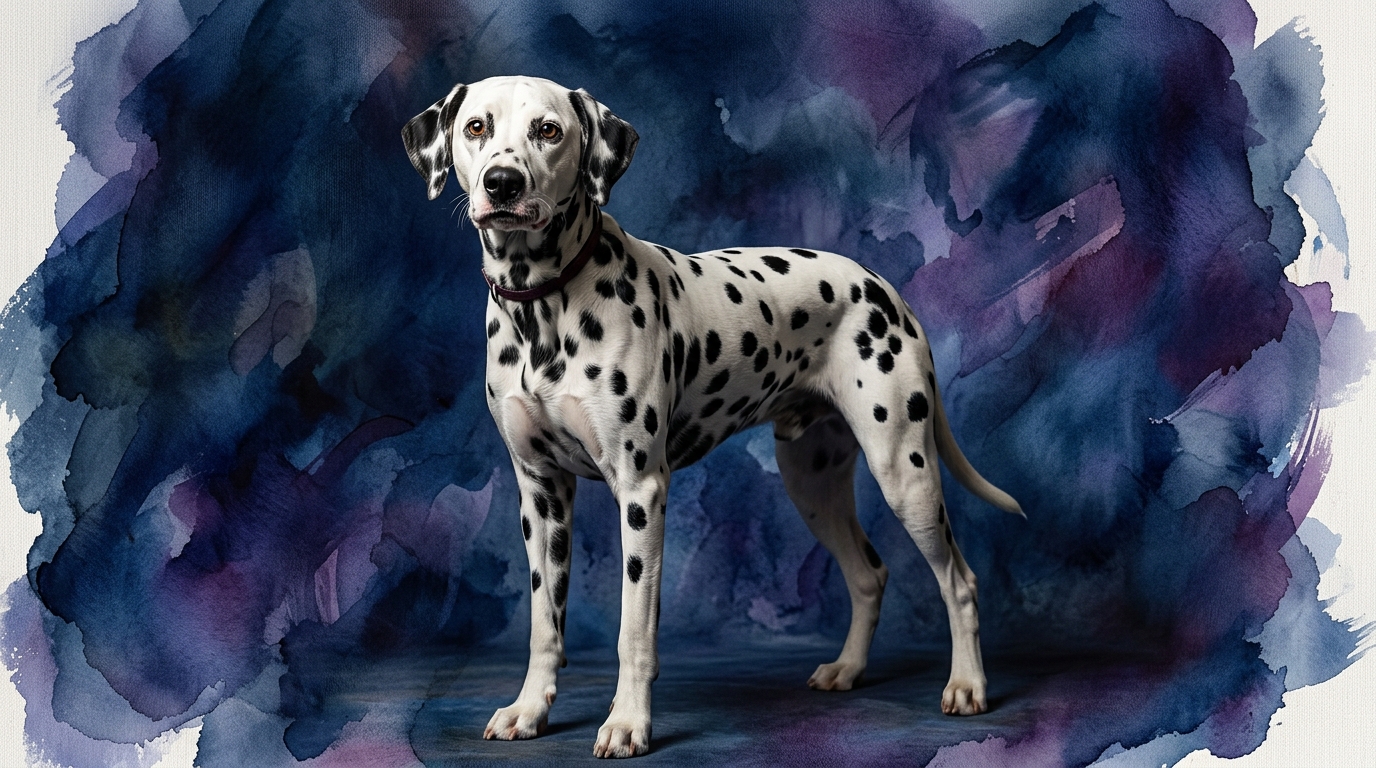
Side-by-Side IQ Profile: Golden Retriever vs. Dalmatian
The Cosmic Pet Pet IQ Lab assesses canine intelligence across five key dimensions, providing a nuanced view beyond a single 'smartness' metric. For the Golden Retriever, a Sporting group member and Coren rank #4, their profile is robust: Problem Solving 4/5, Training Speed 5/5, Social Intelligence 5/5, Instinctive Drive 4/5, and Memory 4/5. This paints a picture of a highly adaptable, eager-to-please companion who thrives on interaction and purpose.
In contrast, the Dalmatian, from the Non-Sporting group and Coren rank #39, presents a different cognitive landscape: Problem Solving 3/5, Training Speed 3/5, Social Intelligence 4/5, Instinctive Drive 4/5, and Memory 4/5. These scores suggest a capable but perhaps more self-directed learner, whose strengths lie in endurance and a keen awareness of their surroundings, rather than an inherent drive to perform complex human-directed tasks with lightning speed. Both breeds share a strong instinctive drive and solid memory, but their approaches to problem-solving and training diverge significantly.
Where the Golden Retriever Wins Cognitively
The Golden Retriever's cognitive strengths are evident in their superior Problem Solving (4/5) and unparalleled Training Speed (5/5). Their aptitude for understanding and executing multi-step commands, coupled with a genuine desire to cooperate, makes them exceptionally proficient in tasks requiring sequential thought and quick learning. This isn't just about 'tricks'; it extends to complex service dog work, intricate scent detection, and navigating challenging environments to retrieve items, demonstrating a fluid and adaptable intellect.
Furthermore, their perfect score in Social Intelligence (5/5) highlights their profound ability to interpret human emotions, body language, and vocal cues. This makes them incredibly empathetic companions, capable of adjusting their behavior to suit the mood or needs of their human counterparts. They are often intuitive to subtle shifts in their environment and human demeanor, making them excellent therapy and emotional support animals. This high social acumen, combined with their problem-solving skills, allows them to anticipate needs and respond proactively, a significant cognitive advantage in a domestic setting.
Where the Dalmatian Wins Cognitively
While the Dalmatian's scores in problem-solving and training speed are lower, their cognitive profile reveals distinct advantages, particularly in areas demanding resilience and focus. Their Instinctive Drive matches the Golden Retriever at 4/5, but it manifests differently. For Dalmatians, this drive is deeply rooted in their historical role as coaching dogs, requiring immense stamina, vigilance, and the independent decision-making to keep pace with carriages over long distances. This translates to an impressive capacity for sustained effort and a keen awareness of their environment, making them exceptional at activities like canicross, agility, or long-distance running where self-motivation is key.
Their Memory score (4/5) is also on par with the Golden Retriever, suggesting a strong ability to retain learned behaviors and spatial information. While they may take longer to grasp new concepts, once a behavior is ingrained, it tends to stick. Their Social Intelligence (4/5) indicates a deep capacity for bonding, albeit often with a select few. This selective attachment fosters a strong, loyal connection, where the Dalmatian's cognitive resources are primarily directed towards understanding and protecting their core family unit, rather than seeking universal approval. This focused social intelligence, combined with their robust memory, contributes to a steadfast and dedicated companionship for those they consider their own.
Which is Easier to Train and Why
Based on the IQ Lab metrics, the Golden Retriever is unequivocally easier to train. Their Training Speed of 5/5 means they absorb new commands and routines with remarkable alacrity, often requiring fewer repetitions to achieve proficiency. This inherent eagerness to please, coupled with their strong Social Intelligence, makes them highly responsive to positive reinforcement and clear communication. They genuinely enjoy the process of learning with their humans, viewing training as a collaborative activity.
The Dalmatian, with a Training Speed of 3/5 and Problem Solving of 3/5, presents a more significant training challenge. Their independent spirit, a remnant of their historical working roles, means they often require more patience, consistency, and a highly motivating approach. While capable of learning, they may not always perceive immediate value in performing tasks solely for human pleasure. Training a Dalmatian often involves finding what truly motivates them, whether it's a specific toy, high-value treats, or the opportunity to engage in a favored activity. Their 'what's in it for me' attitude means trainers must be creative and persistent, understanding that a Dalmatian's intelligence is often expressed through self-reliance rather than eager compliance.
Which Suits Active Owners vs. Relaxed Owners
For owners seeking a highly engaged and adaptable companion for a variety of activities, the Golden Retriever is an excellent match. Their strong instinctive drive for retrieving and working alongside humans, combined with their high social intelligence and training speed, makes them ideal partners for active lifestyles that include hiking, swimming, canine sports like agility or obedience, and even service work. They thrive on having a 'job' and being an integral part of family outings, requiring consistent mental and physical stimulation to prevent boredom and channel their abundant energy positively. Their desire to please translates into a dog that genuinely enjoys participating in whatever their active owner chooses.
The Dalmatian, with its matching 4/5 Instinctive Drive, also requires significant physical activity, but often with a different focus. Their historical role demanded immense endurance, making them superb companions for owners who enjoy long-distance running, cycling, or sustained outdoor adventures. However, their independent nature means they might not always seek constant human direction during these activities; they are content to keep pace and explore. While they bond deeply, they might not be the 'velcro dog' that a Golden Retriever often is, offering a companionship that is more about shared experiences and mutual respect for their individual spaces. Relaxed owners, regardless of breed, would likely find either dog's energy levels challenging, but the Dalmatian's independence might be particularly difficult for someone seeking a low-maintenance, sedentary companion.
The Verdict
Choose a Golden Retriever if you desire a highly cooperative, empathetic, and easily trained companion eager to participate in family life and a wide range of activities. Their cognitive makeup makes them exceptional partners for service work, therapy roles, or active families seeking a dog that thrives on shared purpose.
Choose a Dalmatian if you are an experienced, active owner who appreciates an independent spirit, enduring stamina, and a loyal, albeit selective, bond. They excel in activities requiring sustained physical effort and a degree of self-reliance, offering a unique and rewarding companionship for those who understand their distinct cognitive and behavioral needs.
🧠 Find Your Pet's IQ Score
Our Pet IQ Lab assessment covers 25+ tests across 5 cognitive dimensions — personalized to your breed.
Take the Full IQ Test →Frequently Asked Questions
Are Golden Retrievers good for first-time dog owners?
Yes, Golden Retrievers are often recommended for first-time dog owners due to their high social intelligence, eagerness to please, and superior training speed, which makes them relatively easy to guide and integrate into a family. Their adaptable nature helps new owners build confidence.
Do Dalmatians require a lot of exercise?
Absolutely. Dalmatians possess a strong instinctive drive and were bred for endurance, meaning they require a significant amount of vigorous daily exercise to remain content and well-behaved. Without adequate physical and mental stimulation, they can become restless or destructive.
Which breed is better with children?
Both breeds can be good with children with proper socialization and training, but the Golden Retriever's perfect Social Intelligence score and inherent gentleness often make them a more naturally patient and tolerant companion for families with younger children. Dalmatians can be very loyal to their family but may be less universally tolerant of boisterous play from unfamiliar children.