
Side-by-Side IQ Profile
**Golden Retriever (Coren Rank #4)**: This Sporting breed excels in areas demanding collaboration and adaptability. Their Problem Solving is rated 4/5, indicating a strong capacity for adaptive reasoning and navigating new environments to achieve desired outcomes. Training Speed is a perfect 5/5, reflecting their exceptional quickness in absorbing new commands and routines, driven by a strong desire to please. Social Intelligence, also 5/5, highlights their outstanding ability to interpret human emotions and cues, fostering deep, empathetic bonds. Their Instinctive Drive, 4/5, is a robust desire to carry, fetch, and work alongside humans, rooted in their retrieving heritage. Memory is rated 4/5, showcasing impressive recall for a vast array of commands, routines, and past experiences.
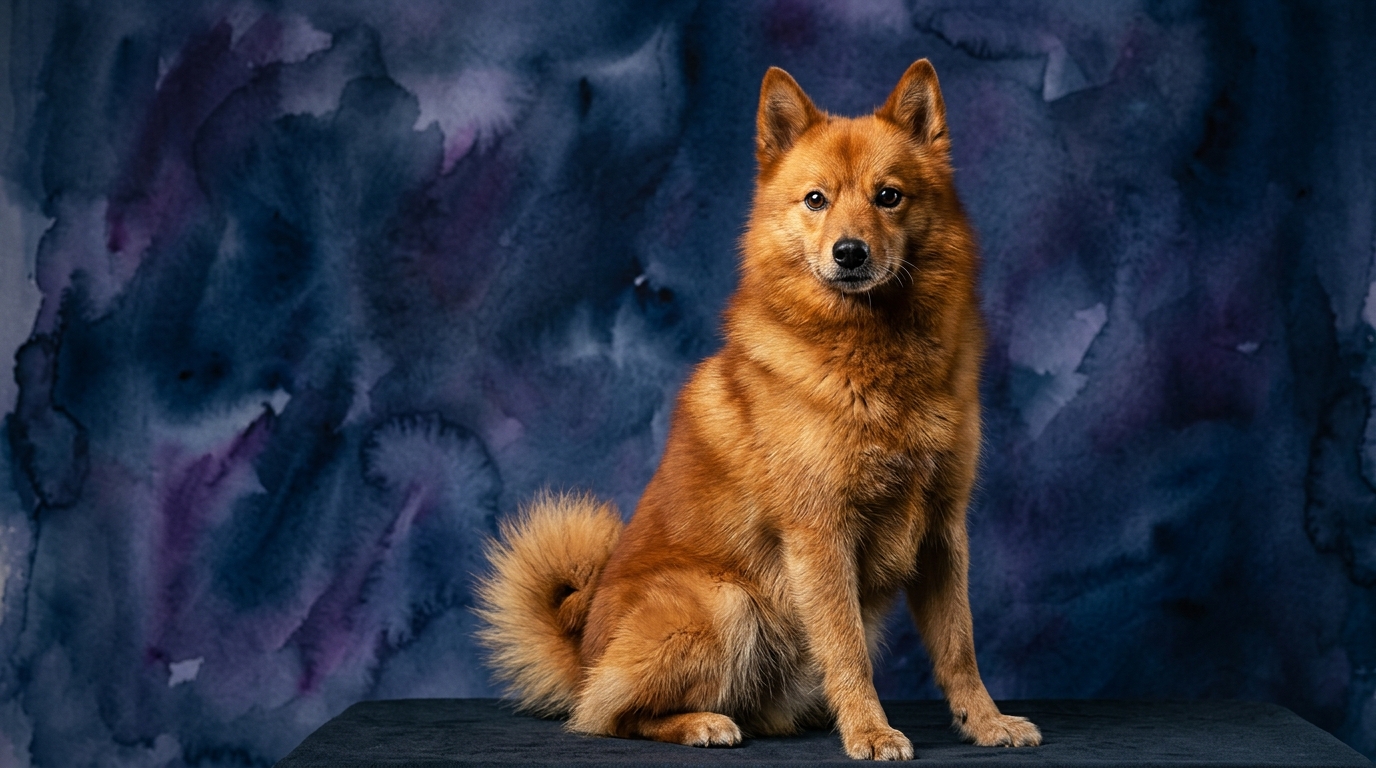
**Finnish Spitz (Not Coren-Ranked)**: This Non-Sporting breed presents a more independent and specialized cognitive profile. Their Problem Solving is 3/5, demonstrating practical, immediate abilities, particularly in hunting-related scenarios, but less inclination towards abstract or sustained multi-step tasks. Training Speed is 3/5; while capable of learning, their independent nature means they require more patient and consistent methods, often needing intrinsic motivation. Social Intelligence is 3/5; they form strong bonds with family but can be reserved with strangers, less attuned to subtle human cues outside their inner circle. Instinctive Drive is 3/5, primarily focused on their vocal hunting role, using distinctive barks to 'bark at game,' rather than a generalized working drive. Memory is 3/5, retaining information, but their independent streak might make recall seem less reliable if not consistently reinforced or if it interferes with their current interest.
Where Golden Retriever Wins Cognitively
The Golden Retriever's cognitive strengths shine particularly bright in areas demanding adaptability and human-centric interaction. Their superior social intelligence, rated at a perfect 5/5, means they excel at interpreting the most subtle human gestures, vocal inflections, and emotional states, fostering an unparalleled depth of companionship. This breed demonstrates an exceptional capacity for understanding complex, multi-stage tasks, often grasping sequences of commands with remarkable speed and executing them reliably. Their problem-solving abilities (4/5) are not just about finding a solution, but about adapting that solution to varying contexts, making them incredibly versatile in new environments or unexpected situations. Furthermore, their strong instinctive drive (4/5) is channeled into a collaborative spirit, eager to work alongside their human partners in a wide array of activities, from obedience to service work, making them highly trainable for diverse roles.
Where Finnish Spitz Wins Cognitively
The Finnish Spitz, while differing in approach, possesses a unique cognitive profile that grants them distinct advantages, particularly in self-reliance and environmental awareness. Their problem-solving (3/5) is highly efficient when it comes to independent tasks, such as navigating complex outdoor terrain or locating specific sounds in the environment, without constant human direction. This breed displays an exceptionally refined auditory discrimination, capable of discerning specific bird calls or subtle rustlings that escape human perception, a crucial skill for their traditional role as 'barking bird dogs.' Their instinctive drive (3/5), though specific, is intensely focused on their hunting heritage, allowing for self-directed decision-making in the field. This independence means they are less prone to separation anxiety and can be content with their own company for periods, relying on their keen senses and internal logic to manage their immediate surroundings.
Which is Easier to Train and Why
When it comes to ease of training, the Golden Retriever holds a clear advantage due to a confluence of inherent traits. Their exceptional training speed (5/5) is driven by a deep-seated desire to please their human companions, making them highly motivated to learn and execute commands. This eagerness, coupled with their outstanding social intelligence (5/5), allows them to quickly understand what is expected of them and respond with enthusiasm. They thrive on positive reinforcement and human interaction, often viewing training sessions as a collaborative game. Their problem-solving skills (4/5) enable them to generalize learned behaviors to new situations, making them adaptable across various training disciplines, from basic obedience to advanced tricks and competitive sports. In contrast, the Finnish Spitz, with a training speed of 3/5, presents a different challenge. Their independent nature and moderate social intelligence (3/5) mean they are less inherently driven to comply purely for human approval. They require highly engaging, consistent, and patient training methods, often needing to understand the 'why' or find intrinsic motivation in the task itself. While capable of learning, their strong, specific instinctive drive (3/5) for vocalizing and hunting can sometimes override a desire to follow commands, demanding a trainer who can cleverly redirect these instincts rather than suppress them.
Which Suits Active Owners vs. Relaxed Owners
The ideal owner profile for these two breeds diverges significantly based on their intrinsic energy levels and cognitive needs. Golden Retrievers are best suited for active owners who can provide consistent mental and physical engagement. Their high instinctive drive (4/5) and problem-solving capacity (4/5) mean they thrive on having a 'job,' whether it's daily retrieving games, long hikes, swimming, or participation in dog sports like agility or obedience. An owner who enjoys outdoor adventures and can dedicate time to regular training and interactive play will find a Golden Retriever to be an incredibly rewarding and enthusiastic partner. Conversely, the Finnish Spitz can be a better fit for more relaxed owners, provided their unique needs are understood. While they do require daily exercise to remain healthy and content, their activity level is generally moderate once their youthful exuberance wanes. They are often content with a good walk and then settling down for quiet companionship. Their independent nature means they don't constantly demand human attention or tasks, making them suitable for owners who appreciate a more self-sufficient canine companion, though managing their often-vocal nature remains a key consideration.
The Verdict
Choose a Golden Retriever if you seek a highly biddable, socially attuned, and versatile companion eager for extensive training, shared activities, and deep emotional connection with their human family.
Opt for a Finnish Spitz if you appreciate an independent, alert, and vocal companion with a unique personality, prepared for patient, consistent training and a moderate activity level that respects their self-reliant nature.
🧠 Find Your Pet's IQ Score
Our Pet IQ Lab assessment covers 25+ tests across 5 cognitive dimensions — personalized to your breed.
Take the Full IQ Test →Frequently Asked Questions
Are Finnish Spitz dogs difficult to train?
Finnish Spitz are not necessarily difficult, but they are independent thinkers. Their training requires patience, consistency, and highly motivating rewards, as they are less driven by a desire to please and more by their own interests.
Do Golden Retrievers need a lot of mental stimulation?
Yes, Golden Retrievers thrive on mental engagement. Beyond physical exercise, they benefit greatly from puzzle toys, training sessions, and activities that challenge their problem-solving abilities to prevent boredom and maintain their cognitive sharpness.
How do their social behaviors differ with strangers?
Golden Retrievers are typically outgoing and friendly with strangers, often seeking interaction due to their high social intelligence. Finnish Spitz, while loyal to family, tend to be more reserved and aloof with unfamiliar people, preferring to observe from a distance rather than immediately engage.