
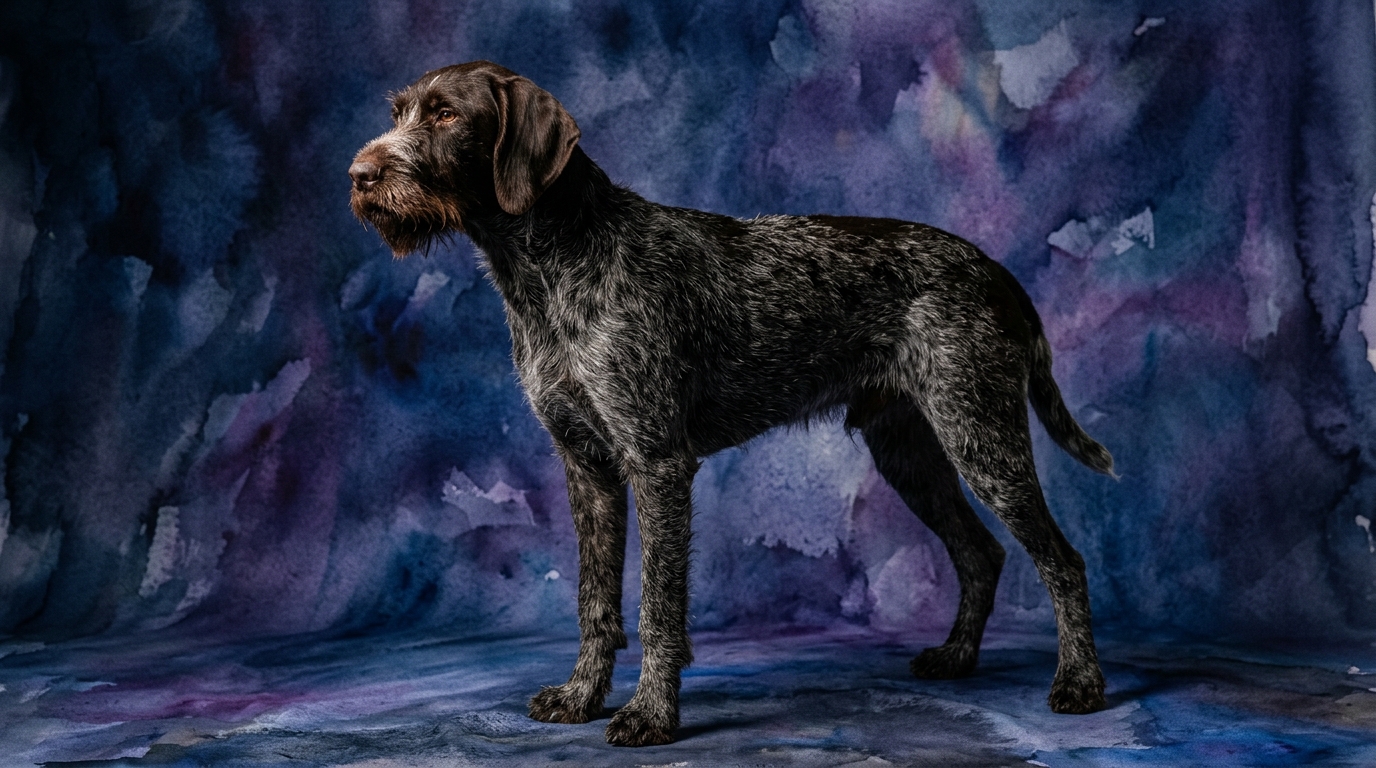
Side-by-Side IQ Profiles: Golden Retriever vs. German Wirehaired Pointer
The Cosmic Pet Pet IQ Lab's assessment provides a clear framework for understanding the unique cognitive makeup of each breed. For the Golden Retriever, ranked #4 by Coren, its IQ profile highlights a balanced and highly cooperative intellect. They score 4/5 in problem solving, adept at figuring out complex tasks like opening latches or navigating obstacles to reach a desired object, often using observational learning effectively. Their training speed is exceptional at 5/5, meaning they pick up new commands and routines with remarkable quickness, frequently requiring fewer repetitions than many other breeds due to their inherent eagerness to please. Social intelligence is also a standout at 5/5, indicating an exceptional ability to read human cues, understand intentions, and adapt their behavior to social contexts, manifesting as empathy and a strong desire for companionship. An instinctive drive of 4/5 points to a strong retrieve drive and natural affinity for carrying objects, along with a moderate prey drive that is generally manageable in domestic settings, often aligning with human direction. Finally, their memory at 4/5 ensures they retain learned commands, routines, and experiences over long periods, making established behaviors durable and recall reliable.
The German Wirehaired Pointer, with a Coren rank of #28, showcases a different, more independent cognitive structure. Like the Golden, they achieve a 4/5 in problem solving, but this often manifests as resourceful, self-directed thinking to overcome challenges, such as finding game or navigating dense cover, sometimes with a stubborn streak. Their training speed is 4/5, meaning they learn new tasks efficiently, though they might require more consistent, engaging methods than a Golden Retriever; their focus can be intense, but their independent nature means they need compelling reasons to comply. Social intelligence for the GWP is 3/5, indicating they understand human communication but often prioritize environmental stimuli or task focus over constant human interaction, forming strong bonds but potentially being less overtly expressive of social connection. An instinctive drive of 3/5 suggests a strong, specialized drive for scent work and pointing, geared towards independent hunting tasks. This drive is focused and can be less malleable for general obedience if not properly channeled, sometimes leading to a dog that follows its nose over commands. Their memory, at 4/5, is robust, allowing them to retain complex hunting patterns, scent trails, and learned commands effectively, making them reliable partners in the field.
Where the Golden Retriever's Cognition Shines
The Golden Retriever's cognitive strengths shine particularly brightly in areas centered around human interaction and rapid assimilation of new information. Their superior social intelligence (5/5) means they are exceptionally attuned to human emotional states and intentions. A Golden is more likely to anticipate a handler's next move or respond to subtle shifts in tone and body language, making them intuitive companions and service animals. This deep understanding fosters a cooperative spirit, where the dog actively seeks to understand and fulfill human requests.
Coupled with their unmatched training speed (5/5), Goldens absorb new commands and routines with remarkable efficiency. They demonstrate a strong desire to please, which translates into fewer repetitions needed to solidify a behavior. For instance, teaching a Golden a multi-step fetch command, like 'find the ball, bring it here, and drop it in the basket,' often progresses quickly because they are eager to engage and readily grasp the sequence of actions and rewards tied to human approval. Their problem-solving (4/5) is frequently influenced by this social awareness, leading them to look to their human for cues or assistance, rather than always attempting to figure things out independently.
Where the German Wirehaired Pointer's Cognition Excels
While the Golden excels in cooperative learning, the German Wirehaired Pointer demonstrates a different facet of cognitive prowess, particularly in independent task execution. Their problem-solving ability (4/5) often manifests as resourceful, self-directed thinking, especially when faced with environmental challenges. A GWP might independently strategize how to navigate dense undergrowth to flush game or follow a complex scent trail without constant human direction, relying on their keen senses and innate drive. This contrasts with a Golden's tendency to consult their handler.
The GWP's memory (4/5) is robust, particularly for spatial information, scent patterns, and learned hunting routes, allowing them to recall specific locations or complex sequences of actions in the field. While their instinctive drive (3/5) might appear numerically lower than a Golden's, this often reflects its specialized nature. A GWP's drive is intensely focused on self-initiated hunting activities like scent tracking or pointing, demanding specific outlets and perhaps less immediate redirection from a handler compared to a Golden's more generalized retrieving enthusiasm. When engaged in activities like tracking or retrieving waterfowl, a GWP’s focus and determination can be singularly impressive, showcasing a profound understanding of their task and an unwavering commitment to seeing it through, often with less overt reliance on human affirmation than a Golden might display.
Training Dynamics: Which Breed is More Amenable?
When considering ease of training, the Golden Retriever generally holds an advantage due to their higher training speed (5/5) and exceptional social intelligence (5/5). Goldens are inherently eager to please and derive satisfaction from working cooperatively with their human partners. This means they often pick up new commands with minimal repetitions, responding well to positive reinforcement and clear communication. Their strong desire for social connection makes them highly motivated by praise and interaction, translating into quicker learning and more consistent compliance. For instance, a Golden is more likely to hold a 'stay' command for extended periods, simply because they are focused on their handler and motivated to perform the requested action.
In contrast, the German Wirehaired Pointer, with a training speed of 4/5 and social intelligence of 3/5, can certainly be trained to a high degree, but often requires a different approach. GWPs are independent thinkers, and while they learn effectively, they might need more compelling reasons or more engaging, varied training methods to maintain their focus. Their natural instinct to follow their nose or pursue a scent can occasionally override a command, especially in distracting environments. A GWP might question the 'why' behind a command more than a Golden, meaning trainers need to be consistent, fair, and make training sessions feel rewarding and purposeful from the dog's perspective, rather than relying solely on the dog's desire to please.
Matching Breeds to Lifestyles: Active vs. Relaxed Owners
The choice between these two breeds for active versus relaxed owners hinges on their intrinsic energy levels and cognitive engagement styles. The Golden Retriever, while certainly energetic and requiring regular exercise, is highly adaptable to a range of lifestyles. Their strong social intelligence and desire for companionship mean they thrive on being included in family activities, whether it's a long hike or a relaxed evening indoors. For owners who enjoy active outdoor adventures but also cherish downtime and close interaction, a Golden's balanced energy and cooperative nature make them an excellent fit. They are content with varied activities, from swimming and fetching to simply cuddling on the couch, as long as they are with their people.
The German Wirehaired Pointer, on the other hand, is unequivocally suited for active owners. Their strong instinctive drive (3/5, but specialized) and robust physical capabilities demand consistent, vigorous exercise and mental stimulation that taps into their hunting heritage. GWPs thrive on tasks that allow them to use their nose, cover ground, and solve problems independently, such as long hikes, scent work, or participation in dog sports like agility or field trials. A relaxed owner who cannot provide daily outlets for their GWP's energy and cognitive needs might find the breed prone to restlessness or developing undesirable behaviors. They are not content to be couch potatoes; their minds and bodies crave purpose and adventure.
The Verdict
Choose a Golden Retriever if you seek a highly cooperative, socially attuned companion who learns rapidly and thrives on close family interaction, adapting well to varied activities.
Choose a German Wirehaired Pointer if you are an active individual or family prepared to engage a dog with robust physical needs and a strong, independent drive for outdoor activities and problem-solving tasks.
🧠 Find Your Pet's IQ Score
Our Pet IQ Lab assessment covers 25+ tests across 5 cognitive dimensions — personalized to your breed.
Take the Full IQ Test →Frequently Asked Questions
Are Golden Retrievers good at problem-solving?
Yes, Golden Retrievers demonstrate strong problem-solving skills (4/5), often using observation and their social intelligence to figure out tasks, sometimes looking to their human for cues or cooperation.
How quickly do German Wirehaired Pointers learn?
German Wirehaired Pointers learn efficiently (training speed 4/5), but their independent nature means training often benefits from engaging, purpose-driven methods and consistent reinforcement rather than relying solely on eagerness to please.
Which breed is more social, the Golden Retriever or GWP?
The Golden Retriever is significantly more socially intelligent (5/5), showing exceptional empathy and a strong desire for human companionship and cooperation. The GWP (3/5) forms strong bonds but is often more focused on tasks or environmental stimuli.