Side-by-Side Cognitive Profiles: Golden Retriever vs. Harrier
At The Cosmic Pet Pet IQ Lab, we assess canine intelligence across five key dimensions: Problem Solving, Training Speed, Social Intelligence, Instinctive Drive, and Memory. These metrics provide a nuanced view, moving beyond simple labels to reveal how a breed's history influences its cognitive strengths.
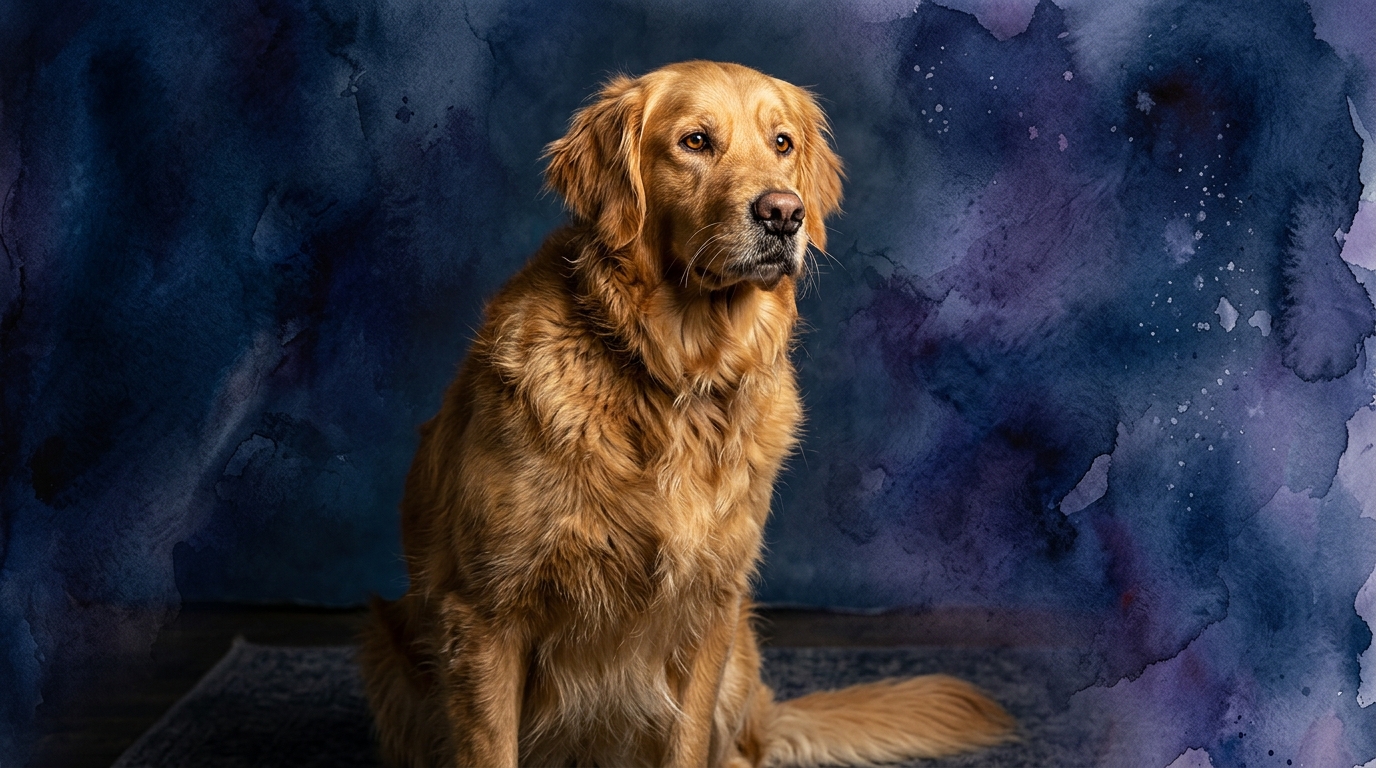
The Golden Retriever, a Sporting group member and ranked #4 by Coren, demonstrates a profile geared towards cooperative work and adaptability. Their Problem Solving is rated 4/5, indicating a strong capacity to figure out complex tasks and adapt to novel situations. Training Speed is an exceptional 5/5, reflecting their quick grasp of new commands and routines. Social Intelligence also scores a perfect 5/5, highlighting their deep attunement to human emotions and social cues. Their Instinctive Drive, at 4/5, is centered around retrieving and working alongside humans, while their Memory, at 4/5, allows for excellent retention of learned behaviors and associations.
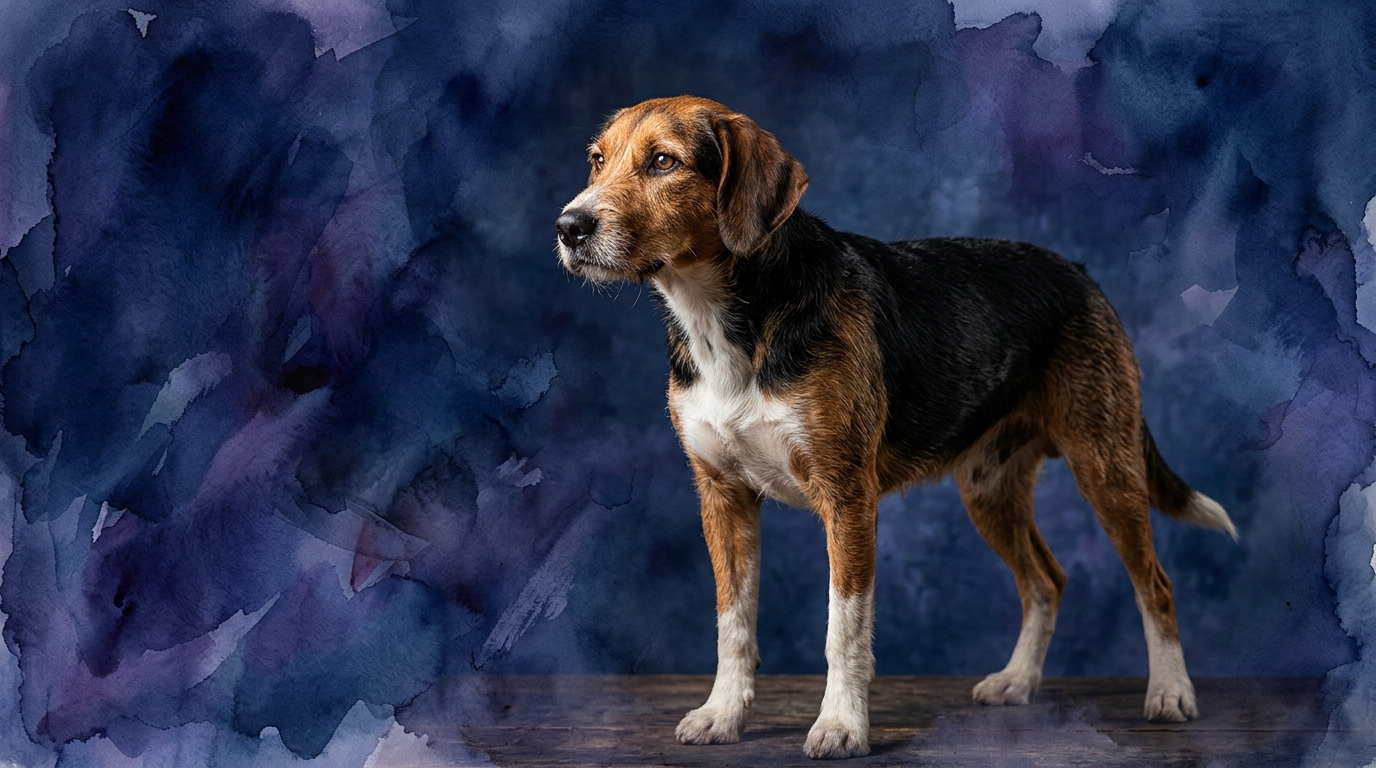
The Harrier, a robust Hound breed not specifically Coren-ranked, presents a profile rooted in independent tracking and scent work. Their Problem Solving is rated 3/5, indicating competence in direct, task-oriented challenges, particularly those related to their primary drive. Training Speed stands at 3/5, suggesting a moderate pace of learning that often requires consistent effort. Social Intelligence is also 3/5, meaning they are generally sociable but may prioritize their innate drives over subtle human direction. Their Instinctive Drive, also 3/5, is powerfully focused on scenting and pursuit. Memory, at 3/5, is proficient for recalling scent trails and familiar environments, though perhaps less so for abstract obedience commands without constant reinforcement.
Where the Golden Retriever Cognitively Excels
The Golden Retriever's cognitive strengths shine particularly in areas requiring human collaboration and adaptable learning. Their 5/5 rating in Training Speed means they absorb new commands and routines with remarkable efficiency, often requiring fewer repetitions than many other breeds. This rapid acquisition is underpinned by their 5/5 Social Intelligence, which allows them to keenly interpret human body language and vocal tones, making them exceptionally responsive to guidance. For instance, a Golden Retriever will quickly learn to perform multi-step tasks, like fetching specific items on command or navigating complex agility courses, not just because they understand the task, but because they understand what their human partner *wants* them to do. Their 4/5 Problem Solving ability further supports this, enabling them to generalize learned concepts to new situations, such as finding creative ways to retrieve a dropped toy from an awkward spot or figuring out how to open a gate they've seen their owner manipulate. This blend of attributes makes them particularly adept at roles requiring complex decision-making within a human-centric framework, like service work or advanced obedience trials.
Where the Harrier Cognitively Excels
While the Harrier's overall IQ profile might suggest a different cognitive approach compared to the Golden, their strengths are undeniably potent within their ancestral purpose. Their 3/5 rating in Instinctive Drive, particularly their powerful scenting ability, is a profound cognitive asset. A Harrier's brain is wired to process olfactory information with incredible precision and persistence, allowing them to follow a faint trail over varied terrain for extended periods, a task that requires immense focus and memory for scent patterns. This isn't merely a physical act but a complex cognitive process of discrimination and recall. Their Problem Solving (3/5) is often geared towards overcoming environmental obstacles to maintain a scent path, such as navigating dense undergrowth or crossing water, demonstrating a specialized intelligence for their hunting role. While their Social Intelligence (3/5) might be less focused on human nuances, it is perfectly suited for working cooperatively within a pack of dogs, coordinating efforts during a hunt. Their memory, rated at 3/5, is particularly robust for recalling specific scent profiles and terrain layouts relevant to their hunting pursuits, allowing them to effectively retrace steps or remember productive areas. A Harrier's cognitive prowess lies in its unwavering dedication to a scent, a single-minded focus that can eclipse other stimuli, making them unparalleled in tasks requiring sustained olfactory tracking.
Trainability: A Tale of Two Temperaments
When evaluating ease of training, the Golden Retriever holds a distinct advantage, primarily due to their higher scores in Training Speed (5/5) and Social Intelligence (5/5). A Golden Retriever inherently seeks to please their human companions and possesses a strong desire for interaction and cooperation. This makes them highly receptive to positive reinforcement; they quickly associate commands with desired actions and rewards, leading to rapid skill acquisition. For instance, teaching a Golden to 'stay' or 'heel' typically involves fewer repetitions because they are attuned to their owner's expectations and motivated by praise and connection. Their strong memory (4/5) also ensures they retain these learned behaviors over time. In contrast, the Harrier, with a Training Speed of 3/5 and Social Intelligence of 3/5, presents a different training challenge. Harriers are independent thinkers, bred to follow a scent trail for miles with minimal human intervention. Their primary motivation is often the thrill of the chase and the pursuit of scent, which can make them less inclined to focus on human-directed tasks when a compelling scent distracts them. While they are trainable, their learning often requires more patience, consistency, and creative motivation to compete with their innate drives. For example, a Harrier might learn 'recall' but could easily 'forget' it if a rabbit scent crosses their path, as their 3/5 Instinctive Drive for tracking overrides the learned command. Training a Harrier is about understanding and working with their hound nature, rather than expecting the eager compliance seen in a Golden.
Matching Canine Cognition to Owner Lifestyle
The choice between a Golden Retriever and a Harrier also hinges significantly on an owner's lifestyle and their capacity to meet a breed's specific cognitive and physical requirements. A Golden Retriever often suits a wide range of active owners who enjoy engaging in various activities with their dog. Their 4/5 Instinctive Drive, while strong for retrieving, is typically channeled into cooperative play, sports like agility or dock diving, and long walks or runs. Their high social intelligence means they thrive on being included in family activities and appreciate consistent mental stimulation through training, puzzle toys, and new experiences. They are adaptable companions for owners who want a dog to join them on hikes, participate in dog sports, or simply be a highly interactive presence in a busy household. While they appreciate downtime, they are not suited for owners who prefer a truly 'relaxed' dog without significant daily engagement.
The Harrier, on the other hand, is uniquely suited for exceptionally active owners, particularly those who embrace outdoor adventures and can provide an outlet for their potent prey drive. Their 3/5 Instinctive Drive, heavily skewed towards scenting and chasing, means they require extensive, vigorous exercise that ideally incorporates off-leash exploration in secure areas or participation in activities like tracking, lure coursing, or even jogging/running. A Harrier is not a dog for a relaxed owner who prefers short walks around the block; their cognitive and physical needs demand sustained effort. Without adequate mental and physical exertion, a Harrier can become restless and destructive, channeling their impressive problem-solving (3/5) into finding their own entertainment, which might include escaping or destructive chewing. Owners must be prepared to integrate their Harrier's inherent hound nature into their daily routine.
The Verdict
Choose a Golden Retriever if you seek a highly cooperative companion eager to learn, excel in various activities, and integrate seamlessly into family life, offering predictable responsiveness and deep social connection.
Opt for a Harrier if you are an exceptionally active owner dedicated to providing extensive outlets for a powerful scent drive, valuing an independent, persistent companion for outdoor adventures and specialized tracking pursuits.
🧠 Find Your Pet's IQ Score
Our Pet IQ Lab assessment covers 25+ tests across 5 cognitive dimensions — personalized to your breed.
Take the Full IQ Test →Frequently Asked Questions
Do Golden Retrievers need a lot of mental stimulation?
Yes, Golden Retrievers thrive on mental challenges. Their high problem-solving (4/5) and training speed (5/5) mean they quickly become bored without engaging tasks, benefiting from consistent training, puzzle toys, and new experiences to keep their minds active and prevent unwanted behaviors.
Is a Harrier a good first dog?
A Harrier is generally not recommended as a first dog due to their strong independent nature and intense prey drive. Their moderate training speed (3/5) and tendency to follow their nose require an experienced owner committed to consistent, patient training and extensive exercise.
How do their social intelligence scores impact living with other pets?
A Golden Retriever's 5/5 social intelligence makes them highly adaptable and generally excellent with other pets, often seeking harmonious interactions. A Harrier's 3/5 social intelligence means they can coexist, but their strong prey drive might require careful introductions and supervision, especially with smaller, fast-moving animals.