
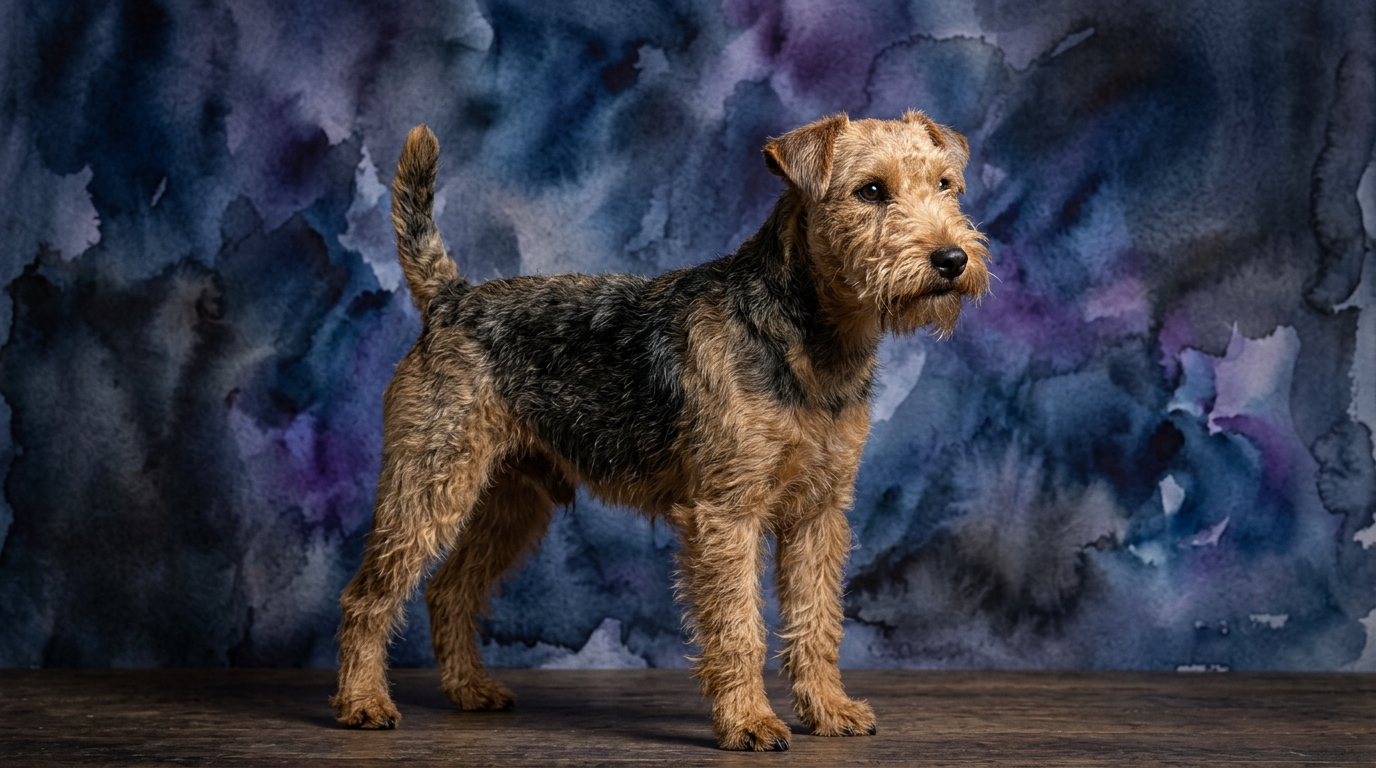
Side-by-Side IQ Profile: Golden Retriever vs. Lakeland Terrier
The Cosmic Pet Pet IQ Lab employs five key dimensions to evaluate canine intelligence, offering a nuanced view beyond simple obedience. For the Golden Retriever, a quintessential Sporting group dog, these dimensions paint a picture of an adaptable, cooperative mind. Their Problem Solving ability rates at 4/5, indicating a capacity for understanding complex tasks and navigating varied situations. Training Speed is a remarkable 5/5, reflecting their eagerness to learn and quick association of commands with actions. Social Intelligence stands at a perfect 5/5, highlighting their exceptional empathy and responsiveness to human cues. Their Instinctive Drive, primarily focused on retrieving and working collaboratively, scores 4/5, while Memory for commands, routines, and individuals is a strong 4/5.
In contrast, the Lakeland Terrier, a tenacious member of the Terrier group, presents a different cognitive blueprint. Unranked by Coren, their scores reflect a more independent and task-specific intellect. Their Problem Solving ability is 3/5, often manifesting as self-directed solutions rather than human-guided ones. Training Speed is 3/5, suggesting they require more motivation and consistency due to their independent streak. Social Intelligence, at 3/5, means they are affectionate but may prioritize their own agenda over constant human interaction. Instinctive Drive, rated 3/5, is strongly tied to their prey drive and persistent pursuit of quarry. Memory, also 3/5, tends to be efficient for relevant tasks but may not extend to an extensive repertoire of arbitrary commands.
Where the Golden Retriever Excels Cognitively
The Golden Retriever's cognitive strengths are evident in their superior scores across most dimensions, particularly in areas that foster human-canine partnership. Their 5/5 Training Speed means they absorb and retain new commands with remarkable alacrity, making them exceptionally amenable to advanced obedience, intricate tricks, or specialized assistance roles. This fast learning is supported by a strong 4/5 Memory, allowing them to recall a vast vocabulary of cues and remember complex sequences. Their pinnacle strength, a 5/5 Social Intelligence, enables them to read human emotions and intentions with impressive accuracy, leading to a profound understanding of their owner's needs and moods. This makes them incredibly responsive and empathetic companions, often anticipating desires before they are vocalized. Their 4/5 Problem Solving manifests in their ability to understand multi-step instructions and adapt to new environments or challenges within a human-directed framework, consistently striving for cooperation and positive reinforcement.
Cognitive Strengths of the Lakeland Terrier
While the Lakeland Terrier's scores are generally lower in metrics designed for biddability, their cognitive profile showcases distinct strengths rooted in their original purpose as vermin hunters. Their 3/5 Problem Solving isn't about following complex human commands, but rather about independent, tenacious thought when faced with a specific goal, like flushing out quarry. This involves clever navigation of obstacles and strategic decision-making in real-time, often without human direction, demonstrating a unique form of practical, self-reliant intelligence. Their 3/5 Instinctive Drive, while sometimes perceived as stubbornness, is a powerful cognitive engine for persistent, focused work; once they lock onto a task, their mental fortitude is formidable. This drive fuels their ability to concentrate intensely on a singular objective, filtering out distractions. Their Memory, at 3/5, is highly efficient for retaining information critical to their specific tasks and environment, ensuring they remember important scents, routes, or behaviors pertinent to their world.
Training Ease: A Tale of Two Temperaments
Comparing the training ease of these two breeds highlights their fundamental behavioral differences. The Golden Retriever, with its 5/5 Training Speed and 5/5 Social Intelligence, is inherently predisposed to cooperative learning. They possess an innate desire to please their human companions, actively seeking to understand and comply with commands. This biddability means they thrive on positive reinforcement and readily form strong associations between actions and rewards, making training a relatively smooth and rewarding experience. Their social awareness allows them to quickly pick up on subtle cues and adjust their behavior accordingly, leading to rapid progress in obedience and manners.
The Lakeland Terrier, however, offers a more independent training journey due to its 3/5 Training Speed and 3/5 Social Intelligence. Their terrier heritage instills a strong sense of self-reliance and a tendency to evaluate whether a command aligns with their own interests before complying. This isn't a lack of capacity, but rather a difference in motivation; they are less driven by a desire to please and more by engagement and their own intrinsic drives. Training a Lakeland requires patience, creativity, and consistency, employing engaging methods that tap into their natural instincts. Owners must build trust and make training feel like a collaborative game rather than a series of demands, understanding that their independence is a core part of their personality.
Matching Breeds to Lifestyles: Active vs. Relaxed Owners
The cognitive profiles of the Golden Retriever and Lakeland Terrier align with distinct owner lifestyles. Golden Retrievers, with their high Social Intelligence and strong Instinctive Drive for collaboration, are ideal for active owners who seek a highly interactive and emotionally attuned companion. They thrive on consistent mental stimulation, extensive training, and participating in family activities, whether it's long walks, retrieving games, or advanced obedience. Their desire to be involved and their capacity for complex learning make them excellent partners for owners dedicated to fostering a deep, working relationship and providing ample companionship and enrichment.
The Lakeland Terrier, while also requiring significant physical activity, suits owners who appreciate a dog with a more independent and spirited personality. Their focused Instinctive Drive and self-directed Problem Solving mean they benefit from owners who can channel their tenacity into constructive outlets, such as earthdog trials, agility, or consistent, engaging training sessions that respect their intelligence and independent thought. They are not necessarily a 'relaxed' dog in terms of energy, but their cognitive independence might appeal to owners who enjoy a companion with more self-direction, rather than one constantly seeking human instruction. These owners should be prepared to provide consistent boundaries and stimulating activities that satisfy their terrier instincts, enjoying a spirited, tenacious friend.
The Verdict
Choose a Golden Retriever if you seek a highly cooperative, emotionally responsive companion eager to learn and integrate deeply into family life, excelling in diverse training pursuits.
Opt for a Lakeland Terrier if you appreciate an independent, tenacious companion with a unique self-directed intelligence, willing to invest in creative, consistent training that respects their spirited nature.
🧠 Find Your Pet's IQ Score
Our Pet IQ Lab assessment covers 25+ tests across 5 cognitive dimensions — personalized to your breed.
Take the Full IQ Test →Frequently Asked Questions
Are Golden Retrievers good family dogs?
Yes, Golden Retrievers are exceptionally good family dogs due to their high Social Intelligence. They are known for their gentle demeanor, patience with children, and ability to form strong bonds with all family members, making them adaptable and affectionate companions.
Do Lakeland Terriers need a lot of exercise?
Lakeland Terriers do require a good amount of exercise to satisfy their Instinctive Drive and energetic terrier nature. Daily vigorous walks, playtime, and opportunities for mental stimulation through training or interactive games are essential to keep them content and well-behaved.
How do their problem-solving skills differ in a home environment?
In a home environment, a Golden Retriever's problem-solving (4/5) might involve figuring out how to open a child-proof gate or learning a multi-step routine to get a treat, often seeking human input or approval. A Lakeland Terrier's problem-solving (3/5) might manifest as independently finding a way to reach a forbidden counter snack or persistently digging under a fence, driven by their own curiosity and tenacity rather than human direction.