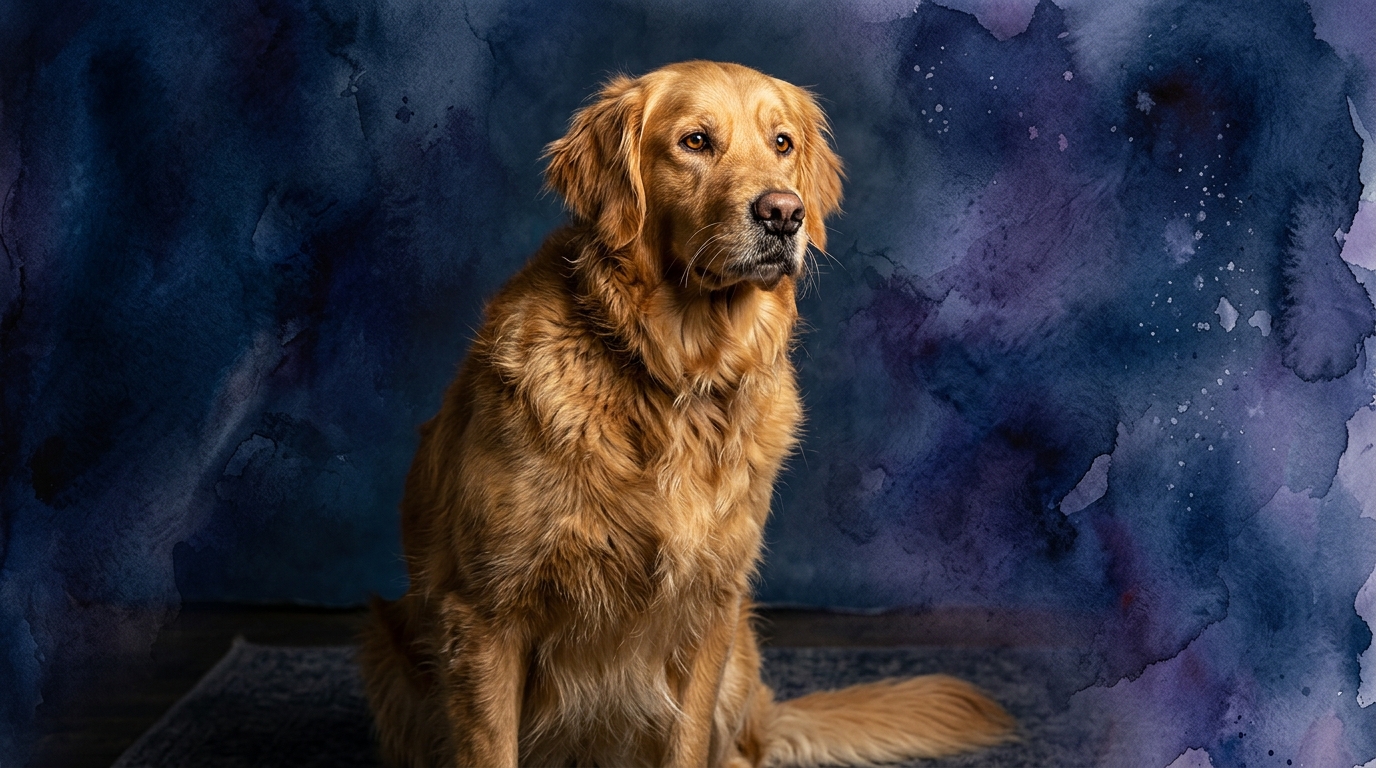

Side-by-Side Cognitive Profile: Golden Retriever vs. Lhasa Apso
At The Cosmic Pet Pet IQ Lab, we evaluate canine intelligence across five key dimensions: Problem Solving, Training Speed, Social Intelligence, Instinctive Drive, and Memory. Understanding these aspects helps us appreciate the nuanced cognitive makeup of each breed. The Golden Retriever, ranking #4 on the Coren scale, presents a profile geared towards collaboration and adaptability, while the Lhasa Apso, at #68, showcases a more independent and discerning cognitive style.
**Golden Retriever Cognitive Profile (Coren Rank #4):**
**Problem Solving (4/5):** Golden Retrievers demonstrate a robust capacity for figuring out solutions. Their persistence combined with an analytical approach allows them to tackle new challenges effectively, often figuring out multi-step solutions to access a coveted toy or navigate a new environment.
**Training Speed (5/5):** This breed excels in acquiring new behaviors swiftly. This rapid learning curve is underpinned by their eagerness to engage and cooperate, coupled with an inherent desire to please their human partners, translating into swift acquisition and high retention rates for commands and complex routines.
**Social Intelligence (5/5):** Golden Retrievers are acutely attuned to human emotions and social cues. They readily interpret body language, vocal tones, and even subtle shifts in mood, making them exceptionally responsive and empathetic companions who strive to harmonize with their human families. This social acumen underpins their remarkable versatility in roles ranging from compassionate therapy animals to dedicated service dogs.
**Instinctive Drive (4/5):** Originating as gun dogs, Golden Retrievers possess a strong, well-directed instinctive drive, particularly for retrieving. This drive manifests not just in enthusiastic fetching games but also in their focused work ethic and desire for purpose, which can be channeled into various dog sports, scent work, and even assistance roles, providing them with immense satisfaction.
**Memory (4/5):** Their recall capabilities are substantial, enabling them to remember a wide array of commands, routines, and even specific people and places over extended periods. This strong memory contributes significantly to their reliability, consistency in learned tasks, and their ability to quickly adapt to new situations based on past experiences.
**Lhasa Apso Cognitive Profile (Coren Rank #68):**
**Problem Solving (3/5):** Lhasa Apsos exhibit a moderate ability in problem-solving. They might find their own solutions, which may not always align with human expectations, demonstrating a resourceful yet often self-directed intelligence when faced with obstacles.
**Training Speed (3/5):** Learning new commands takes a more deliberate pace for the Lhasa Apso. They are not inherently driven by the same intense desire for human approval, often requiring patience, consistent positive reinforcement, and a clear demonstration of 'what's in it for them' to solidify new behaviors. Their independent spirit means they learn on their own terms, making training a journey of mutual understanding rather than immediate compliance.
**Social Intelligence (3/5):** Lhasa Apsos are generally more reserved in their social interactions. While deeply affectionate with their chosen family, they may not display the same overt sensitivity to human emotional nuances or eagerness to engage in social games as a Golden Retriever. Their social intelligence is more focused on discerning who belongs to their inner circle and guarding it with a keen, discerning eye.
**Instinctive Drive (3/5):** Bred as watchful sentinels for Tibetan monasteries, their instinctive drive is primarily geared towards alertness, observation, and territorial awareness rather than retrieving or intense physical work. This drive manifests as a keen sense of hearing, a vigilant watchfulness, and a tendency to bark at perceived intruders, but less so as a strong compulsion for physically demanding tasks.
**Memory (3/5):** Lhasa Apsos possess a functional memory, allowing them to recall routines and established commands, especially those reinforced consistently. However, their memory might not be as expansive or as consistently applied to novel situations as breeds with higher scores, often requiring more repetition and consistent practice for long-term retention of complex sequences or infrequently used cues.
Where the Golden Retriever Excels Cognitively
The Golden Retriever's cognitive strengths shine particularly in areas requiring collaboration, rapid learning, and adaptability. Their exceptional Training Speed (5/5) means they grasp complex sequences of commands with remarkable swiftness, making them adept at advanced obedience, agility, and specialized tasks like scent detection or assistance work. This rapid learning curve, fueled by their high Social Intelligence (5/5), allows them to deeply understand and respond to human instruction and emotional states, translating into a seamless, willing partnership in almost any endeavor. Furthermore, their Problem Solving (4/5) combined with a strong Memory (4/5) enables them to quickly apply learned solutions to new contexts and recall intricate details of commands or routes, making them exceptionally reliable partners in dynamic environments like search and rescue or complex competitive sports. Their Instinctive Drive (4/5) for retrieving is not merely a playful habit but a focused, purposeful application of their cognitive resources, directing their energy towards productive engagement and an eager desire to work alongside their human.
Where the Lhasa Apso's Cognitive Profile Offers Unique Advantages
While the Lhasa Apso's cognitive profile might appear less outwardly collaborative, it presents distinct advantages for specific lifestyles and owner preferences. Their more moderate Social Intelligence (3/5) translates into an independent nature, meaning they are less prone to separation anxiety and can be content with their own company for reasonable periods, making them suitable for owners who might not always be able to provide constant, intense interaction. This self-reliance is a cognitive strength for those seeking a companion with a strong sense of self. Their Problem Solving (3/5) and Instinctive Drive (3/5), geared towards alertness and observation rather than intense physical work, mean they excel as vigilant, discerning guardians of the home. They are keenly aware of their surroundings, often detecting subtle changes long before their human counterparts, without needing constant mental stimulation through complex tasks or demanding physical outlets. This self-possessed cognitive style means they are less demanding of continuous human direction, fostering a relationship built on mutual respect for their autonomy and discerning affection. Owners who appreciate a dog with a robust personality, a watchful demeanor, and a strong sense of self will find their cognitive makeup perfectly suited to their preferences.
Training Ease: Golden Retriever vs. Lhasa Apso
Without question, the Golden Retriever is generally easier to train due to its superior cognitive attributes across the board. Their Training Speed (5/5) is a direct result of their profound Social Intelligence (5/5) and an inherent eagerness to please, making them highly motivated to learn and execute commands with precision. They actively seek human direction and derive immense satisfaction from successful collaboration, often picking up new tricks or complex obedience cues in just a few repetitions. Their strong Memory (4/5) ensures these lessons are retained long-term, making them consistently reliable. In stark contrast, the Lhasa Apso's Training Speed (3/5) is more deliberate and requires a different approach. Their independent nature, stemming from a more moderate Social Intelligence (3/5), means they often require more patience, creativity, and consistency from their trainer. They are not as inherently motivated by external approval, sometimes appearing stubborn or disengaged if they don't see the immediate benefit of a command. Training a Lhasa Apso demands understanding their self-possessed character, utilizing high-value rewards, and often breaking down tasks into smaller, manageable steps, resulting in a slower, albeit eventually successful, learning process. Their memory (3/5) requires consistent reinforcement to solidify new behaviors and prevent them from fading.
Lifestyle Compatibility: Active vs. Relaxed Owners
For active owners seeking a canine partner for adventures and structured activities, the Golden Retriever is an exceptional match. Their robust Instinctive Drive (4/5) and high energy levels mean they thrive on engaging in vigorous activities like hiking, swimming, extended retrieving games, and structured dog sports such as agility, competitive obedience, or flyball. Their rapid Training Speed (5/5) makes them ideal candidates for advanced training and specialized roles, allowing them to excel in competitive sports or tasks requiring complex skill sets. They relish being an integral part of family outings and require substantial physical and mental exercise to remain balanced and content. Conversely, the Lhasa Apso is better suited for more relaxed owners who appreciate a companion with a calmer daily rhythm and independent spirit. Their moderate Instinctive Drive (3/5) and lower energy needs mean they are content with shorter, leisurely walks and indoor playtime, rather than demanding extensive outdoor adventures or continuous strenuous activity. While they enjoy interaction and affection, their independent streak means they don't constantly seek intense engagement or complex tasks. They are ideal for individuals or families who prefer a watchful, affectionate presence without the need for constant, vigorous physical or mental stimulation, providing loyal companionship that complements a quieter, more composed lifestyle.
The Verdict
Choose a Golden Retriever if you seek an eager, collaborative partner for training, sports, and active family life, valuing their rapid learning and deep social connection.
Opt for a Lhasa Apso if you prefer an independent, discerning companion with a watchful nature, content with a calmer routine and a relationship built on mutual respect for their self-possessed character.
🧠 Find Your Pet's IQ Score
Our Pet IQ Lab assessment covers 25+ tests across 5 cognitive dimensions — personalized to your breed.
Take the Full IQ Test →Frequently Asked Questions
Do Golden Retrievers and Lhasa Apsos require different training methods?
Absolutely. Golden Retrievers respond well to positive reinforcement and enthusiastic praise due to their eagerness to please. Lhasa Apsos benefit from consistent, patient, and reward-based training, often requiring higher-value treats and a clear understanding of what's in it for them, given their independent streak.
Which breed is more adaptable to new environments?
Golden Retrievers, with their higher social intelligence and problem-solving scores, generally adapt more readily to new environments and experiences. They are often more curious and less wary of novel situations, while Lhasa Apsos may take longer to adjust due to their inherent watchfulness and preference for established routines.
Can a Lhasa Apso be a good family dog despite its independence?
Yes, Lhasa Apsos can be excellent family dogs, especially for families who respect their independent nature and provide consistent boundaries. While they may not be as overtly playful or constantly seeking interaction as a Golden Retriever, they form deep, loyal bonds with their family and are content to be a watchful, affectionate presence.