
Side-by-Side Cognitive Profiles: Golden Retriever vs. Newfoundland
At The Cosmic Pet Pet IQ Lab, we analyze canine intelligence across several key dimensions, providing a granular view beyond simple rankings. The Golden Retriever, a Sporting group dog with a Coren rank of #4, exhibits a Problem Solving score of 4/5, demonstrating strong analytical skills for practical tasks. Its Training Speed is exceptional at 5/5, indicating rapid learning. Social Intelligence also scores a perfect 5/5, highlighting its ability to interpret and respond to human cues, while Instinctive Drive is 4/5, often channeled into cooperative retrieving tasks. Memory for the Golden Retriever is robust at 4/5, ensuring consistent performance over time.
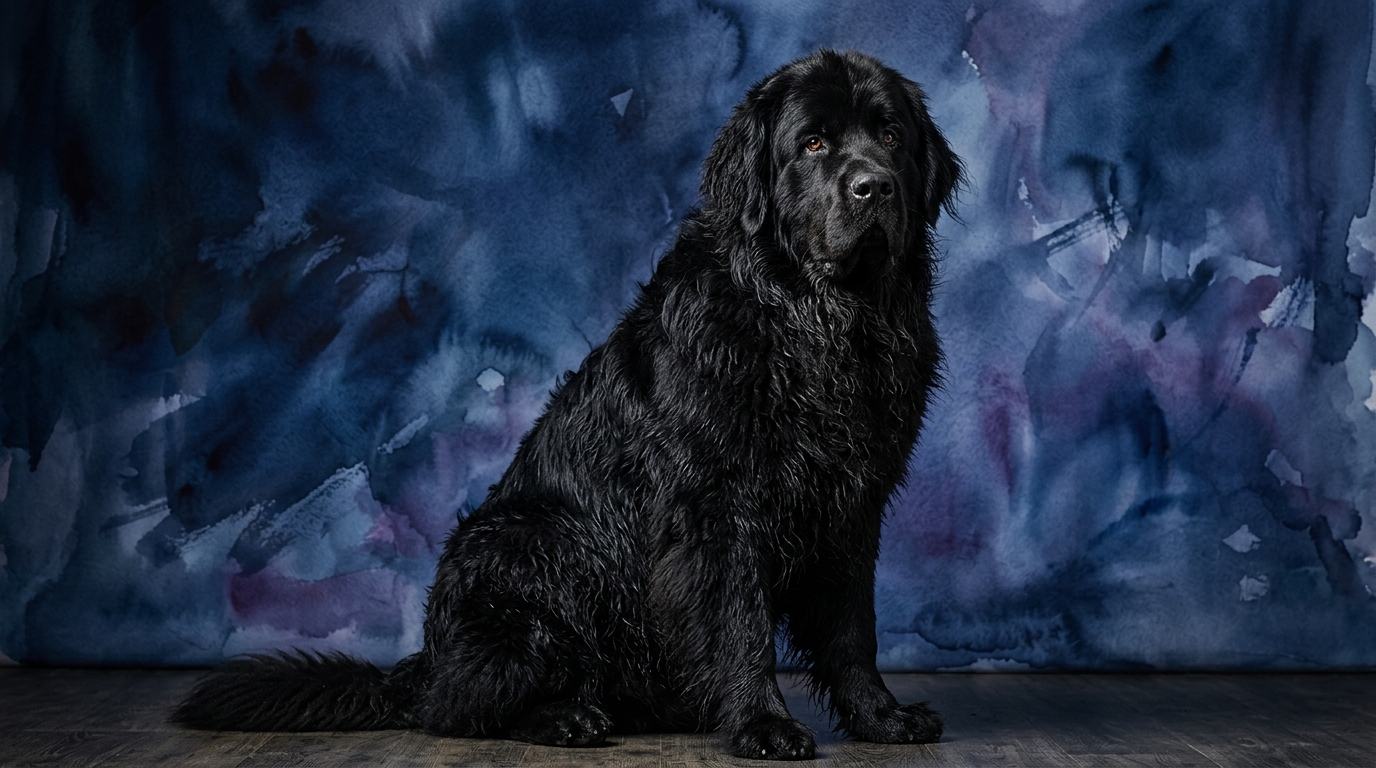
In contrast, the Newfoundland, a Working group dog with a Coren rank of #34, presents a distinct cognitive blueprint. Its Problem Solving ability is rated 3/5, focusing more on real-world, often safety-related, scenarios. Training Speed is a solid 4/5, meaning it learns steadily, though perhaps not with the same lightning-fast acquisition as a Golden. Social Intelligence is equally impressive at 5/5, showing deep empathy and understanding of its family unit. Crucially, its Instinctive Drive is a paramount 5/5, centered on protection and water rescue, profoundly influencing its decision-making. Memory for the Newfoundland is 4/5, ensuring it retains important information related to its duties and relationships.
Where the Golden Retriever Excels Cognitively
The Golden Retriever's cognitive edge lies significantly in its **adaptability to novel tasks and its remarkable eagerness to learn quickly**. Their Problem Solving score of 4/5 indicates a breed that can readily analyze new situations and devise solutions, particularly when those solutions involve working collaboratively with a human. For instance, a Golden Retriever might quickly discern the sequence of actions required to open a cabinet or retrieve a specific item from a cluttered space, not merely by brute force but by understanding the mechanics and the human's intent.
Coupled with their top-tier Training Speed (5/5), this means a Golden Retriever can be taught complex multi-step commands or intricate routines, like those seen in competitive obedience or service work, with minimal repetition. They are adept at understanding the 'rules' of a game or task and applying them consistently, often anticipating the next step in a familiar process. Their cognitive strengths make them exceptionally versatile in roles requiring precise, rapid responses and a broad repertoire of learned behaviors, making them eager participants in a wide array of activities.
Where the Newfoundland Excels Cognitively
The Newfoundland's unique cognitive strength is rooted in its profound Instinctive Drive (5/5) for protection and water rescue, coupled with its exceptional Social Intelligence (5/5). While their Problem Solving score is 3/5, this doesn't imply a lack of mental capacity but rather a different kind of problem-solving—one driven by necessity and an innate understanding of safety. A Newfoundland might not quickly learn a complex agility course, but faced with a real-life scenario, like a child falling into water, their powerful instinct often overrides learned commands, allowing them to independently assess the situation and act decisively to save.
Their social intelligence is not just about reading cues but about anticipating needs and potential dangers within their family unit, acting as a gentle guardian. This breed possesses a deep, intuitive understanding of responsibility, often making independent, thoughtful decisions based on a situation's practical demands rather than strict obedience to a command. Their robust memory (4/5) reinforces this, allowing them to recall specific individuals or past incidents that inform their protective behaviors, making them incredibly reliable in their caregiving roles.
Which is Easier to Train and Why
Based on our data, the **Golden Retriever is generally easier to train** for a wider array of tasks, primarily due to its superior Training Speed (5/5) and its strong desire to please, reflected in its high Social Intelligence (5/5) and Coren Rank of #4. Golden Retrievers are often described as 'biddable,' meaning they are naturally inclined to cooperate and respond to human direction. Their quick processing of new information means they pick up commands rapidly, requiring fewer repetitions and making the training process feel more fluid and rewarding for both dog and owner. They are highly motivated by praise and positive reinforcement, eagerly offering behaviors to earn approval.
In contrast, the Newfoundland, with a Training Speed of 4/5 and a Coren Rank of #34, learns at a respectable pace but often requires more patience and understanding of their motivations. While equally socially intelligent (5/5), their drive is profoundly internal and task-oriented, particularly towards their protective and water rescue instincts. They learn best when they understand the purpose behind a command, and may show a thoughtful, deliberate independence if a command conflicts with their strong innate drives. For instance, a Newfoundland might hesitate to 'stay' if they perceive a family member is in distress, prioritizing their protective instinct over the command. This isn't stubbornness, but a different cognitive wiring where deeply ingrained drives can supersede learned obedience in critical moments.
Which Suits Active Owners vs. Relaxed Owners
The **Golden Retriever** typically suits **active owners** who enjoy engaging their dogs in a variety of activities that leverage their cognitive strengths and physical stamina. Their combination of high Training Speed (5/5), Problem Solving (4/5), and Instinctive Drive (4/5) for retrieving makes them ideal companions for dog sports like agility, obedience, flyball, or even scent work. They thrive on mental stimulation and physical exercise, often becoming bored or restless without sufficient engagement. Owners who appreciate a dog that is eager to learn new tricks, participate in long hikes, or retrieve countless tennis balls will find a Golden Retriever to be an incredibly rewarding and compatible partner. Their desire to please and adaptability mean they can seamlessly integrate into a busy, active lifestyle, always ready for the next adventure.
The **Newfoundland**, while possessing significant physical presence, often suits **more relaxed owners** who appreciate a calm, steady companion with a profound sense of responsibility. Their Instinctive Drive (5/5) is more about guarding and gentle companionship than high-octane activity, and their Problem Solving (3/5) is geared towards practical, often slower-paced, decision-making. While they need regular, moderate exercise—especially swimming, which engages their natural instincts—they are not typically suited for owners seeking a dog for competitive dog sports requiring rapid, complex movements. Instead, they excel in roles where their Social Intelligence (5/5) and protective nature can shine, such as being a devoted family guardian or a therapy dog. Owners who value a thoughtful, independent dog that enjoys leisurely walks, quiet companionship, and the occasional swim will find the Newfoundland's steady temperament and deep loyalty a perfect match.
The Verdict
Choose a Golden Retriever if you seek a highly trainable, versatile companion eager to engage in diverse activities and learn complex tasks rapidly, thriving on collaborative interaction. Their quick intelligence and desire to please make them excellent partners for active, involved families.
Opt for a Newfoundland if you value a calm, protective, and deeply empathetic companion whose intelligence manifests in independent, thoughtful problem-solving, particularly in real-world scenarios or protective roles. They suit owners who appreciate a steady presence and are prepared for a dog driven by strong, inherent instincts.
🧠 Find Your Pet's IQ Score
Our Pet IQ Lab assessment covers 25+ tests across 5 cognitive dimensions — personalized to your breed.
Take the Full IQ Test →Frequently Asked Questions
Is the Golden Retriever truly smarter than the Newfoundland?
When comparing their cognitive profiles, the Golden Retriever shows an advantage in training speed and general problem-solving adaptability, reflected in its higher Coren rank. However, the Newfoundland excels in instinctive problem-solving related to its protective and rescue drives, demonstrating a different, equally valuable form of intelligence.
Do Newfoundlands learn slower because they are less intelligent?
Newfoundlands learn at a respectable pace, though often requiring more repetition than Golden Retrievers. Their learning style is often more deliberate and purpose-driven; they may not be "slower" but rather process information differently, prioritizing tasks aligned with their strong instinctive drives and needing to understand the 'why' behind a command.
Which breed is better with children from an intelligence perspective?
Both breeds possess exceptional social intelligence (5/5), making them wonderful with children. The Golden Retriever's eagerness to please and adaptability ensures gentle play, while the Newfoundland's profound protective instincts and calm demeanor make it a remarkably patient and vigilant guardian, often showing an innate understanding of a child's vulnerability.