Side-by-Side IQ Profile: Golden Retriever vs. Pug
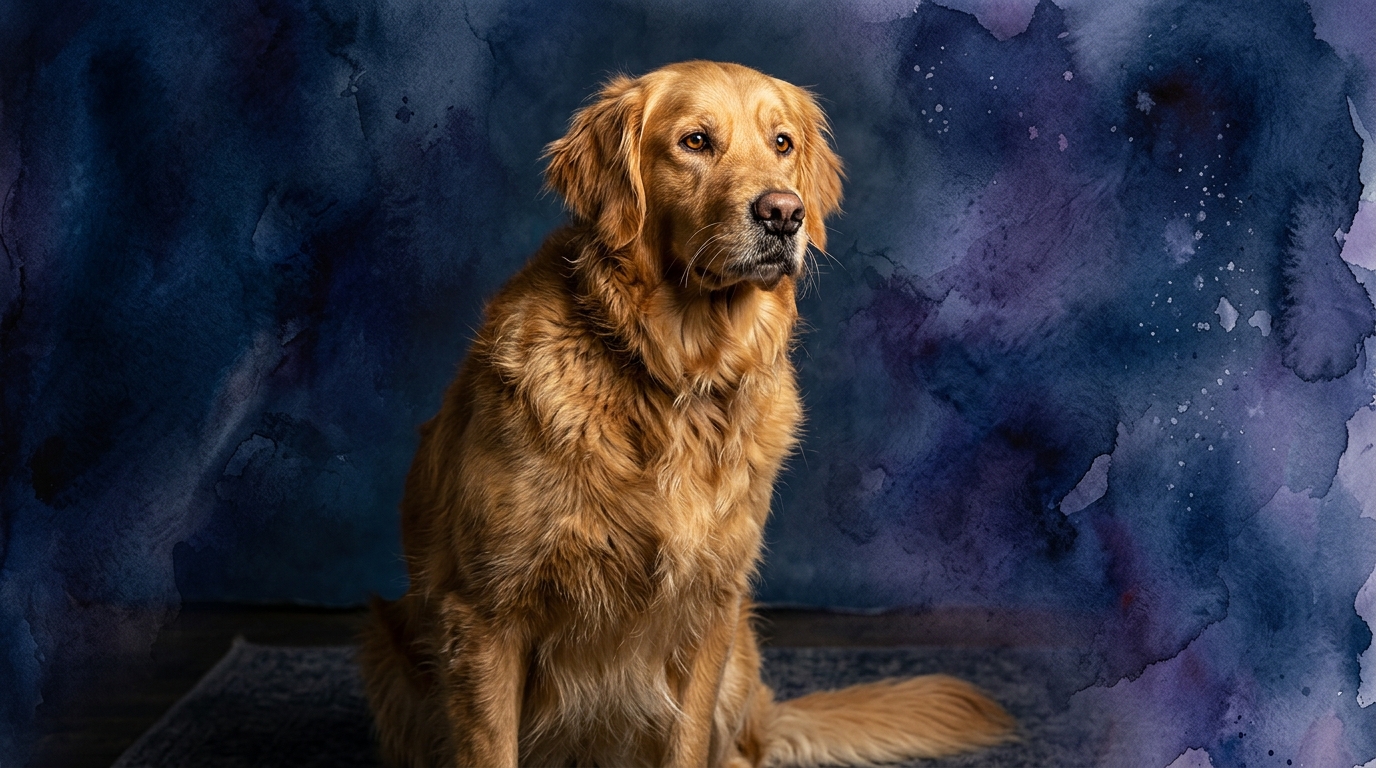
At The Cosmic Pet Pet IQ Lab, we evaluate canine intelligence across five key dimensions, revealing the nuanced cognitive landscapes of each breed. For the Golden Retriever, their Problem Solving is rated 4/5, indicating a strong capacity for understanding and navigating complex situations. Their Training Speed is an exceptional 5/5, meaning they pick up new commands with remarkable swiftness. Social Intelligence scores a perfect 5/5, showcasing their profound ability to read human cues and adapt within a family unit. An Instinctive Drive of 4/5 highlights their robust natural inclination for tasks, while their Memory at 4/5 confirms their reliable retention of learned information and experiences. This profile paints a picture of a dog that is both mentally agile and deeply connected to its human partners.
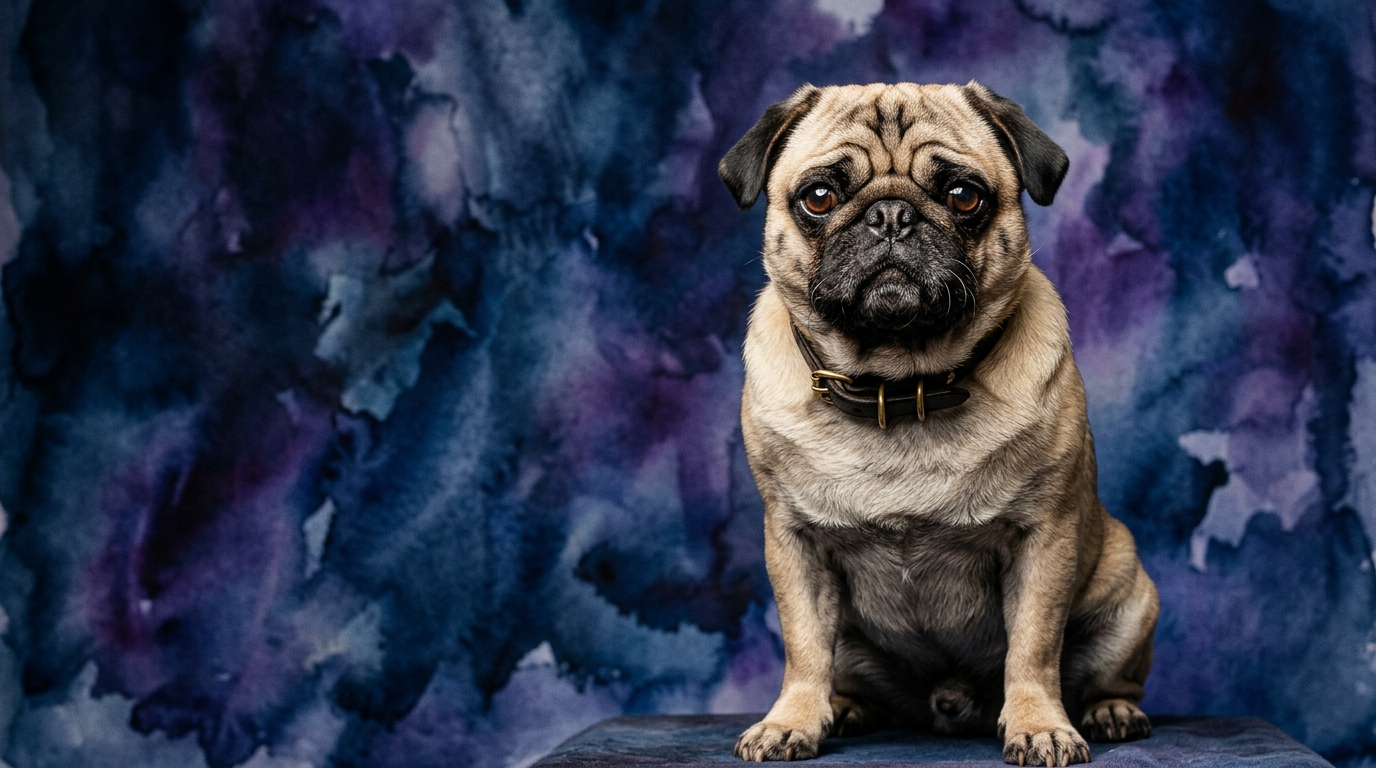
The Pug, in contrast, presents a different set of cognitive strengths. Their Problem Solving is rated 2/5, suggesting they approach novel situations with less independent strategic thinking, often relying more on learned routines or direct guidance. Training Speed is 2/5, indicating that while capable of learning, they generally require more patience and repetition. However, their Social Intelligence mirrors the Golden Retriever's at a perfect 5/5, demonstrating an equally impressive capacity for understanding human emotions and social dynamics. Their Instinctive Drive is 2/5, meaning minimal inclination towards tasks requiring sustained physical or mental exertion. Finally, their Memory is 3/5, a moderate ability to recall past experiences and learned behaviors. This unique combination makes the Pug a master of companionship, attuned to social nuances over complex tasks.
Where the Golden Retriever Wins Cognitively
The Golden Retriever's cognitive profile positions it as a master of practical application and cooperative learning, particularly excelling in dynamic environments. Its 4/5 problem-solving score means it can independently assess and overcome environmental challenges with notable ingenuity, such as figuring out how to manipulate a complex puzzle toy to extract a treat, or navigating an unfamiliar hiking trail by remembering previous paths. This breed's 5/5 training speed is unparalleled, allowing it to rapidly acquire complex multi-step commands, differentiate between nuanced cues, and perform intricate tasks like guide work, scent detection, or competitive obedience routines with remarkable efficiency. They don't just learn quickly; they understand the context of their actions. Furthermore, their 4/5 instinctive drive, combined with a perfect 5/5 social intelligence, means they are not just capable of learning but are also inherently motivated to work alongside humans, eager to apply their cognitive abilities in a collaborative context. This intrinsic drive to engage and perform makes their cognitive strengths readily observable and highly functional across a wide spectrum of demanding roles, from assistance animals to search and rescue dogs.
Where the Pug Wins Cognitively
While Pugs may not excel in areas requiring complex problem-solving or rapid task acquisition, their cognitive strengths lie deeply within the realm of social connection and emotional intelligence. A perfect 5/5 in social intelligence signifies their profound ability to interpret human moods, intentions, and even subtle body language, allowing them to form exceptionally strong and empathetic bonds with their families. This cognitive acumen makes them intuitive companions, often seeming to anticipate their owner's needs for comfort or companionship without explicit commands, offering a quiet presence during distress or a playful nudge during moments of joy. Their lower instinctive drive (2/5) can also be seen as a cognitive advantage for certain lifestyles; they are less prone to boredom-induced destructive behaviors stemming from an intense need for mental stimulation, making them inherently content with a calmer, more routine-oriented existence. This cognitive predisposition for tranquility means they are less likely to "problem-solve" ways to entertain themselves through mischief, instead finding profound fulfillment in close proximity and social interaction, making them superb lap companions who are highly attuned to their human's emotional state.
Training Ease: Golden Retriever vs. Pug
Based on The Cosmic Pet Pet IQ Lab data, the Golden Retriever is unequivocally easier to train, primarily due to its 5/5 training speed and 4/5 problem-solving ability. A Golden Retriever can often master a new command in just a few repetitions, quickly associating verbal cues with desired actions and understanding the intent behind the training. For instance, teaching a "stay" command might take only a handful of short sessions for a Golden to grasp the concept of prolonged stillness. Their capacity for problem-solving means they are more likely to attempt different strategies to figure out what is being asked of them, actively participating in the learning process rather than passively waiting for guidance. For example, when taught to "fetch a specific toy," a Golden will quickly learn the name and retrieve it, whereas a Pug, with its 2/5 training speed, may require many more sessions and might struggle with the conceptual leap of identifying and retrieving a named item from a group. Pugs also tend to have a shorter attention span for repetitive tasks and are more easily distracted by their immediate environment, making consistent, focused training sessions a greater challenge. Their lower instinctive drive means they are less inherently motivated by the structured "work" of training compared to a Golden's eagerness to please and perform tasks for human approval.
Matching Cognitive Profiles to Lifestyles
The distinct cognitive profiles of these two breeds naturally align them with vastly different owner lifestyles. The Golden Retriever, with its high problem-solving (4/5), exceptional training speed (5/5), and robust instinctive drive (4/5), thrives with active owners who enjoy engaging in both mental and physical challenges. Owners who want a dog for activities like agility, advanced obedience trials, retrieving games, hiking, or even complex service work will find the Golden Retriever's cognitive makeup perfectly suited for these demanding roles. They require consistent mental stimulation, such as learning new tricks or puzzle toys, to prevent boredom and will actively seek out engagement. Conversely, the Pug, characterized by its lower problem-solving (2/5), moderate training speed (2/5), and minimal instinctive drive (2/5), is an ideal match for relaxed owners seeking a more laid-back, yet deeply affectionate companion. Pugs are cognitively content with a less demanding routine, preferring short bursts of playful activity followed by long periods of contented lounging. Their high social intelligence (5/5) means they excel in simply being present and interacting emotionally with their family, without needing constant cognitive "work" or complex tasks to feel fulfilled. They are masters of the art of companionship.
The Verdict
Choose a Golden Retriever if you seek a highly trainable, eager-to-please partner for complex tasks, active pursuits, and a deep, cooperative working relationship.
Opt for a Pug if your priority is a charming, empathetic companion who thrives on social connection and requires less structured mental engagement, perfectly fitting a calm, affectionate home environment.
🧠 Find Your Pet's IQ Score
Our Pet IQ Lab assessment covers 25+ tests across 5 cognitive dimensions — personalized to your breed.
Take the Full IQ Test →Frequently Asked Questions
Does a lower problem-solving score mean a dog is "unsmart"?
Not at all; a lower problem-solving score simply indicates a dog may not independently devise complex solutions as readily, often preferring routine or direct guidance rather than extensive strategic thinking. It doesn't diminish their overall value or capacity for other forms of intelligence.
How does social intelligence differ between these breeds if both score 5/5?
While both breeds excel in understanding human social cues, the Golden Retriever often applies this alongside its high training speed for cooperative tasks, whereas the Pug primarily uses it for empathetic companionship and fitting seamlessly into family dynamics. Both are highly attuned but express it differently.
Can a Pug be trained for complex tasks despite its lower training speed?
Yes, a Pug can certainly learn complex tasks, but it will require significantly more patience, repetition, and a consistent, positive reinforcement approach from the owner. Their learning process is slower, so expectations should be adjusted accordingly, focusing on gradual progress rather than rapid mastery.