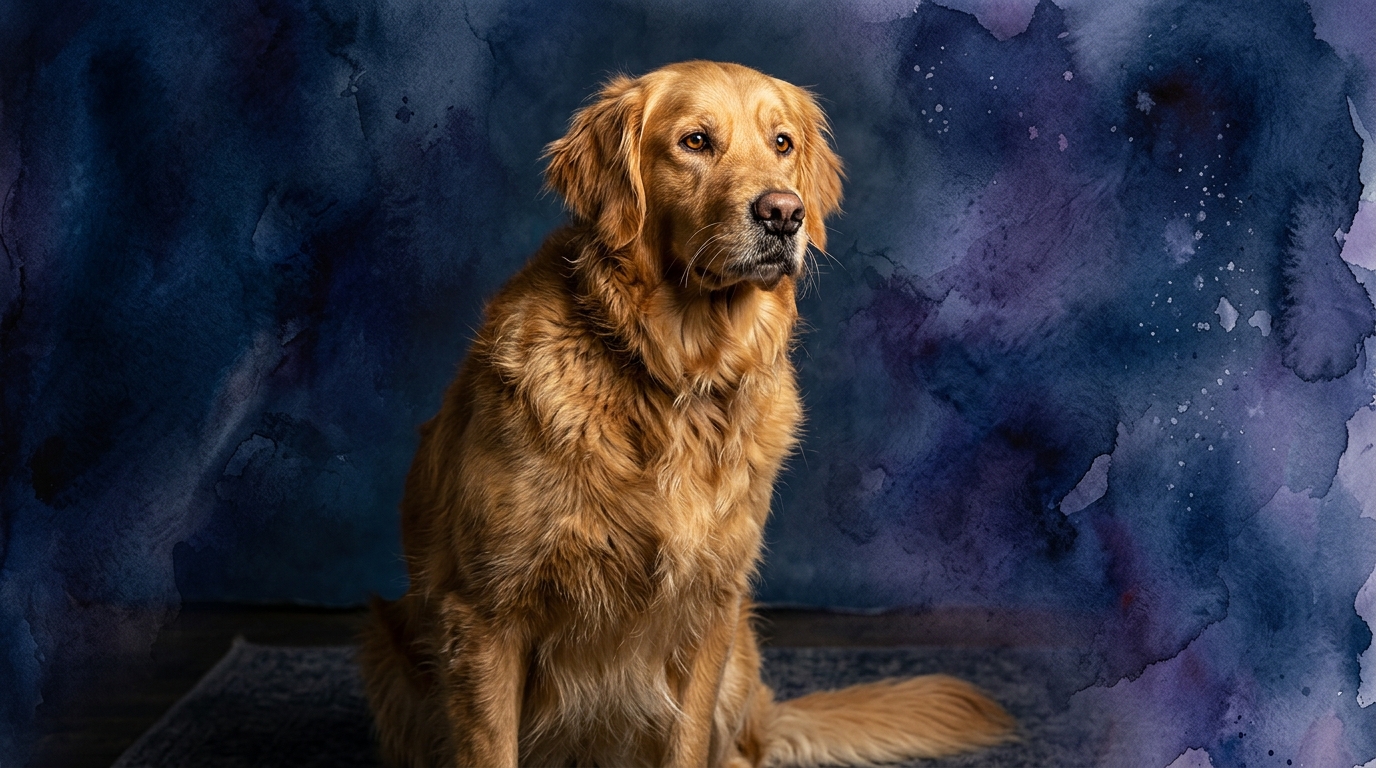
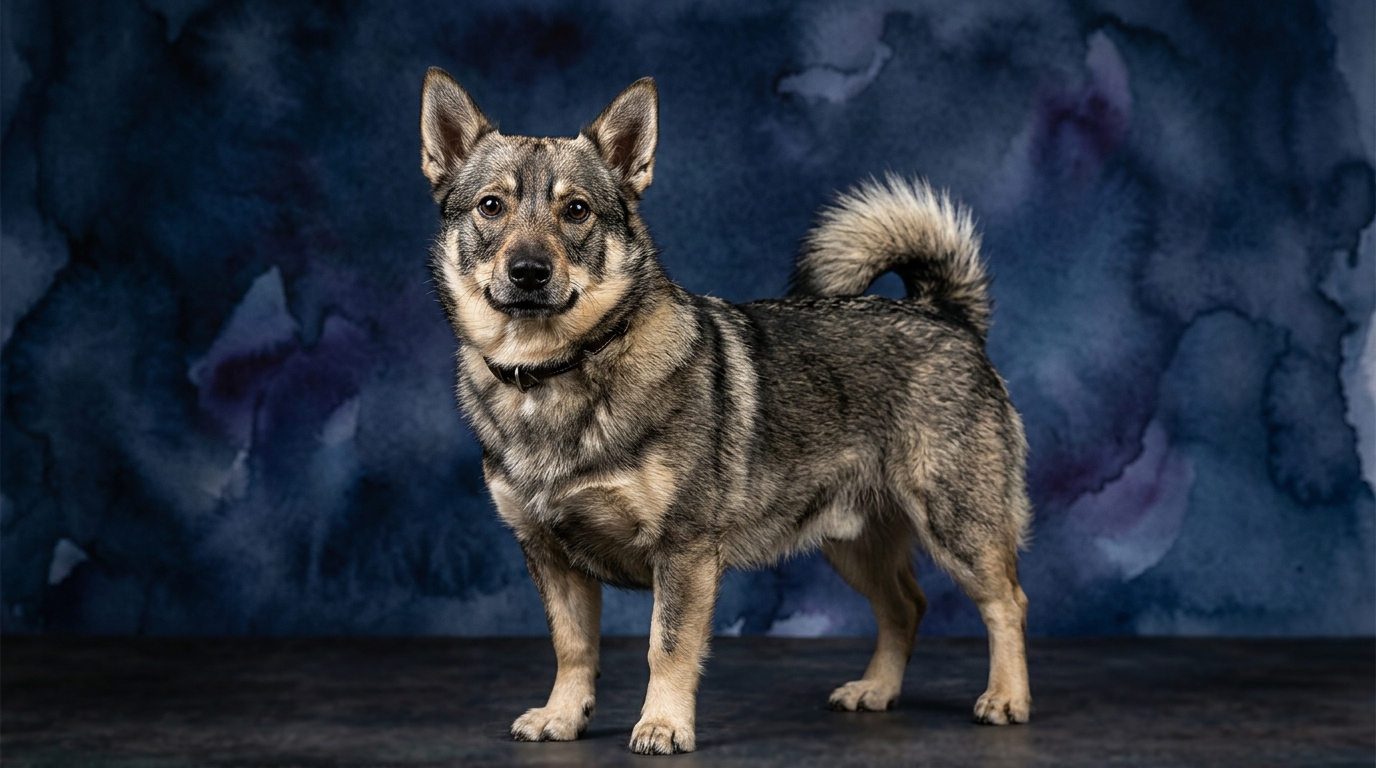
Side-by-Side IQ Profile: Golden Retriever vs. Swedish Vallhund
According to The Cosmic Pet Pet IQ Lab, the Golden Retriever's profile is impressive across several cognitive dimensions. Their Problem Solving at 4/5 indicates a strong capacity for independent thought and figuring out novel situations. Training Speed scores a perfect 5/5, meaning they grasp new commands and routines with exceptional quickness. Social Intelligence also reaches 5/5, highlighting their profound ability to interpret human cues, understand social hierarchies, and adapt to diverse social settings. Instinctive Drive sits at 4/5, reflecting their robust retrieving and working dog instincts, which can be channeled into various tasks. Memory is rated 4/5, suggesting they retain learned information and experiences over extended periods. Their Coren rank of #4 further solidifies their capacity for working obedience and adaptive learning.
In contrast, the Swedish Vallhund presents a different, yet equally valid, cognitive blueprint. Their Problem Solving at 3/5 shows a moderate ability to navigate new challenges, often relying on learned patterns rather than spontaneous innovation. Training Speed is 3/5, indicating they learn at a steady pace, requiring consistent repetition and clear communication. Social Intelligence also registers 3/5, meaning they are generally responsive to human interaction but may not possess the same nuanced understanding of complex social dynamics. Instinctive Drive is 3/5, pointing to inherent herding tendencies, which are present but might not be as intensely focused or easily redirected. Memory at 3/5 implies a solid but not extraordinary capacity for recall, meaning consistent reinforcement helps maintain learned behaviors. Their lack of a specific Coren rank suggests they haven't been as widely recognized in standardized obedience trials.
Where the Golden Retriever Excels Cognitively
The Golden Retriever truly shines in areas demanding high social attunement and rapid skill acquisition. Their 5/5 Social Intelligence allows them to anticipate human intentions and respond appropriately, making them empathetic companions and service animals. This translates into a dog that not only understands commands but seems to grasp their underlying purpose, fostering a deeper bond. Furthermore, their 5/5 Training Speed means they can master complex sequences of commands and adapt to new environments with remarkable efficiency, a trait that makes them standouts in competitive obedience and assistance work. Their Coren rank of #4 is a testament to this inherent capability. The combination of strong Problem Solving (4/5) and Memory (4/5) also means they can apply past learning to new situations and recall a vast repertoire of behaviors, making them adaptable partners in diverse activities from scent work to therapy.
Where the Swedish Vallhund Excels Cognitively
While the Golden Retriever excels in broad adaptability, the Swedish Vallhund demonstrates specific cognitive strength rooted in its herding heritage. Their 3/5 Instinctive Drive, while not overwhelming, is a focused intelligence for managing livestock. This manifests as an inherent understanding of spatial awareness, boundary setting, and subtle communication within a group. Their Problem Solving at 3/5, combined with this drive, often involves clever strategies for maneuvering and controlling, rather than simply retrieving. They are persistent and methodical in their approach to tasks, a trait valuable in agility or scent games where sustained effort is rewarded. This breed's cognitive profile suggests a practical, grounded intelligence, particularly in environments where they can utilize their natural inclination to 'organize' their surroundings.
Which Breed is Easier to Train, and Why?
Based on The Cosmic Pet Pet IQ Lab's metrics, the Golden Retriever is unequivocally easier to train. Their 5/5 Training Speed and 5/5 Social Intelligence are the cornerstones of this advantage. Golden Retrievers actively seek to understand and please their human companions, making them highly receptive to instruction. They quickly connect verbal cues with desired actions and are motivated by positive reinforcement, often requiring fewer repetitions to solidify new behaviors. Their strong social awareness means they are attuned to subtle body language, allowing for nuanced communication during training. In contrast, the Swedish Vallhund's 3/5 scores in both Training Speed and Social Intelligence indicate a more independent learner. They will learn, but often require more patience, consistency, and a clearer, more direct approach. Vallhunds might not be as inherently driven to "please" in the same all-encompassing way; their motivation is often more task-oriented or driven by internal herding instincts. Trainers need to be creative in making tasks engaging and relevant to the Vallhund's natural drives.
Matching Canine Cognition to Owner Lifestyles
The distinction here isn't solely about physical activity, but also mental engagement. An active owner, defined by someone who enjoys consistent training, structured activities, and a companion eager for diverse mental challenges, would find the Golden Retriever an ideal match. Their high Problem Solving, Training Speed, and Social Intelligence mean they thrive on learning new tricks, participating in dog sports like obedience or agility, and engaging in interactive play that stimulates their minds. A Golden Retriever requires significant mental stimulation to prevent boredom, making them perfect for owners dedicated to ongoing enrichment. The Swedish Vallhund also benefits from an active owner, particularly one who understands and can channel their herding instincts. While their IQ scores are lower in some areas, their instinctive drive requires an outlet. Owners who enjoy activities like herding trials, agility, or even trick training that involves problem-solving will find the Vallhund a willing participant. Their physical activity needs can be met with regular walks and playtime, potentially suiting a moderately active owner who prefers less intense, but still consistent, engagement. For truly relaxed owners, neither breed is ideal without dedicated effort, but the Vallhund might be marginally more adaptable to a less demanding routine, provided its herding instincts are managed.
The Verdict
If you seek a highly adaptable companion eager for extensive training, nuanced social interaction, and participation in diverse activities from service work to competitive obedience, the Golden Retriever's exceptional cognitive profile makes them an outstanding choice.
Opt for the Swedish Vallhund if you appreciate a self-reliant dog with a practical, focused intelligence rooted in herding, and are prepared to engage their instincts with consistent, clear training and purposeful activities.
🧠 Find Your Pet's IQ Score
Our Pet IQ Lab assessment covers 25+ tests across 5 cognitive dimensions — personalized to your breed.
Take the Full IQ Test →Frequently Asked Questions
Does the Coren rank directly correlate with a dog's overall happiness?
Coren rank measures a breed's working obedience and adaptive intelligence, reflecting how quickly they learn commands and solve problems. While a higher rank can indicate a dog that enjoys learning and pleases its owner, a dog's happiness is primarily influenced by its environment, health, and the fulfillment of its specific breed needs, regardless of its Coren ranking.
Can a Swedish Vallhund excel in activities like agility despite lower IQ scores?
Absolutely. While their training speed score is 3/5, Swedish Vallhunds possess a strong instinctive drive and physical agility suited for activities like herding and agility. With consistent, positive reinforcement and an understanding of their herding-oriented problem-solving, many Vallhunds thrive in these sports, demonstrating impressive focus and capability.
How does 'Social Intelligence' impact a dog's role as a family pet?
Social Intelligence, rated 5/5 for Golden Retrievers and 3/5 for Vallhunds, dictates a dog's ability to interpret human emotions, understand social dynamics, and adapt to different people and situations. A higher score often means a dog is more empathetic, responsive to family members' moods, and generally more adaptable in varied social settings, making them typically easier to integrate into diverse family lifestyles.