
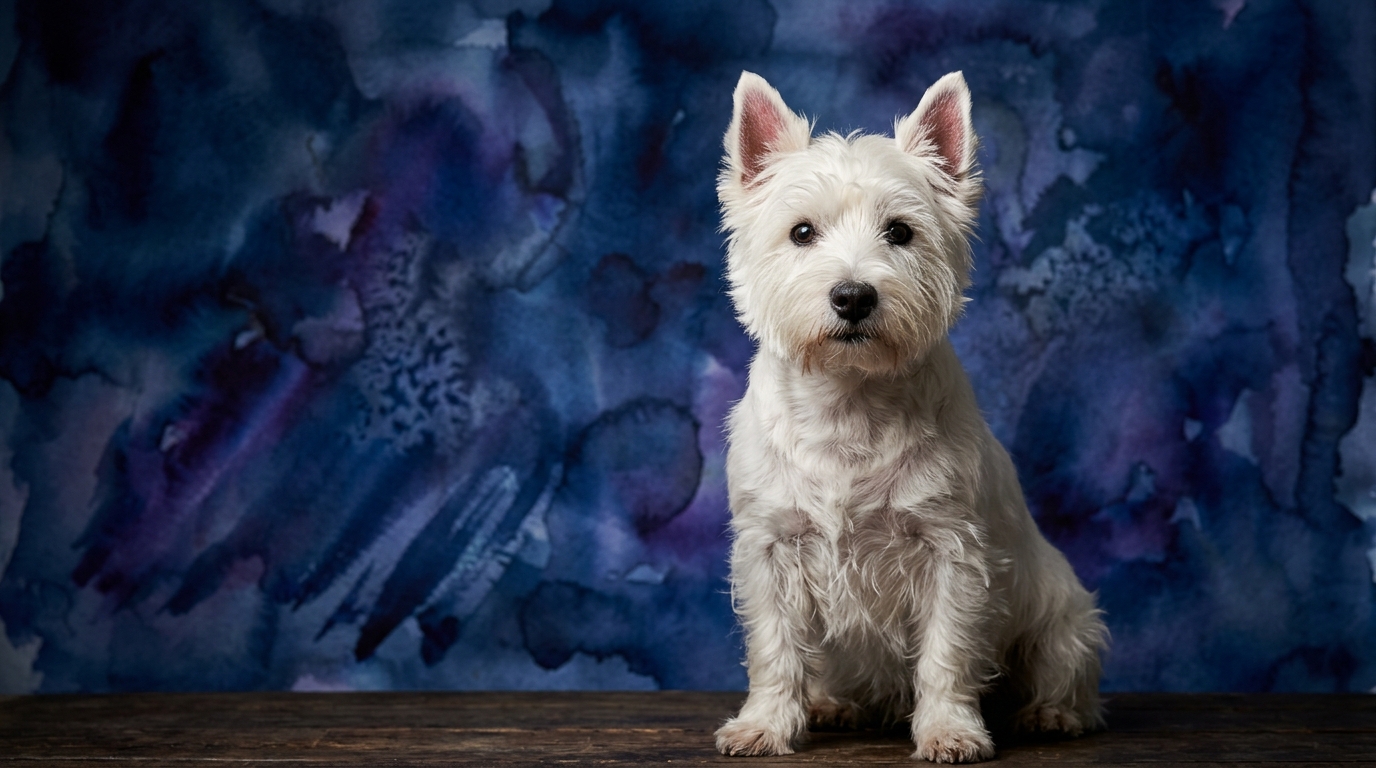
Side-by-Side IQ Profile: Golden Retriever vs. West Highland White Terrier
The Cosmic Pet Pet IQ Lab employs a five-dimensional framework to assess canine intelligence, offering a nuanced view beyond simple obedience. For the Golden Retriever, ranked #4 by Coren, and the West Highland White Terrier, ranked #47, these dimensions highlight distinct cognitive strengths and approaches to the world. Understanding these profiles is key to appreciating their unique mental makeups.
**Golden Retriever IQ Profile:** These dogs are renowned for their cooperative spirit and adaptability, traits reflected across their cognitive scores. Their **Problem Solving (4/5)** demonstrates a strong capacity for figuring out complex tasks, often excelling in multi-step retrieving scenarios or navigating obstacles to reach a desired object. Their **Training Speed (5/5)** is exceptional, as they assimilate new commands and routines with remarkable swiftness, often grasping new behaviors in just a few repetitions. **Social Intelligence (5/5)** is a hallmark, allowing them to interpret human cues and emotional states with accuracy, fostering strong bonds and harmonious household integration. Their **Instinctive Drive (4/5)**, rooted in their retrieving heritage, translates into a desire for purposeful activity alongside humans. Finally, their **Memory (4/5)** is robust, enabling them to retain learned behaviors, commands, and specific locations over extended periods.
**West Highland White Terrier IQ Profile:** Westies, while smaller, possess a tenacious spirit and independent streak, influencing their cognitive scores. Their **Problem Solving (3/5)** is characterized by persistence rather than complex strategizing; they often work through challenges using determination, such as digging or barking, to achieve their goals. **Training Speed (3/5)** for Westies can be slower than more biddable breeds, as their independent nature requires more repetitions and engaging methods to ingrain new commands. Their **Social Intelligence (3/5)**, while allowing for strong bonds with their primary human, tends to be more self-contained; they observe their environment but engage on their own terms rather than seeking constant collaboration. The **Instinctive Drive (3/5)** of a Westie is profoundly influenced by their terrier heritage, manifesting as a strong prey drive and propensity for digging and chasing, geared towards independent exploration. Despite these differences, their **Memory (4/5)** is strong, allowing them to retain learned commands and navigate familiar environments effectively once training is established.
Where the Golden Retriever Wins Cognitively
The Golden Retriever's cognitive strengths shine particularly in areas demanding collaborative problem-solving and rapid assimilation of new information. Their 4/5 in Problem Solving demonstrates an ability to process and adapt strategies in real-time, especially when tasks involve multiple steps or require coordination with a handler. This makes them adept at complex obedience routines or service tasks where they must independently assess a situation and respond appropriately. Furthermore, their perfect 5/5 in Training Speed means they absorb new commands with impressive efficiency, often understanding the expectation after just a few repetitions. This quick learning curve is underpinned by their strong desire to cooperate, allowing handlers to build a vast repertoire of behaviors relatively quickly. Their superior Social Intelligence, also rated 5/5, enables them to finely tune into human emotions and intentions, making them exceptionally responsive to subtle cues and fostering a deep, empathetic connection. This cognitive empathy allows them to anticipate needs and react in socially appropriate ways, a trait invaluable for therapy or assistance roles where nuanced interaction is paramount.
Where the West Highland White Terrier Wins Cognitively
While the West Highland White Terrier might not match the Golden's collaborative learning pace, their cognitive profile reveals distinct advantages rooted in their independent working history. Their Problem Solving, rated 3/5, is characterized by persistent, often ingenious, approaches to overcoming obstacles, particularly when motivated by their prey drive. This translates into a dog capable of figuring out how to access desired areas or 'outsmarting' barriers through sheer determination, even if the method isn't always elegant or immediately obvious to a human observer. The Westie's Memory, scoring a robust 4/5, stands out as a particular strength, matching the Golden Retriever. This strong recall means that once a Westie learns a command or a routine, it tends to stick, despite their initial slower Training Speed (3/5). This enduring memory makes them reliable once trained, remembering boundaries and acceptable behaviors over long periods. Their Instinctive Drive (3/5), while sometimes challenging for owners, is a cognitive asset in its original context. It represents a tenacious focus on a task, whether it’s tracking a scent or investigating a burrow, demonstrating a singular-minded problem-solving approach geared towards independent goal achievement rather than human partnership. This drive equips them with a relentless spirit that, when channeled appropriately, can be incredibly effective.
Which is Easier to Train and Why: Behavioral Differences
The Golden Retriever is undeniably easier to train for a broad range of tasks, primarily due to their exceptional Training Speed (5/5) and Social Intelligence (5/5). Their fundamental desire to please their human companions means they actively seek to understand and comply with commands, often interpreting subtle body language and vocal tones. This intrinsic motivation, combined with their quick grasp of new concepts, allows them to master complex sequences and respond reliably in varied environments. For instance, a Golden will typically learn 'sit' in a handful of sessions because they are primed to connect the command with the action and the positive reinforcement from their handler. Their high social intelligence makes them less likely to 'test' boundaries once established, preferring the harmony of cooperation.
In contrast, the West Highland White Terrier, with its 3/5 Training Speed and 3/5 Social Intelligence, presents a greater training challenge. Their strong independent streak, a hallmark of their terrier heritage, means they are less inherently motivated by human approval and more by their own instincts and desires. While they possess a good memory (4/5), they may require more repetitions to learn a new command, and even once learned, they might choose to comply only if they perceive a benefit or if the command aligns with their current interests. For example, a Westie might understand 'come' but choose to ignore it if a more interesting scent or squirrel distraction is present, requiring a more consistent, reward-heavy, and engaging approach to maintain compliance. Their training often requires more creativity and patience to work with their independent nature rather than against it, focusing on making training a game rather than a chore.
Suiting Active vs. Relaxed Owners
For active owners seeking a highly engaged and cooperative canine partner, the Golden Retriever is an excellent match. Their 4/5 Instinctive Drive fuels a desire for purposeful activity, whether it's retrieving, hiking, or participating in dog sports like agility or obedience. They thrive on mental and physical stimulation that involves working alongside their human, making them ideal companions for those who enjoy structured outdoor adventures or training sessions. Their high social intelligence also means they genuinely enjoy being an integral part of family activities, not just observers. A relaxed owner, on the other hand, might find the Golden Retriever's needs for engagement and exercise overwhelming if not prepared, as an under-stimulated Golden can develop undesirable behaviors.
The West Highland White Terrier, while also requiring regular exercise, can suit a different type of active owner or even a more relaxed owner with specific outlets for their energy. Their 3/5 Instinctive Drive is geared towards independent exploration, digging, and chasing, making them suitable for owners who enjoy brisk walks, secure yard play, or activities that tap into their tenacious terrier spirit, such as earthdog trials. They are less dependent on constant human collaboration for their mental stimulation, often content to patrol their yard or investigate interesting smells. A 'relaxed' owner who appreciates a dog with a strong personality and is prepared to manage their independent nature and provide consistent mental engagement through puzzle toys or short, engaging training bursts, rather than long, cooperative work sessions, might find a Westie a delightful companion. They offer companionship without the constant demand for interactive 'work' that Goldens often express, as long as their innate drives are acknowledged and appropriately channeled.
The Verdict
Select a Golden Retriever if you desire a highly cooperative, empathetic, and rapidly trainable companion eager to participate in shared activities and complex learning.
Opt for a West Highland White Terrier if you appreciate an independent, tenacious spirit with excellent memory, willing to learn at its own pace and thrive on focused, self-directed exploration.
🧠 Find Your Pet's IQ Score
Our Pet IQ Lab assessment covers 25+ tests across 5 cognitive dimensions — personalized to your breed.
Take the Full IQ Test →Frequently Asked Questions
Do Golden Retrievers bark a lot?
Golden Retrievers generally aren't excessive barkers, but they will use their voice to alert to strangers, express excitement, or communicate needs. Consistent training from a young age can help manage any potential for nuisance barking, and their biddable nature makes them responsive to quiet commands.
Are West Highland White Terriers good with children?
West Highland White Terriers can be good with respectful, older children who understand how to interact gently with a dog. Their independent nature means they might tolerate less rough play than some more placid breeds, so supervision and teaching children appropriate interactions are always key.
Which breed is better for first-time dog owners?
The Golden Retriever is generally more forgiving and easier to train for first-time owners due to their biddable nature and eagerness to please. Westies require a more experienced hand to navigate their independent and sometimes stubborn tendencies, making them a better fit for those prepared for a more assertive personality.