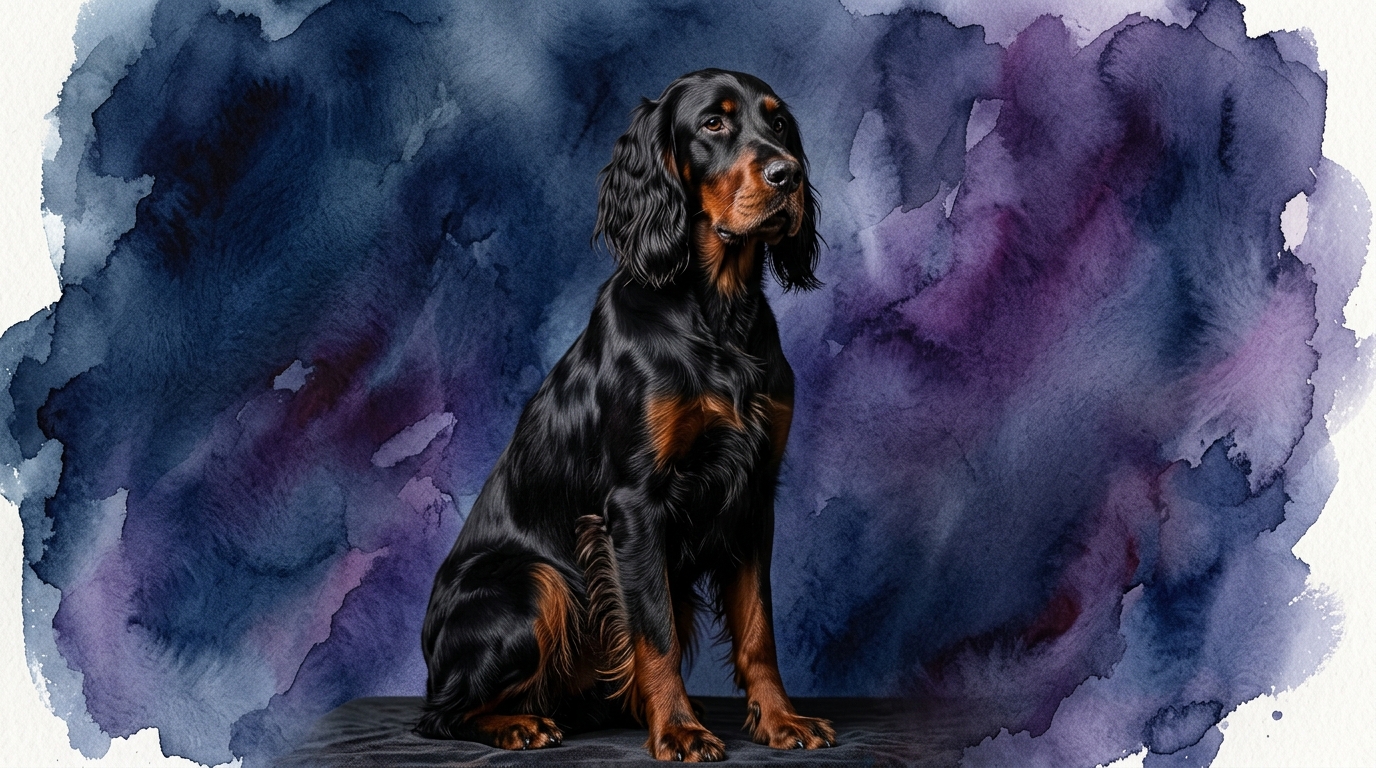
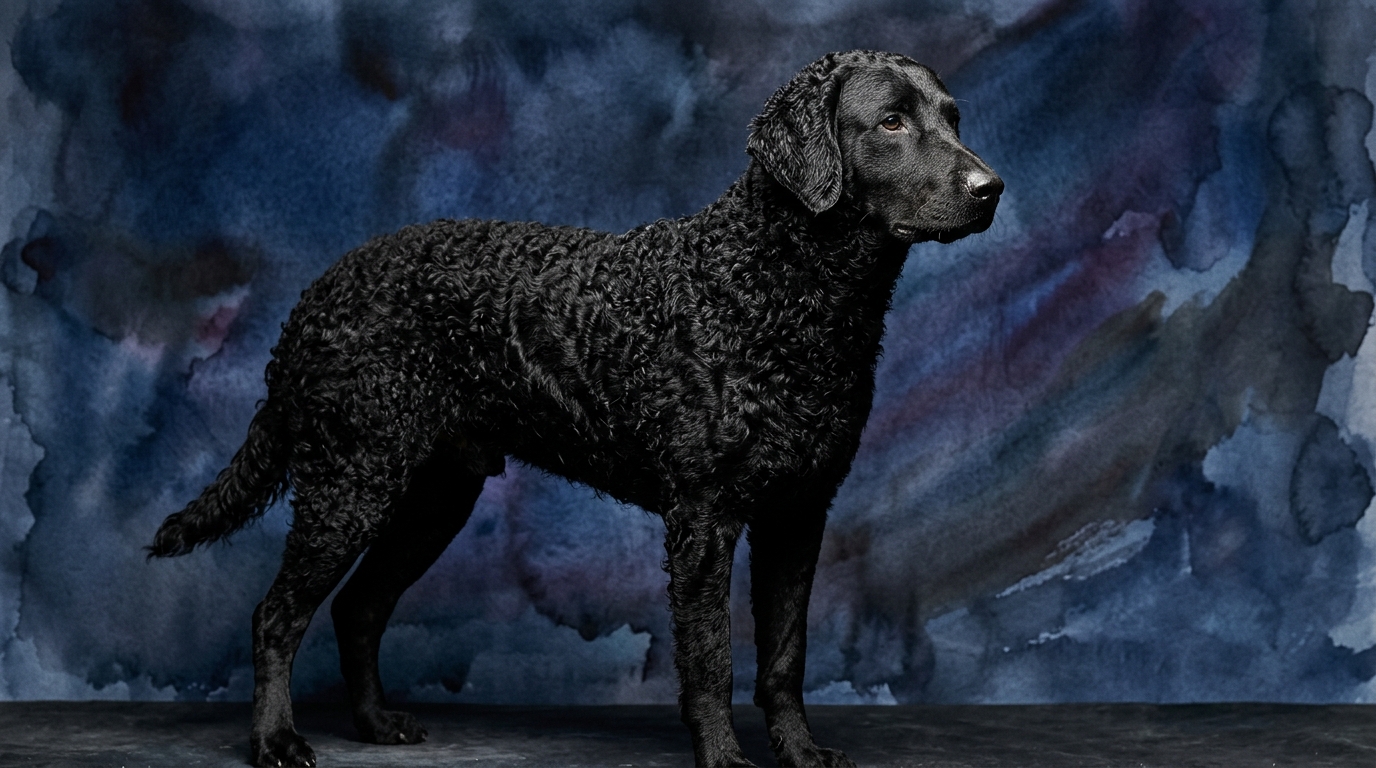
Side-by-Side IQ Profile: Gordon Setter vs. Curly-Coated Retriever
The Cosmic Pet Pet IQ Lab evaluates canine cognition across five key dimensions: Problem Solving, Training Speed, Social Intelligence, Instinctive Drive, and Memory. These metrics offer a granular view into how each breed processes information, interacts with its environment, and retains learned behaviors, moving beyond generic descriptions to specific performance indicators. Understanding these scores helps illuminate the daily realities of living and working with these animals.
The Gordon Setter, with a Coren rank of #39, demonstrates a robust cognitive profile. Its Problem Solving is rated 4/5, indicating an above-average capacity to navigate novel situations and figure out solutions independently. Training Speed also scores 4/5, suggesting a quick grasp of new commands and routines. Social Intelligence is 3/5, meaning it forms good connections but might not be overtly effusive, displaying a balanced demeanor. Instinctive Drive, at 3/5, signifies a present but manageable prey drive, typical for a setter. Crucially, its Memory is 4/5, ensuring that once skills are learned, they are retained effectively over time.
In contrast, the Curly-Coated Retriever, ranked #41 by Coren, presents a profile of consistent competence. Its Problem Solving is 3/5, indicating it can handle routine challenges and learn from experience, though perhaps with less spontaneous innovation than the Gordon. Training Speed also stands at 3/5, meaning it learns steadily and reliably, requiring clear, consistent methods. Social Intelligence matches the Gordon at 3/5, suggesting a loyal but often reserved nature, not prone to excessive outward displays of affection with strangers. Instinctive Drive is 3/5, reflecting its heritage as a working retriever. Like the Gordon, its Memory is a strong 4/5, highlighting its ability to remember tasks and cues once they are solidified through training.
Where the Gordon Setter Wins Cognitively
The Gordon Setter's primary cognitive advantage lies in its superior scores for Problem Solving and Training Speed, both at 4/5. This higher capacity for problem-solving means a Gordon Setter is more likely to independently figure out how to open a gate, retrieve a toy from an unusual spot, or adapt to a new training exercise without extensive guidance. They possess a mental agility that allows them to process complex information and make connections more rapidly, often anticipating what is expected of them in a dynamic environment.
Furthermore, the 4/5 Training Speed score translates directly into a more efficient learning process. A Gordon Setter typically requires fewer repetitions to master a new command or trick, making advanced obedience work, intricate dog sports like agility, or complex field tasks more accessible. Owners will find them quicker to pick up on subtle cues and more adaptable to variations in training scenarios, leading to a more fluid and engaging learning partnership. This responsiveness makes them particularly rewarding for those who enjoy pushing the boundaries of canine performance and exploring diverse training disciplines.
Where the Curly-Coated Retriever Wins Cognitively
While the Curly-Coated Retriever's Problem Solving and Training Speed scores are a solid 3/5, its cognitive strengths often manifest in its steadfastness and independent nature. This breed possesses a robust mental resilience, allowing it to remain focused and purposeful in its work. The 3/5 Problem Solving indicates a practical intelligence, excelling at consistent, goal-oriented tasks rather than necessarily seeking novel solutions. They are adept at understanding routines and executing learned behaviors with unwavering reliability, making them exceptional at their retrieving duties.
The Curly's 3/5 Social Intelligence, mirroring the Gordon's, means it's not overly dependent on constant human interaction for validation, often displaying a quiet dignity. This reserved social approach, combined with a strong 4/5 Memory, means that once a Curly-Coated Retriever commits to a task or a family member, that bond and learning endure. Their cognitive makeup supports a dog that, while perhaps not flashy in its learning speed, is incredibly dependable and focused on the task at hand, offering a consistent and thoughtful presence that many owners deeply appreciate.
Which is Easier to Train and Why
Based on The Cosmic Pet Pet IQ Lab's data, the Gordon Setter is generally easier to train, primarily due to its 4/5 Training Speed and 4/5 Problem Solving capabilities. A Gordon will typically grasp new concepts more quickly, requiring fewer repetitions and responding to more nuanced commands sooner. For example, when teaching a complex sequence in obedience or agility, a Gordon Setter is likely to connect the individual steps into a fluid routine with greater alacrity. Their higher problem-solving score means they are also more apt to extrapolate from previous training experiences to new, similar situations, making them more adaptable learners.
The Curly-Coated Retriever, with its 3/5 Training Speed, requires a more consistent and patient approach. While capable of learning anything a Gordon can, it may take more repetitions and a clearer, less ambiguous presentation of commands. Their independent streak, a hallmark of their temperament, can sometimes be misinterpreted as stubbornness, but it often reflects a dog that needs to understand the 'why' or simply requires more time to process and commit information to its 4/5 long-term memory. Owners training a Curly will benefit from positive reinforcement, short, engaging sessions, and unwavering consistency to build a reliable repertoire of behaviors.
Which Suits Active Owners vs. Relaxed Owners
Both the Gordon Setter and the Curly-Coated Retriever are Sporting dogs, meaning they inherently possess a drive for activity and purpose. However, their cognitive profiles suggest slightly different needs for owner lifestyles. The Gordon Setter, with its higher Problem Solving and Training Speed, thrives with active owners who can provide not just physical exercise but also significant mental stimulation. These dogs excel in activities like advanced obedience, field trials, hunting, or dog sports that challenge their intellect and quick learning ability. An owner who enjoys teaching complex tricks, engaging in varied training routines, or participating in competitive events will find the Gordon Setter an eager and capable partner, preventing boredom and potential misbehavior stemming from an underutilized mind.
The Curly-Coated Retriever, while certainly active, might suit owners who appreciate a working dog with a touch more independence and a reliable, rather than lightning-fast, learning curve. Their 3/5 Problem Solving and Training Speed, combined with their reserved social intelligence, means they are content with focused, purposeful activities like retrieving games, long hikes, or consistent field work. They still require substantial physical exercise, but their mental needs might be met with routines that emphasize consistency and reliability over constant novelty. A 'relaxed' owner for a Curly might be someone who enjoys daily structured walks or runs, regular retrieving sessions, and values a self-possessed companion who is loyal without being overly demanding of constant interaction, rather than someone seeking a couch potato.
The Verdict: When to Choose Each
Choosing between a Gordon Setter and a Curly-Coated Retriever hinges on your specific lifestyle, training aspirations, and what you value in a canine companion's cognitive makeup. Both are dedicated, capable dogs, but their intellectual nuances cater to different preferences.
If you are an owner who thrives on engaging in complex training, enjoys dog sports, or seeks a highly responsive partner capable of quickly adapting to novel situations and learning intricate commands, the Gordon Setter's superior Problem Solving and Training Speed make it an excellent choice. Its mental agility ensures a dynamic and stimulating partnership.
Conversely, if you appreciate a steadfast, self-possessed companion with a practical intelligence, reliable work ethic, and a quieter, more independent demeanor, the Curly-Coated Retriever could be your ideal match. Its consistent learning, excellent memory, and reserved social nature suit owners who value consistency, purpose, and a dignified presence, and are prepared for a patient, methodical training journey.
The Verdict
Choose the Gordon Setter if you desire a mentally agile, quick-learning companion for advanced training and diverse dog sports, appreciating a dog that thrives on intellectual challenges and rapid understanding.
Opt for the Curly-Coated Retriever if you prefer a steadfast, independent working dog that learns reliably with consistent effort, valuing a reserved yet loyal presence and a practical, purposeful intelligence.
🧠 Find Your Pet's IQ Score
Our Pet IQ Lab assessment covers 25+ tests across 5 cognitive dimensions — personalized to your breed.
Take the Full IQ Test →Frequently Asked Questions
Do Gordon Setters and Curly-Coated Retrievers both have a strong memory?
Yes, both breeds score 4/5 in Memory according to The Cosmic Pet Pet IQ Lab, indicating they are equally adept at retaining learned commands, routines, and experiences over the long term. This means once a behavior is solidified, it tends to stick with both breeds.
Which breed is better for a first-time dog owner?
Neither breed is typically recommended for entirely novice owners due to their high energy and working drives. However, a Gordon Setter might be slightly more forgiving for a dedicated first-timer willing to invest in consistent training, given its faster learning speed. A Curly-Coated Retriever's independence and need for patience in training might be more challenging for someone without prior experience.
How do their social intelligence scores impact family life?
Both breeds score 3/5 in Social Intelligence, suggesting they are loyal and form strong bonds with their families but may not be overly demonstrative or universally friendly with strangers. This means they are generally good family companions who can be polite but reserved with new people, valuing their inner circle over broad social interaction.