
Side-by-Side IQ Profile
The Cosmic Pet Pet IQ Lab employs a five-dimensional framework to evaluate canine intelligence, offering a nuanced look beyond simple obedience. For the Gordon Setter and English Foxhound, understanding these dimensions illuminates their inherent capabilities and the specialized cognitive tools each breed brings.
**Gordon Setter (Sporting Group, Coren Rank #39):** These setters exhibit strong analytical capabilities, adept at navigating complex field scenarios to locate game and retrieve. Their Problem Solving (4/5) allows them to assess changing conditions quickly, adjusting their approach to achieve a goal, such as finding a downed bird in dense cover or working around obstacles. Gordon Setters are quick studies, typically grasping new commands and routines with relative ease and fewer repetitions, reflected in their Training Speed (4/5). Their eagerness to please their handler, combined with a focused attention span, contributes to their efficient learning process in structured environments. While affectionate and forming strong bonds with their families, their Social Intelligence (3/5) leans towards their human companions rather than a broad pack dynamic, generally responsive to human emotional cues. Their Instinctive Drive (3/5) centers on hunting, specifically pointing and retrieving game birds, showing a controlled yet persistent pursuit that is typically handler-directed. Gordon Setters possess a robust Memory (4/5), retaining learned commands, routines, and even specific locations or scents over extended periods, aiding significantly in advanced obedience and complex field work.
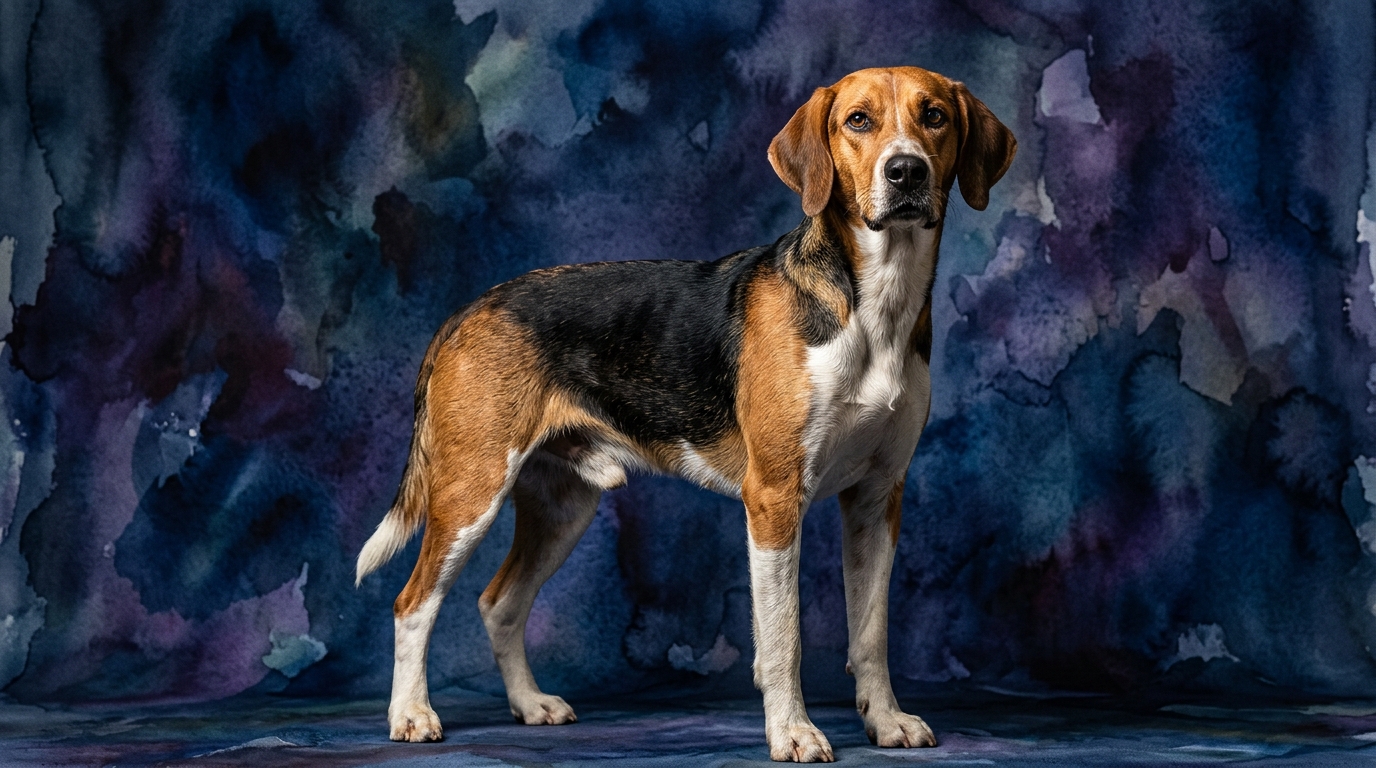
**English Foxhound (Hound Group, Not Coren-Ranked):** English Foxhounds approach problems with a direct, persistent mindset, particularly when a scent trail is involved, giving them a Problem Solving (3/5) score. Their “problem-solving” often manifests as unwavering dedication to following a complex scent puzzle, rather than devising novel solutions to abstract challenges. Learning for a Foxhound can be a more deliberate process, often requiring consistent patience and repetition, especially if the task doesn't directly align with their primary instinct, hence their Training Speed (3/5). While capable of learning, their attention can be easily diverted by compelling scents, making rapid acquisition of arbitrary commands challenging. Bred to work in large packs, English Foxhounds exhibit a high degree of Social Intelligence (3/5) within a canine group, understanding pack dynamics and cooperation, though their interaction with humans can be less overtly demonstrative. The defining characteristic of the English Foxhound is its formidable scent drive, a relentless urge to follow a trail with incredible stamina and focus, contributing to its Instinctive Drive (3/5). Their memory (3/5) is particularly acute for scent patterns and established routes, crucial for long hunts and returning to the pack, though recall for human-initiated commands may require more reinforcement.
Where Gordon Setter Wins Cognitively
The Gordon Setter’s cognitive edge primarily shines in areas demanding adaptability, quick learning, and a strong partnership with a human handler. Their 4/5 scores in Problem Solving and Training Speed mean they not only grasp new concepts rapidly but also apply learned behaviors to novel situations with greater flexibility. This manifests in their ability to quickly understand complex multi-step commands, adjust their hunting patterns based on environmental cues, or even figure out how to navigate household puzzles. The Gordon Setter’s superior Memory (4/5) further enhances this, allowing them to recall a vast repertoire of commands and routines, making advanced obedience and intricate field work a more fluid and rewarding experience. They are adept at remembering specific verbal cues, hand signals, and the sequence of actions required for a successful retrieve, demonstrating a nuanced understanding of their role in partnership with their human.
Where English Foxhound Wins Cognitively
While the English Foxhound's scores might appear lower in some general categories, their specific cognitive strengths are profoundly specialized for their historical role. Their 3/5 in Instinctive Drive, when viewed through the lens of scent work, represents an unparalleled cognitive focus and endurance. A Foxhound can process and remember complex scent trails for miles, differentiating individual animal scents and ignoring countless distractions – a form of problem-solving (3/5) that is highly specific and relentless. Their pack-oriented Social Intelligence (3/5) also represents a significant cognitive advantage in group cooperation, understanding intricate canine hierarchies and working together seamlessly towards a common goal without constant human intervention. This breed's memory (3/5) is particularly potent for geographical routes and the subtle nuances of scent, enabling them to navigate vast territories and stay on track for hours, a testament to their dedicated sensory processing and recall for their primary function.
Which is Easier to Train and Why
Between these two breeds, the Gordon Setter generally presents as the more straightforward student, largely due to its superior Training Speed (4/5) and Problem Solving (4/5). Gordon Setters are typically eager to please their handlers, form strong bonds, and possess a focused attention span that makes them receptive to instruction. They quickly connect actions with consequences and are motivated by positive reinforcement, allowing for relatively swift acquisition of basic and advanced commands. Their ability to generalize learned behaviors makes them efficient learners in various contexts.
In contrast, the English Foxhound, with its 3/5 in Training Speed and a powerful, independent Instinctive Drive (3/5), often requires greater patience and a more creative approach to training. Their primary motivation is often following a scent, and arbitrary human commands can seem less compelling. While capable of learning, their attention can be easily hijacked by environmental odors, making consistent recall or heel work a long-term project. Training a Foxhound means understanding and working with, rather than against, their profound drive, often requiring extensive desensitization to scents and highly rewarding, engaging methods to capture and maintain their focus.
Which Suits Active Owners vs Relaxed Owners
Neither the Gordon Setter nor the English Foxhound are suited for truly relaxed owners, as both are breeds developed for active, demanding work. However, the *type* of activity they thrive on differs significantly. The Gordon Setter, with its balanced drives and strong handler focus, is ideal for active owners who enjoy diverse outdoor activities like hiking, running, or field trials, and who are committed to consistent training and mental stimulation. They excel when given 'a job' to do, be it obedience, agility, or actual hunting, making them a fit for owners who want an engaged, participatory canine companion that learns and adapts alongside them.
The English Foxhound, on the other hand, demands a uniquely intense level of physical exertion and opportunities to utilize its powerful scenting abilities. Owners must be prepared for long, vigorous runs or walks, ideally in secure, open areas where they can explore scents. Their independent nature and relentless drive make them less suited for owners seeking a dog primarily for casual strolls or indoor companionship. They require an owner who understands and can accommodate their profound need for extensive, structured exercise that taps into their innate purpose, often making them a better fit for rural or very active suburban living with dedicated time for their physical and mental outlets, especially those involving scent work.
The Verdict
Choose the Gordon Setter if you seek a highly trainable, adaptable companion for diverse activities, valuing a strong human-dog partnership and quick learning in a family setting.
Opt for the English Foxhound if you are an incredibly active owner prepared to accommodate an independent, scent-driven dog with immense stamina, providing extensive opportunities for rigorous outdoor exploration and specialized scent work.
🧠 Find Your Pet's IQ Score
Our Pet IQ Lab assessment covers 25+ tests across 5 cognitive dimensions — personalized to your breed.
Take the Full IQ Test →Frequently Asked Questions
Is the English Foxhound difficult to live with due to its strong scent drive?
While their scent drive is profound, it's not inherently "difficult" but requires specific management. Owners must provide ample opportunities for their Foxhound to engage this drive safely, typically through long, leashed walks or secure off-leash areas, to prevent them from independently following a compelling trail. Consistent training focusing on recall and impulse control from an early age is also crucial for harmonious coexistence.
Can a Gordon Setter adapt to apartment living if given enough exercise?
A Gordon Setter *can* adapt to apartment living, but it demands significant dedication from the owner. Their high energy levels and need for mental stimulation mean daily vigorous exercise, including long walks, runs, or structured play, is non-negotiable. Without sufficient outlets, they may develop undesirable behaviors, so apartment living requires an owner committed to providing extensive physical and cognitive engagement outside the home.
How do their social intelligence scores (both 3/5) manifest differently in a home environment?
The Gordon Setter's 3/5 social intelligence often means they are deeply bonded with their immediate family, attentive to human cues, and generally amiable with familiar people and dogs, though they may be reserved with strangers. The English Foxhound's 3/5 social intelligence, rooted in pack dynamics, translates to a dog that thrives in a multi-dog household and is generally friendly with people, but might be less singularly focused on human interaction and more inclined towards independent exploration or canine companionship.