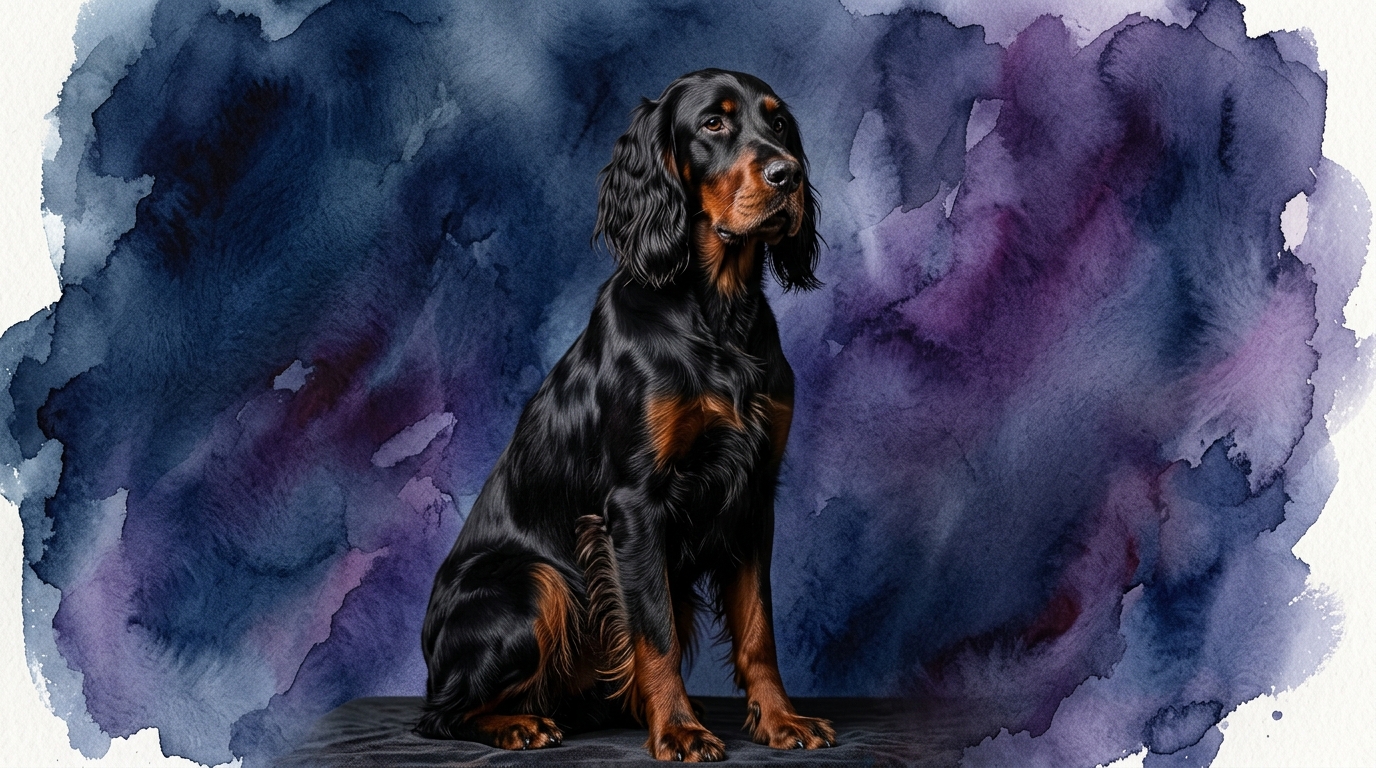
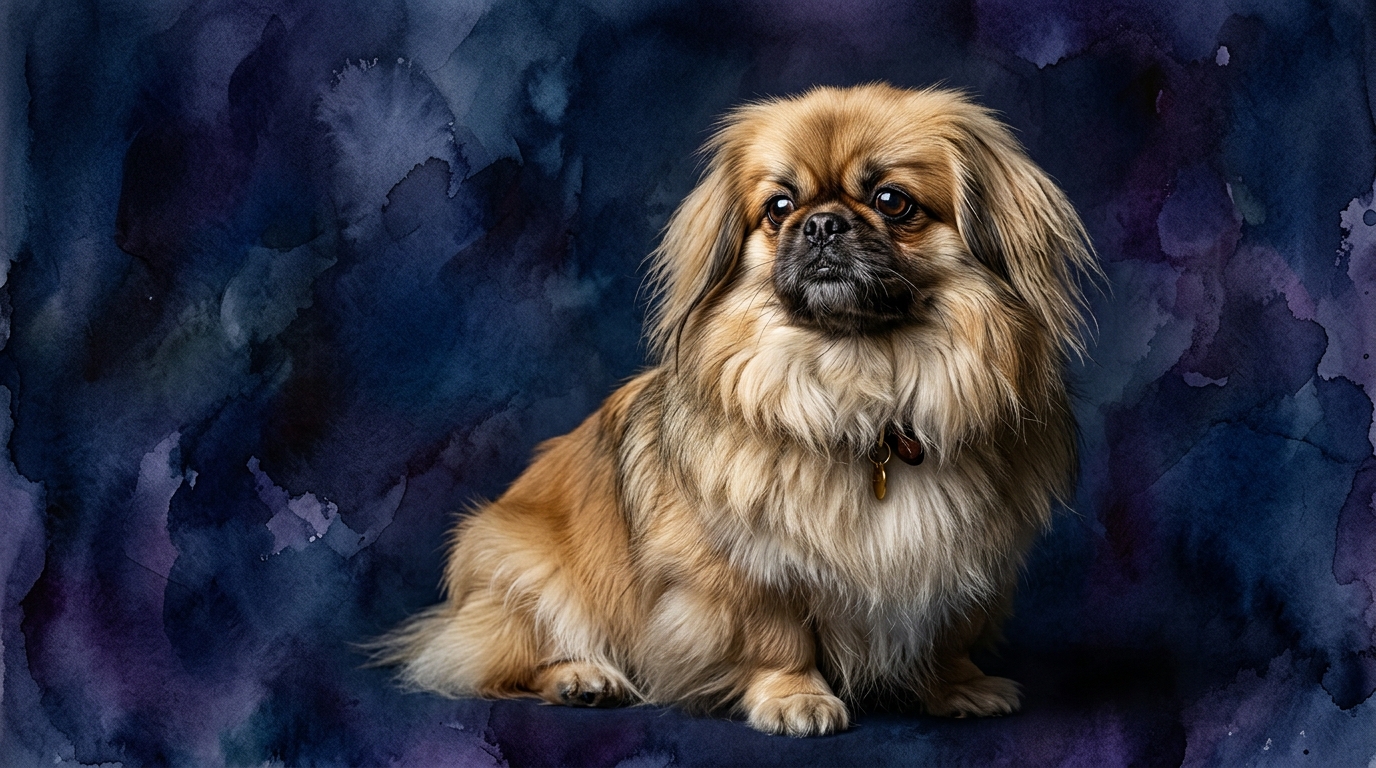
Side-by-Side IQ Profile: Gordon Setter vs. Pekingese
The Gordon Setter, with a Coren rank of #39, sits comfortably in the upper echelon of canine working intelligence, signaling a significant capacity for understanding and obedience. Their problem-solving score of 4/5 indicates a notable efficiency in navigating novel situations and devising solutions. A training speed of 4/5 means they acquire new commands and routines with impressive swiftness, often requiring fewer repetitions than many other breeds. While their social intelligence at 3/5 suggests a reasonable grasp of human cues and social dynamics, it might not be as overtly expressive as some breeds. Their instinctive drive, also 3/5, points to a functional level of inherent behaviors tied to their original purpose, such as tracking or retrieving, without being overwhelmingly obsessive. Crucially, a memory score of 4/5 underscores their strong ability to retain learned behaviors and recall past experiences, making them reliable partners in recurrent tasks and long-term training.
In contrast, the Pekingese holds a Coren rank of #77, placing it in a category that typically demands more patience and nuanced understanding during training. Their problem-solving ability, rated at 3/5, indicates they can certainly tackle challenges, though they might approach them with a more deliberate pace or necessitate clearer guidance. A training speed of 3/5 confirms their trainability, yet owners should anticipate the need for consistent reinforcement and potentially varied teaching methods to solidify new behaviors. Similar to the Gordon Setter, their social intelligence is rated 3/5, signifying a capacity to form bonds with their human companions and interpret basic social signals, often expressed with a characteristic, dignified independence. An instinctive drive of 3/5 means they possess breed-specific inherent tendencies, but these are generally directed more towards companionship and vigilance rather than intricate working tasks. Their memory, also 3/5, allows them to learn and remember routines and commands, albeit potentially with less precision or recall speed than a breed scoring higher in this dimension.
Where the Gordon Setter Wins Cognitively
The Gordon Setter’s cognitive strengths truly emerge in scenarios requiring active participation and rapid learning. Their superior problem-solving score of 4/5 demonstrates an advanced capability to process environmental information and formulate effective responses, whether it involves skillfully navigating a complex scent trail or ingeniously retrieving a toy from an challenging spot. This cognitive prowess directly underpins their remarkable training speed of 4/5; they assimilate new commands and intricate action sequences with impressive alacrity, making them highly receptive to advanced obedience training or specialized tasks. Their robust memory, also rated 4/5, ensures that once a lesson is mastered, it tends to be retained over time, significantly reducing the necessity for constant re-teaching. This powerful combination of swift learning, efficient problem-solving, and reliable memory positions the Gordon Setter as an exceptional candidate for activities demanding sustained mental effort and precision, such as competitive dog sports, field trials, or even complex household routines. Their cognitive makeup is inherently geared towards active partnership and engaged participation in collaborative tasks.
Where the Pekingese Wins Cognitively
While the Pekingese may not surpass the Gordon Setter in direct cognitive metrics, its distinct amalgamation of intellectual traits offers unique advantages, particularly fitting its historical role as a companion. The Pekingese’s consistent 3/5 scores across problem-solving, training speed, social intelligence, instinctive drive, and memory, portray a dog whose cognitive abilities are perfectly attuned for independent companionship rather than demanding work. Their moderate instinctive drive means they are considerably less prone to developing the intense, sometimes overwhelming, needs for constant mental stimulation or rigorous physical exertion often observed in working breeds. This translates to a dog that is generally content with a more relaxed lifestyle, placing fewer cognitive demands on its environment or owner. Their 3/5 social intelligence, coupled with their inherent independence, frequently results in a discerning companion who bestows affection on their own terms, providing a calm and self-possessed presence rather than an insistent need for constant interaction. This cognitive self-sufficiency is a distinct 'win' for owners seeking a dignified, less overtly demanding canine presence, one whose intellect is expressed through thoughtful observation and a quiet understanding of their home environment, without the relentless drive for complex engagement.
Which is Easier to Train and Why
Based on their respective IQ profiles, the Gordon Setter is undeniably easier to train than the Pekingese, a difference deeply rooted in their breed histories and inherent cognitive predispositions. The Gordon Setter’s 4/5 training speed signifies they absorb new commands and routines with fewer repetitions, frequently displaying an eagerness to learn and cooperate. Their superior problem-solving (4/5) allows them to grasp the underlying logic of a command more quickly, making them responsive to nuanced instructions and adept at generalizing learned behaviors to new situations. This breed was meticulously developed to work in close partnership with humans in the field, necessitating a high degree of attentiveness and a strong willingness to follow directions. Conversely, the Pekingese, with its 3/5 training speed and problem-solving, demands a more patient and consistently applied approach. Their historical role as royal companions often meant they were indulged and not typically subjected to rigorous obedience training. This background, combined with their characteristic independence, means they can sometimes appear less motivated by traditional rewards or immediate human approval, often preferring to exercise their own discretion. While certainly trainable, owners must adapt their methods, focusing on positive reinforcement, engaging short sessions, and understanding that a Pekingese might deliberate if a command is 'worth' executing at that precise moment, rather than offering immediate, eager compliance. Their training is more about cultivating a respectful relationship and discovering what truly resonates with their individual motivations.
Which Suits Active Owners vs. Relaxed Owners
The cognitive profiles of the Gordon Setter and Pekingese distinctly outline their suitability for different owner lifestyles. The Gordon Setter, with its 4/5 problem-solving and training speed, complemented by a 3/5 instinctive drive, flourishes with active, engaged owners capable of providing consistent mental and physical stimulation. They are an ideal match for individuals or families who relish outdoor pursuits like hiking, jogging, or dog sports such as agility or competitive obedience. Their strong memory (4/5) and rapid learning capability make them exceptional partners for intricate training routines and dependable companions for adventures where remembering commands or navigating diverse terrains is crucial. An owner who appreciates a dog that actively participates in life and genuinely enjoys the process of learning new things will discover immense fulfillment with a Gordon Setter. Conversely, the Pekingese, characterized by its consistent 3/5 scores across all cognitive dimensions and its moderate instinctive drive, is a perfect fit for more relaxed owners. They are perfectly content with shorter, leisurely walks and indoor playtime, not requiring extensive daily exercise or constant mental challenges to avert boredom. Their social intelligence (3/5) facilitates a meaningful bond, but their inherent independence means they are not typically 'velcro dogs' demanding incessant attention. An owner who values a dignified, self-sufficient companion who enjoys quiet companionship, perhaps a brief stroll, and comfortable naps, without the need for intense training or strenuous activity, will find the Pekingese an ideal and cherished member of their household.
The Verdict
Choose a Gordon Setter if you seek an active, intelligent partner eager for complex training, outdoor adventures, and a dog who readily engages in problem-solving tasks.
Opt for a Pekingese if you prefer a dignified, independent companion content with a more relaxed lifestyle, valuing quiet presence over constant activity or intense training demands.
🧠 Find Your Pet's IQ Score
Our Pet IQ Lab assessment covers 25+ tests across 5 cognitive dimensions — personalized to your breed.
Take the Full IQ Test →Frequently Asked Questions
Do Pekingese dogs understand commands as well as Gordon Setters?
While both breeds can certainly learn commands, Gordon Setters typically grasp them faster due to their 4/5 training speed and problem-solving abilities. Pekingese, with 3/5 scores, require more patience and consistency in training, but are absolutely capable of learning and responding effectively.
Is a Gordon Setter prone to destructive behavior if not mentally stimulated?
Yes, a Gordon Setter's higher problem-solving and memory scores, coupled with their instinctive drive, mean they require regular mental engagement. Insufficient stimulation can indeed lead to boredom, which may manifest as frustration and potentially destructive behaviors as they seek their own outlets for mental activity.
How does the social intelligence rating of 3/5 compare for these two breeds?
A 3/5 social intelligence score for both breeds indicates they possess a functional capacity to understand human cues and form bonds. However, the Gordon Setter might express this through active partnership, while the Pekingese often demonstrates it with a more independent, discerning affection, fitting their distinct breed temperaments and historical roles.