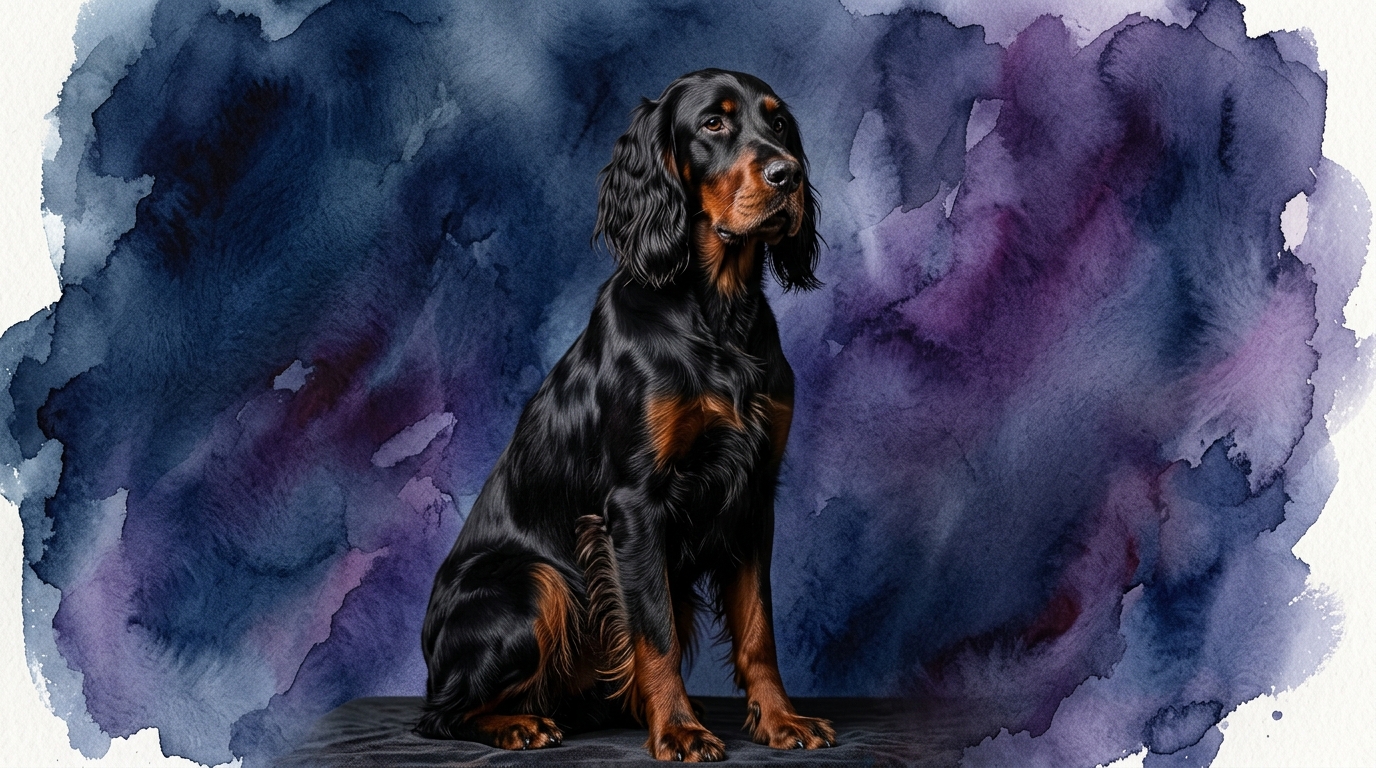
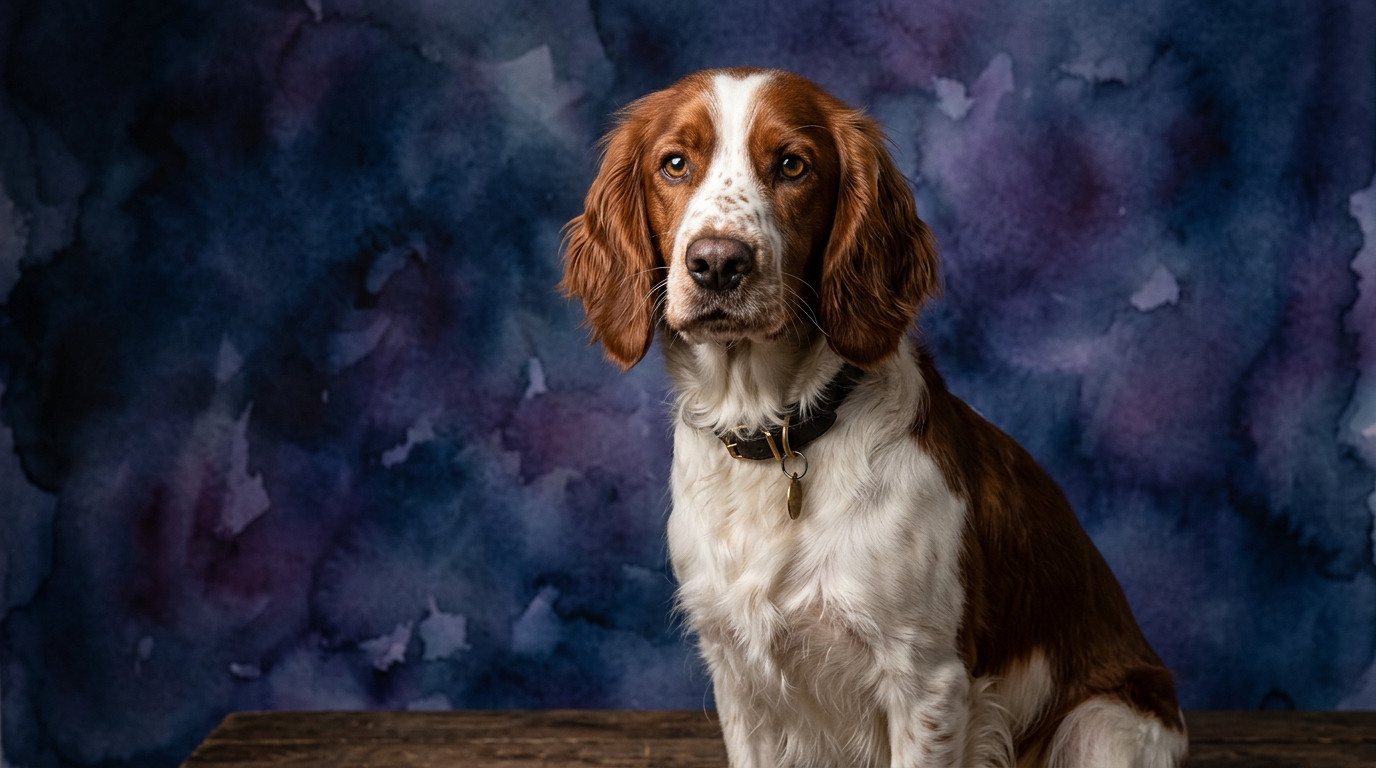
Side-by-Side Cognitive Profile
The Pet IQ Lab provides a detailed breakdown of canine intelligence across five key dimensions, offering a comparative lens for breeds like the Gordon Setter and the Welsh Springer Spaniel. Both breeds register identical scores across the board, signaling a shared foundational cognitive capacity, yet their application of these traits often differs based on their historical roles and inherent temperaments.
For Problem Solving, both breeds score an impressive 4 out of 5. This indicates a strong capacity for navigating novel situations, understanding cause and effect, and adapting strategies to achieve goals, whether it's locating hidden game or figuring out a puzzle toy. Their Training Speed also stands at 4 out of 5, suggesting they both possess a commendable ability to learn and retain new commands and routines with relative efficiency. Social Intelligence for both is rated 3 out of 5, reflecting a moderate aptitude for understanding human cues and interacting within a social structure, often prioritizing their immediate family unit. Instinctive Drive, crucial for their sporting heritage, is 3 out of 5 for both, denoting a solid, purposeful drive to perform breed-specific tasks like tracking or flushing. Finally, Memory is rated 4 out of 5 for both, highlighting their excellent capacity to recall past experiences, learned behaviors, and spatial information over time.
Where the Gordon Setter Shines Cognitively
Despite identical numerical scores, the Gordon Setter's cognitive strengths often manifest in a distinct manner, honed by its origins as a wide-ranging bird dog. Their Problem Solving (4/5) tends to lean towards sustained, independent strategic thinking over vast, open terrains. A Gordon Setter excels at deciphering complex scent trails and making autonomous decisions far from the handler, showcasing a self-reliant cognitive focus required for methodical tracking and locating game in challenging environments. This requires a specific type of mental stamina and decision-making under less direct guidance, prioritizing deep engagement with the task at hand.
Their Instinctive Drive (3/5), while mirroring the Welsh Springer's score, is expressed through a profound, controlled desire to 'set' or point birds. This specialized predatory instinct demands significant cognitive discipline: the ability to detect, approach, and then freeze, suppressing the immediate urge to chase. This act of holding a point for an extended period, signaling the bird's location to the hunter, is a complex cognitive feat involving impulse control, environmental awareness, and a nuanced understanding of their role in the hunting partnership.
Where the Welsh Springer Spaniel Excels Cognitively
The Welsh Springer Spaniel, with its role as a flushing and retrieving dog, demonstrates its cognitive prowess in a different, equally impressive fashion. Their Problem Solving (4/5) often manifests as rapid, adaptive thinking within dense, confined cover. A Welsh Springer's mind is adept at quickly assessing and navigating thickets, flushing birds efficiently, and retrieving them from challenging environments. This suggests a quick-witted, agile problem-solver that can adjust tactics on the fly to immediate, changing circumstances in close quarters, requiring swift perceptual analysis and physical coordination.
While sharing a Social Intelligence score of 3/5, the Welsh Springer's expression of this trait often includes a more pronounced eagerness to please and work in a dynamic, cooperative partnership. A flushing dog needs to be highly attuned to the handler's movements and signals for efficient quartering and flushing, indicating a quick uptake of social cues for collaborative action. This strong cooperative drive, coupled with their Training Speed (4/5), enables them to respond with exceptional alacrity to intricate command sequences in the field, making them particularly responsive to a handler's nuanced directions.
Which is Easier to Train and Why
Both the Gordon Setter and the Welsh Springer Spaniel score 4/5 in Training Speed, indicating a strong capacity for learning. However, the *experience* of training them can differ due to their inherent temperaments. Gordon Setters are often described as sensitive and can be more independent thinkers, a trait stemming from their wide-ranging hunting style which necessitates self-reliance. This independence means training requires significant patience, consistent positive reinforcement, and a strong, trusting bond to overcome their occasional 'what's in it for me?' attitude. While they remember lessons well (Memory 4/5), their social intelligence (3/5) might not always translate into an immediate, unquestioning desire to please, demanding a trainer who appreciates their thoughtful nature and avoids harsh corrections.
Welsh Springer Spaniels, by contrast, are generally known for their biddable, merry, and eager-to-please disposition. Their social intelligence (3/5) combined with an inherent enthusiasm can make them appear more straightforward for basic obedience and advanced tasks, as they often genuinely enjoy the interaction and collaboration of training sessions. However, their high energy and strong instinctive drive (3/5) for flushing means they can be easily distracted by interesting scents or movements. This requires a trainer to be highly engaging, consistent with impulse control exercises, and adept at managing environmental distractions. Their problem-solving (4/5) can also manifest as cleverness in finding loopholes if training isn't consistent, meaning a firm but fair approach is essential to channel their enthusiasm effectively.
Suitability for Active vs. Relaxed Owners
Both breeds are members of the Sporting Group, implying a significant need for physical activity. The Gordon Setter, with its heritage as a wide-ranging bird dog, typically requires extensive, sustained exercise to satisfy its stamina and mental stimulation needs. Owners who enjoy long hikes, trail running, or field activities where a dog can cover substantial ground will find the Gordon Setter a willing and capable companion. Their independent nature also means they can thrive with owners who appreciate a dog that explores with purpose, though they still require engagement. A relaxed owner might find the Gordon's energy levels overwhelming, potentially leading to boredom-induced behaviors if not adequately exercised and mentally challenged.
The Welsh Springer Spaniel, while equally active, often thrives on more varied, burst-like activities associated with flushing and retrieving in denser cover. They enjoy agility, flyball, and retrieving games, alongside regular walks or runs. Their strong desire to work closely with their handler makes them excellent partners for dog sports and activities that involve teamwork. While they certainly need ample exercise, their energy might be more easily channeled through interactive play and training sessions compared to the Gordon's need for expansive, independent exploration. Owners seeking a highly engaged, energetic partner for diverse activities, rather than solely long, sustained outings, would find the Welsh Springer a delightful fit. A truly relaxed owner would struggle with either breed's exercise demands.
The Verdict
Choose the Gordon Setter if you seek a thoughtful, independent companion for sustained outdoor adventures and appreciate a dog that applies its cognitive skills with methodical self-reliance.
Opt for the Welsh Springer Spaniel if you desire an eager, cooperative partner for dynamic activities, valuing a dog that applies its intelligence with rapid adaptability and close teamwork.
🧠 Find Your Pet's IQ Score
Our Pet IQ Lab assessment covers 25+ tests across 5 cognitive dimensions — personalized to your breed.
Take the Full IQ Test →Frequently Asked Questions
Do Gordon Setters and Welsh Springer Spaniels learn at the same rate?
Based on their Pet IQ Lab scores, both breeds share a Training Speed rating of 4/5, indicating they possess a similar capacity for learning new commands and routines efficiently. However, their individual temperaments may influence the *ease* of the training process, with Gordon Setters potentially requiring more patience for their independent streak, and Welsh Springers needing focus amidst their enthusiasm.
Which breed is better at problem-solving?
Both breeds are rated 4/5 for Problem Solving, suggesting an equal foundational ability to navigate novel situations and adapt strategies. The difference lies in the *type* of problem-solving they excel at: Gordon Setters often display sustained, independent decision-making in vast environments, while Welsh Springers show rapid, adaptive problem-solving in dynamic, close-quarters situations.
Are these breeds good with children and other pets?
Both breeds have a Social Intelligence score of 3/5, indicating they are generally good with their immediate family. Gordon Setters can be reserved with strangers but typically gentle with children they know, while Welsh Springers are often more outgoing and merry with everyone. Early socialization is crucial for both to ensure they adapt well to various family dynamics and other animals.