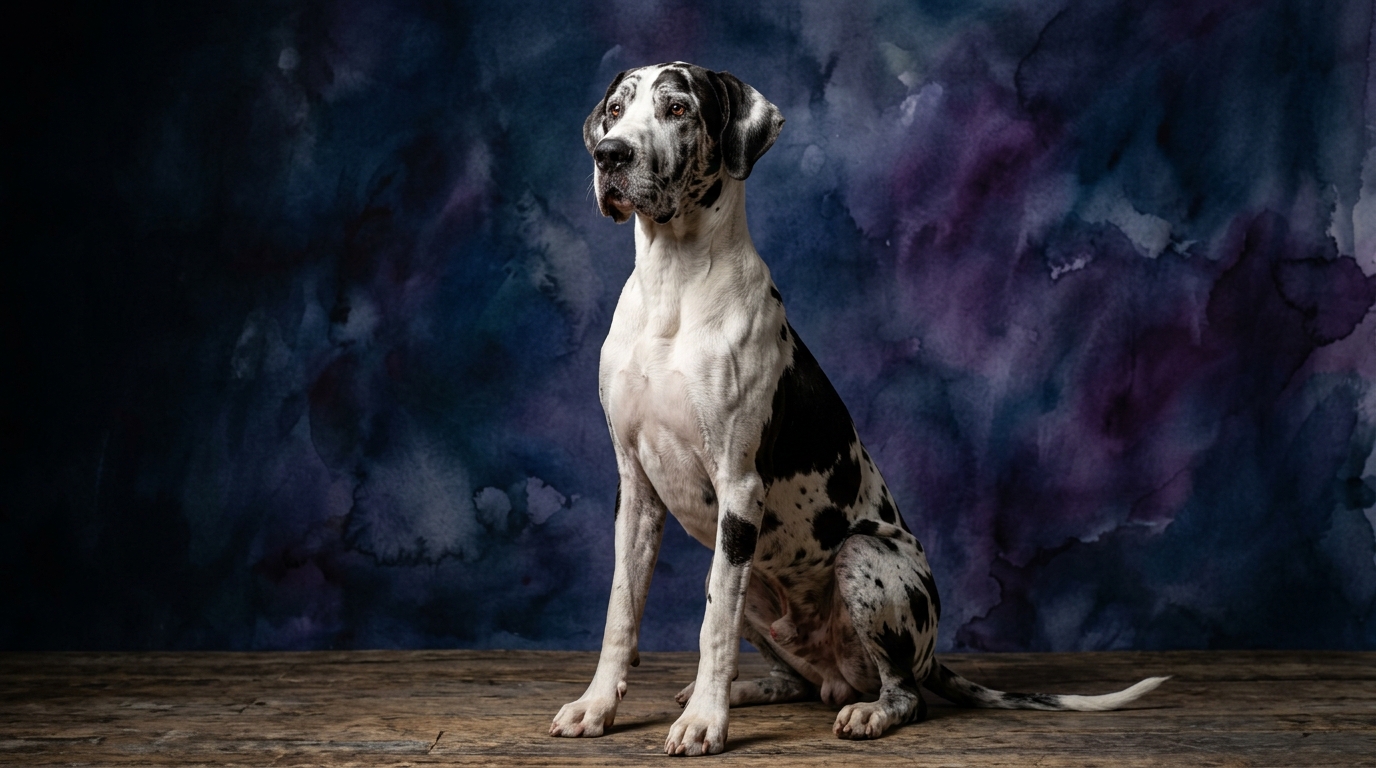
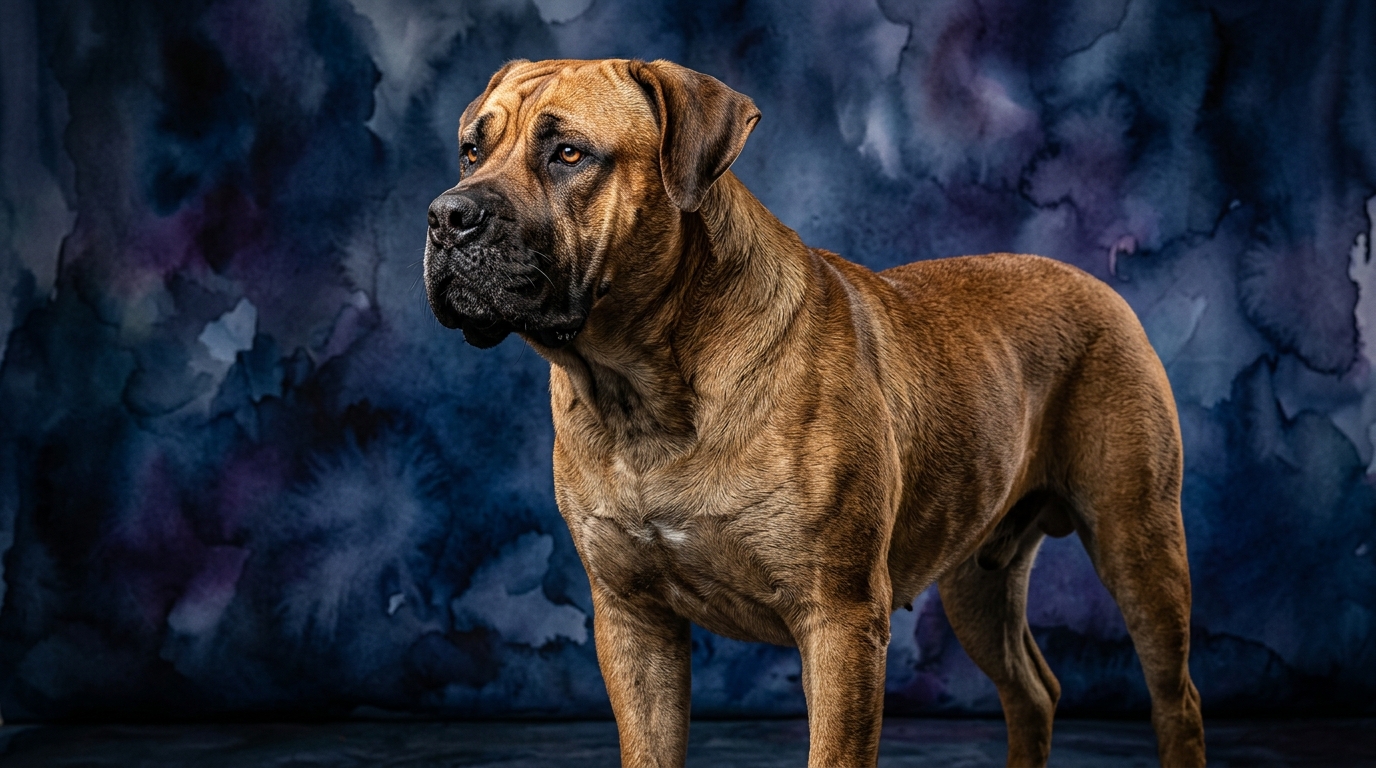
Side-by-Side IQ Profile: Great Dane vs. Boerboel
The Cosmic Pet Pet IQ Lab provides a structured framework for understanding canine cognition across five crucial dimensions. For the Great Dane, ranked #48 by Coren, its profile shows a balanced set of abilities, with a notable strength in social interaction. Its Problem Solving is rated 3/5, indicating competence in navigating moderately complex situations, often relying on learned patterns rather than innovative solutions. Training Speed also stands at 3/5, suggesting consistent, positive reinforcement methods yield average acquisition rates for new commands. Where the Great Dane truly shines is in Social Intelligence, scoring 4/5, demonstrating a pronounced ability to interpret human cues, understand social hierarchies, and adapt behavior within a family unit. Its Instinctive Drive is 3/5, expressing itself in protective instincts towards family rather than intense prey drive, and Memory is 3/5, showing solid retention of learned commands and routines.
The Boerboel, a robust working breed without a Coren ranking, presents a similar baseline across several cognitive areas. Like the Great Dane, its Problem Solving is rated 3/5, meaning it can handle practical challenges but isn't typically known for inventive, abstract solutions, often applying this skill to its protective role. Training Speed is also 3/5, requiring patient, firm, and consistent training, learning at a steady pace without exceptional speed, often driven by a desire to please its primary handler. Its Social Intelligence is 3/5, indicating a functional understanding of social dynamics within its immediate family, but perhaps being more reserved or less overtly expressive in interpreting subtle human emotions. The Boerboel's Instinctive Drive is 3/5, a robust drive centered on guarding and protection reflecting its heritage. Finally, its Memory is 3/5, retaining training and experiences effectively, particularly those related to routines and home environment safety.
Where the Great Dane Wins Cognitively
The Great Dane’s primary cognitive advantage lies in its superior social intelligence, rated at 4/5 compared to the Boerboel’s 3/5. This elevated capacity for social understanding means Great Danes are often more attuned to the nuances of human emotion and communication. They demonstrate a remarkable ability to read facial expressions, body language, and vocal tones, allowing them to adapt their behavior to suit the mood of their human companions. This makes them particularly adept at forming deep, empathetic bonds, often anticipating needs or offering comfort without explicit prompts. For instance, a Great Dane might instinctively lean into a distressed owner or quietly follow them, sensing their emotional state. Their responsiveness to subtle cues can make them appear more 'person-oriented' in their daily interactions, often seeking to be an integral, harmonious part of the family’s emotional fabric. This isn't just about obedience; it's about a sophisticated level of interspecies communication and connection that sets them apart.
Where the Boerboel Wins Cognitively
While the Great Dane excels in social empathy, the Boerboel's cognitive strengths, though not reflected in a higher numerical score in the provided metrics, are acutely focused on their instinctive drive and practical application within their historical role. Both breeds share a 3/5 rating for instinctive drive, but for the Boerboel, this drive is often channeled with a singular, resolute purpose towards guardianship and territorial protection. Their problem-solving, while rated 3/5, is often expressed through a heightened awareness of their environment and an ability to assess potential threats with a focused intensity. This breed demonstrates a profound capacity for vigilance, often meticulously surveying their surroundings and remembering specific individuals or events that might pose a risk to their domain. Their 'win' is not in abstract problem-solving or broad social understanding, but in the unwavering application of their cognitive resources towards their protective duties. They excel at pattern recognition related to security, quickly identifying anomalies and responding with a deliberate, measured approach. This focused intensity, while not a higher numerical score, represents a specialized cognitive triumph rooted in their genetic blueprint for protecting homesteads.
Which is Easier to Train and Why
When considering ease of training, the Great Dane generally presents a more straightforward path for the average owner, primarily due to its higher social intelligence score of 4/5. This enhanced ability to interpret human cues and desire to integrate harmoniously into the family unit means they are often more receptive to direction and eager to please. Their sensitivity to human feedback, coupled with a moderate instinctive drive, allows positive reinforcement techniques to yield consistent results. A Great Dane is more likely to respond to a change in vocal tone or a subtle hand signal, making the communication loop during training more fluid. In contrast, the Boerboel, with a social intelligence score of 3/5, tends to be more independent and less overtly focused on human emotional states. While equally capable of learning (both rated 3/5 for training speed), their training often requires a more assertive, confident, and consistent handler who can establish clear boundaries and expectations. Their strong, inherent protective drive means training must be channeled effectively to ensure their natural vigilance doesn't translate into unwarranted suspicion or aggression. Therefore, while both require dedication, the Great Dane's inherent social attunement can make the training journey feel more collaborative and less like a constant negotiation of wills.
Which Suits Active Owners vs. Relaxed Owners
For owners seeking a more relaxed companion, the Great Dane often proves to be a better fit. Despite their imposing size, Great Danes are frequently described as ‘gentle giants’ who thrive on being close to their families. Their moderate instinctive drive and a tendency towards being content with moderate daily exercise, such as a good walk or playtime in a secure yard, align well with a less intensely active lifestyle. They are often happy to lounge alongside their owners, preferring comfort and companionship over constant stimulation. Their higher social intelligence means they integrate seamlessly into household routines and social gatherings, adapting to various situations with a calm demeanor. The Boerboel, on the other hand, is better suited for active owners who understand the demands of a working breed. Their robust build and inherent protective drive necessitate consistent physical activity and mental engagement to prevent boredom and channel their energy constructively. They require more structured exercise, often enjoying activities that engage both their bodies and minds, such as long hikes, agility training, or supervised guarding tasks. An owner who appreciates and can facilitate these needs will find the Boerboel to be a loyal and formidable companion, but they are not a breed content with a purely sedentary existence.
The Verdict
Choose the Great Dane if you seek a deeply empathetic, socially attuned companion who integrates seamlessly into family life and prefers a more relaxed, gentle pace.
Opt for the Boerboel if you are an experienced, active owner seeking a vigilant, dedicated protector who thrives on consistent training and structured activity.
🧠 Find Your Pet's IQ Score
Our Pet IQ Lab assessment covers 25+ tests across 5 cognitive dimensions — personalized to your breed.
Take the Full IQ Test →Frequently Asked Questions
Do Great Danes make good guard dogs despite their social nature?
Great Danes possess a natural protective instinct towards their family, often acting as a deterrent due to their size and imposing appearance. While not typically aggressive, their strong social bonds mean they are quick to sense threats to their loved ones, making them effective guardians in a family context.
How does the Boerboel's protective instinct manifest in daily life?
The Boerboel's protective instinct is deeply ingrained, leading to a vigilant awareness of their surroundings and a strong territorial drive. They are often reserved with strangers and will typically place themselves between their family and perceived threats, demonstrating a calm but firm presence.
Is there a significant difference in exercise needs between these two breeds?
Yes, while both are large breeds, the Boerboel generally requires more consistent and vigorous exercise to satisfy its working dog heritage and robust build. Great Danes need regular walks but are often content with less intense activity, valuing companionship and comfort.