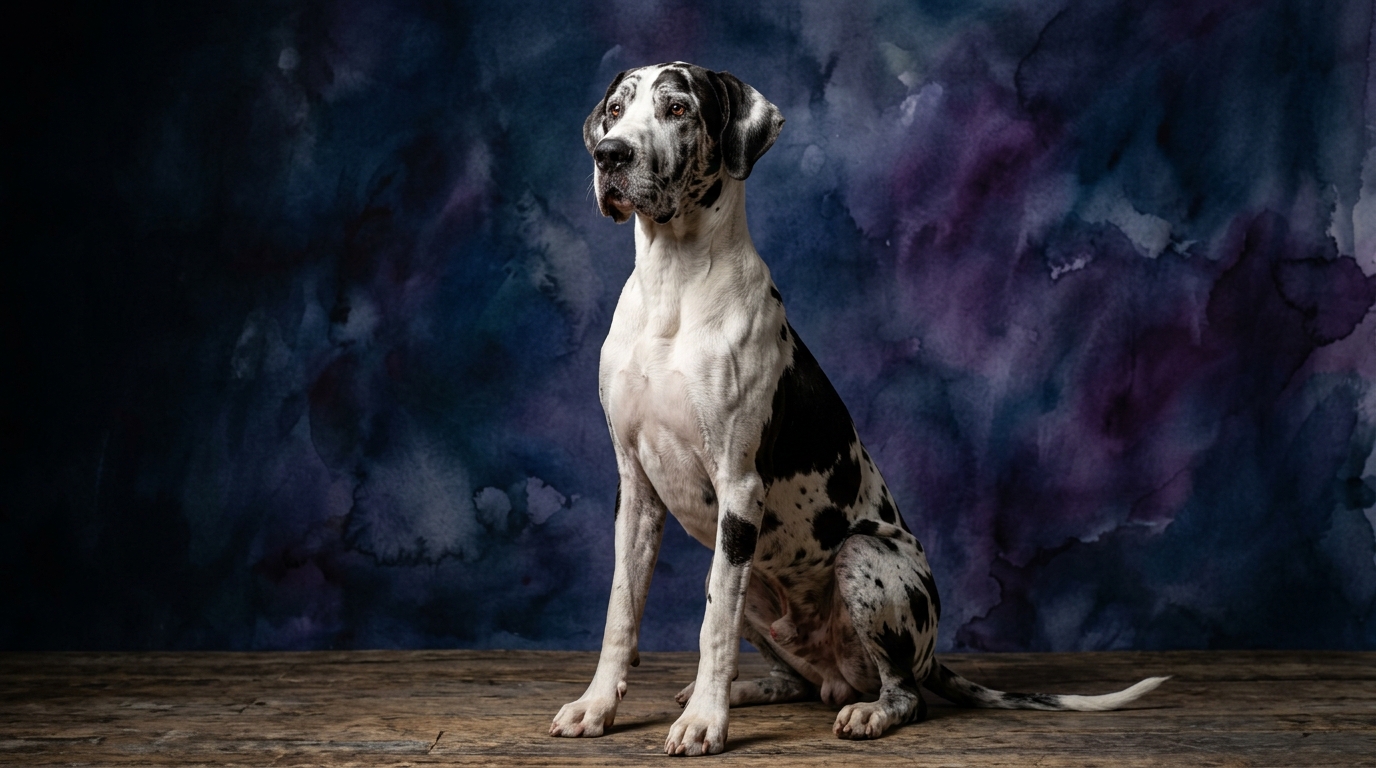
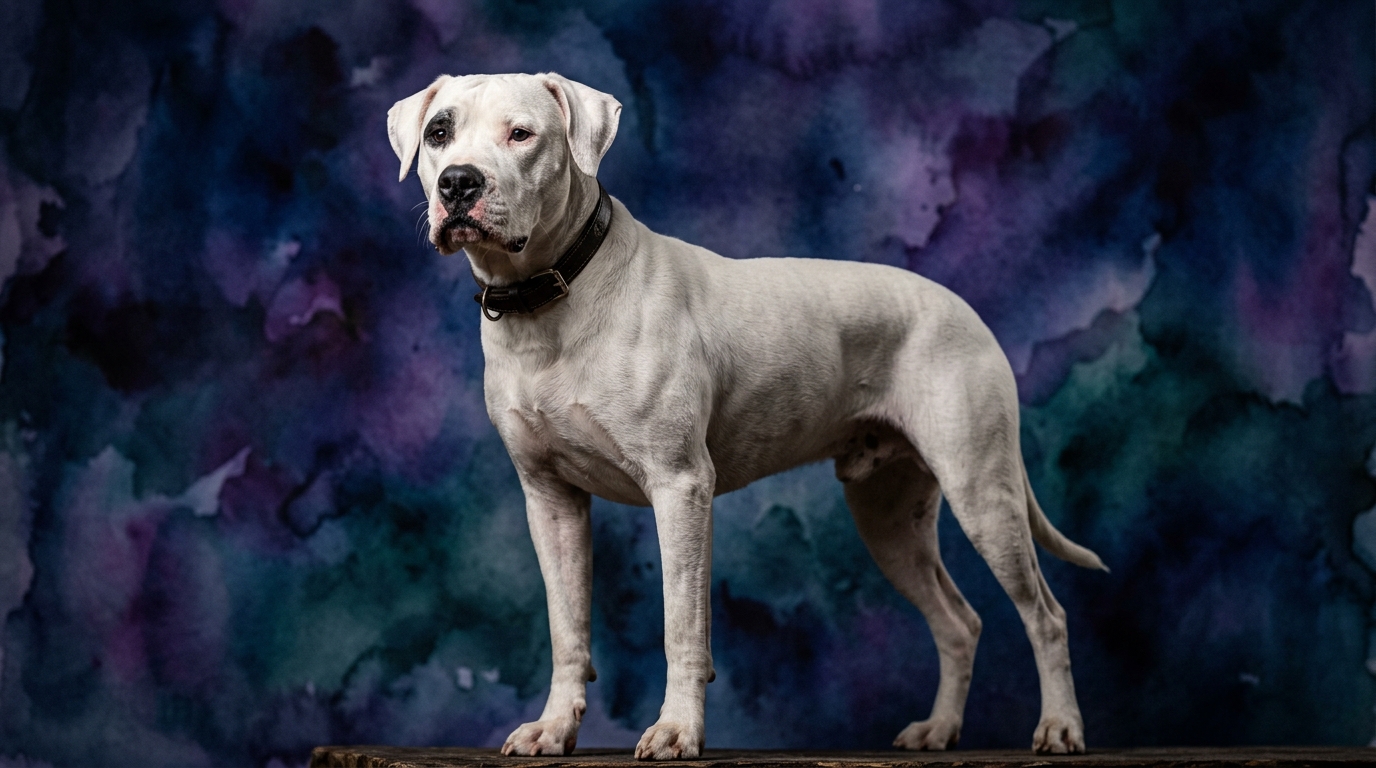
Side-by-Side Cognitive Profiles: Great Dane vs. Dogo Argentino
To understand the cognitive nuances of these breeds, The Cosmic Pet Pet IQ Lab employs a five-dimensional framework, rating each aspect on a scale of 1 to 5. Let's break down how the Great Dane and Dogo Argentino measure up in each category.
For the **Great Dane**, a Coren-ranked #48 working dog, their profile reveals a balanced but socially inclined mind:
**Problem Solving (3/5):** This breed demonstrates an average capacity for novel challenges, often relying on learned responses rather than immediate innovative solutions. They can figure out simple puzzles but might need guidance for complex, multi-step tasks.
**Training Speed (3/5):** Great Danes absorb new commands at a moderate pace, requiring consistent positive reinforcement to solidify learning. Repetition and patience are crucial, as they cooperate well but don't always grasp concepts instantly.
**Social Intelligence (4/5):** They exhibit a strong aptitude for understanding human cues and social dynamics, forming deep family bonds. Great Danes are perceptive to emotional states and adapt behavior in social settings, showing empathy and connection.
**Instinctive Drive (3/5):** This breed possesses a moderate level of inherent drives, such as guarding or companionship, which are present but generally manageable. Their working heritage leans more towards companionship and occasional guarding.
**Memory (3/5):** Great Danes retain learned information and experiences at an average level, remembering commands and past interactions. They recall familiar people and places, maintaining consistency in trained behaviors over time.
The **Dogo Argentino**, another working dog, though not Coren-ranked, presents a profile of focused determination:
**Problem Solving (3/5):** Similar to the Great Dane, the Dogo Argentino approaches problem-solving with a steady aptitude. They capably execute solutions to familiar problems but may need more guidance for truly novel situations.
**Training Speed (3/5):** Dogo Argentinos learn new tasks and commands at an average rate, benefiting from clear, consistent instruction. Their strong will means that while efficient, motivation and firm leadership are crucial for optimal progress.
**Social Intelligence (3/5):** They show a moderate understanding of social cues, primarily focusing on their immediate family unit. Loyal and protective, they might be less overtly expressive or universally adaptable in new social situations, often needing structured socialization.
**Instinctive Drive (3/5):** This breed carries a moderate, yet focused, instinctive drive from its hunting and guarding origins. This drive can manifest as protectiveness or a desire to track, requiring appropriate outlets and management.
**Memory (3/5):** Dogo Argentinos possess an average memory capacity, retaining training and experiences effectively. They remember boundaries and established routines, aiding consistent behavior once trained.
Where the Great Dane Shows Cognitive Strengths
The Great Dane's standout cognitive strength is its social intelligence, rated 4/5 compared to the Dogo Argentino's 3/5. This indicates a nuanced understanding of complex social dynamics and human emotions. A Great Dane often displays a remarkable ability to read a room, adjusting its demeanor based on the mood of human companions or social gathering energy. They are frequently described as sensitive and empathetic, often seeking to comfort or engage appropriately. This heightened social awareness contributes to their reputation as a gentle giant, as they are often more attuned to preventing conflicts and maintaining harmony. Their capacity to interpret subtle human cues, such as tone of voice, body language, and even unspoken expectations, makes them particularly responsive and adaptable in various household settings. This cognitive advantage allows them to integrate seamlessly into family life, often becoming intuitive companions who anticipate needs without explicit commands.
Where the Dogo Argentino Shows Cognitive Strengths
While the Dogo Argentino shares similar ratings in problem-solving, training speed, instinctive drive, and memory with the Great Dane, its cognitive strengths are often channeled through a different lens of focus and determination, particularly related to its working heritage. Although raw scores are identical, the Dogo's application of these traits in real-world scenarios can present as a more singularly focused drive when engaged in a task. Their instinctive drive, while rated 3/5, is often directed with keen intensity towards its purpose, whether guarding, tracking, or canine sports. This focus, combined with their problem-solving and memory, means that once a Dogo understands a task and its purpose, they apply themselves with robust resolve. For instance, in a scent-work challenge, the Dogo might exhibit a more unwavering commitment to the scent trail, leveraging its memory and problem-solving to persist until the goal is achieved. Their cognition, therefore, often manifests as a powerful, direct approach to challenges, driven by a strong inner motivation to complete a perceived "job."
Which is Easier to Train and Why
Both the Great Dane and the Dogo Argentino have a training speed rating of 3/5, suggesting moderate learning pace. However, the Great Dane often presents as marginally "easier" to train for the average owner, primarily due to its higher social intelligence (4/5). A Great Dane's greater attunement to human emotional states and social cues means they are frequently more eager to please and responsive to positive reinforcement rooted in social praise and connection. They are more likely to interpret a human's disappointment or joy, which can act as a powerful motivator. Their inherent desire for companionship often translates into a cooperative attitude during training sessions, making them generally more amenable to direction. In contrast, while the Dogo Argentino also learns effectively, its training often requires a firmer, more consistent hand and clear establishment of leadership due to its strong-willed nature and focused drives. While equally capable, the Dogo may test boundaries more often, requiring an owner to be assertive and unwavering in expectations. Therefore, while both require patience, the Great Dane's intrinsic social compliance often makes the training process feel smoother and more collaborative.
Suited for Active vs. Relaxed Owners
For the relaxed owner seeking a large, affectionate companion who enjoys a comfortable pace of life, the Great Dane often emerges as the more fitting choice. While they need regular exercise, their energy levels typically align with moderate activity. A Great Dane is often content with daily walks, playtime in a secure yard, and ample time lounging with family. Their higher social intelligence means they thrive on interaction and being an integral part of household activities, often preferring quiet companionship over constant stimulation. They adapt well to a serene home environment, often seeking out soft spots for naps and enjoying a calm routine. In contrast, the Dogo Argentino, despite similar IQ scores, inherently possesses a robust working heritage that often translates into a greater need for purposeful activity and mental engagement. While not hyperactive, a Dogo benefits immensely from an owner who can provide consistent, structured exercise and activities that tap into their instinctive drives, such as tracking, agility, or extensive hikes. An active owner who understands the need for consistent physical and mental outlets will find the Dogo Argentino a rewarding partner, as their cognitive abilities are best expressed when given a "job" or a challenging routine.
The Verdict
Choose a Great Dane if you prioritize a highly empathetic, socially intuitive companion who thrives on close family bonds and a generally relaxed home environment, valuing emotional connection and gentle cooperation in training. Their capacity for social understanding makes them excellent at integrating into diverse family dynamics and responding to subtle human cues.
Opt for a Dogo Argentino if you are an experienced, active owner prepared to provide consistent, structured training and purposeful activities that engage their focused drive and robust energy. They are a loyal, protective companion who excels when given a clear role and a challenging routine to follow, thriving under confident leadership.
🧠 Find Your Pet's IQ Score
Our Pet IQ Lab assessment covers 25+ tests across 5 cognitive dimensions — personalized to your breed.
Take the Full IQ Test →Frequently Asked Questions
Are Great Danes good with children?
Yes, Great Danes often excel with children due to their high social intelligence and gentle nature. They are typically patient and tolerant, though their large size always necessitates supervision to prevent accidental bumps during play. Their empathetic nature means they usually adapt well to the energy of a family environment.
Do Dogo Argentinos require a lot of exercise?
Dogo Argentinos require consistent and purposeful exercise to satisfy their working breed instincts. While not necessarily requiring constant high-impact activity, they benefit from daily structured walks, playtime, and mental challenges that tap into their drive for engagement. This helps manage their energy and focus their cognitive abilities.
How do the breeds compare in terms of protectiveness?
Both breeds possess a protective instinct, but it manifests differently. Great Danes are protective of their family due to their strong social bonds and empathy, often acting as gentle deterrents. Dogo Argentinos, with their hunting and guarding heritage, tend to have a more pronounced and focused protective drive, requiring thorough socialization and training to ensure appropriate responses.