
Side-by-Side Cognitive Profiles
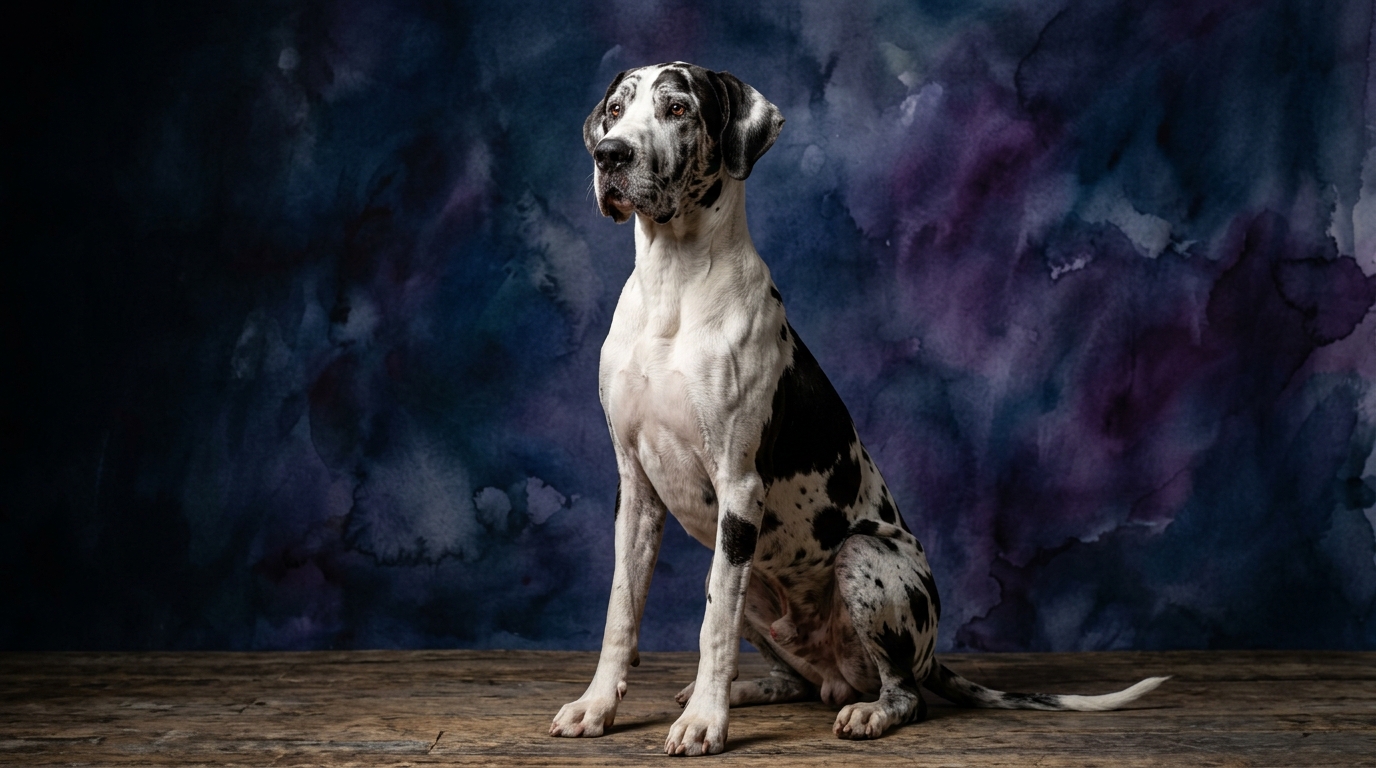
The Great Dane, a majestic breed ranked #48 by Coren, presents a balanced cognitive profile. Its Problem Solving is rated at 3/5, indicating a solid capacity to navigate novel situations and figure out solutions, though not always with lightning speed. Training Speed, also at 3/5, suggests they learn new commands at a moderate pace, thriving on consistent, positive reinforcement. Where the Great Dane truly distinguishes itself is its Social Intelligence, scoring 4/5, signifying a strong ability to understand human cues, emotional states, and social dynamics. Its Instinctive Drive is 3/5, reflecting a moderate level of inherent urges like guarding or prey drive, while its Memory stands at 3/5, allowing it to retain learned behaviors and routines effectively.
The Dogue de Bordeaux, while not Coren-ranked, possesses a robust and consistent cognitive makeup across the board. Its Problem Solving is 3/5, much like the Great Dane, demonstrating a practical approach to challenges. Training Speed also mirrors the Great Dane at 3/5, meaning patience and repetition are key to successful learning. The Dogue de Bordeaux's Social Intelligence is rated at 3/5, indicating a generally responsive but perhaps more independent nature compared to the Great Dane, less driven by the immediate desire to please. Its Instinctive Drive is 3/5, pointing to a foundational level of inherent behaviors often associated with its protective heritage, and its Memory is 3/5, ensuring it remembers training and experiences with consistency.
Where the Great Dane's Cognition Excels
The Great Dane's primary cognitive advantage lies in its superior Social Intelligence, scoring 4/5 compared to the Dogue de Bordeaux's 3/5. This higher score translates into a dog that is often more attuned to human emotions and social nuances. Great Danes typically exhibit a greater desire to engage with their family members, often seeking interaction and responding readily to verbal and non-verbal cues. This makes them particularly adept at forming deep, communicative bonds, often anticipating their owner's wishes or reacting sensitively to changes in household mood. Their Coren ranking of #48 further supports their general cognitive responsiveness within the canine spectrum, indicating a breed that processes and reacts to its environment with a notable degree of comprehension and adaptability, especially in social contexts.
Where the Dogue de Bordeaux's Cognitive Profile Shines
While the Dogue de Bordeaux doesn't numerically 'win' in a specific IQ dimension over the Great Dane, its consistent 3/5 scores across Problem Solving, Training Speed, Instinctive Drive, and Memory, combined with its 3/5 Social Intelligence, paint a picture of steadfastness and robust determination. Its cognitive strength lies in its unwavering focus and purposeful approach, particularly when it comes to its inherent protective instincts. The Dogue de Bordeaux's problem-solving, though moderate, is often applied with a practical, no-nonsense attitude, driven by its inherent sense of duty. This breed's specific cognitive blend, while perhaps less outwardly effusive than the Great Dane, results in a dog that is deeply devoted and capable of independent thought in guarding scenarios, relying on its solid memory and intrinsic drives to assess and act.
Training Dynamics: Great Dane vs. Dogue de Bordeaux
When it comes to training, both breeds share a Training Speed score of 3/5, suggesting they learn at a moderate pace requiring consistency. However, the Great Dane's higher Social Intelligence (4/5) often gives it an edge in terms of perceived trainability. Great Danes typically exhibit a stronger desire to please their human companions, making them more responsive to positive reinforcement and praise. They are often quicker to engage in training sessions and more motivated by human interaction, translating into smoother progress, especially for novice owners. Their ability to read human body language and vocal tones more acutely can also help them understand commands and expectations faster.
In contrast, the Dogue de Bordeaux, with a 3/5 Social Intelligence, may display a more independent streak during training. While equally capable of learning, they might require a trainer with a firmer, more consistent hand and a deeper understanding of their motivations. They are not necessarily stubborn, but their desire to comply might be less overtly expressed than a Great Dane's. Training a Dogue de Bordeaux often benefits from clear, concise commands and a focus on building respect and trust, rather than relying solely on a strong desire to please. Their robust build and powerful presence also mean early and consistent socialization and obedience are paramount to manage their physical capabilities.
Matching Breeds to Owner Lifestyles
The Great Dane, with its 4/5 Social Intelligence and moderate 3/5 Instinctive Drive, often thrives with owners who enjoy active engagement and social interaction. While they aren't hyperactive, they benefit immensely from being an integral part of family activities, whether it's leisurely walks, car rides, or simply lounging nearby. Their social nature means they can be prone to separation anxiety if left alone for extended periods, making them ideal for owners who are home frequently or can bring their dog along. They require consistent, gentle exercise to maintain their physical and mental well-being, but their need for constant high-intensity activity is moderate, suiting owners who appreciate a calm yet companionable giant.
The Dogue de Bordeaux, with its consistent 3/5 scores across most cognitive dimensions, including Instinctive Drive and Social Intelligence, can suit a different kind of owner. While they certainly need exercise and family inclusion, their slightly more independent social nature means they might be content with less constant, direct interaction than a Great Dane. They possess a strong, protective instinct (rooted in their 3/5 instinctive drive) that needs appropriate channeling, making them suitable for owners who understand and are prepared to manage a powerful guardian breed. They are not typically high-energy dogs, preferring short bursts of activity and then extended periods of rest, which can appeal to owners who lead a more relaxed lifestyle but still commit to structured walks and training.
The Verdict: When to Choose Each Magnificent Breed
The Verdict
Choose the Great Dane if you prioritize a highly socially responsive companion who thrives on close interaction and aims to please, fitting seamlessly into a family-centric lifestyle with moderate activity needs.
Opt for the Dogue de Bordeaux if you appreciate a steadfast, purposeful guardian with a more independent spirit, valuing a robust presence and a dog whose loyalty is expressed through unwavering devotion rather than constant effusive affection.
🧠 Find Your Pet's IQ Score
Our Pet IQ Lab assessment covers 25+ tests across 5 cognitive dimensions — personalized to your breed.
Take the Full IQ Test →Frequently Asked Questions
Are Great Danes good with children?
Great Danes, with their 4/5 social intelligence and gentle nature, are often excellent with children when properly socialized. Their calm demeanor and patience make them wonderful family dogs, though their large size always necessitates supervision to prevent accidental bumps.
Do Dogue de Bordeaux dogs require a lot of exercise?
Dogue de Bordeaux dogs have a moderate 3/5 instinctive drive and are not typically high-energy. They require daily walks and some playtime to stay healthy, but they are content with shorter bursts of activity followed by ample rest, making them suitable for owners with a balanced activity level.
Which breed is more prone to separation anxiety?
Given its higher social intelligence (4/5), the Great Dane is generally more prone to developing separation anxiety if left alone for extended periods. Their strong bond with their human family means they thrive on companionship and can become distressed without it, whereas the Dogue de Bordeaux's 3/5 social intelligence might make it slightly more tolerant of solitude, though still requiring companionship.