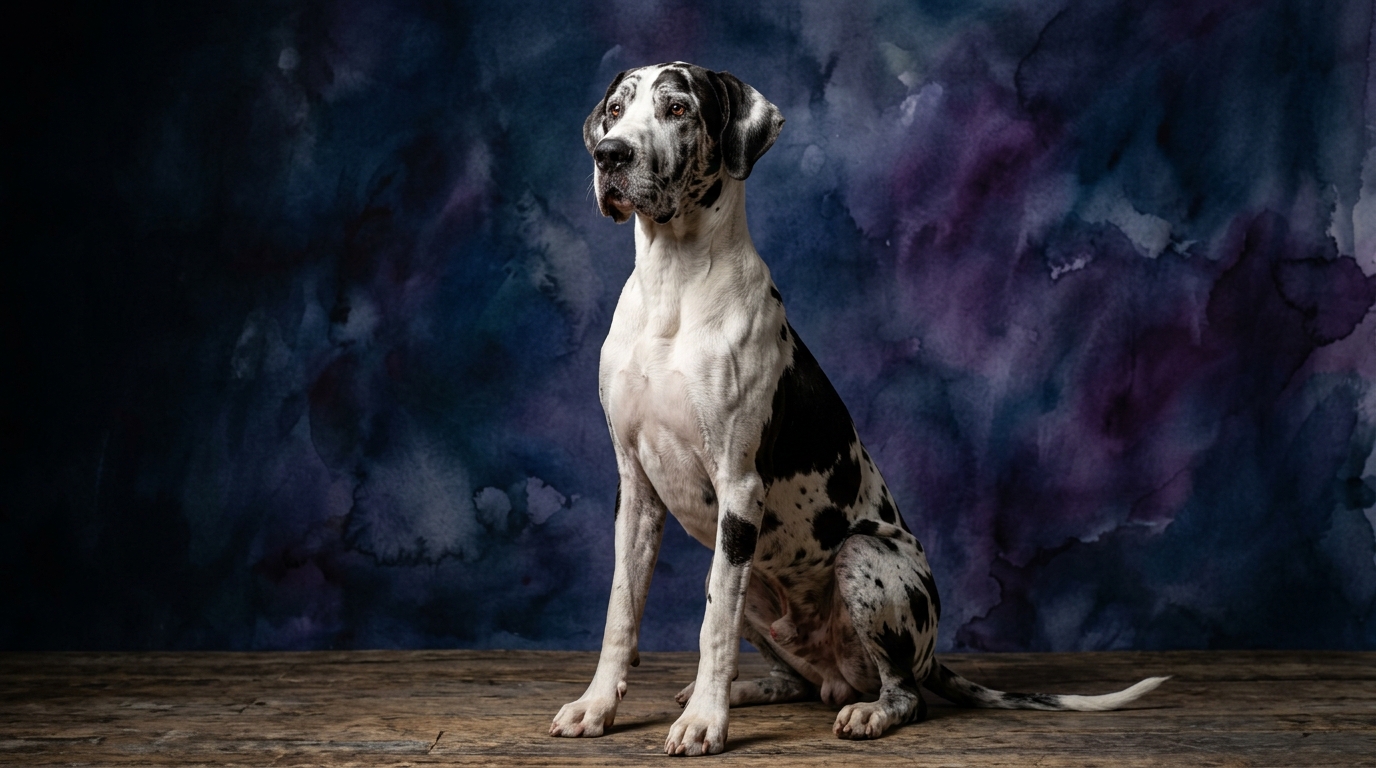
Unpacking the Cognitive Profiles: Great Dane
The Great Dane, a majestic member of the Working Group, registers a Coren rank of 48, indicating a solid capacity for learning and adaptation. Their problem-solving score sits at a 3 out of 5, suggesting they are capable of navigating moderate challenges, such as figuring out how to open a simple gate latch or retrieving a toy from under furniture, but they may not consistently devise complex, multi-step solutions independently without prior guidance. This score reflects a practical intelligence focused on their immediate environment and routine.
In terms of training speed, the Great Dane also scores a 3 out of 5, meaning they grasp new commands at a steady pace. They respond particularly well to consistent, positive reinforcement methods that build a strong partnership, though owners should expect regular, engaging sessions rather than instant mastery. Their social intelligence is a notable strength at 4 out of 5, reflecting a deep attunement to human emotions, body language, and household routines, making them highly empathetic and seamlessly integrated family members who often anticipate their owner's needs.
Their instinctive drive, rated at 3 out of 5, primarily manifests as a moderate protective instinct for their family and home, rather than a strong prey drive. They are vigilant observers of their surroundings, often alerting to novel sounds or sights without being overly reactive. Finally, memory also scores a 3 out of 5, indicating they retain learned behaviors, recognize familiar individuals and places, and recall routines reliably over extended periods, contributing to their predictable and comforting presence.
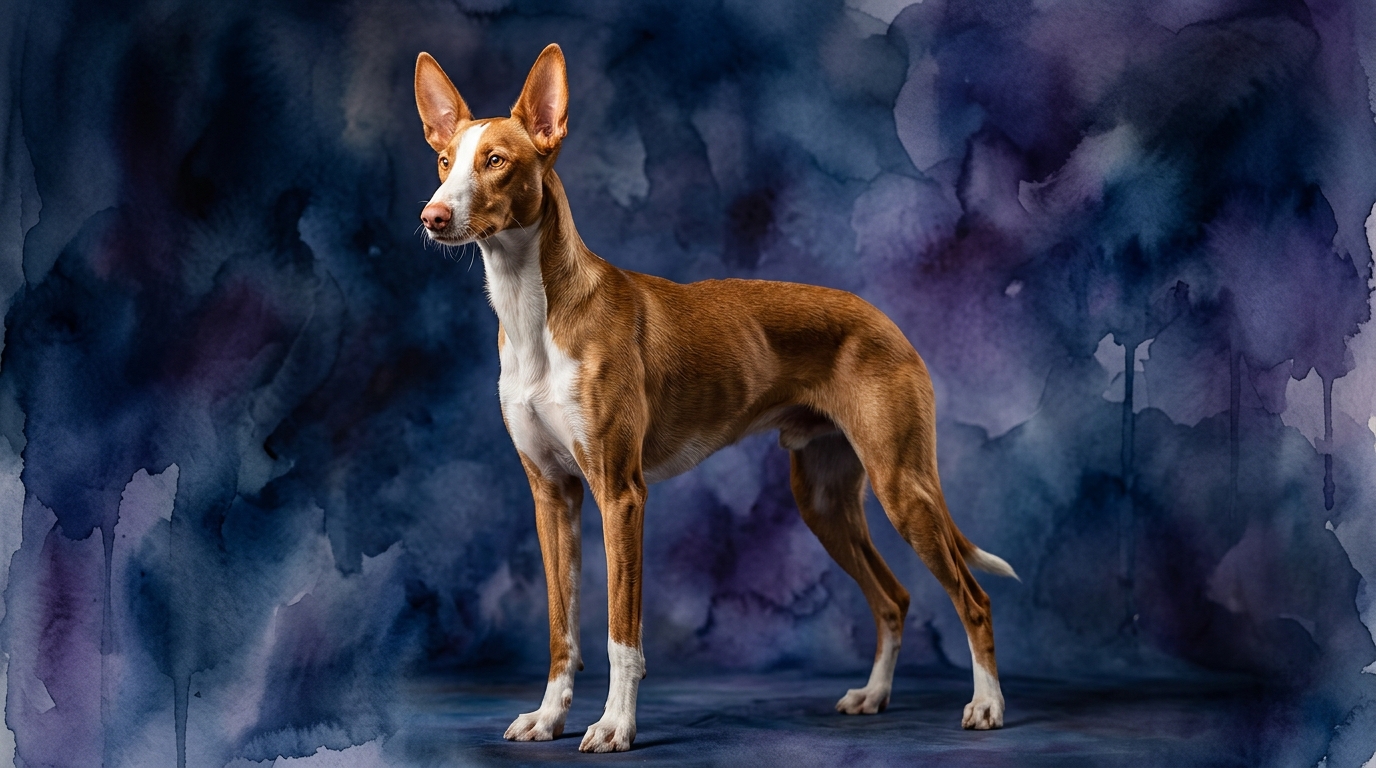
Unpacking the Cognitive Profiles: Ibizan Hound
The Ibizan Hound, an elegant and agile member of the Hound Group, holds a Coren rank of 53, placing them slightly lower than the Great Dane but still within a respectable range for cognitive abilities. Their problem-solving capacity, like the Dane's, is rated 3 out of 5, often expressed through their natural hunting prowess. This might involve strategically cornering small game, navigating complex terrains to achieve a goal, or cleverly escaping enclosures, demonstrating a practical, independent intelligence geared towards self-preservation and pursuit.
Their training speed also stands at 3 out of 5, implying they can learn commands effectively; however, their inherent independence and strong instinctual drives mean they often require more patience, creative motivation, and a clear demonstration of personal benefit to comply consistently. Unlike breeds that live to please, an Ibizan Hound’s own instincts can sometimes override human directives, making training a nuanced dance. The Ibizan Hound's social intelligence is rated 3 out of 5, indicating they form strong, loyal bonds with their family but might display a more reserved or independent demeanor compared to the highly people-oriented Dane, often choosing to observe rather than constantly engage.
Instinctive drive for the Ibizan Hound is also 3 out of 5, but this score predominantly reflects a powerful prey drive and an innate desire to chase and hunt, a core characteristic of their sighthound heritage. This drive is a central part of their identity and influences many of their behaviors. Their memory, like the Great Dane's, is rated 3 out of 5, allowing them to recall training cues and navigate familiar environments, though they might particularly excel at remembering hunting grounds or the scent trails of specific prey, showcasing a cognitive specialization towards their original purpose.
Where the Great Dane Excels Cognitively
The Great Dane's primary cognitive advantage lies in its superior social intelligence, scoring a 4 out of 5 compared to the Ibizan Hound's 3 out of 5. This translates into an exceptional ability to read and respond to human emotional states and social cues, making them incredibly attuned companions. They often anticipate their owner's needs and moods, displaying a remarkable capacity for empathy and connection within the family unit, and frequently seek to be physically close to their humans.
This elevated social awareness means Great Danes are typically more inclined to seek human interaction and approval, making them highly responsive to praise, gentle correction, and social rewards during training. Their cognitive framework is geared towards harmonious coexistence, allowing them to seamlessly integrate into household dynamics. They quickly grasp complex family routines, understand subtle changes in their environment as signals related to their human pack, and demonstrate a profound desire to participate in family life, often acting as a comforting presence.
Where the Ibizan Hound Excels Cognitively
While their problem-solving scores are identical on paper (3/5), the Ibizan Hound's cognitive strengths are fundamentally rooted in their hound heritage, manifesting distinct advantages in specific contexts. Their problem-solving is often applied to independent, self-directed tasks, such as navigating challenging, varied terrains to locate a target, demonstrating cleverness in overcoming physical obstacles or outsmarting small game. This is less about human-directed puzzle solving and more about self-directed, goal-oriented strategizing in the field or in pursuit of something that captures their keen interest.
Their instinctive drive, though rated 3/5 like the Dane, is channeled into a powerful, acute sensory perception and an unwavering focus on scent or sight-based stimuli. This allows them to excel in activities requiring independent decision-making and persistence, like lure coursing or tracking, where they must follow their own judgment and instincts rather than relying solely on human guidance. Their memory, while rated similarly, might be particularly robust for recalling hunting grounds, the scent trails of specific prey, or escape routes from enclosed spaces, showcasing a unique cognitive specialization that serves their ancestral purpose.
Training Dynamics: Great Dane vs. Ibizan Hound
Both breeds share a training speed score of 3 out of 5, suggesting neither is a lightning-fast learner nor particularly slow. However, the *approach* to training differs significantly due to their other cognitive dimensions. The Great Dane's higher social intelligence (4/5) makes them generally easier to train from a human perspective, as they are more motivated by pleasing their owners and thrive on positive social interaction and approval. They often display a strong desire to engage in cooperative learning, actively seeking to understand and comply with commands. This responsiveness makes consistent, reward-based training highly effective.
Conversely, the Ibizan Hound's 3/5 social intelligence, combined with their strong independent and instinctive drives, means training can present unique challenges. While they are capable of learning, their inherent independence and intense focus on their environment can make them less inclined to follow commands if a more compelling instinct, like a fleeting scent or a distant movement, captures their attention. Training an Ibizan Hound often requires more patience, creativity, and a deep understanding of their hound nature, focusing on making training fun and highly rewarding to compete effectively with their natural predilections. They respond best to methods that acknowledge and channel their independent spirit, rather than trying to suppress it entirely, often thriving with clicker training or positive reinforcement that rewards their choices.
Lifestyle Match: Active Owners vs. Relaxed Owners
When considering lifestyle, the Great Dane generally aligns well with owners seeking a more relaxed yet engaged companion. Despite their imposing size, adult Great Danes are often described as "gentle giants" who enjoy comfortable home life, requiring moderate daily exercise that includes regular walks and structured playtime in a secure area. Their strong social intelligence makes them ideal for owners who desire a deeply integrated family member, one who enjoys quiet companionship, thrives on close human interaction, and is content to lounge nearby. They appreciate routines and a predictable home environment.
The Ibizan Hound, on the other hand, is distinctly suited for active owners. Their heritage as agile hunters means they possess a significant need for consistent physical exertion and mental stimulation, often in the form of running, chasing, and exploring. They excel in activities like lure coursing, long, brisk hikes, or securely fenced off-leash play where their natural athleticism and keen senses can be fully engaged. Owners who appreciate a dog with an independent spirit, are prepared to provide ample opportunities for high-energy outlets, and can manage their strong prey drive will find the Ibizan Hound a rewarding and engaging match, but they are not typically content to be couch potatoes.
The Verdict
Opt for a Great Dane if you prioritize a deeply empathetic and socially attuned companion who thrives on close family interaction and a more relaxed home environment, appreciating their gentle nature and cooperative spirit in training.
Select an Ibizan Hound if you lead an active lifestyle and desire an independent, agile companion who excels in high-energy pursuits, valuing their keen instincts and unique problem-solving approaches in the field.
🧠 Find Your Pet's IQ Score
Our Pet IQ Lab assessment covers 25+ tests across 5 cognitive dimensions — personalized to your breed.
Take the Full IQ Test →Frequently Asked Questions
Do Great Danes or Ibizan Hounds excel at dog sports?
Great Danes can participate in various dog sports like obedience and rally, leveraging their social intelligence and willingness to please, though their size might limit some agility events. Ibizan Hounds, with their exceptional speed and agility, naturally excel in sighthound-specific sports like lure coursing and racing, as well as general agility.
Are Great Danes or Ibizan Hounds better with children?
Great Danes, with their high social intelligence and typically gentle disposition, are often excellent with children, provided they are well-socialized and supervised due to their large size. Ibizan Hounds can be good with respectful children, but their independent nature means they might be less inclined to engage in prolonged interactive play and may prefer quieter interactions.
Which breed is more prone to separation anxiety?
Great Danes, due to their strong social bonds and desire for companionship, can be more prone to separation anxiety if left alone for extended periods. Ibizan Hounds, while affectionate, often exhibit more independence, which may make them less susceptible to severe separation anxiety, though individual temperament always plays a role.