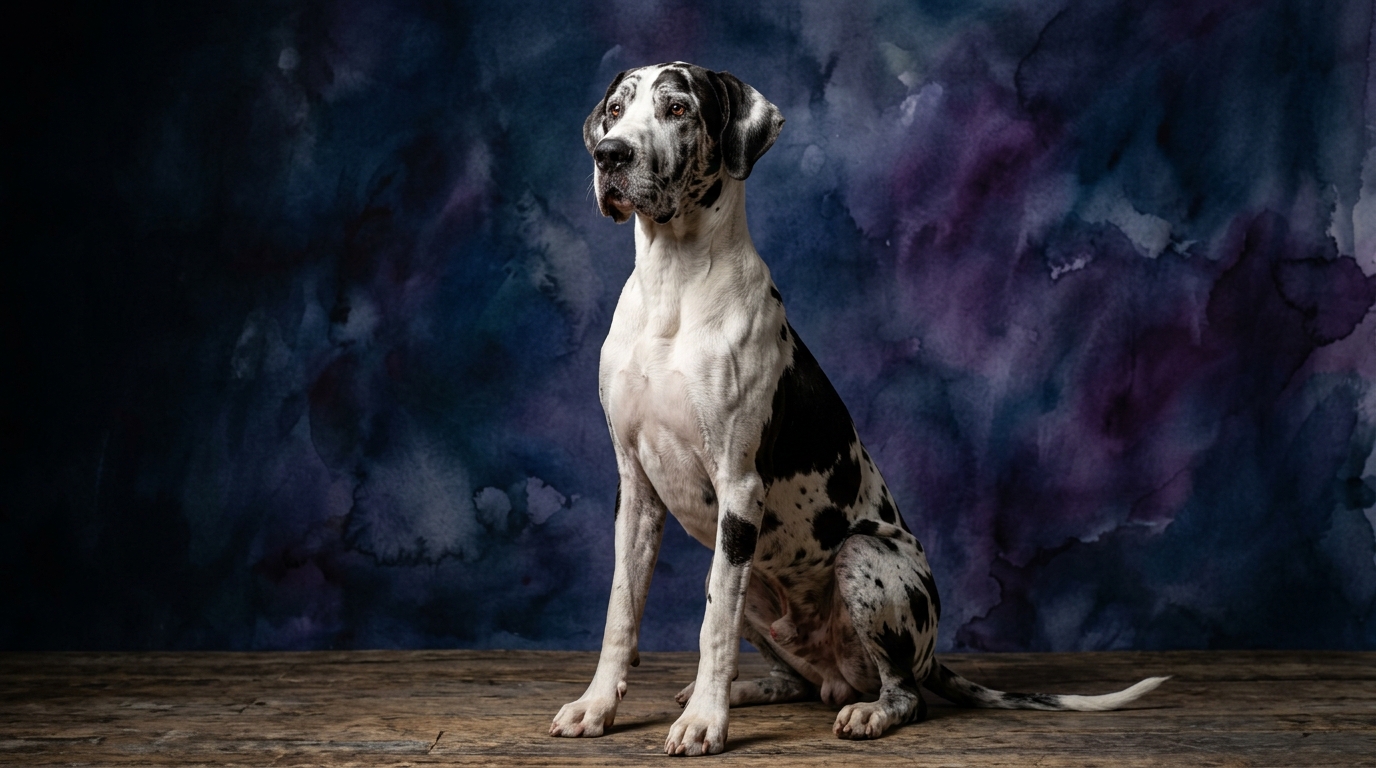
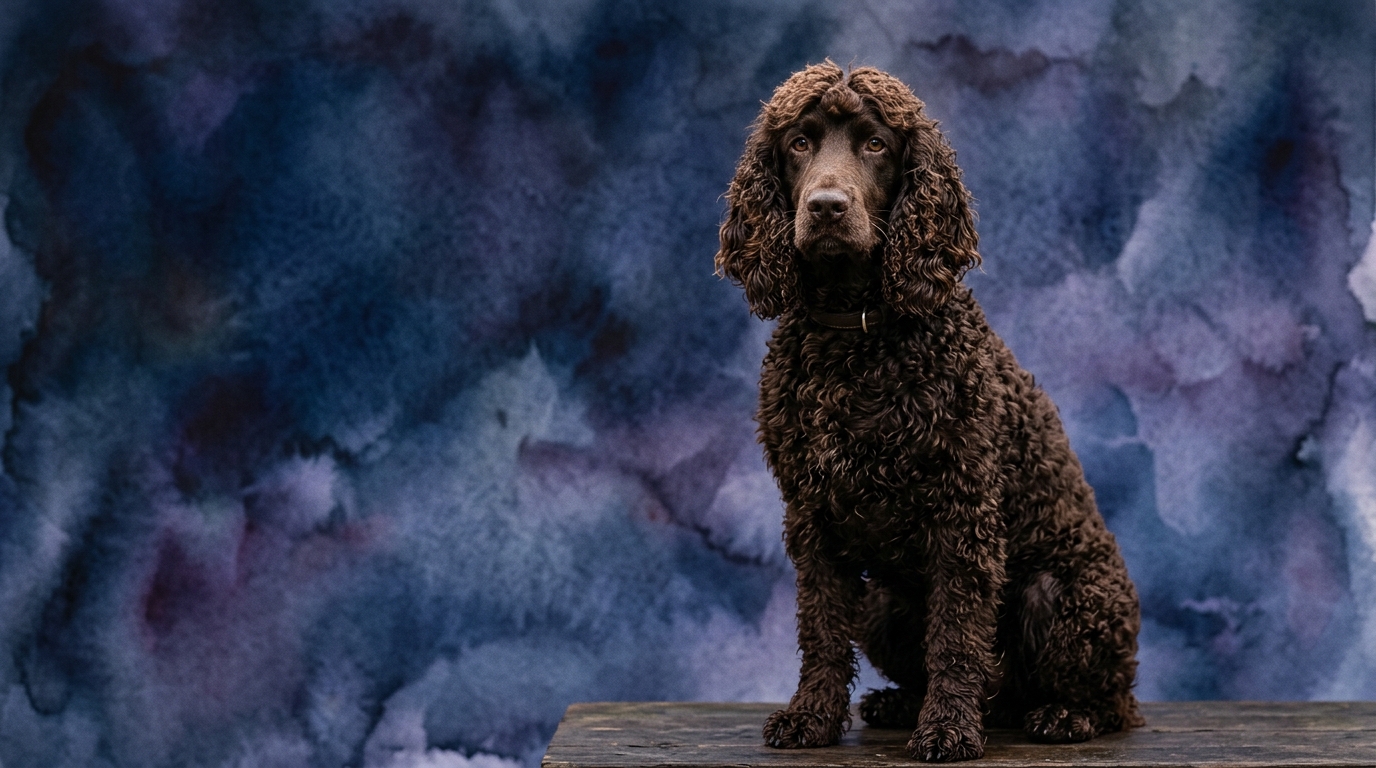
Side-by-Side IQ Profile: Great Dane vs. Irish Water Spaniel
The Cosmic Pet Pet IQ Lab employs five key dimensions to evaluate canine cognition, providing a nuanced understanding beyond simple rankings. For the Great Dane, a breed within the Working group with a Coren rank of #48, their cognitive profile suggests a balanced but distinct set of mental aptitudes. Their problem-solving capacity sits at 3/5, indicating a moderate ability to navigate novel situations or figure out how to access desired objects, often through methodical observation rather than spontaneous innovation. Training speed is also rated 3/5, meaning they generally respond well to training but may require a bit more repetition to fully grasp and generalize new commands across different environments. A standout strength for the Great Dane is their social intelligence, scoring 4/5, reflecting a profound attunement to human cues, emotions, and intentions, forming deep, empathetic bonds. Their instinctive drive registers at 3/5, a moderate expression of their historical working roles, often tempered by their calm demeanor. Finally, their memory is rated 3/5, suggesting a good, reliable recall for learned commands and routines, though perhaps not for overly complex sequences.
In contrast, the Irish Water Spaniel, a Sporting group breed with a higher Coren rank of #24, presents a profile geared towards quick learning and agile problem-solving. Their problem-solving ability scores an impressive 4/5, indicating a strong aptitude for analyzing new challenges, experimenting with solutions, and adapting to unfamiliar circumstances with resourcefulness. This mental agility is complemented by a training speed of 4/5, meaning these spaniels are quick to pick up new commands and concepts, thriving on mental engagement and consistent, reward-based training. Their social intelligence is 3/5; while affectionate and responsive to their handlers, their focus is often more on working cooperatively than deep emotional attunement. The instinctive drive for an Irish Water Spaniel is 3/5, centered around their historical role as water retrievers, manifesting as a manageable prey drive and a love for retrieving games. Memory is a significant strength for this breed, scoring 4/5, signifying an excellent capacity to retain complex behaviors, routines, and environmental cues with superior longevity and precision.
Where the Great Dane Shines Cognitively
The Great Dane's primary cognitive advantage lies in its exceptional social intelligence, scoring 4/5 compared to the Irish Water Spaniel's 3/5. This dimension highlights their profound ability to understand and respond to human emotions, social cues, and intentions. A Great Dane often displays a remarkable sensitivity to their family's moods, offering comfort or companionship precisely when needed without explicit prompting. This manifests as a dog that 'reads the room' with subtle awareness, understanding unspoken signals within the household and forming exceptionally deep, empathetic bonds with their human companions. Their cognitive strength here isn't about solving complex puzzles, but about navigating the intricate emotional landscape of human interaction with grace and understanding, making them truly intuitive family members.
Furthermore, while not a direct IQ score, the Great Dane's inherent calm demeanor often allows for a more consistent application of their moderate problem-solving and training speed. Their steady temperament means they are less prone to impulsive reactions, which can make them easier to work with in varied social environments. This cognitive stability, combined with their social attunement, positions them as uniquely composed and understanding companions, capable of maintaining composure in situations where a more excitable breed might struggle.
Where the Irish Water Spaniel Excels Cognitively
The Irish Water Spaniel's cognitive strengths distinctly outpace the Great Dane in three crucial areas: problem-solving, training speed, and memory. With a problem-solving score of 4/5 (vs. Great Dane's 3/5), this breed demonstrates a superior ability to independently figure out solutions to new puzzles or obstacles. This might involve strategizing how to retrieve a toy from a tricky spot, quickly learning to manipulate a gate latch, or navigating a complex agility course with minimal handler guidance, showcasing their mental agility and resourcefulness. They are adept at analyzing situations and creatively finding effective solutions.
Their training speed, also 4/5 (vs. Great Dane's 3/5), means they grasp new commands and concepts with remarkable efficiency, requiring fewer repetitions to master tasks. This rapid acquisition of behaviors makes them exceptionally rewarding for advanced obedience, competitive dog sports, or any activity demanding a broad repertoire of learned actions. Complementing this is their superior memory, scoring 4/5 (vs. Great Dane's 3/5). Irish Water Spaniels retain learned behaviors, complex sequences, and specific environmental cues with greater longevity and precision, ensuring that once a skill is learned, it is remembered reliably, even after extended periods without practice. These combined strengths make them exceptional learners and performers in structured environments.
Training Dynamics: Which Breed is Easier?
When considering ease of training, the Irish Water Spaniel generally holds an advantage due to its higher scores in Training Speed (4/5) and Problem Solving (4/5). These breeds are eager to engage mentally, picking up new commands and concepts much faster than many other dogs. Their mental agility means they thrive on structured training sessions and new challenges, often finding joy in the learning process itself. They require fewer repetitions to solidify behaviors and can generalize what they've learned to different environments more readily. Their strong memory further ensures that once a command is ingrained, it tends to stick, making long-term retention of complex routines a hallmark of their training.
The Great Dane, while certainly trainable and possessing a strong desire to please, may require more patience and consistency, reflecting their moderate Training Speed (3/5). They are sensitive dogs, and harsh corrections can cause them to shut down or become withdrawn, making positive reinforcement and gentle guidance essential. While they learn, they often need more repetitions to fully internalize new behaviors and may take longer to generalize commands to different contexts. Their training success hinges on clear, consistent communication and a calm, reassuring approach, rather than rapid acquisition. Their strong social intelligence means they respond well to a trainer they trust and respect, making the bond a crucial element in their learning journey.
Lifestyle Match: Active vs. Relaxed Owners
For active owners seeking a canine partner for adventures and mental challenges, the Irish Water Spaniel is an ideal match. Their higher problem-solving ability, rapid training speed, and inherent sporting drive mean they thrive on significant mental and physical stimulation. They excel in dog sports such as agility, obedience, dock diving, and field trials, and without sufficient engagement, they can become bored and potentially destructive. Owners who enjoy a dog that is always ready for a new task, eager to explore, and thrives on consistent activity will find the Irish Water Spaniel a rewarding and engaging companion. They are not content to be couch potatoes and require regular, purposeful activity to be truly content.
Conversely, the Great Dane, despite its immense size, often suits more relaxed owners who can provide ample indoor space and appreciate a calm, affectionate presence. While they do require moderate daily exercise – typically a couple of good walks or supervised play sessions to maintain their health – they are not generally high-energy endurance dogs. Their high social intelligence means they thrive on close companionship and being an integral part of family activities, often content to lounge near their humans. They are well-suited for owners who value a steady, loving companion who enjoys routine and proximity, rather than constant high-intensity activity. Their exercise needs are more about consistent, moderate activity than intense, prolonged exertion.
The Verdict
Opt for a Great Dane if you prioritize a deeply empathetic, socially astute companion who will be profoundly attuned to your family's emotional landscape and is content with a moderate, consistent routine.
Select an Irish Water Spaniel if you desire a mentally agile, quick-learning partner eager for engaging training, dog sports, and outdoor adventures, thriving on consistent mental and physical challenges.
🧠 Find Your Pet's IQ Score
Our Pet IQ Lab assessment covers 25+ tests across 5 cognitive dimensions — personalized to your breed.
Take the Full IQ Test →Frequently Asked Questions
Do Great Danes need a lot of exercise despite their calm reputation?
While Great Danes are known for their laid-back nature indoors, they still require moderate daily exercise, typically two to three walks or play sessions to maintain their physical health and prevent boredom. Their large size means even moderate activity can be substantial for them, but they aren't typically high-energy endurance dogs.
Are Irish Water Spaniels good family pets with children?
Irish Water Spaniels can be wonderful family pets, often described as playful and comical, making them good companions for active children. However, their energetic nature and need for mental stimulation mean they thrive best in homes where children understand how to interact respectfully and participate in their training and play.
What are the key differences in grooming needs between the two breeds?
Great Danes have short, smooth coats that require minimal grooming, primarily weekly brushing to remove loose hair and occasional baths. Irish Water Spaniels, conversely, have a dense, water-repellent double coat of tight curls that needs regular brushing (several times a week) to prevent matting, along with professional grooming every few months to maintain their distinctive appearance.