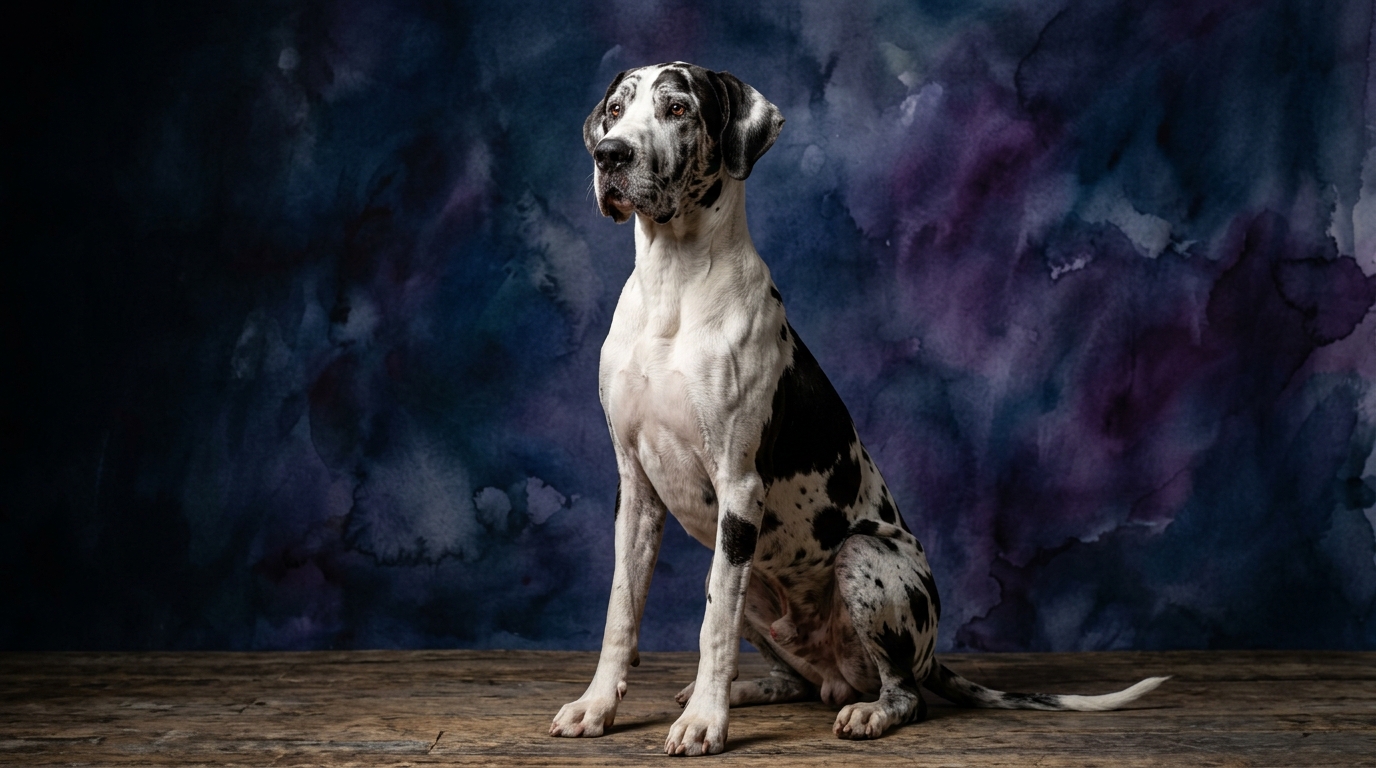
Side-by-Side IQ Profile: Great Dane
The Great Dane, recognized within the Working group and Coren-ranked at #48, presents a cognitive profile balancing strength with a remarkable social aptitude. Their Problem Solving is rated 3/5, indicating a moderate capacity to navigate daily challenges, such as understanding routines or figuring out how to access desired objects. They approach new scenarios with a thoughtful, rather than impulsive, mindset. Their Training Speed also stands at 3/5; these majestic dogs learn at a steady pace, benefiting significantly from consistent, positive reinforcement. While not exhibiting lightning-fast acquisition, their willingness to engage makes the learning process effective over time. A standout trait is their Social Intelligence, scoring a notable 4/5. Great Danes possess a profound ability to read human emotions and social cues, often responding with empathetic gestures and understanding complex family dynamics. Their Instinctive Drive is a balanced 3/5, encompassing some protective instincts toward their family and a moderate prey drive for small, fast-moving objects, but without the intense focus of specialized working breeds. Finally, their Memory is rated 3/5, allowing them to reliably recall people, places, established routines, and consistently reinforced commands, forming deep, lasting bonds.
In essence, the Great Dane’s cognitive landscape is characterized by its social depth and a steady, reliable approach to learning and environmental interaction. They are not merely physically imposing; their minds are attuned to the nuances of their human companions, making them intuitive and responsive members of a household. Their intellectual strengths lie in their capacity for collaboration and emotional understanding, rather than complex manipulation or independent strategizing.
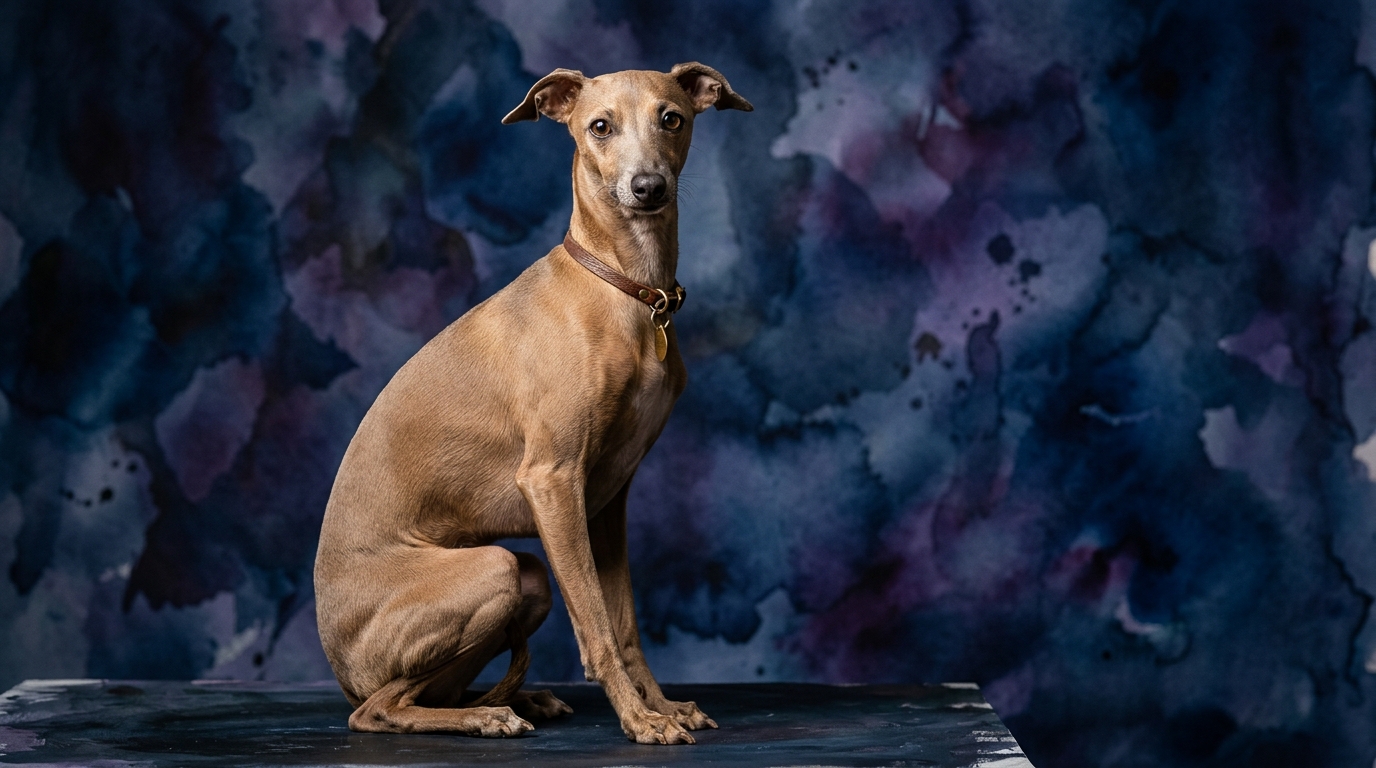
Side-by-Side IQ Profile: Italian Greyhound
The Italian Greyhound, a member of the Toy group and not specifically Coren-ranked, offers a distinct cognitive profile that belies its delicate stature. Their Problem Solving scores 3/5, reflecting an ability to navigate their environment effectively for comfort and resources, such as finding the warmest sunbeam or maneuvering around obstacles to reach a favorite toy. Their solutions often involve agility and quick assessment of immediate opportunities rather than complex strategic planning. Their Training Speed is also 3/5, meaning these sensitive sighthounds learn at a moderate pace. They thrive on gentle, consistent, and positive reinforcement methods, as harsh corrections can be counterproductive due to their delicate emotional constitution. Their Social Intelligence is 3/5; Italian Greyhounds form deep, often exclusive bonds with their primary human caregivers, demonstrating a keen understanding of their owner's moods and preferences, though they can be more reserved with strangers. Their Instinctive Drive is 3/5, strongly influenced by their sighthound heritage, which manifests as a pronounced impulse to chase small, fast-moving objects. Beyond this, their drives are predominantly geared toward companionship and seeking comfort. Their Memory is rated 3/5, allowing them to retain knowledge of their favored people, routines, and preferred resting spots, along with commands that are regularly practiced.
The Italian Greyhound’s cognitive strengths are rooted in their acute sensory perception and their strong desire for comfort and companionship. While their raw scores align closely with the Great Dane’s in many areas, their approach to interaction and problem-solving is often colored by their sighthound instincts and their deep, sometimes exclusive, human bonds. They bring a unique blend of delicate sensitivity, bursts of focused energy, and a profound need for close connection to their cognitive repertoire.
Where the Great Dane Wins Cognitively
The Great Dane’s most pronounced cognitive advantage lies in its superior Social Intelligence, scoring a 4/5 compared to the Italian Greyhound’s 3/5. This difference is not merely about being friendly; it reflects a deeper, more nuanced capacity for understanding and integrating into complex human social structures. A Great Dane often exhibits a remarkable ability to read subtle shifts in human mood or the overall atmosphere of a room, responding with appropriate, often comforting, behaviors. For instance, they might gently nuzzle a distressed owner, subtly position themselves to offer a reassuring presence, or intuitively understand when to be playful versus when to be calm. Their empathetic responses appear to stem from a profound connection to their human family, allowing them to anticipate needs and offer companionship with remarkable sensitivity. This heightened social understanding makes them exceptional collaborators in shared activities and remarkably adaptable to complex household dynamics, fostering a unique collaborative spirit. They excel at becoming truly integrated, sentient members of a family, capable of participating in and influencing the emotional tone of their environment in a way that their smaller counterpart, while affectionate, doesn't quite match in breadth or depth of understanding.
Where the Italian Greyhound Wins Cognitively
While the Italian Greyhound's raw cognitive scores largely mirror or fall just below the Great Dane's, its cognitive strengths manifest in a distinct manner, particularly within its Instinctive Drive (3/5) and its application in Problem Solving (3/5). The Italian Greyhound’s sighthound heritage imbues it with a specific form of environmental awareness and rapid visual processing that can be interpreted as a unique cognitive advantage. Their 'win' isn't in broad social understanding, but in their acute perception of movement and their ability to quickly strategize how to pursue it, even if just for play or curiosity. This translates into exceptional spatial awareness and agility in navigating their environment, whether it's finding the warmest sunbeam, maneuvering through furniture with elegant precision, or devising quick, agile routes to a desired object. Their problem-solving, while scored similarly, often involves more physical dexterity and a quicker, albeit less strategic, assessment of immediate opportunities, such as identifying the fastest route to a perceived 'prey' or a comfortable spot. This sharp, visually driven cognitive processing allows them to excel in environments where quick reflexes and precise movement are advantageous, showcasing a distinct form of practical intelligence focused on immediate environmental interaction and comfort-seeking, a unique strength in their cognitive makeup.
Which is Easier to Train and Why
When comparing the ease of training between Great Danes and Italian Greyhounds, both rated 3/5 for Training Speed, it's essential to look beyond the raw score to their underlying temperaments and social inclinations. The Great Dane, with its higher Social Intelligence (4/5), often presents as more eager to please and attuned to human direction. This desire to collaborate and strong bond with their family can make training feel more straightforward, as they are generally receptive to cues and highly motivated by positive interaction and praise. Their sheer size, however, necessitates early and consistent training in manners and obedience, as an untrained Great Dane can be an unintentional hazard. They respond well to clear, calm instruction and can be quite sensitive to harsh tones, making positive reinforcement the most effective approach to leverage their cooperative nature.
The Italian Greyhound, despite its similar Training Speed score, can be a more nuanced training proposition. Their 3/5 Social Intelligence often means they are deeply bonded to one or two people but can be more independent or reserved, requiring a more patient and understanding approach from their owner. Their sighthound nature can lead to distractions, and their delicate physical and emotional constitution means they are highly sensitive to correction, necessitating exclusively positive reinforcement and a gentle hand. House training, in particular, can be a persistent challenge for Italian Greyhounds due to their sensitivity to cold and a preference for indoor comfort, demanding exceptional consistency and understanding from their owners. Therefore, while both breeds require dedication, the Great Dane’s inherent cooperative nature and desire to please might make the training journey feel smoother for many owners, even if the raw learning speed itself is comparable. The Italian Greyhound, by contrast, demands a more specialized, sensitive, and patient approach to navigate their unique motivations and sensitivities.
Which Suits Active Owners vs. Relaxed Owners
The ideal owner profile for each of these breeds diverges significantly, despite some overlaps in their cognitive scores and moderate activity needs. The Great Dane, often described as a 'gentle giant,' is surprisingly well-suited for moderately active owners who appreciate a calm, yet substantial, presence indoors. While they require regular, moderate exercise—daily walks and opportunities to stretch their long legs—they are not typically high-energy, hyperactive dogs. Their strong social intelligence means they thrive on being an integral part of family activities, even if those activities are quiet evenings at home. They are excellent companions for owners who enjoy consistent, but not extreme, outdoor adventures and cherish deep, empathetic interaction, preferring a dog that is present and engaged without demanding constant, intense stimulation. They adapt well to a family routine that includes both exercise and significant downtime, making them suitable for owners who lead a balanced lifestyle.
In contrast, the Italian Greyhound, despite its small stature, carries the genetic blueprint of a sighthound, meaning it possesses bursts of intense energy. These dogs need opportunities for vigorous running in a securely fenced area, followed by extensive periods of napping and snuggling. They are well-suited for owners who can provide these short, high-intensity play sessions and then enjoy a highly affectionate, often clingy, indoor companion. They are not ideal for owners seeking a rugged outdoor adventure partner that can hike for miles, nor for entirely sedentary lifestyles, but rather for those who appreciate their unique blend of athletic bursts and profound demand for warmth and close physical contact. They excel with owners who can accommodate their need for secure, high-speed exercise and then offer ample lap time and cozy comforts, making them a fit for specific types of active-yet-relaxed individuals.
The Verdict
Choose a Great Dane if you seek a deeply empathetic, collaborative companion who thrives on social interaction and offers a calm, majestic presence, and you are prepared for consistent training of a large, sensitive breed.
Choose an Italian Greyhound if you appreciate a delicate, profoundly affectionate, and sometimes independent companion with bursts of playful energy, and you are ready to provide warmth, security, and patient, positive reinforcement.
🧠 Find Your Pet's IQ Score
Our Pet IQ Lab assessment covers 25+ tests across 5 cognitive dimensions — personalized to your breed.
Take the Full IQ Test →Frequently Asked Questions
Do Great Danes have a strong prey drive?
While Great Danes score a 3/5 in instinctive drive, indicating a moderate level, their prey drive is typically not as pronounced or persistent as specialized hunting breeds. They might show interest in chasing small animals, but it's often manageable with consistent training and redirection, focusing more on companionship than pursuit.
Are Italian Greyhounds difficult to house train?
Italian Greyhounds can indeed present a significant challenge for house training due to their sensitivity to cold, delicate bladders, and sometimes independent nature. Success requires exceptional patience, frequent outdoor trips, positive reinforcement, and often the use of indoor potty solutions during inclement weather or when unsupervised.
How do their problem-solving abilities compare in daily life?
Both breeds score 3/5 in problem-solving, but it manifests differently. Great Danes might methodically figure out how to open a gate or retrieve a specific toy, relying on observation and memory. Italian Greyhounds often use their agility and quick visual assessment to navigate obstacles for comfort or to chase perceived 'prey,' demonstrating a more physically oriented, rapid problem-solving approach.