Side-by-Side IQ Profile: Great Dane vs. Kooikerhondje
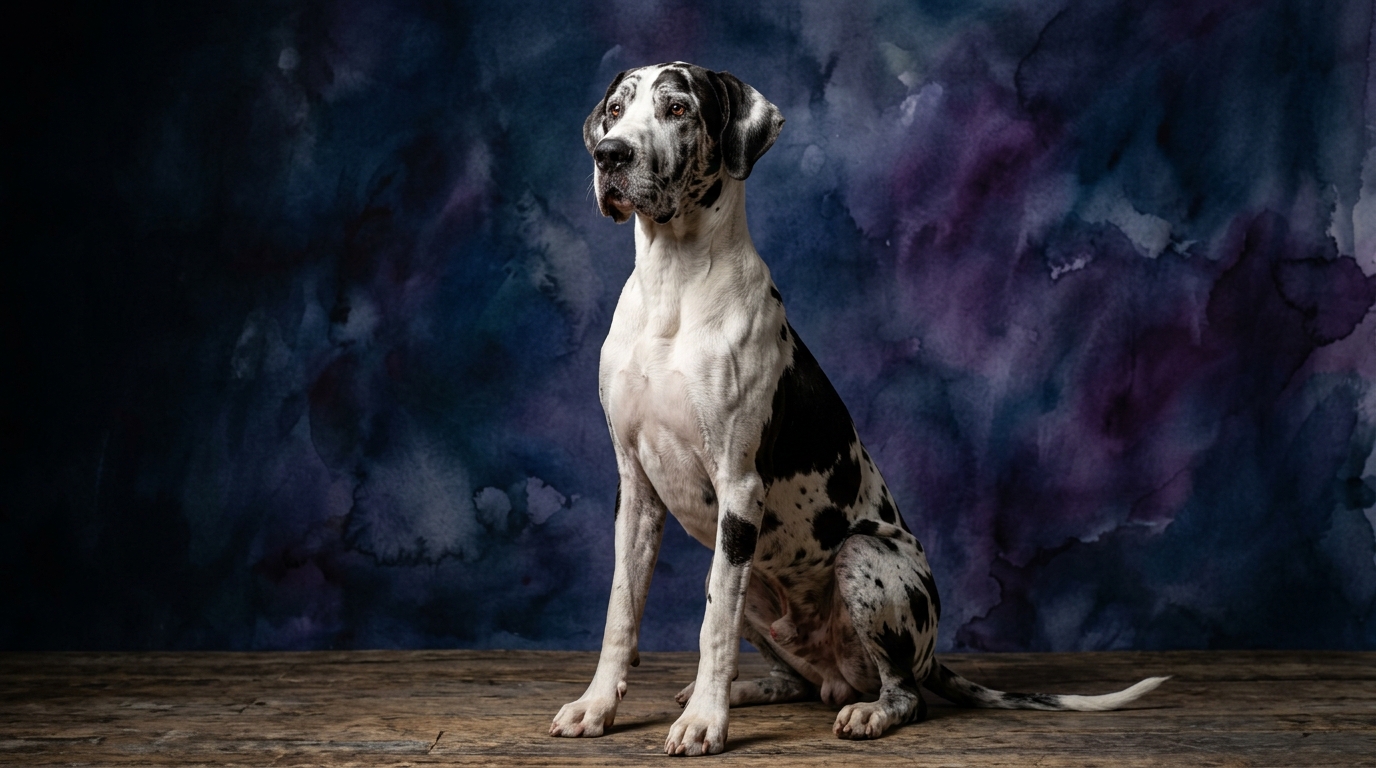
The Cosmic Pet Pet IQ Lab employs five core dimensions to map a breed's cognitive landscape. For the Great Dane, a Working group dog, its Coren rank of #48 places it firmly in the average working intelligence category. Its Problem Solving is rated at 3/5, indicating a moderate capacity for navigating novel challenges or figuring out complex mechanisms. Training Speed also sits at 3/5, suggesting it learns new commands and routines at an average pace. Where the Great Dane truly shines is its Social Intelligence, scoring an impressive 4/5, reflecting a deep understanding of human emotions, social cues, and group dynamics. Instinctive Drive is 3/5, meaning it possesses a moderate inherent motivation for tasks tied to its ancestral purpose, while Memory is also 3/5, indicating an average ability to retain learned information and experiences.
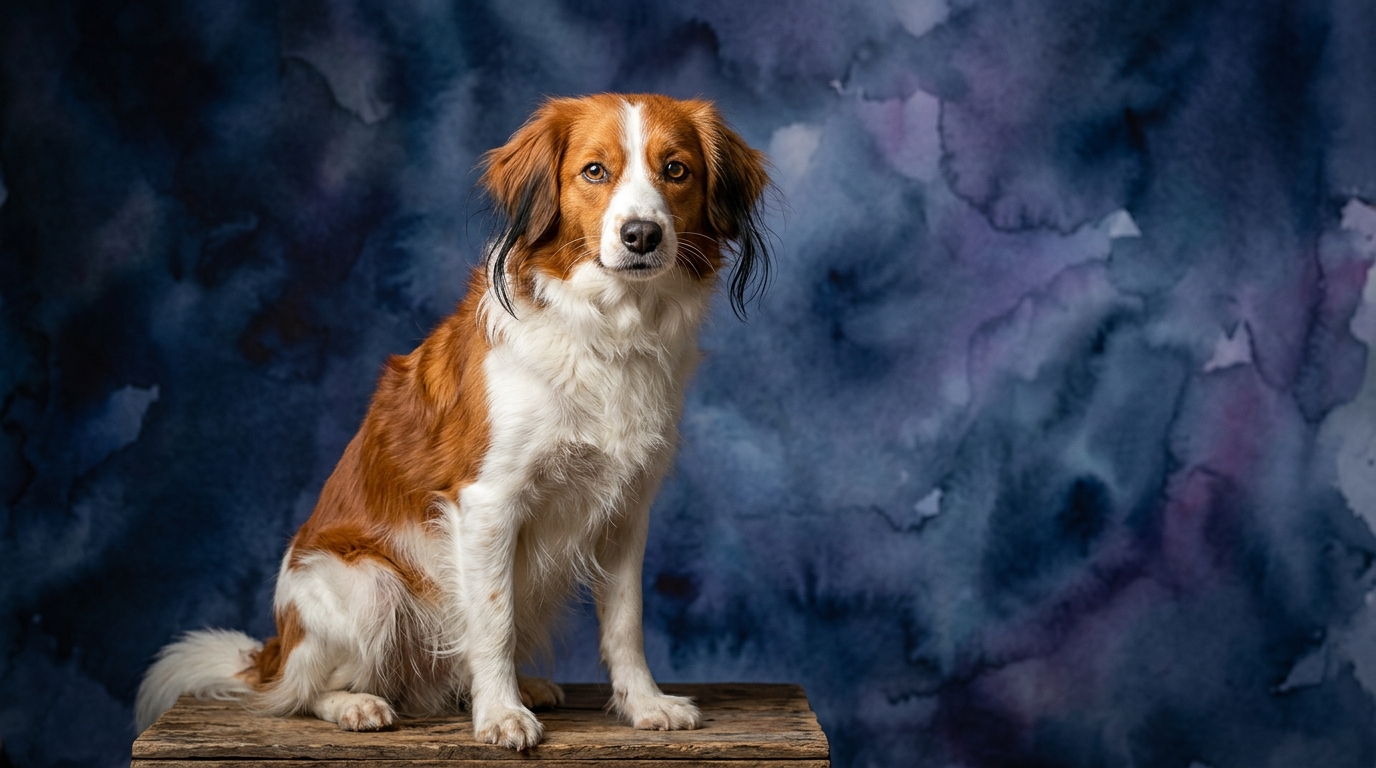
In contrast, the Kooikerhondje, a Sporting group dog, currently lacks a Coren rank, which means its overall standing in comparative intelligence studies is less defined by that particular metric. However, our IQ Lab scores provide valuable insights: its Problem Solving is 3/5, mirroring the Great Dane's capacity for independent thought in new situations. Training Speed is also 3/5, suggesting a similar learning curve for new behaviors and commands. The Kooikerhondje's Social Intelligence is 3/5, indicating a solid but not exceptional ability to interpret human social signals. Its Instinctive Drive is 3/5, reflecting a moderate, task-oriented motivation typical of its sporting heritage. Finally, its Memory also scores 3/5, indicating an average retention of lessons and past events.
Where the Great Dane Wins Cognitively
The Great Dane's most notable cognitive advantage lies in its Social Intelligence, scoring 4/5 compared to the Kooikerhondje's 3/5. This higher score translates into a profound capacity for emotional attunement and a nuanced understanding of human social structures. A Great Dane is often described as a 'people dog,' not just because of its affectionate nature, but because it actively seeks and interprets human interaction. This superior social cognition means a Great Dane is more likely to pick up on subtle changes in your mood, respond to your tone of voice with greater sensitivity, and integrate seamlessly into family dynamics, often acting as a gentle, empathetic companion. Their ability to read and react to complex social situations can make them particularly adaptable in diverse household environments and excellent at forming deep, reciprocal bonds.
Where the Kooikerhondje Wins Cognitively
While the Kooikerhondje's individual cognitive scores largely align with the Great Dane's, its distinct sporting background imbues it with a particular type of focused cognitive strength. With Problem Solving, Training Speed, Instinctive Drive, and Memory all at 3/5, the Kooikerhondje possesses a balanced and robust mental toolkit well-suited to its original purpose. This breed excels in tasks requiring sustained attention and methodical execution, often demonstrating a persistent drive to complete a job once engaged. Their balanced profile suggests a practical, task-oriented approach to learning and problem-solving, making them particularly effective in structured activities that tap into their innate prey drive and agility, such as dog sports or scent work. Their cognitive make-up leans towards functional application rather than broad social interpretation.
Which is Easier to Train and Why
Both breeds share a Training Speed score of 3/5, implying they learn new commands at a comparable pace. However, the Great Dane's superior Social Intelligence (4/5) can significantly influence the *perception* of ease in training. A Great Dane is often highly motivated by human approval and connection, making it more responsive to positive reinforcement and praise. Their strong desire to please and their sensitivity to human cues mean they often engage readily in training sessions, understanding the social contract involved. This doesn't necessarily mean they learn faster, but their willingness to cooperate and their attentiveness to their handler can make the training process feel smoother and more rewarding for the owner, especially for basic obedience and integration into family life.
The Kooikerhondje, with its 3/5 Social Intelligence and 3/5 Instinctive Drive, might require a slightly different training approach. While equally capable of learning, their motivation might be more task-oriented and less purely social. They thrive when training taps into their sporting instincts, using elements like retrieving, scent work, or agility. Owners might find success by making training sessions feel like engaging games or purposeful tasks rather than solely relying on social praise. Their independent streak, typical of many sporting breeds, means consistency and clear, concise commands are crucial to harness their moderate instinctive drive effectively.
Which Suits Active Owners vs. Relaxed Owners
For relaxed owners seeking a deeply connected and emotionally responsive companion, the Great Dane is often an excellent fit. Its high Social Intelligence means it thrives on companionship and close human interaction, often content to lounge near its family after a moderate amount of exercise. While large, their social nature often means they are less prone to destructive behaviors if their need for connection is met. They appreciate a calm, stable home environment where they can be an integral part of daily life, offering empathetic presence without demanding constant strenuous activity. Their size, however, dictates they still require ample space and regular, though not intense, physical activity to maintain health.
Active owners, particularly those interested in engaging in dog sports or structured outdoor activities, might find the Kooikerhondje more aligned with their lifestyle. Its balanced cognitive profile, combined with its sporting heritage, means it benefits from consistent mental and physical stimulation. While not hyperactive, a Kooikerhondje needs outlets for its instinctive drive and problem-solving abilities. Owners who enjoy hiking, retrieving games, agility, or obedience training will find a willing and capable partner in the Kooikerhondje. Its smaller size and moderate energy levels make it a versatile companion for various adventures, provided those adventures include engaging cognitive challenges.
The Verdict
Choose the Great Dane if your priority is a deeply empathetic, socially attuned companion who integrates seamlessly into family life and offers a calm, reassuring presence.
Opt for the Kooikerhondje if you are an active owner seeking a versatile, task-oriented partner for dog sports, outdoor adventures, and structured cognitive engagement.
🧠 Find Your Pet's IQ Score
Our Pet IQ Lab assessment covers 25+ tests across 5 cognitive dimensions — personalized to your breed.
Take the Full IQ Test →Frequently Asked Questions
Do Great Danes typically excel in problem-solving activities?
Great Danes score 3/5 in problem-solving, indicating they possess an average capacity to figure out novel challenges or puzzles. While not exceptional, they can certainly engage in and enjoy moderate mental stimulation activities.
Is the Kooikerhondje difficult to train given its lack of Coren ranking?
The Kooikerhondje has a Training Speed of 3/5, suggesting it learns at an average pace, comparable to the Great Dane. Its lack of Coren ranking doesn't imply difficulty, but rather that it hasn't been as widely studied by that specific metric; effective training relies on consistent, engaging methods.
How does a Great Dane's high social intelligence manifest in daily life?
A Great Dane's 4/5 social intelligence means it's highly perceptive of human emotions and social cues, often acting as an empathetic companion. They are adept at understanding family dynamics and can offer comfort or react appropriately to subtle shifts in their owner's mood or household environment.