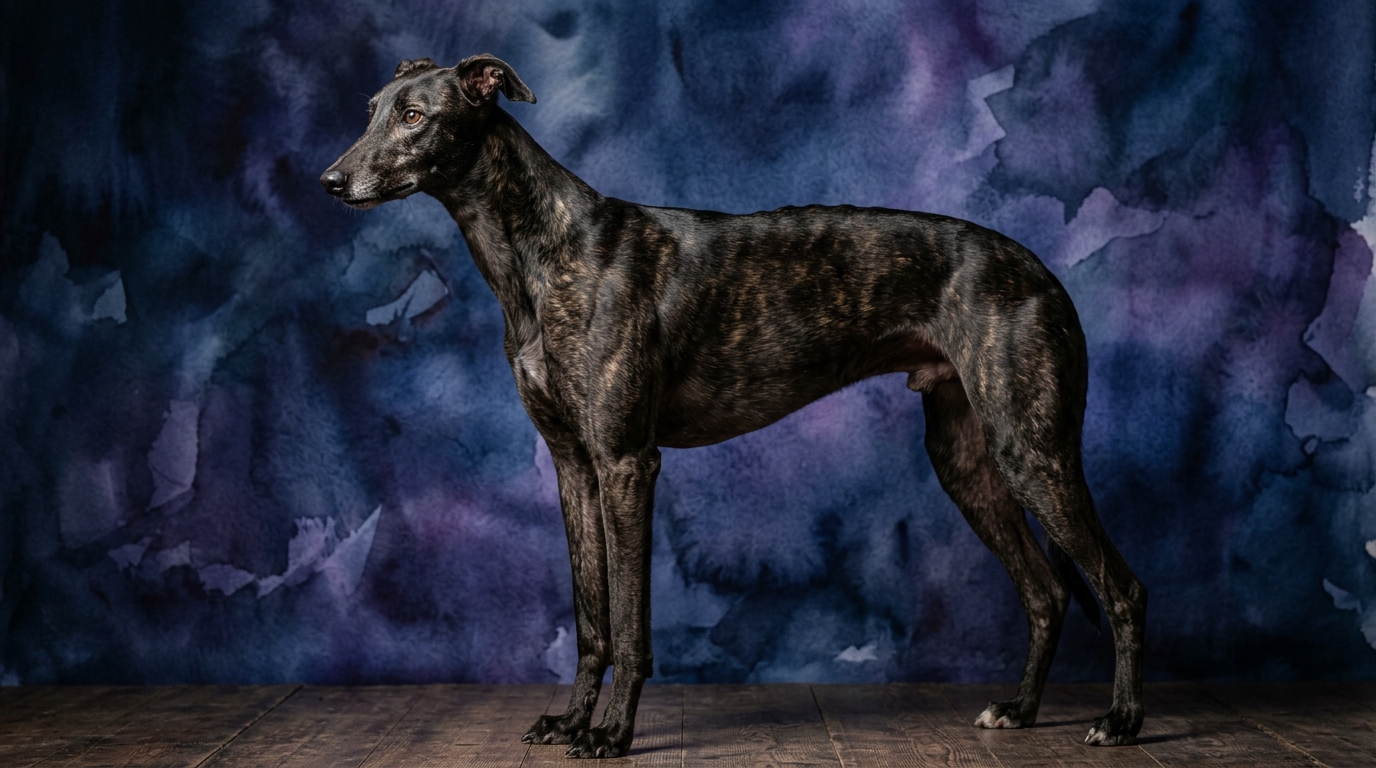
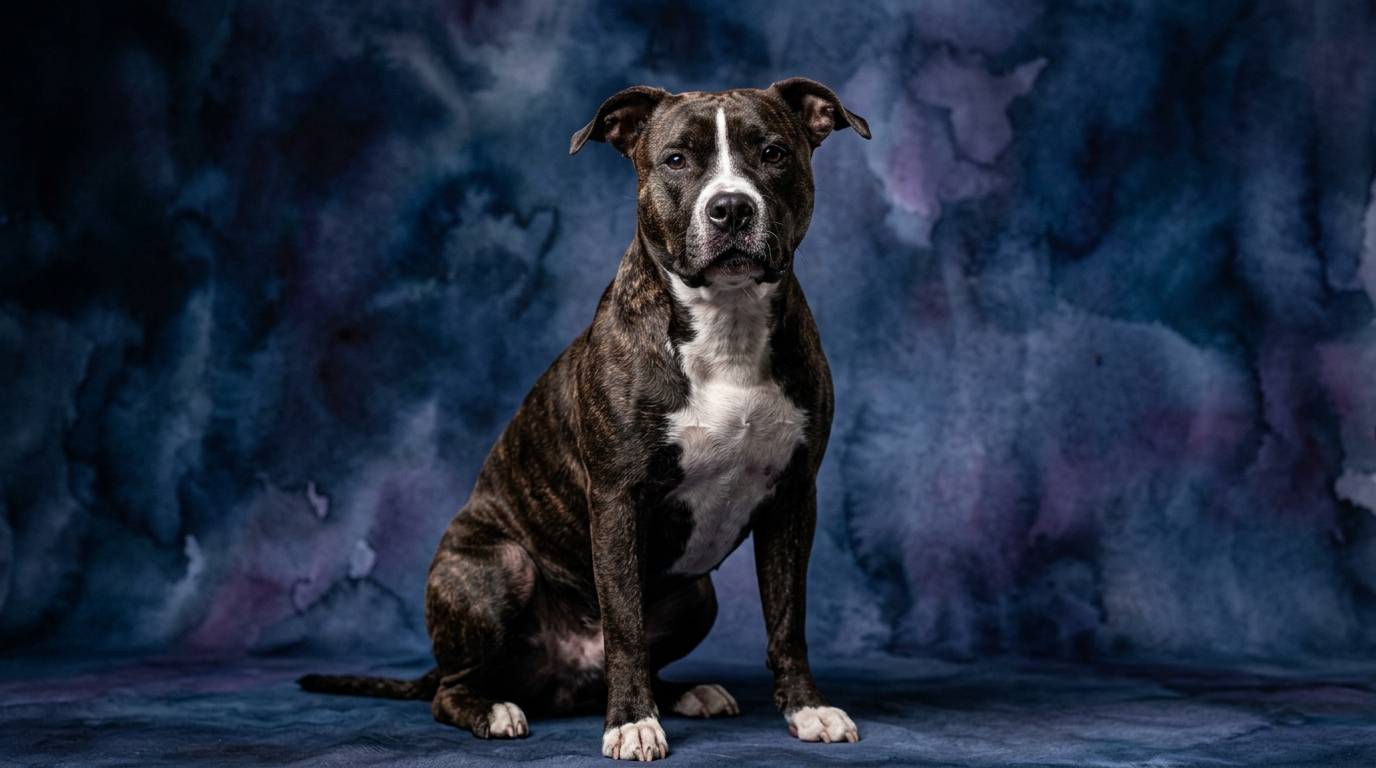
Side-by-Side IQ Profile: Greyhound vs. American Staffordshire Terrier
The Cosmic Pet Pet IQ Lab offers a refined lens through which to examine the cognitive landscapes of different dog breeds, moving beyond simplistic labels. When comparing the elegant Greyhound with the stalwart American Staffordshire Terrier, we find intriguing parallels and distinct divergences across five key dimensions: Problem Solving, Training Speed, Social Intelligence, Instinctive Drive, and Memory. While both breeds register a Coren rank in the mid-forties—Greyhound at #46 and American Staffordshire Terrier at #48—their internal cognitive architectures present unique strengths and considerations.
For the Greyhound, the Lab’s assessment reveals a Problem Solving score of 3 out of 5, indicating a moderate capacity for navigating novel challenges. Their Training Speed, however, stands at 2 out of 5, suggesting that new commands may require more repetition and patience to solidify. Social Intelligence is rated at 3 out of 5, reflecting an average ability to interpret and respond to cues from humans and other animals. A standout feature is their Instinctive Drive, scoring a perfect 5 out of 5, a testament to their deep-seated prey drive and chase instincts. Finally, their Memory is assessed at 3 out of 5, indicating a solid, but not exceptional, recall of experiences and learned behaviors.
In contrast, the American Staffordshire Terrier presents a slightly different cognitive blueprint. Like the Greyhound, their Problem Solving ability is rated at 3 out of 5, showing a similar aptitude for figuring things out. Where they diverge notably is in Training Speed, scoring 3 out of 5, which suggests a slightly quicker grasp of new instructions compared to the Greyhound. Their Social Intelligence mirrors the Greyhound’s at 3 out of 5, indicating comparable skill in navigating social interactions. The AmStaff’s Instinctive Drive is rated at 3 out of 5, a balanced score reflecting a moderate expression of innate behaviors without the overwhelming chase impulse seen in the Greyhound. A particular strength for the AmStaff is Memory, scoring 4 out of 5, indicating a superior capacity for retaining information and past experiences.
Where the Greyhound Wins Cognitively
The Greyhound's undisputed cognitive advantage lies in its profound Instinctive Drive, rated a perfect 5 out of 5 by The Cosmic Pet Pet IQ Lab. This isn't just about speed; it's a deeply ingrained predatory sequence that dictates their focus, motivation, and physical execution. This specialized drive means Greyhounds possess an unparalleled ability to fixate on fast-moving objects, process their trajectory, and respond with incredible precision and acceleration. In activities like lure coursing, this cognitive strength translates into an almost intuitive understanding of the 'game,' making them exceptional in tasks that tap into their innate chase response.
While their overall Problem Solving is rated equally with the AmStaff, the Greyhound’s problem-solving in scenarios related to their drive can appear exceptionally fluid. For instance, navigating complex turns and obstacles during a chase, or anticipating the movement of prey, is a real-time cognitive puzzle they solve with remarkable efficiency. This isn't abstract reasoning, but rather a highly specialized, almost intuitive, form of intelligence honed over centuries for a specific purpose.
Where the American Staffordshire Terrier Wins Cognitively
The American Staffordshire Terrier shines particularly in the domain of Memory, earning a robust 4 out of 5 from The Cosmic Pet Pet IQ Lab, surpassing the Greyhound's 3/5. This enhanced memory capacity means an AmStaff is more likely to retain learned commands, routines, and even specific positive or negative associations over longer periods. Owners often observe this in their AmStaff's consistent recall of training cues or their ability to remember complex sequences of actions, making them reliable participants in various dog sports and daily life.
Coupled with their superior memory is a slightly quicker Training Speed, rated 3 out of 5 compared to the Greyhound's 2/5. This indicates that AmStaffs generally require fewer repetitions to grasp new concepts and commands, absorbing information at a faster rate. This cognitive agility allows for more efficient training sessions and a potentially broader repertoire of learned behaviors. Their ability to quickly form and retrieve associations contributes to a perception of readiness and enthusiasm for engaging in structured learning activities.
Which is Easier to Train, and Why?
When evaluating ease of training, the American Staffordshire Terrier generally holds an advantage, primarily due to its higher Training Speed (3/5) and superior Memory (4/5) scores. This combination means an AmStaff is often quicker to pick up new commands and more likely to retain them consistently. Owners typically find that AmStaffs can progress through training levels with fewer repetitions, making the learning process feel more rewarding and efficient for both dog and handler. Their capacity to remember specific cues and expected responses contributes significantly to their perceived trainability.
In contrast, the Greyhound, with a Training Speed of 2/5 and Memory of 3/5, may require a more patient and consistent approach to training. While not incapable of learning, they often need more repetition to solidify new behaviors. A significant factor influencing their training is their powerful Instinctive Drive (5/5). This deep-seated chase instinct means that during training, especially outdoors, environmental distractions like a scurrying squirrel or a blowing leaf can easily override commands, demanding an owner's keen awareness and management. Their focus can be intensely channeled towards movement, making initial impulse control training a key challenge.
For example, teaching a reliable recall can be a longer journey with a Greyhound, where the allure of a distant moving object might be profoundly difficult to resist, regardless of prior training. An AmStaff, while still a dog with natural instincts, tends to have a more balanced instinctive drive (3/5), making them generally more amenable to redirection and less prone to having their focus entirely consumed by a chase. This difference isn't about willingness, but about the innate cognitive architecture that prioritizes certain stimuli over others, directly impacting the training experience.
Matching Cognitive Needs to Owner Lifestyles
Considering their cognitive profiles and inherent drives, Greyhounds are often best suited for owners who appreciate a specific type of activity followed by significant periods of relaxation. Their 5/5 Instinctive Drive means they thrive when given safe, regular opportunities to run at full speed, such as in a securely fenced yard or a lure coursing event. However, after these intense bursts, their moderate Problem Solving (3/5) and Social Intelligence (3/5) often lead to a calm, observant demeanor indoors. They are content to lounge, making them surprisingly good companions for relaxed owners who can provide dedicated outlets for their unique physical needs.
The American Staffordshire Terrier, with its balanced Instinctive Drive (3/5) and stronger Memory (4/5) and Training Speed (3/5), generally appeals to owners who enjoy consistent engagement and a variety of activities. AmStaffs often possess a robust energy level that benefits from regular exercise, but also from mentally stimulating tasks like obedience, agility, or puzzle toys that tap into their problem-solving and memory skills. Their social intelligence (3/5) and eagerness to learn make them suitable for owners who enjoy interactive play, structured training sessions, and including their dog in family activities.
Ultimately, the choice hinges on how an owner's lifestyle aligns with the breed's cognitive strengths and needs. A Greyhound's calm indoor presence belies a powerful, specialized drive that must be honored, making them ideal for individuals who can facilitate those specific outlets. An AmStaff, while equally capable of relaxation, often seeks more sustained mental and physical engagement, making them a fit for owners who enjoy a more interactive and varied daily routine, leveraging their quicker learning and memory.
The Verdict
For individuals captivated by a specialized, powerful instinctive drive and a calm indoor presence after intense bursts of speed, the Greyhound is an exceptional match. They are ideal for owners who understand and can cater to their unique need for chase-oriented activity, appreciating their quiet companionship.
The American Staffordshire Terrier suits owners who value a quicker learning curve, reliable memory, and a balanced drive for consistent engagement in diverse activities. They are a strong choice for those seeking an interactive companion eager to participate in structured learning and family life.
🧠 Find Your Pet's IQ Score
Our Pet IQ Lab assessment covers 25+ tests across 5 cognitive dimensions — personalized to your breed.
Take the Full IQ Test →Frequently Asked Questions
Do Greyhounds struggle with learning new commands?
While Greyhounds have a Training Speed of 2/5, indicating they may require more repetition than some breeds, they are certainly capable of learning. Their key challenge is often managing their powerful Instinctive Drive (5/5), which can distract them from commands in stimulating environments. Patience and consistent, positive reinforcement are crucial for their training success.
Is the American Staffordshire Terrier good at remembering tricks and routines?
Yes, the American Staffordshire Terrier excels in memory, scoring 4 out of 5, which means they are quite proficient at retaining tricks, routines, and even complex sequences of actions. This strong memory, combined with a Training Speed of 3/5, makes them adept at building a broad repertoire of learned behaviors and performing them reliably. Owners often find them eager to engage in mental challenges.
How does the 'Instinctive Drive' score impact daily life for these breeds?
For Greyhounds, a 5/5 Instinctive Drive means a profound urge to chase, requiring secure containment and safe outlets for running; otherwise, they might bolt after perceived 'prey.' The AmStaff's 3/5 Instinctive Drive is more balanced, meaning they have natural dog instincts but are generally less consumed by the chase, making them more adaptable to various environments and easier to redirect during walks or play.