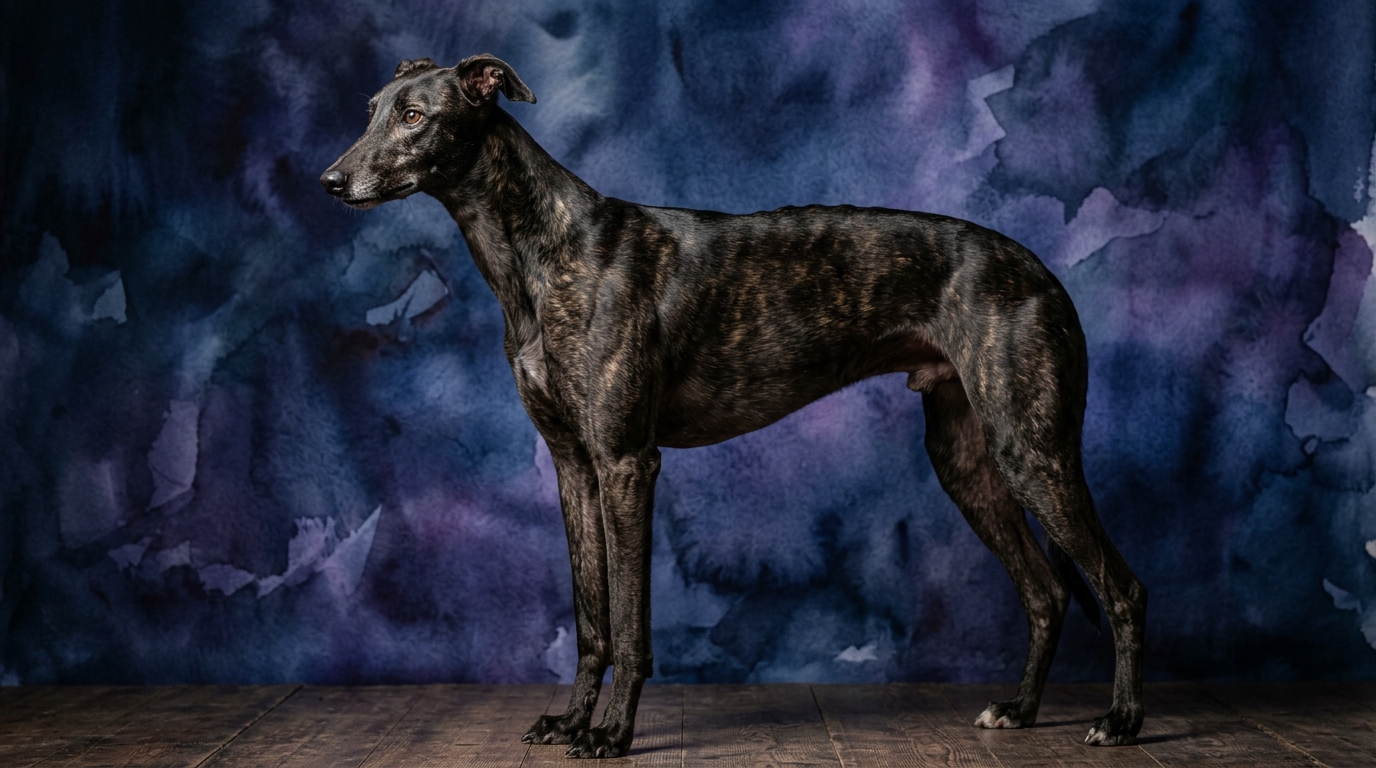
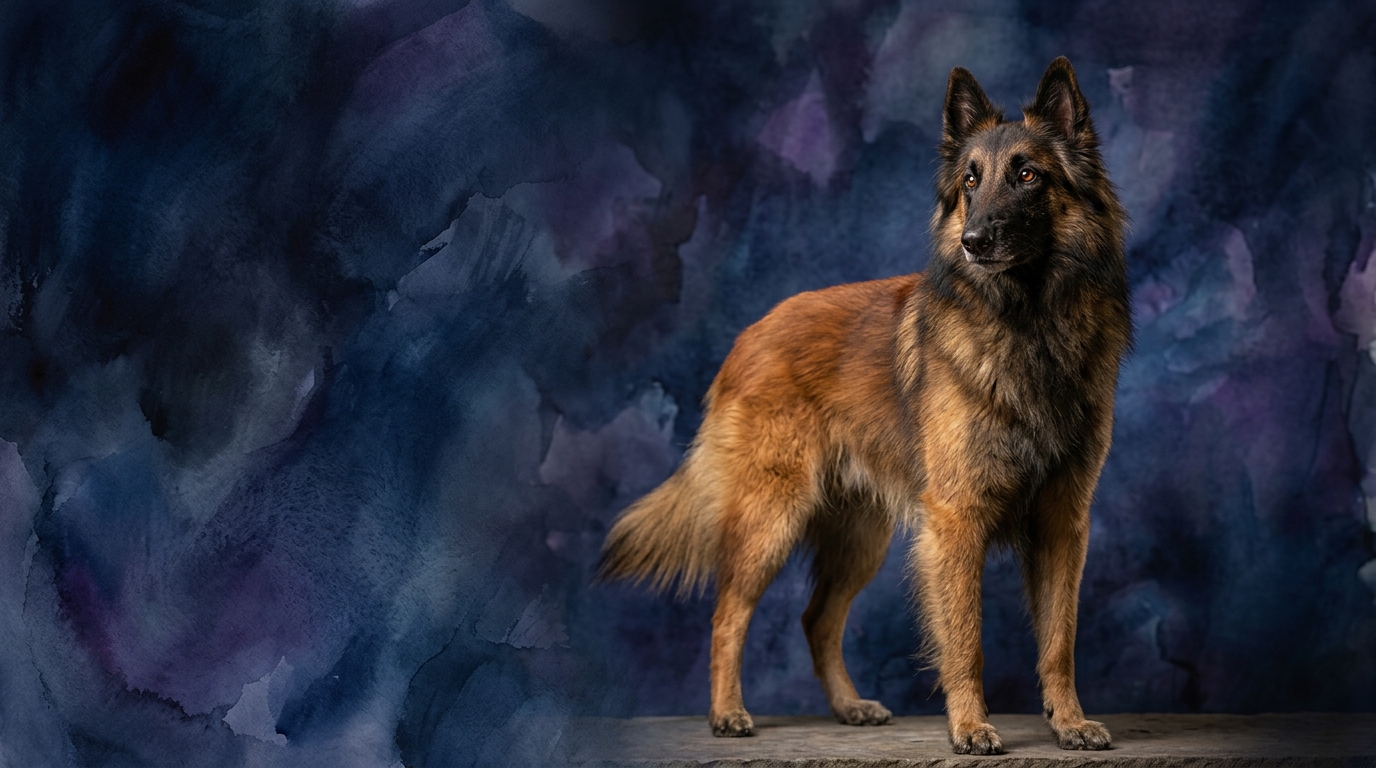
Side-by-Side IQ Profile: Greyhound vs. Belgian Tervuren
**Greyhound (Coren Rank #46):** This sighthound's cognition is finely tuned for its ancestral purpose: the chase.
**Problem Solving (3/5):** Greyhounds excel at solving pursuit-related problems, like anticipating a lure's path. They show less interest in complex, human-initiated puzzles not tied to their chase drive, often seeking comfort or self-directed solutions instead.
**Training Speed (2/5):** While capable, Greyhounds typically require more repetition. Their independent nature means they need to understand a command's immediate benefit, rather than just complying. Consistency and positive reinforcement are vital.
**Social Intelligence (3/5):** Generally gentle and polite, Greyhounds read subtle cues from humans and dogs, often observing rather than mediating. Their reserved social awareness contributes to their calm indoor demeanor.
**Instinctive Drive (5/5):** Their prey drive is profoundly ingrained, an intense desire to chase anything small and fast. This underpins their speed and single-minded focus during pursuit.
**Memory (3/5):** Greyhounds have good memory for routines, safe spaces, and trusted people. They recall training cues with consistent practice but may not retain complex sequences as readily as other breeds, focusing on practical daily needs.
**Belgian Tervuren (Coren Rank #14):** As a Herding dog, the Tervuren's intellect is geared towards intricate cooperation and dynamic problem-solving.
**Problem Solving (5/5):** Tervurens are exceptional at analytical problem-solving, whether in herding strategies or mastering complex obedience routines. They thrive on mental challenges and actively seek solutions.
**Training Speed (5/5):** These dogs are incredibly quick studies, grasping new commands with minimal repetition. Their eagerness to engage and work alongside humans makes them highly receptive, absorbing and retaining information rapidly.
**Social Intelligence (3/5):** Tervurens possess nuanced social understanding, keen observers of their environment and family. Perceptive to moods and intentions, this contributes to their sensitive yet protective nature.
**Instinctive Drive (3/5):** Their drive primarily focuses on herding—gathering and controlling. While they have a moderate prey drive, it's typically less intense and more manageable than a Greyhound's, often channeled into play.
**Memory (5/5):** Tervurens demonstrate outstanding memory, recalling extensive commands, complex action sequences, and intricate spatial layouts. This robust memory is crucial for their precision in various dog sports and working tasks.
Where the Greyhound Wins Cognitively
The Greyhound's cognitive strengths are deeply rooted in their specialized role as a sighthound, offering a unique form of brilliance. Their **Instinctive Drive (5/5)** is unparalleled, allowing for an extraordinary focus and efficiency when pursuing a moving target. This isn't just about speed; it's about the cognitive processing required to track, anticipate, and react with split-second precision to an unpredictable lure or animal. Their **Problem Solving (3/5)**, while not broadly applied, is highly refined within this domain. A Greyhound swiftly calculates trajectories and identifies the most efficient path to intercept, demonstrating a specialized form of spatial reasoning under extreme pressure. Furthermore, their **Social Intelligence (3/5)**, combined with their generally quiet nature, allows them to be incredibly observant companions. They often process their environment with a calm, discerning gaze, making them adept at understanding the subtle rhythms of a household without needing to overtly intervene or control. This understated social awareness contributes to their reputation as serene housemates, capable of independent decision-making when it comes to comfort and personal space.
Where the Belgian Tervuren Wins Cognitively
The Belgian Tervuren's cognitive profile showcases a different, yet equally impressive, set of strengths, particularly evident in their **Problem Solving (5/5)** and **Memory (5/5)**. A Tervuren approaches new challenges with an analytical mind, capable of breaking down complex tasks into manageable steps and devising creative solutions. This skill is invaluable in dog sports like agility, where they must quickly learn intricate courses, or in real-world herding situations requiring strategic thinking. Their **Training Speed (5/5)** is a testament to their exceptional capacity for learning and retention; they often pick up new commands after just a few repetitions, eager to engage and demonstrate understanding. This rapid acquisition of knowledge is supported by their phenomenal **Memory (5/5)**, enabling them to store and recall vast amounts of information, from a wide array of obedience commands to the precise sequence of a protection routine. While their **Instinctive Drive (3/5)** is moderate compared to a Greyhound's, it is precisely this balance that allows their other cognitive functions to come to the forefront for complex, cooperative work, rather than being solely dominated by a singular pursuit instinct.
Which is Easier to Train and Why
When considering ease of training, the Belgian Tervuren holds a distinct advantage due to its exceptional **Training Speed (5/5)** and **Problem Solving (5/5)** scores. Tervurens are bred for close cooperation with humans, possessing an inherent drive to work and a mental architecture that absorbs new information rapidly. They are keen students, often anticipating what is expected of them and deriving satisfaction from mastering new skills. This means they require fewer repetitions to learn commands and are more inclined to offer novel behaviors in an attempt to “figure out” a task. In contrast, the Greyhound's **Training Speed (2/5)** and more independent **Problem Solving (3/5)**, which is geared towards the chase, mean that training requires more patience and a different approach. Greyhounds may not see the inherent value in performing a sit-stay if a squirrel is visible, as their powerful **Instinctive Drive (5/5)** takes precedence. While they are certainly trainable, their learning curve is generally slower, and trainers must consistently demonstrate the direct benefit or reward for compliance, often needing to out-compete the allure of their natural instincts. Real behavioral differences include the Tervuren's intense focus during training sessions versus the Greyhound's tendency to disengage if not sufficiently motivated or if a stronger instinct takes over. The Tervuren learns quickly through positive reinforcement and clear communication, while the Greyhound benefits from calm, consistent guidance that respects their independent spirit and strong prey drive.
Which Suits Active vs. Relaxed Owners
The cognitive profiles of these two breeds paint a clear picture of which might suit different lifestyles. Owners who thrive on constant engagement, enjoy participating in structured dog sports, or are looking for a highly cooperative working partner will find the **Belgian Tervuren** to be an ideal match. Their high **Problem Solving (5/5)** and **Training Speed (5/5)** mean they genuinely need consistent mental stimulation through advanced training, agility, obedience, or even herding activities. A Tervuren with insufficient mental outlets can become bored and potentially destructive, as their active minds seek ways to occupy themselves. They flourish with owners who provide daily challenges and appreciate a dog that is always "on" and ready to learn.
Conversely, the **Greyhound** is better suited for owners who appreciate a more relaxed, independent companion, understanding that their intense bursts of energy are typically short-lived. While they absolutely require opportunities for safe, vigorous sprints to satisfy their **Instinctive Drive (5/5)**, their cognitive needs for continuous, complex mental work are lower than a Tervuren's. After a good run, a Greyhound is typically content to nap for hours, making them excellent companions for individuals or families who enjoy quiet evenings and less demanding daily training routines. Their **Social Intelligence (3/5)** ensures they are pleasant household members, but they don't demand the same level of interactive mental gymnastics as a Tervuren. They are a good fit for those who want a dog that can enjoy quiet companionship after fulfilling its physical need for speed.
The Verdict
Choose a Greyhound if you appreciate an independent, calm housemate who requires intense bursts of physical activity followed by long periods of rest, and you're prepared for a more patient approach to training their distinct sighthound instincts.
Choose a Belgian Tervuren if you are an active, dedicated trainer seeking a highly cooperative, mentally agile partner for dog sports, advanced obedience, or a working role, and you can provide consistent, challenging mental stimulation.
🧠 Find Your Pet's IQ Score
Our Pet IQ Lab assessment covers 25+ tests across 5 cognitive dimensions — personalized to your breed.
Take the Full IQ Test →Frequently Asked Questions
Are Greyhounds difficult to train because of their lower training speed score?
Not necessarily difficult, but they require a different approach. Their Training Speed (2/5) indicates they learn at a slower pace and benefit from patience, positive reinforcement, and understanding their strong prey drive. Consistency and making training engaging are key to success.
How much mental stimulation does a Belgian Tervuren truly need daily?
A significant amount. With a Problem Solving (5/5) and Memory (5/5), Tervurens thrive on daily engagement like advanced obedience, puzzle toys, dog sports (agility, rally), or even learning new tricks. Aim for at least 30-60 minutes of dedicated mental work in addition to physical exercise.
Can a Greyhound live peacefully with smaller pets given their high instinctive drive?
It depends entirely on the individual dog and careful management. While their Instinctive Drive (5/5) means a strong chase instinct, many Greyhounds can learn to coexist with cats or small dogs through slow, supervised introductions and consistent training. However, caution and secure environments are always paramount.