Side-by-Side Cognitive Profile
At The Cosmic Pet Pet IQ Lab, we analyze canine intelligence across five key dimensions to provide a nuanced understanding of each breed's mental aptitudes. While both breeds rank outside the top tiers of Stanley Coren's intelligence scale—Greyhounds at #46 and English Bulldogs at #77—their cognitive styles offer fascinating contrasts.
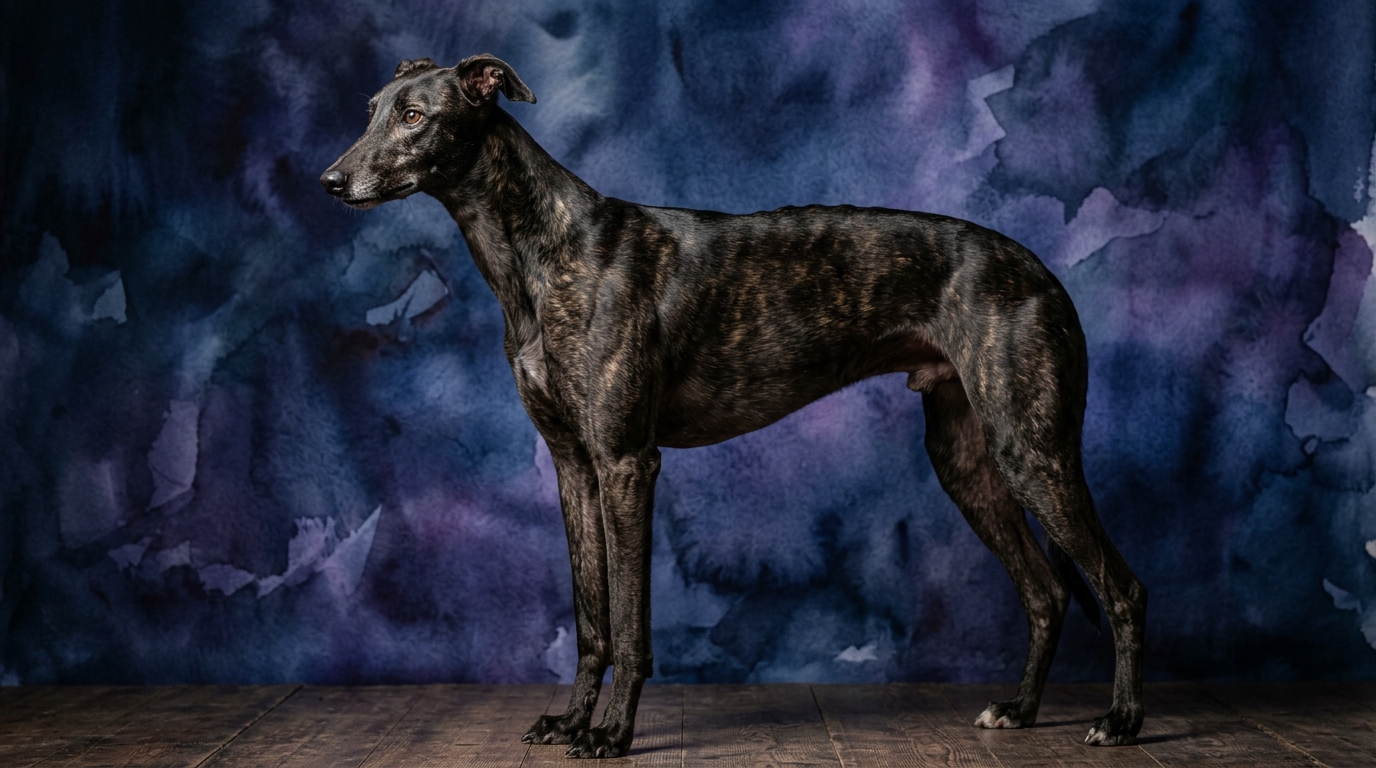
The Greyhound, a Sighthound breed, exhibits a Problem Solving score of 3/5. This reflects an ability to quickly assess and react to visual stimuli, particularly in scenarios involving pursuit or navigating open spaces. Their Training Speed is 2/5, indicating they can learn but often require patience and consistent reinforcement, not always generalizing commands rapidly. Social Intelligence for Greyhounds stands at 3/5; they form deep bonds with their inner circle but can be reserved or aloof with strangers. Their Instinctive Drive is a powerful 5/5, overwhelmingly centered on their primal urge to chase and hunt by sight. Finally, their Memory is rated 3/5, allowing them to retain routines and learned behaviors effectively.
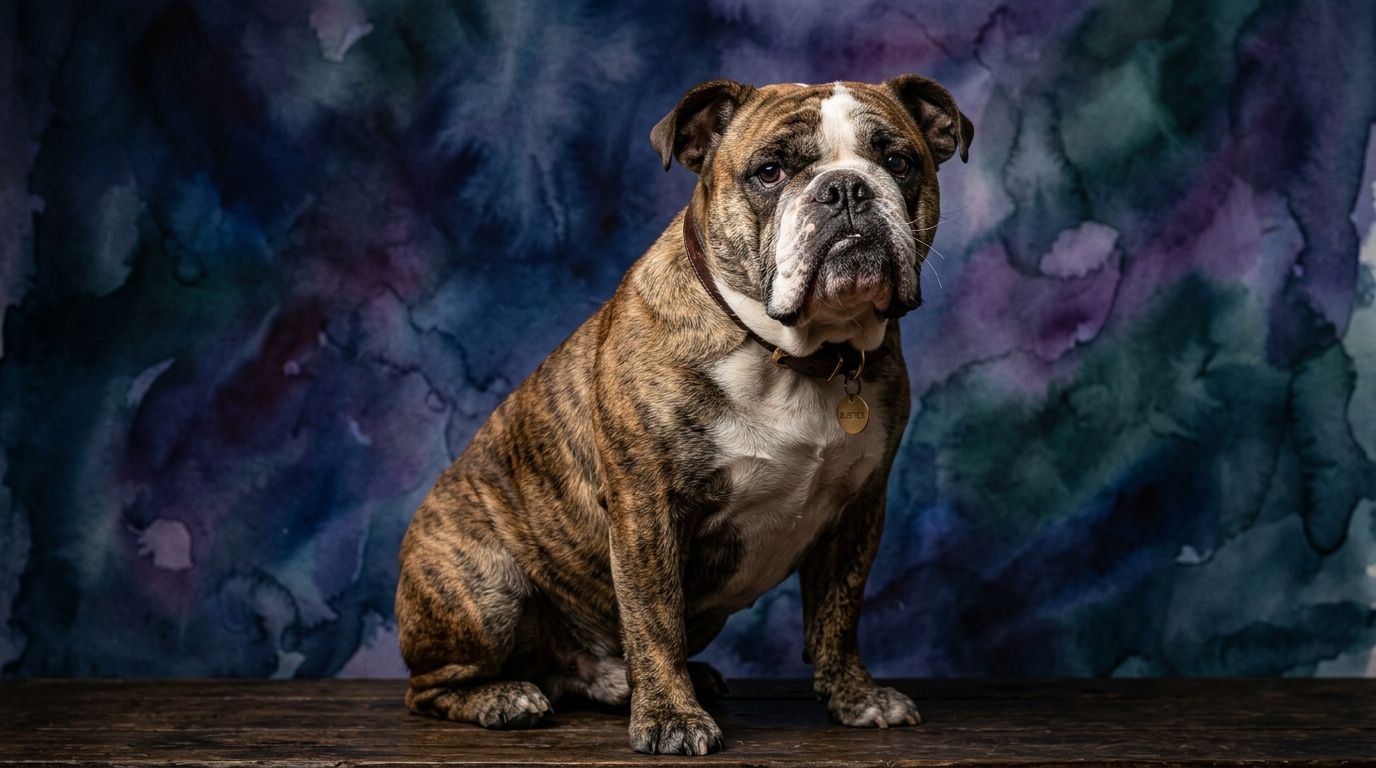
The English Bulldog, a member of the Non-Sporting group, presents a distinct profile. Their Problem Solving is 2/5, suggesting a more deliberative, sometimes persistent, approach rather than rapid analytical thought, often taking longer to adapt to novel situations. Training Speed, like the Greyhound, is 2/5, meaning they require dedicated, positive reinforcement to overcome their potential for stubbornness or distraction. Where they truly shine is Social Intelligence, scoring an impressive 4/5, demonstrating exceptional attunement to human emotions and intentions. Their Instinctive Drive is 3/5, being moderate and typically focused on comfort, food, and companionship rather than intense prey pursuit. Their Memory is 2/5, capable of recalling routines and familiar associations, but perhaps less adept at complex sequences or abstract concepts.
Where the Greyhound Excels Cognitively
The Greyhound's primary cognitive advantages lie in their superior problem-solving related to visual input and their profound instinctive drive. With a Problem Solving score of 3/5, they demonstrate a keen ability to process visual information rapidly, making split-second decisions crucial for high-speed pursuits or navigating complex environments. This isn't about solving puzzles with their paws, but rather their capacity for spatial reasoning and efficient movement, a direct legacy of their sighthound heritage. Their 5/5 Instinctive Drive further amplifies this, providing an unparalleled motivation for tasks that engage their chase instinct, such as lure coursing, where they combine speed, agility, and a focused mental effort to track a moving target. This intense focus, when properly channeled, allows them to execute complex, instinct-driven behaviors with remarkable precision and dedication.
Where the English Bulldog Excels Cognitively
The English Bulldog’s cognitive strengths are rooted deeply in their exceptional social intelligence, scoring 4/5 in this dimension. They possess a remarkable capacity for empathy and emotional attunement, often demonstrating an innate understanding of human moods and intentions. This means they are particularly adept at reading subtle cues from their owners, responding with comforting presence or gentle solicitations for attention precisely when needed. Their strength isn't in physical prowess or rapid analytical thought, but in forging profound, emotionally resonant connections. This makes them highly responsive to the nuances of human interaction, thriving on companionship and providing significant emotional support, which is a sophisticated form of social problem-solving in itself.
Training: Distinct Challenges, Different Approaches
Neither the Greyhound nor the English Bulldog are considered 'quick studies' in traditional obedience, both scoring 2/5 in Training Speed, but their training challenges stem from fundamentally different cognitive landscapes. Greyhounds, with their potent instinctive drive, can be challenging to train in environments with competing visual stimuli; their focus can be singularly on a moving target, making reliable recall in open spaces a lifelong project. Their moderate social intelligence means they respond well to a calm, consistent handler but might not constantly seek approval through performance, sometimes appearing independent or 'tuning out' if not genuinely engaged.
English Bulldogs, while possessing superior social intelligence, often present a different training hurdle: their inherent desire for comfort and a less intense drive for activity can translate into a charming stubbornness. They are not unintelligent, but their slower problem-solving (2/5) means new concepts may take more repetitions to solidify, and they require a trainer who can make learning profoundly rewarding and engaging, often through food or play, to overcome their preference for leisure. For both breeds, force-based methods are ineffective; patience, positive reinforcement, and understanding their unique motivations are paramount.
Matching Breeds to Lifestyles: Active vs. Relaxed Owners
When considering lifestyle compatibility, the Greyhound and English Bulldog cater to very different owner preferences. Greyhounds, despite their reputation for speed, are often affectionately called '45 mph couch potatoes.' They require opportunities for vigorous sprints in a safe, securely fenced area to satisfy their 5/5 instinctive drive, but outside of these bursts, they are remarkably calm, quiet, and content to lounge for extended periods. They suit owners who can provide consistent, short periods of high-intensity exercise, appreciate a serene indoor companion, and understand the need for secure containment due to their strong chase instinct.
The English Bulldog, conversely, is an ideal match for genuinely relaxed owners. Their moderate instinctive drive (3/5) means their exercise needs are modest, primarily consisting of short, leisurely strolls rather than strenuous activity. They thrive in environments where comfort and companionship are prioritized, perfectly content to be a steadfast, affectionate presence by their owner's side. Owners who enjoy a slower pace, value a devoted, low-energy companion, and are prepared for the occasional snore or snort will find the English Bulldog a perfect fit.
The Verdict
Choose a Greyhound if you value a graceful, quiet companion that enjoys vigorous sprints in secure areas and possesses keen visual tracking abilities, thriving on a routine that balances high-speed exercise with significant downtime.
Choose an English Bulldog if you seek a devoted, socially adept companion who excels at reading human emotions, thrives on comfort, and requires a moderate, relaxed approach to daily activity and training.
🧠 Find Your Pet's IQ Score
Our Pet IQ Lab assessment covers 25+ tests across 5 cognitive dimensions — personalized to your breed.
Take the Full IQ Test →Frequently Asked Questions
Are Greyhounds difficult to train?
While Greyhounds are not always quick to generalize commands (training speed 2/5) and possess an independent streak, they are certainly trainable. Their strong prey drive means consistent, positive reinforcement and an understanding of their sighthound instincts are crucial for successful training, particularly for recall in open spaces.
What makes English Bulldogs good companions?
English Bulldogs shine in social intelligence (4/5), making them exceptionally attuned to their human families. They offer unwavering devotion and comfort, often anticipating emotional needs and providing a gentle, reassuring presence, which strengthens their bond with owners and makes them wonderful, empathetic companions.
Do Greyhounds need a lot of exercise?
Greyhounds require opportunities for short, intense bursts of running in a secure area to satisfy their instinctive drive (5/5), but outside of these sprints, they are remarkably calm indoors. They are not endurance athletes, preferring long naps on soft surfaces over sustained activity, earning them the moniker '45 mph couch potatoes.'