Side-by-Side IQ Profile
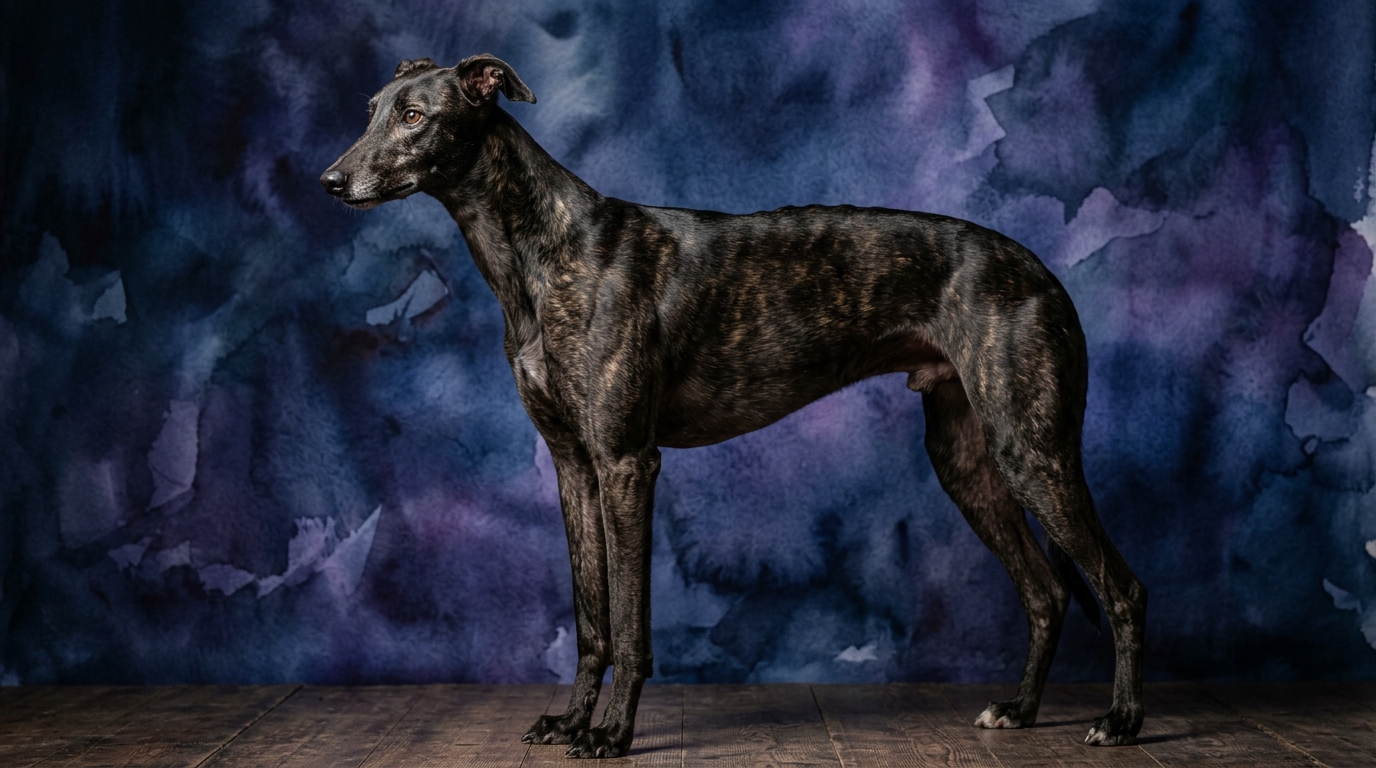
**Greyhound**: This sighthound, ranked #46 by Coren, presents a unique cognitive blend. Its Problem Solving at 3/5 suggests an ability to navigate challenges, often leaning on independent thought rather than direct human guidance, essential for a pursuit predator. Training Speed at 2/5 indicates a breed that requires patience and consistent, engaging methods, as their focus can be fleeting when their instincts pull them elsewhere. Social Intelligence also stands at 3/5, meaning they understand social cues and bond with their family, but might not be overtly demonstrative or people-focused in the same way a working breed might be. A standout feature is their Instinctive Drive at 5/5, reflecting an incredibly powerful prey drive and an inherent urge to chase and capture, which governs much of their behavior and perception of the world. Memory at 3/5 indicates a solid capacity to recall experiences and training, though perhaps not with the same meticulous detail as breeds designed for complex, sequential tasks. Their mental agility is often tied to their physical agility, making rapid assessments in dynamic environments.
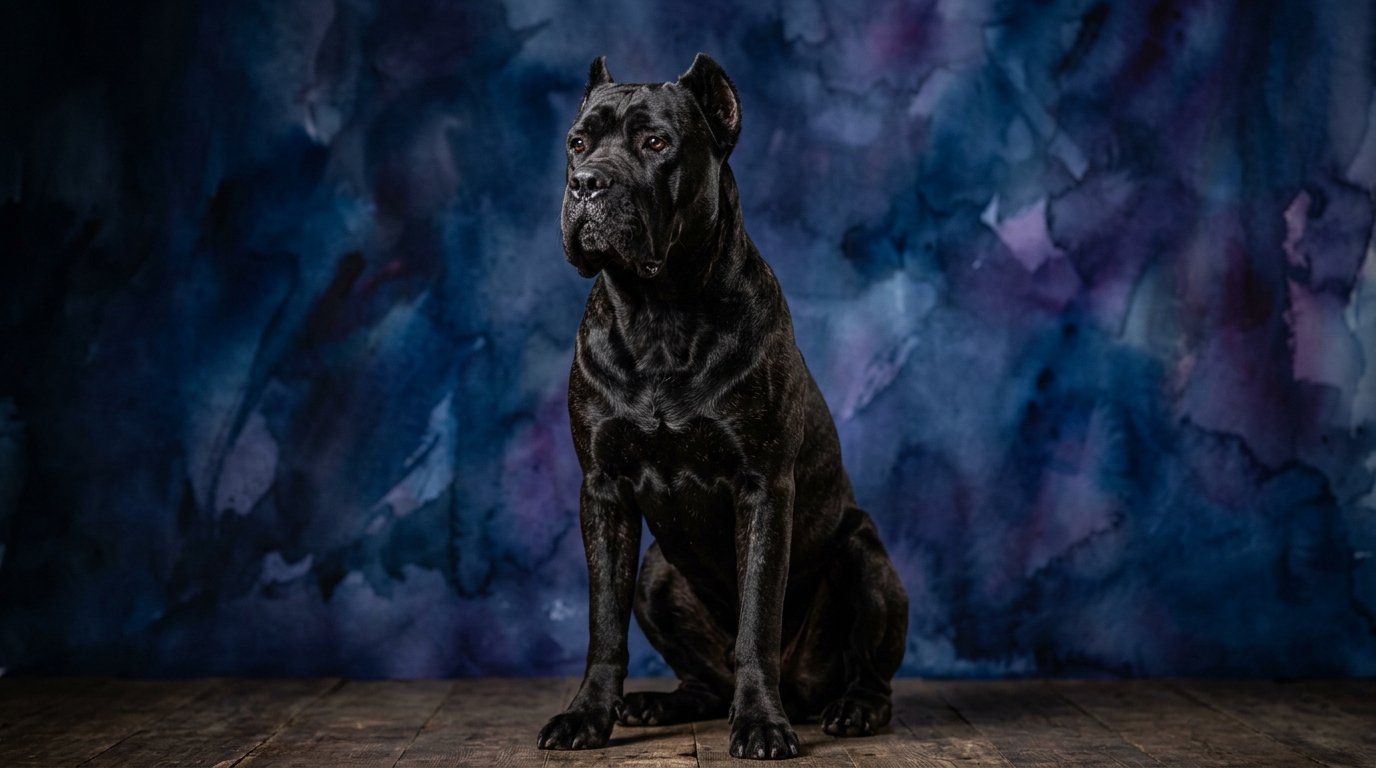
**Cane Corso**: Unranked by Coren but a formidable presence in the Working group, the Cane Corso demonstrates a balanced and purposeful cognitive profile. Its Problem Solving at 3/5 indicates a capable mind that can assess situations and find solutions, particularly in scenarios related to protection or managing its environment, often with a robust and direct approach. Training Speed at 3/5 signifies a more biddable and responsive learner than the Greyhound, eager to engage with human instruction and perform tasks, a hallmark of many working breeds. Social Intelligence also registers at 3/5, reflecting a strong awareness of family dynamics and a protective, discerning nature towards strangers, understanding social hierarchies within its pack. Instinctive Drive at 3/5 points to a strong, but more controlled and situation-dependent, set of natural urges compared to the Greyhound. While possessing protective instincts, this drive is typically channeled through human direction rather than pure, unbridled pursuit. Memory at 3/5 suggests a reliable capacity for retaining commands, routines, and experiences, contributing to their consistency and reliability as guardians and companions. Their cognition is often expressed through their calm vigilance and their ability to make sound judgments in protective roles.
Where Greyhound Wins Cognitively
The Greyhound truly excels in areas demanding rapid, independent decision-making rooted in their powerful instinctive drive. Their 5/5 Instinctive Drive isn't just about chasing; it encompasses an intricate cognitive process of target acquisition, trajectory calculation, and immediate environmental assessment during high-speed pursuit. A Greyhound can process visual stimuli at incredible speeds, identifying a distant movement and formulating an intercept course almost instantaneously, a feat requiring exceptional spatial reasoning and predictive cognition. While their general problem-solving is 3/5, within the context of their primary drive – the chase – their cognitive functions operate at peak efficiency. They demonstrate a unique form of problem-solving when navigating complex terrains at full sprint, adjusting their stride and path to avoid obstacles without breaking rhythm. This “on-the-fly” cognition, honed over centuries of open-field hunting, allows them to make split-second judgments that would overwhelm many other breeds. Their memory, while rated 3/5, is particularly adept at recalling visual cues and hunting grounds, associating specific locations with potential prey, even if their recall for complex obedience sequences might be less enthusiastic. Their independent nature means they are less reliant on human input for certain decisions, which, in their historical role, was a significant cognitive advantage.
Where Cane Corso Wins Cognitively
The Cane Corso's cognitive strengths lie in its biddability, consistency, and a nuanced understanding of social roles, especially within a family unit. Its Training Speed of 3/5, compared to the Greyhound's 2/5, indicates a greater eagerness to learn and retain human commands, making them more adaptable to structured training environments and complex task learning. This superior training speed is underpinned by a desire to work alongside their human companions, understanding that cooperation leads to positive outcomes. Their problem-solving (3/5) is often directed towards practical, real-world scenarios, such as assessing potential threats or navigating social situations with a calm, discerning demeanor. Unlike the Greyhound's instinct-driven problem-solving, the Cane Corso's often involves a more deliberate, analytical approach, weighing options before acting. Their Social Intelligence (3/5) manifests in their protective instincts and their ability to form deep, loyal bonds, understanding the subtle cues of their family members and responding appropriately. They can discern friend from foe, often making judgments based on body language and context, a sophisticated form of social cognition. Their Instinctive Drive (3/5) is less about raw chase and more about guardianship and vigilance, requiring a cognitive framework for assessing risk and acting decisively when necessary, but always within a structured context. This combination makes them more predictable and reliable in roles requiring sustained attention and obedience.
Which is easier to train and why
Based on their Pet IQ Lab profiles, the Cane Corso is generally easier to train than the Greyhound. The Cane Corso's Training Speed is rated 3/5, indicating a more responsive and cooperative learner, while the Greyhound's is 2/5, suggesting a more independent and sometimes less enthusiastic approach to formal instruction. This difference stems from their core behavioral drivers. Cane Corsos, as working breeds, are typically eager to please their owners and thrive on having a purpose, making them receptive to commands and consistent routines. They possess a natural inclination towards biddability, meaning they are more inclined to follow human direction and understand the 'why' behind the training. In contrast, Greyhounds, with their powerful 5/5 Instinctive Drive, are often more focused on their environment and potential prey than on human directives. Their independent hunting heritage means they were bred to make their own decisions in the field, not to strictly obey every command. While certainly capable of learning, their attention can be easily diverted by visual stimuli, and they might find repetitive training tedious. Engaging a Greyhound requires finding ways to tap into their natural drives or making training feel like a fun game, whereas a Cane Corso often approaches training with a more serious, focused intent, making the process smoother for many owners.
Which suits active owners vs relaxed owners
Both breeds require engaged owners, but their activity needs manifest differently. The Greyhound, despite being often described as “45 mph couch potatoes,” suits owners who understand and can accommodate their profound need for bursts of intense physical activity. “Active owners” for a Greyhound means providing safe, fenced spaces for them to gallop at full speed several times a week, allowing them to fulfill their 5/5 Instinctive Drive. However, inside the home, they are remarkably relaxed and quiet, content to nap for hours. Therefore, they also suit “relaxed owners” who appreciate a calm indoor companion, provided the outdoor exercise requirements are met. The Cane Corso, on the other hand, demands a different kind of “active owner.” While not requiring the same explosive speed as a Greyhound, they need consistent mental stimulation, structured exercise, and ongoing training to channel their protective instincts and working drive (3/5 Instinctive Drive). An active owner for a Cane Corso is someone committed to daily walks, engaging in obedience work, and providing opportunities for them to feel purposeful. A relaxed owner, in the sense of being hands-off or inconsistent with training and socialization, would find a Cane Corso challenging. Their need for structure and guidance means they are not a breed for owners seeking a purely independent or low-maintenance companion. They need an owner who is actively involved in their daily lives, providing clear leadership and consistent engagement.
The Verdict
Choose a Greyhound if you appreciate an elegant, independent companion who is calm indoors but requires regular, safe opportunities to sprint and fulfill their powerful prey drive.
Choose a Cane Corso if you seek a loyal, trainable guardian who thrives on consistent guidance, purposeful activity, and a strong bond with an actively engaged owner.
🧠 Find Your Pet's IQ Score
Our Pet IQ Lab assessment covers 25+ tests across 5 cognitive dimensions — personalized to your breed.
Take the Full IQ Test →Frequently Asked Questions
Do Greyhounds truly have a strong prey drive, and how does that impact their cognitive function?
Yes, Greyhounds possess a very strong 5/5 Instinctive Drive, primarily expressed as a prey drive. This impacts their cognitive function by sharpening their visual processing, speed-related problem-solving, and memory for movement, making them highly attuned to anything that moves quickly.
How does the Cane Corso's protective instinct relate to its social intelligence?
The Cane Corso's 3/5 Social Intelligence is closely linked to its protective instinct, allowing it to accurately read social cues within its family and discern potential threats from strangers. This cognitive ability helps them make nuanced judgments about when and how to act as a guardian.
What are the main training considerations when comparing these two breeds?
Training a Cane Corso (3/5 Training Speed) benefits from consistency and positive reinforcement, leveraging their desire to please. Training a Greyhound (2/5 Training Speed) requires more patience, engaging their independent spirit, and finding ways to work around their powerful, often distracting, prey drive.