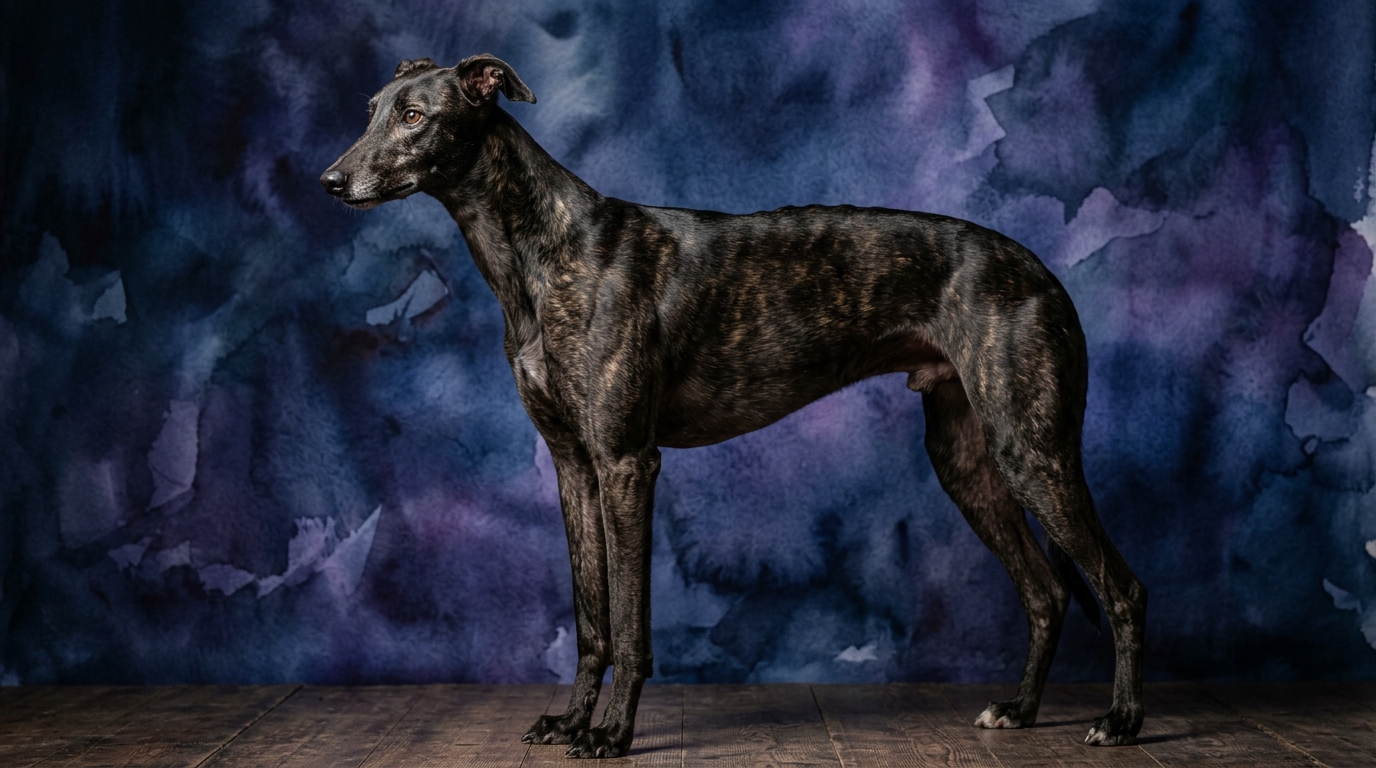
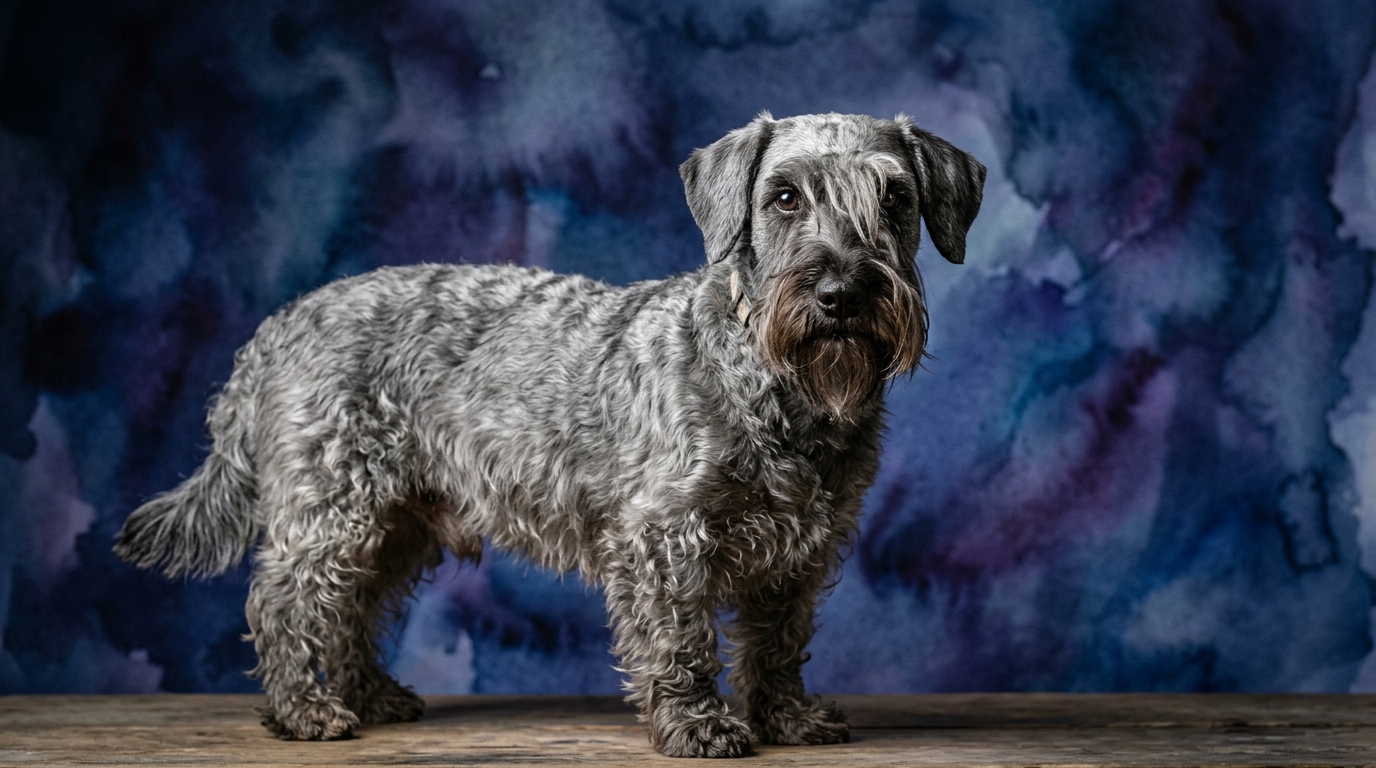
Side-by-Side IQ Profile: Greyhound vs. Cesky Terrier
The Cosmic Pet Pet IQ Lab's framework provides a precise lens through which to compare the Greyhound and the Cesky Terrier's intellectual attributes. Both breeds register a 3/5 for Problem Solving, indicating a moderate capacity to navigate novel situations through learned behaviors and trial-and-error, without displaying master strategist tendencies. Their Social Intelligence aligns at 3/5, signifying competent understanding of human and canine cues, allowing effective integration into social settings. Both also share a Memory rating of 3/5, retaining learned commands and routines adequately without exceptional recall or forgetfulness.
However, the breeds diverge significantly in other cognitive areas. The Greyhound's Training Speed is rated 2/5, indicating they may require more repetition and patience to solidify new commands or behaviors. This often stems from their independent nature and a tendency to prioritize their own motivations over handler directives, especially with distractions. In stark contrast, the Cesky Terrier boasts a Training Speed of 3/5, suggesting a more cooperative learning curve and a quicker grasp of new concepts, making them generally more responsive to structured training sessions.
The most striking difference lies in their Instinctive Drive. The Greyhound scores an emphatic 5/5, reflecting an exceptionally powerful impulse to chase and pursue moving objects, a trait meticulously honed over centuries for hunting and racing. This intense drive is a core cognitive component, influencing their focus and environmental interactions. The Cesky Terrier, while a working terrier, exhibits a more moderate Instinctive Drive at 3/5. This reflects a pronounced inclination for digging and solid prey drive, less overwhelming and more manageable than the Greyhound's, allowing broader focus.
Where the Greyhound Wins Cognitively
The Greyhound's cognitive strengths are deeply rooted in its heritage as a coursing dog, where speed, visual acuity, and autonomous decision-making were paramount. Their exceptional Instinctive Drive (5/5) translates into an unparalleled ability to rapidly process and react to visual stimuli, making instantaneous judgments about the trajectory and speed of moving objects. This is not merely physical speed, but a cognitive quickness in target acquisition and pursuit planning, allowing them to navigate complex environments at high velocity while maintaining focus on their quarry.
Their problem-solving (3/5) shines brightest in chase scenarios, demonstrating cunning in anticipating a lure's path or cornering game. This specialized cognitive function, honed for centuries, means they excel in tasks requiring rapid, independent action driven by visual cues, often making them appear aloof but intensely focused when their prey drive is engaged. They possess unique spatial awareness and navigational intelligence in open spaces, essential for their original purpose.
Where the Cesky Terrier Wins Cognitively
The Cesky Terrier, in contrast, excels in areas reflecting its origins as a versatile hunting companion, requiring both tenacity and a practical, grounded intellect. Their higher Training Speed (3/5) compared to the Greyhound suggests a greater willingness to engage cooperatively with a handler and a quicker uptake of new commands. This translates into a more adaptable problem-solving approach in domestic or varied working contexts, valuing the overcoming of physical barriers or sequential task learning.
While their Instinctive Drive (3/5) is lower, it manifests as persistent, focused determination rather than explosive speed, adept for tasks like scent work or navigating tunnels. Their cognitive strengths lie in their practical cunning and resourcefulness in confined or challenging environments, often employing trial-and-error with a persistent attitude to achieve their goals. This breed displays a robust, hands-on intelligence, favoring engagement and interaction over independent, visually-driven pursuits.
Which Is Easier to Train and Why
Comparing the ease of training between these two breeds reveals distinct challenges and rewards, primarily influenced by their differing Training Speed and Instinctive Drive scores. The Cesky Terrier, with a Training Speed of 3/5, generally presents a straightforward training experience. They tend to be more eager to please and receptive to learning new behaviors, often showing a consistent desire to participate in training sessions. Their moderate Instinctive Drive (3/5) means fewer instant distractions from fleeting squirrels, allowing more focused learning.
Ceskys typically respond well to positive reinforcement and clear, consistent commands, building a solid foundation of obedience with relatively fewer repetitions. They possess a terrier's characteristic determination, which, when channeled correctly, aids in mastering complex tasks and maintaining learned behaviors.
Conversely, the Greyhound, with a Training Speed of 2/5, often requires a different approach. While capable of learning, their independent nature and preference for self-directed action mean they may take longer to generalize commands or perform reliably in varied environments. Their profound Instinctive Drive (5/5) is the most significant factor impacting training; a sudden visual stimulus can instantly override any learned command, making off-leash reliability a considerable challenge without extensive, specialized training in secure areas.
Greyhounds learn quickly when motivated, but their motivation often aligns with their innate drives, not necessarily human directives. Trainers must be exceptionally patient, consistent, and creative, building trust and finding high-value rewards to compete with their powerful chase instinct. Their quiet demeanor can sometimes be mistaken for an unwillingness to learn, when in fact, they are simply processing information at their own pace and weighing their options.
Which Suits Active Owners vs. Relaxed Owners
The suitability of the Greyhound versus the Cesky Terrier for active or relaxed owners hinges significantly on how each breed's cognitive and physical energy manifests. The Greyhound, despite its racing past, often surprises owners with a "45 mph couch potato" demeanor. While they possess an explosive Instinctive Drive (5/5) for short bursts of speed, their energy profile is typically one of intense, brief activity followed by prolonged periods of rest. This makes them surprisingly compatible with relaxed owners who appreciate quiet companionship indoors and can provide access to a securely fenced area for safe, supervised sprints.
They are not typically dogs for long, sustained hikes or complex agility courses requiring constant engagement, preferring a calm home environment. Their social intelligence (3/5) allows affectionate companionship without demanding constant interaction, fitting those seeking a tranquil presence after brief exercise. The Cesky Terrier, on the other hand, with its more balanced Instinctive Drive (3/5) and higher Training Speed (3/5), is better suited for active owners who enjoy consistent engagement and varied activities.
While not requiring marathon runs, Ceskys thrive on mental stimulation and regular physical exercise beyond short walks. They enjoy structured play, scent work, and learning new tricks, benefiting from owners who can channel their terrier tenacity into productive outlets. Their problem-solving (3/5) and social intelligence (3/5) make them excellent partners for interactive games and training sessions, preventing boredom and potential destructive behaviors. Owners appreciating a companion eager for daily adventures, from new trails to dog sports, will find the Cesky Terrier a rewarding, engaging partner, thriving on shared experiences and consistent mental input.
The Verdict
Choose a Greyhound if you appreciate an independent, calm indoor companion whose exercise needs are met with intense, brief bursts of speed in a secure area, valuing their quiet demeanor and profound chase instinct.
Opt for a Cesky Terrier if you desire an engaged, adaptable partner for consistent training, interactive activities, and varied adventures, thriving on shared experiences and a practical, persistent intellect.
🧠 Find Your Pet's IQ Score
Our Pet IQ Lab assessment covers 25+ tests across 5 cognitive dimensions — personalized to your breed.
Take the Full IQ Test →Frequently Asked Questions
Is a Greyhound suitable for a first-time dog owner?
Greyhounds can be suitable, but their unique needs require understanding. Their high prey drive and independent nature mean off-leash safety is paramount, and patience is key for their 2/5 training speed, but they offer a calm presence indoors.
Do Cesky Terriers need a lot of grooming?
Cesky Terriers have a double coat that requires regular grooming, including stripping or clipping every few months to maintain its texture and health. This helps prevent matting and keeps their distinctive appearance tidy.
Can Greyhounds and Cesky Terriers live together peacefully?
They can, but careful introduction and management are crucial due to the Greyhound's strong prey drive and the Cesky's terrier tenacity. Supervision is important, especially with smaller pets, to ensure harmonious cohabitation.