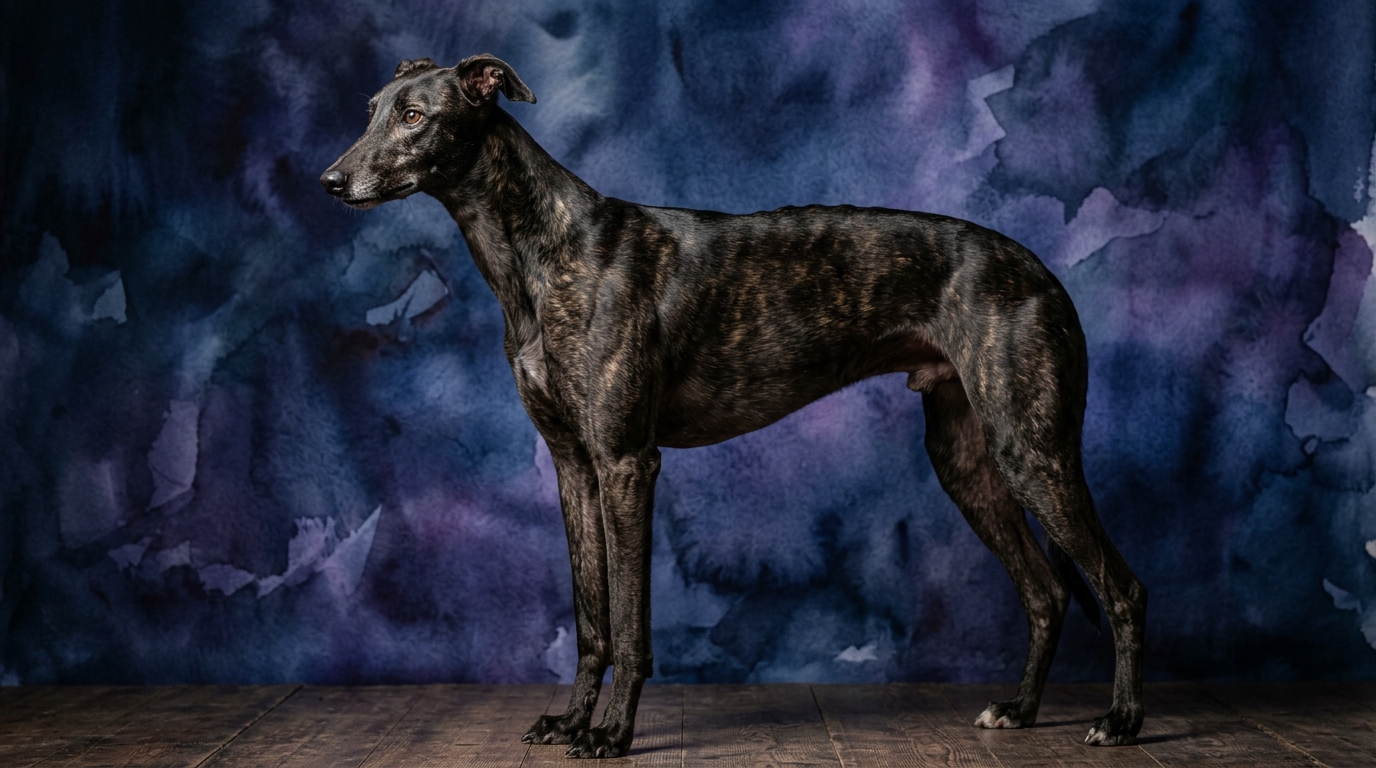
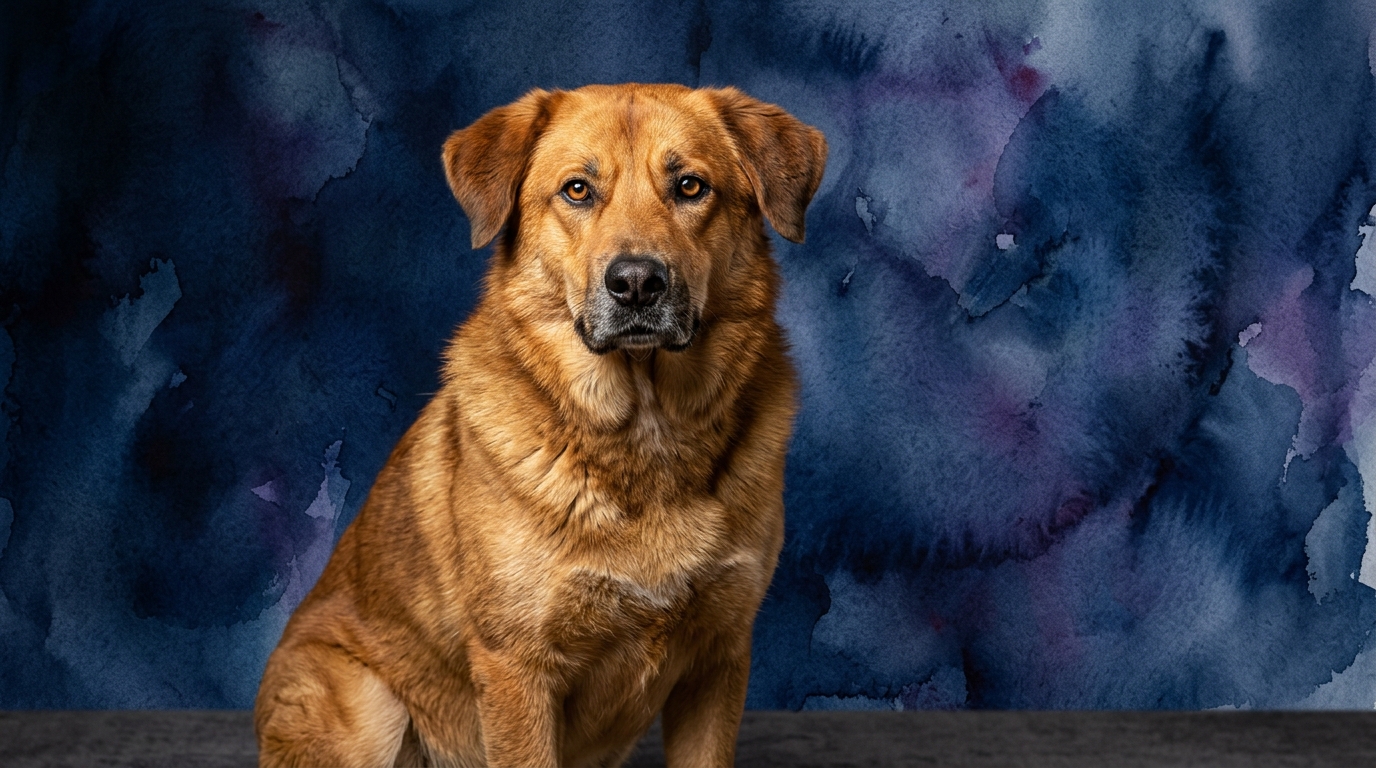
Side-by-Side Cognitive Profile: Greyhound vs. Chinook
Understanding the cognitive landscape of any dog breed requires examining multiple dimensions, and for the Greyhound and Chinook, these dimensions reveal fascinating insights into their inherent aptitudes. We break down their scores across five critical IQ parameters.
**Greyhound Cognitive Dimensions:**
**Problem Solving (3/5):** Greyhounds exhibit practical problem-solving for direct goals like navigating obstacles to reach a desired object or finding the most efficient path in familiar territory, often leveraging their physical capabilities rather than complex abstract thought.
**Training Speed (2/5):** Learning new commands can be a deliberate process for Greyhounds, requiring consistent, positive reinforcement and patience due to their independent nature and strong focus on self-interest or immediate environmental stimuli.
**Social Intelligence (3/5):** Greyhounds are attuned to their immediate human family's emotions and routines, forming deep bonds and understanding subtle cues within their trusted circle, though they often maintain a reserved demeanor with unfamiliar individuals.
**Instinctive Drive (5/5):** Their defining cognitive trait is an intense, unwavering pursuit drive, an instinct perfected over millennia for spotting, chasing, and capturing moving objects with extraordinary speed and focus, central to their breed identity.
**Memory (3/5):** Greyhounds possess a solid memory for established routines, familiar people, and the locations of comfort or reward, enabling them to navigate their daily lives consistently and remember specific, relevant associations.
**Chinook Cognitive Dimensions:**
**Problem Solving (3/5):** Chinooks demonstrate moderate problem-solving, often approaching new situations with thoughtful persistence to overcome obstacles or figure out how to access resources, showing adaptability in their strategies when faced with challenges.
**Training Speed (3/5):** These dogs typically learn new commands and tasks at a good pace, responding well to clear instruction and positive reinforcement, exhibiting an eager willingness to cooperate and engage in structured learning activities.
**Social Intelligence (3/5):** Chinooks are generally responsive to human social cues, displaying empathy and an understanding of social dynamics within their family, making them sensitive and attuned companions who interact appropriately.
**Instinctive Drive (3/5):** Their instinctive drive is balanced and moderate, reflecting a history of cooperative work; it manifests as a natural inclination for pulling, exploring, and engaging in purposeful tasks without the intense single-mindedness of a sighthound.
**Memory (3/5):** Chinooks show reliable memory for learned commands, routines, and the locations of important items or people, retaining information effectively over time, which supports their consistent behavior and adaptability in various situations.
Where the Greyhound Excels Cognitively
The Greyhound's unparalleled 5/5 Instinctive Drive stands out as its primary cognitive advantage, allowing for an extraordinary focus and efficiency in tasks requiring rapid identification and pursuit of moving objects. This specialized form of problem-solving, honed over centuries, means they are unmatched in activities like lure coursing, where their entire cognitive system is geared towards this singular purpose. Their ability to process visual stimuli at speed and react instantaneously in a chase scenario demonstrates a highly specialized cognitive strength that few other breeds possess to the same degree.
Where the Chinook Holds a Cognitive Edge
The Chinook's cognitive strength lies in its more balanced profile, particularly its slightly higher Training Speed (3/5 compared to the Greyhound's 2/5) and its moderate Instinctive Drive (3/5). This balance suggests a greater aptitude for diverse, cooperative tasks and a more adaptable approach to learning varied commands and complex routines, making them generally more versatile in structured training environments. Their problem-solving is often applied to collaborative efforts, a different cognitive strength than the Greyhound's independent pursuit.
Ease of Training: Behavioral Differences in Action
The Chinook is generally easier to train for a wider range of commands and activities due to its 3/5 Training Speed and more moderate 3/5 Instinctive Drive, which fosters a greater willingness to engage cooperatively with human instruction. Their working background means they often seek purpose and direction from their owners, making them receptive to learning new skills and responding reliably to cues without their innate drives overwhelming their focus. In contrast, the Greyhound's 2/5 Training Speed combined with its powerful 5/5 Instinctive Drive means that while they can learn, their independent nature and overwhelming desire to chase require training methods that are highly engaging, consistent, and often specifically designed to manage their intense prey drive. Training a Greyhound often involves carefully managing environments to prevent the activation of their chase instinct, which can be a significant distraction from other commands.
Matching Canine Cognition to Owner Lifestyle
The Chinook, with its balanced 3/5 Instinctive Drive and 3/5 Problem Solving, is better suited for moderately active owners who enjoy engaging in consistent outdoor activities, hiking, or even dog sports where cooperative effort is valued. They thrive on having a 'job' or a purpose, even if it's just regular, structured exercise and mental enrichment; they are not hyperactive but require consistent engagement to prevent boredom. The Greyhound, while famous for short bursts of speed, is ultimately a connoisseur of comfort, making them surprisingly suitable for relaxed owners who appreciate quiet companionship indoors, provided their specific exercise needs (short, intense sprints in a secure area) are met. Their 5/5 Instinctive Drive means secure fencing is paramount for their safety during outdoor activity, but once their exercise is done, their memory (3/5) of a comfy couch often takes precedence, making them excellent '45 mph couch potatoes.'
The Verdict
Choose the Greyhound if your lifestyle accommodates their need for secure, high-speed exercise bursts and you desire a calm, affectionate indoor companion who excels in activities like lure coursing.
Opt for the Chinook if you seek a versatile, cooperative companion for consistent outdoor adventures and enjoy engaging in diverse training activities that leverage their balanced working drive.
🧠 Find Your Pet's IQ Score
Our Pet IQ Lab assessment covers 25+ tests across 5 cognitive dimensions — personalized to your breed.
Take the Full IQ Test →Frequently Asked Questions
Does a Greyhound's high instinctive drive make them difficult to live with?
Not necessarily, but it requires careful management; their intense prey drive means secure fencing and leashed walks are crucial for safety, but indoors they are typically calm and quiet companions who enjoy comfort and routine.
Are Chinooks good family dogs given their working background?
Yes, Chinooks are generally good family dogs due to their social intelligence and cooperative nature, often forming strong bonds and being patient with children when properly socialized and consistently trained.
How do their problem-solving abilities differ in everyday situations?
A Greyhound might problem-solve by efficiently finding the shortest path to a moving squirrel, while a Chinook might more readily figure out how to open a gate or retrieve a hidden toy through trial and error, demonstrating different applications of their cognitive capacities based on their drives.