Side-by-Side Cognitive Profile
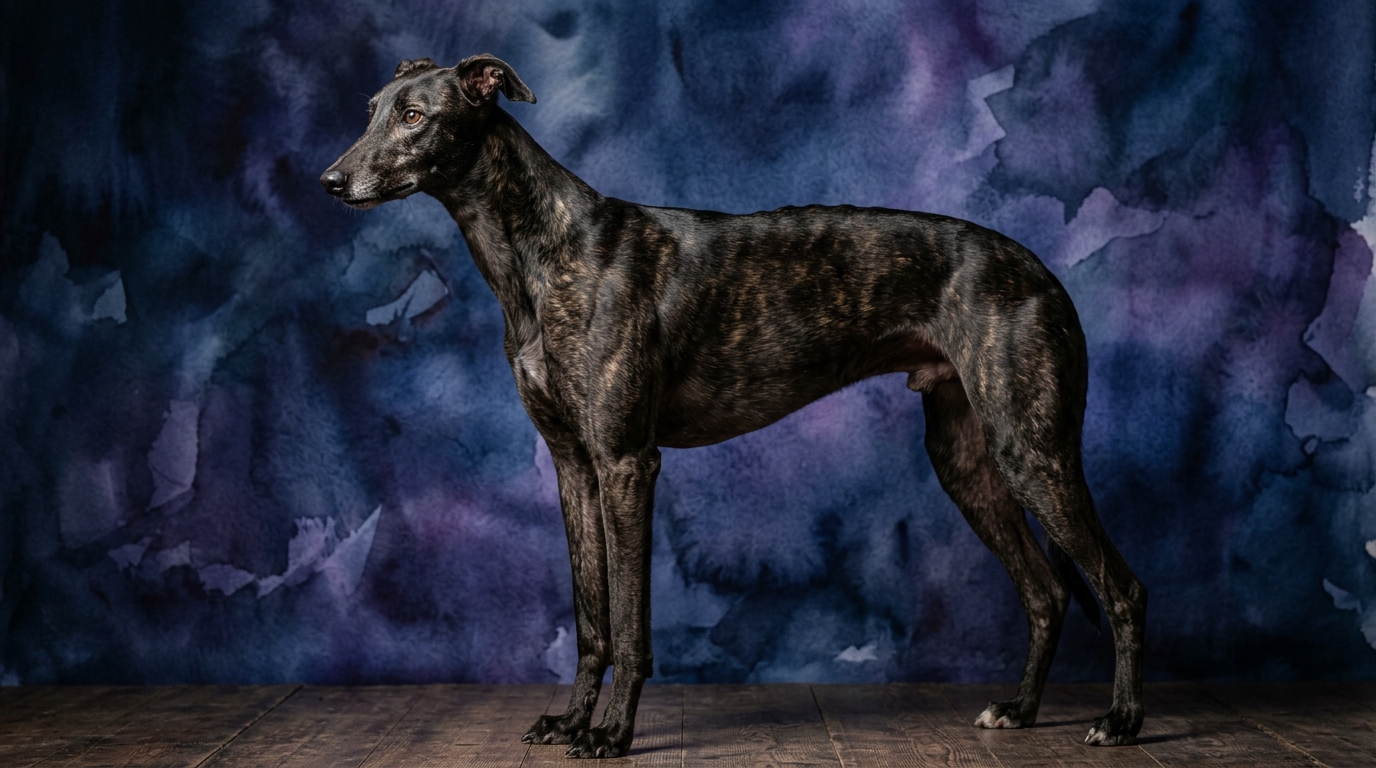
At The Cosmic Pet Pet IQ Lab, we evaluate canine intelligence across five key dimensions. For the Greyhound, a Hound breed ranked #46 by Coren, its cognitive profile reveals a specialized intellect. Its problem-solving ability scores 3 out of 5, indicating a preference for direct approaches rather than complex manipulations. Training speed is 2 out of 5, suggesting that learning new commands requires consistent repetition and specific motivation. Social intelligence is rated 3 out of 5, reflecting a capacity for strong bonds within its immediate family, often accompanied by a reserved demeanor towards strangers. The Greyhound’s instinctive drive is a perfect 5 out of 5, profoundly centered on sight-hunting and pursuit. Memory, at 3 out of 5, means it effectively recalls routines and familiar individuals, though complex sequences might need reinforcement.
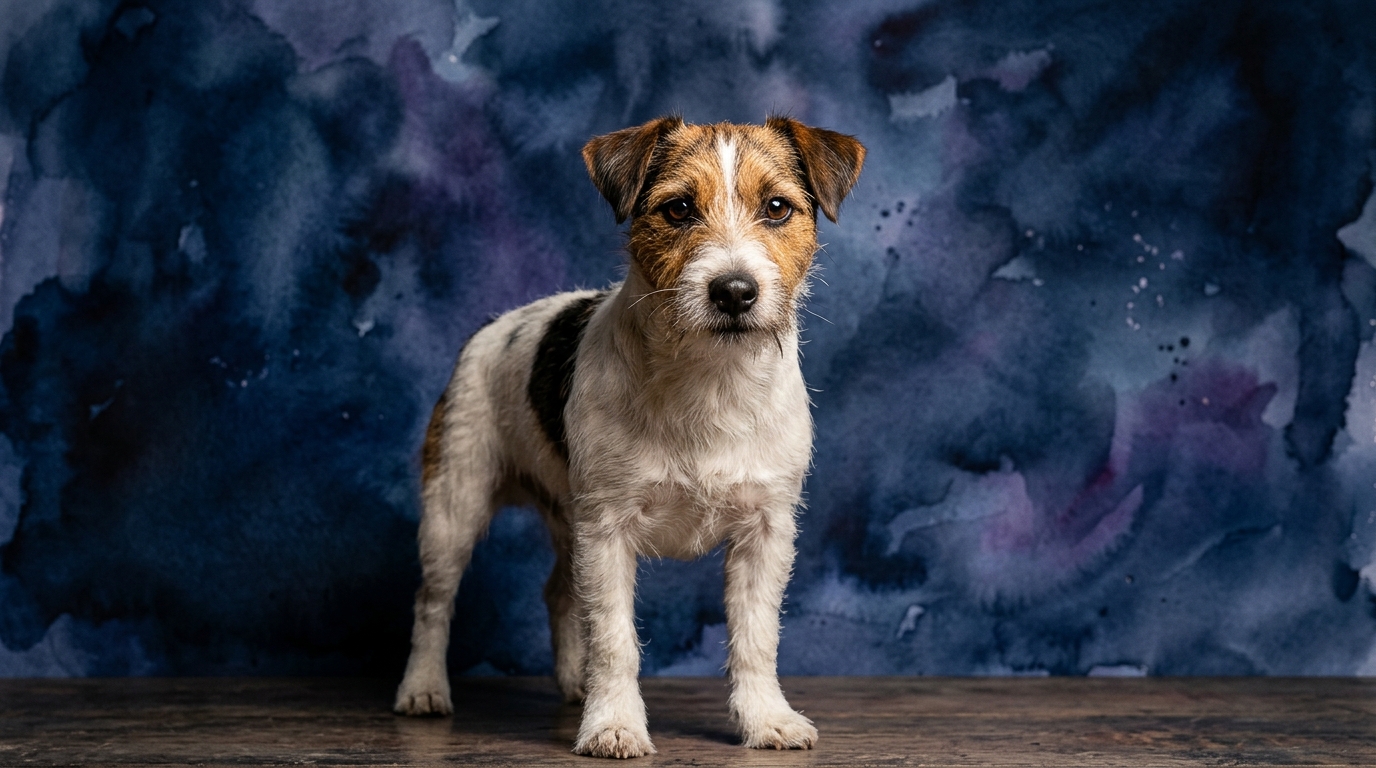
The Jack Russell Terrier, a Terrier breed not formally Coren-ranked but with a distinct cognitive signature, presents a different set of strengths. Its problem-solving ability is an impressive 5 out of 5, showcasing a natural aptitude for navigating challenges and devising creative solutions, a trait honed by its historical role. Training speed is 3 out of 5, indicating a moderate pace of learning new commands, often coupled with a quick grasp of concepts when engaged. Social intelligence matches the Greyhound at 3 out of 5, capable of deep family attachments but with a discerning nature. Like the Greyhound, its instinctive drive is a powerful 5 out of 5, focused on hunting, digging, and exploration. The Jack Russell Terrier’s memory stands at 4 out of 5, demonstrating a strong capacity to retain commands, routines, and experiences over extended periods.
Where the Greyhound Excels Cognitively
The Greyhound's cognitive strengths are deeply intertwined with its evolution as a sighthound, primarily excelling in tasks demanding rapid visual processing and spatial awareness for pursuit. Their brains are uniquely wired for instant analysis of a fast-moving object's trajectory, speed, and potential interception points across open terrain. This isn't merely about physical velocity; it's a highly specialized form of visual problem-solving that allows them to react with breathtaking precision and anticipate changes in their environment. This unique cognitive efficiency enables them to alternate between explosive sprints and profound relaxation, conserving mental and physical resources for when their intense drive is truly engaged by a compelling visual stimulus. Furthermore, their relatively low social reactivity with strangers, while sometimes misinterpreted as aloofness, can be a cognitive advantage in environments where overstimulation might detract from focus on a primary task, allowing for a more serene and single-minded approach.
Where the Jack Russell Terrier Shines Cognitively
The Jack Russell Terrier's cognitive prowess truly shines in scenarios demanding tenacity, adaptability, and intricate problem-solving, particularly within confined or complex environments. Their top-tier problem-solving score (5/5) is vividly demonstrated in their relentless pursuit of solutions, whether it's figuring out how to bypass a gate, retrieve a toy from an awkward spot, or follow a scent trail through challenging terrain. This breed exhibits exceptional cognitive flexibility, often trying multiple approaches until success is achieved. Their superior memory (4/5) allows them to retain complex sequences of actions and specific locations, which is crucial for navigating underground tunnels or remembering where a scent trail diverged. This memory, combined with their robust instinctive drive for exploration and hunting, means they are constantly processing and mapping their environment, learning from every interaction and applying that knowledge to future challenges with remarkable persistence and determination.
Training Dynamics: Greyhound vs. Jack Russell Terrier
Comparing the ease of training between these two breeds highlights their distinct behavioral motivations. The Jack Russell Terrier, with a training speed score of 3 out of 5, generally responds to training with more overt enthusiasm and a quicker grasp of concepts than the Greyhound, which scores 2 out of 5. Jack Russells possess a fervent desire to engage and a natural curiosity that makes them receptive to novel tasks, provided the training is stimulating, varied, and consistent. Their higher problem-solving aptitude also means they can often generalize commands more readily to different contexts. However, their independent spirit and high instinctive drive mean that motivation must be strong and varied to maintain their focus, as they can easily become distracted by environmental stimuli or their own agenda.
Greyhounds, while not lacking in cognitive capacity, often require a different pedagogical approach. Their lower training speed score reflects a tendency to be less intrinsically motivated by abstract commands or human praise, especially if those commands conflict with their powerful prey drive or their preference for comfort and relaxation. They typically learn best with clear, consistent methods and often excel when the training taps into their natural athleticism or offers tangible, high-value rewards. For instance, a Greyhound might quickly learn a recall if it means a chance to chase a lure, but a complex agility sequence might demand significantly more patience and repetition. While their social intelligence allows them to be attuned to their handler’s mood, their independent nature often means they weigh the 'cost-benefit' of compliance more heavily.
Lifestyle Match: Active vs. Relaxed Owners
The ideal owner profile diverges significantly when considering the activity levels and cognitive engagement required by these two breeds. The Jack Russell Terrier is unequivocally suited for active owners. Their exceptionally high instinctive drive and impressive problem-solving abilities demand constant mental and physical engagement. An owner who enjoys daily long, vigorous walks, energetic play sessions, and engaging in dog sports like agility, earthdog trials, or advanced obedience will find a Jack Russell a rewarding and tireless companion. Without sufficient outlets for their sharp minds and boundless energy, these terriers can quickly become bored and destructive, channeling their impressive problem-solving into less desirable pursuits like digging up the garden or dismantling furniture, requiring dedicated management.
Conversely, while Greyhounds certainly need opportunities for bursts of high-speed running in a securely fenced area, they are famously described as '45 mph couch potatoes.' This suggests they are well-suited for owners who appreciate a dog that can transition gracefully from intense activity to long periods of calm relaxation. Their moderate problem-solving and training speed scores, combined with their general preference for comfort, mean they don't require the same constant, intense mental stimulation as a Jack Russell. A relaxed owner who enjoys leisurely strolls, provides a soft bed, and offers opportunities for controlled sprints will find a Greyhound to be a serene, affectionate, and relatively low-maintenance companion. Their social intelligence allows them to be content simply existing alongside their family, making them excellent partners for quieter households.
The Verdict
Choose a Greyhound if you seek a calm, affectionate presence that enjoys short bursts of intense activity followed by extended periods of relaxation, appreciating their unique blend of speed and serenity.
Opt for a Jack Russell Terrier if you thrive on high energy, embrace a dog's relentless curiosity and sharp problem-solving skills, and are prepared to provide consistent, engaging mental and physical challenges.
🧠 Find Your Pet's IQ Score
Our Pet IQ Lab assessment covers 25+ tests across 5 cognitive dimensions — personalized to your breed.
Take the Full IQ Test →Frequently Asked Questions
Are Greyhounds difficult to train due to their low training speed score?
Greyhounds are not inherently difficult to train, but they require patience and consistent, reward-based methods. Their training often benefits from tapping into their natural athletic abilities or prey drive, as their focus can be more on environmental stimuli than abstract commands.
How do Jack Russell Terriers utilize their high problem-solving skills in a home environment?
Jack Russell Terriers apply their problem-solving skills to navigate household challenges, such as figuring out how to open cabinets, retrieve hidden toys, or find creative ways to explore off-limits areas. This requires owners to provide ample mental engagement to prevent boredom-driven mischief and channel their intellect constructively.
Do either of these breeds make good family pets?
Both breeds can be excellent family pets, but their suitability largely depends on the family's lifestyle and experience. Greyhounds are gentle and calm, often good with older, respectful children, while Jack Russell Terriers thrive in active families prepared to manage their high energy and strong prey drive with consistent training and supervision.