Side-by-Side IQ Profile
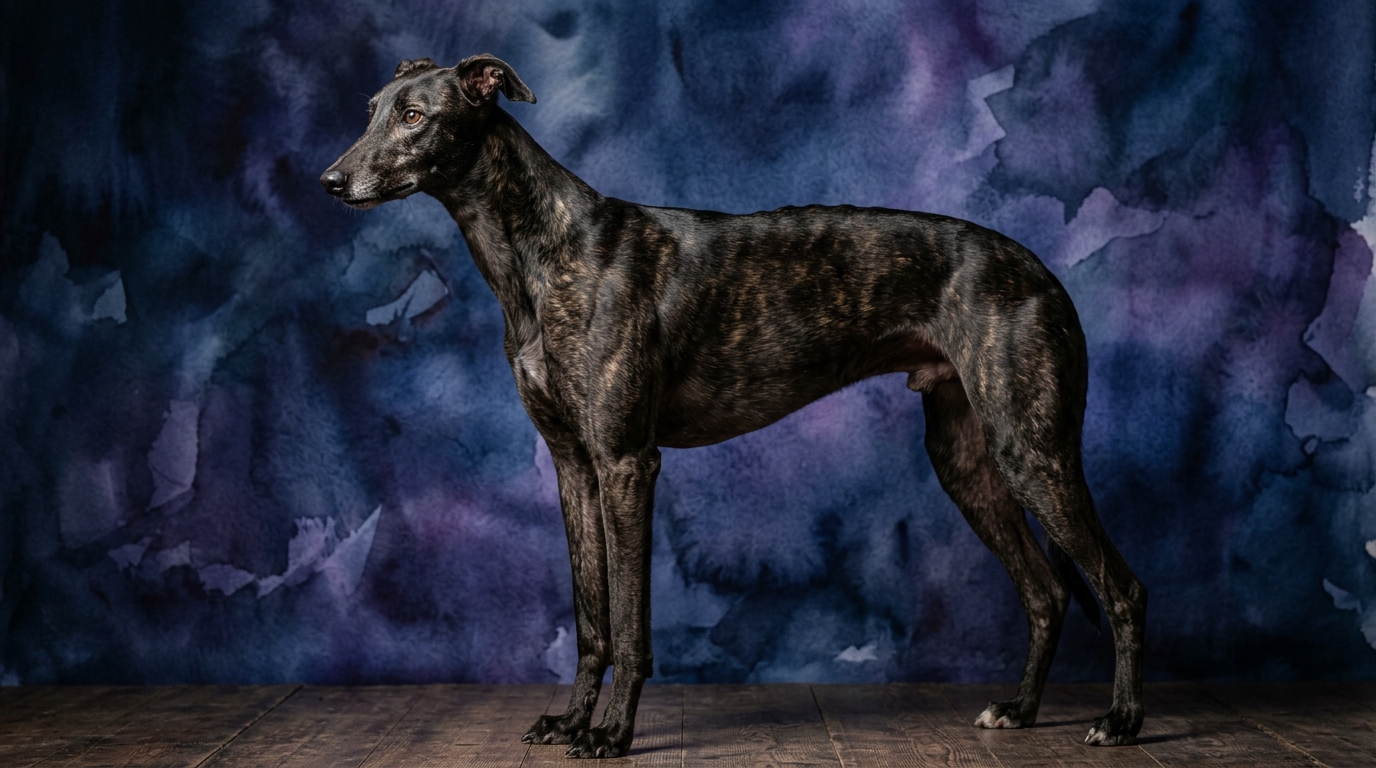
The Greyhound, a breed refined over millennia for speed and pursuit, exhibits a cognitive profile deeply intertwined with its sighthound heritage. Its Problem Solving ability, rated at 3/5, often manifests as rapid, independent decision-making in dynamic environments, such as calculating the optimal pursuit path or navigating complex terrains at high speeds. Training Speed for the Greyhound stands at 2/5, reflecting a degree of independence and a focus on intrinsic motivation rather than a strong desire to please through repetitive tasks. Their Social Intelligence, at 3/5, indicates a capacity for deep, sensitive bonds with their chosen family, often displaying a quiet empathy. The Greyhound's Instinctive Drive is exceptionally high at 5/5, dominated by an innate, powerful urge to chase and track moving objects, a drive so profound it can override other cognitive functions. Their Memory, rated 3/5, allows them to recall routines, safe spaces, and the individuals they trust, forming lasting associations.
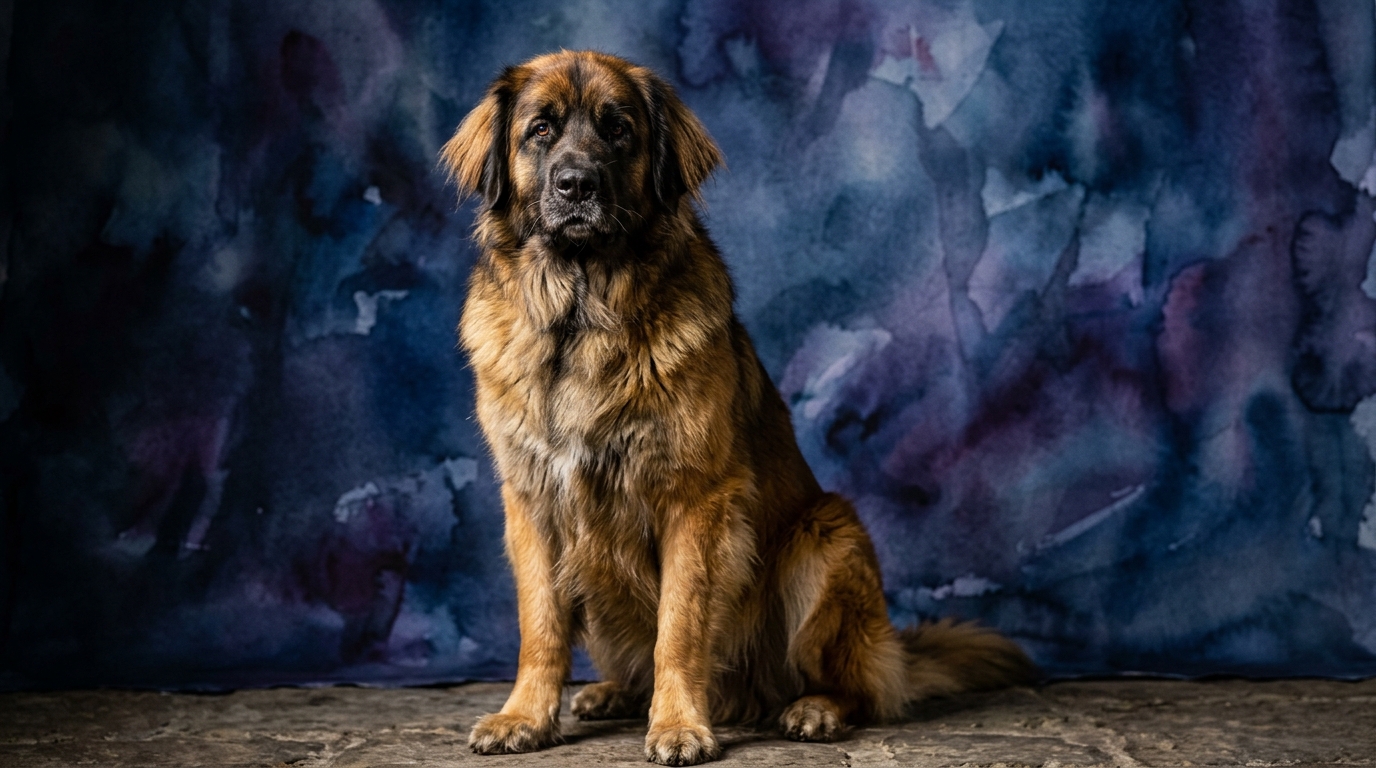
The Leonberger, a formidable working dog bred for companionship and protection, presents a cognitive makeup that emphasizes cooperation and contextual awareness. Its Problem Solving score also sits at 3/5, but this manifests as a more deliberate, thoughtful approach to novel situations, such as figuring out how to access a desired object or navigating obstacles with foresight. The Leonberger's Training Speed is rated 3/5, indicating a more amenable disposition to structured learning and a greater willingness to engage in cooperative tasks, making them generally responsive to consistent guidance. Their Social Intelligence, also 3/5, speaks to their reputation as gentle giants, capable of forming strong, protective bonds within their family unit and exhibiting a calm, discerning demeanor towards others. The Instinctive Drive of a Leonberger is 3/5; while they possess guardian instincts, it is a more moderate, controlled drive compared to the Greyhound's intense prey focus. Like the Greyhound, their Memory is 3/5, enabling them to retain a wide range of commands, learned behaviors, and social experiences.
Where Greyhound Wins Cognitively
The Greyhound's undisputed cognitive advantage lies in its profound Instinctive Drive, rated a perfect 5/5, which underpins its unparalleled ability for pursuit. This isn't just about speed; it's a highly specialized form of intelligence allowing them to process visual stimuli with incredible efficiency, predicting the trajectory of moving objects and executing complex, agile maneuvers without hesitation. Their problem-solving in this context is rapid and intuitive, making split-second decisions to outmaneuver prey or competitors. This intense drive means their neurological wiring is optimized for detecting subtle movements and reacting with precision and power. While this drive can present training challenges, it represents a peak of specialized cognitive function for a sighthound, enabling them to perform tasks requiring extreme focus and physical coordination in pursuit.
Where Leonberger Wins Cognitively
The Leonberger demonstrates a clear cognitive edge in its Training Speed, scoring 3/5 compared to the Greyhound's 2/5. This higher receptiveness to training stems from a fundamental difference in their approach to human interaction and purpose. As a working breed, the Leonberger often possesses an inherent desire to collaborate and understand human directives, finding satisfaction in performing tasks alongside their owners. This translates to a greater willingness to engage in structured learning sessions, absorbing new commands and behaviors more readily. Their problem-solving, while rated similarly at 3/5, is often more deliberate and cooperative, focusing on understanding the task at hand rather than purely independent action. This makes them more amenable to complex obedience, therapy work, or even search and rescue, where consistent application of learned skills is paramount.
Which Is Easier to Train and Why
Based on their cognitive profiles, the Leonberger is generally easier to train than the Greyhound. The primary reason for this lies in the Leonberger's higher Training Speed (3/5) coupled with its more moderate Instinctive Drive (3/5). Leonbergers typically exhibit a greater eagerness to please and a stronger intrinsic motivation to work alongside their human companions, a hallmark of many working breeds. This translates into quicker acquisition of commands and a more consistent response to cues, with their problem-solving often directed towards understanding and fulfilling human expectations.
Conversely, the Greyhound's Training Speed of 2/5, combined with its overwhelming Instinctive Drive of 5/5, presents unique challenges. While Greyhounds are certainly capable of learning, their independent nature means they may not always see the immediate value in performing repetitive obedience tasks. Their powerful prey drive means that in an environment with a squirrel or even a blowing leaf, their attention can be instantly diverted, overriding any learned command. This isn't a lack of intelligence, but rather a different prioritization of cognitive resources—their brain is wired for the chase. Training a Greyhound often requires more patience, positive reinforcement, and a deep understanding of their sighthound instincts, focusing on management and leveraging their natural desire for comfort rather than demanding strict obedience in all scenarios.
Which Suits Active Owners vs Relaxed Owners
The choice between a Greyhound and a Leonberger largely depends on the owner's lifestyle and their definition of "active." For owners who enjoy short bursts of intense activity followed by extended periods of relaxation, the Greyhound can be an excellent fit. Despite their reputation for speed, Greyhounds are often described as "45 mph couch potatoes," requiring dedicated opportunities for full-speed sprints in a securely fenced area, but otherwise content to lounge. Their mental stimulation often comes from visual engagement and the occasional chase, rather than prolonged, complex tasks. A relaxed owner who appreciates a calm, quiet companion indoors but is committed to providing safe, vigorous exercise outlets will find a Greyhound rewarding.
The Leonberger, on the other hand, suits owners who enjoy consistent, moderate activity and thrive on having a cooperative partner for outdoor adventures. While they aren't built for blistering speed, Leonbergers require regular, sustained walks, hikes, or swimming sessions to maintain their physical and mental well-being. Their working breed heritage means they benefit from mental engagement through training, puzzle toys, or even participation in dog sports. An active owner who enjoys daily excursions and wants a companion to share in various activities, and who is prepared for the grooming and care of a giant breed, will find the Leonberger an ideal match. Their social intelligence and willingness to learn make them adaptable partners for a more consistently engaged lifestyle.
The Verdict
When considering a companion, the Greyhound is the choice for owners who appreciate an independent spirit, value bursts of intense, instinct-driven exercise, and seek a quiet, sensitive presence indoors.
The Leonberger is better suited for individuals or families who desire a consistently cooperative, gentle giant, willing to engage in regular, moderate activity and thrive on shared tasks and companionship.
🧠 Find Your Pet's IQ Score
Our Pet IQ Lab assessment covers 25+ tests across 5 cognitive dimensions — personalized to your breed.
Take the Full IQ Test →Frequently Asked Questions
Are Greyhounds difficult to train because of their low training speed?
Not necessarily difficult, but Greyhounds require a different approach to training due to their independence and strong instinctive drive. They respond best to positive reinforcement, short sessions, and an understanding of their sighthound nature, often prioritizing environmental stimuli over human commands in certain contexts.
How does the Leonberger's social intelligence compare to its protective instincts?
The Leonberger's social intelligence (3/5) allows them to form deep family bonds and be gentle companions, while their moderate instinctive drive (3/5) includes a natural protective instinct. These traits typically combine to create a discerning guardian who is calm and friendly with trusted individuals but observant and protective when necessary, rather than aggressively reactive.
Do Greyhounds and Leonbergers have similar problem-solving abilities?
Both breeds rate 3/5 in problem-solving, but their approaches differ significantly. Greyhounds excel at rapid, intuitive problem-solving in pursuit-related scenarios, making quick decisions on the fly. Leonbergers, conversely, tend towards more deliberate, thoughtful problem-solving, often in cooperative or environmental navigation contexts, rather than high-speed reactive situations.