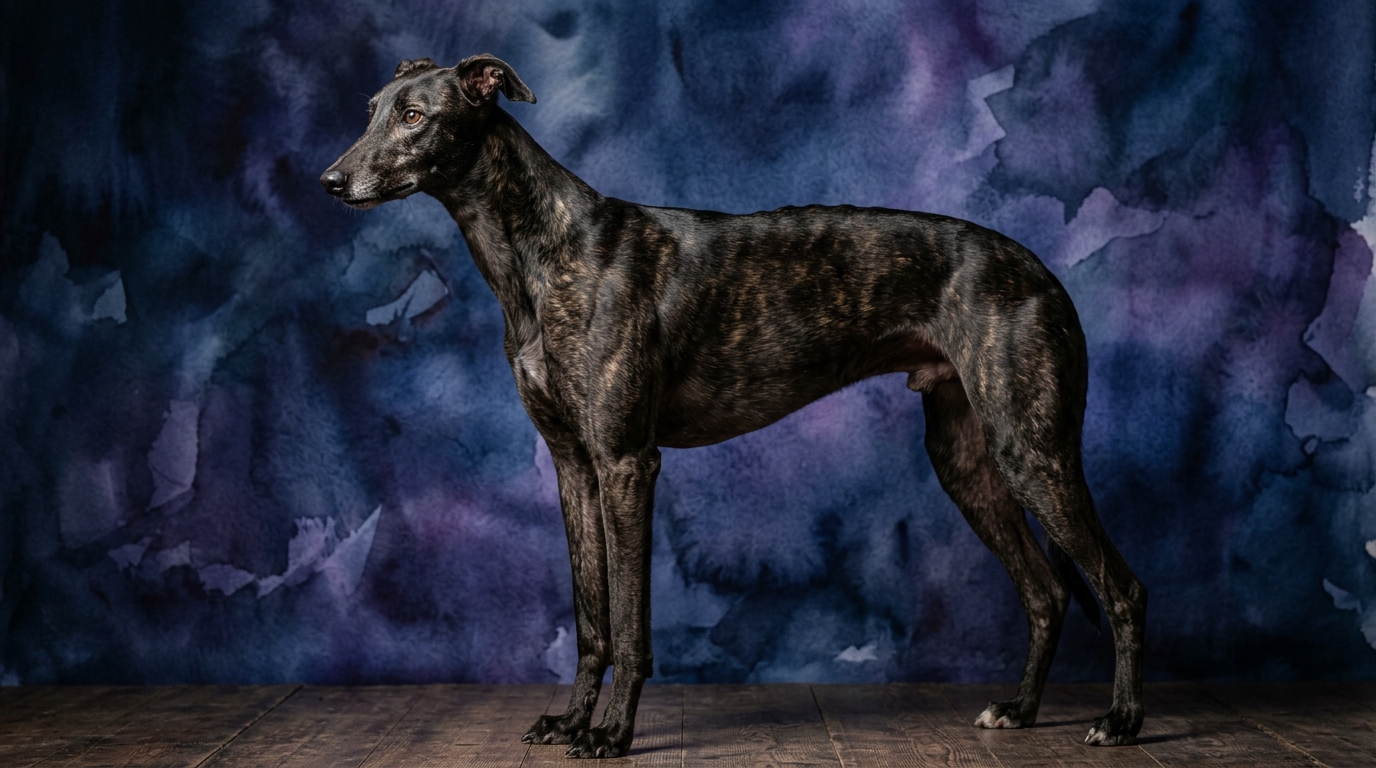

Side-by-Side Cognitive Profiles: Greyhound vs. Manchester Terrier
The Greyhound, a breed often celebrated for its incredible speed, registers at Coren rank #46, placing it within a respectable tier for working and obedience intelligence. Its cognitive strengths are primarily rooted in its ancestral purpose: a keen focus on pursuit and a highly efficient physical execution.
In contrast, the Manchester Terrier, though not Coren-ranked, presents a balanced cognitive profile typical of its terrier heritage. Its mental faculties are geared towards versatility, quick reactions, and a readiness for engagement, making it a distinct counterpoint to the Greyhound's specialized mind.
When assessing Problem Solving, both breeds score a 3/5. For the Greyhound, this score often manifests as efficient navigation of open spaces during a chase or clever ways to conserve energy. Its solutions are typically direct and goal-oriented, often tied to its strong instinctive drives. The Manchester Terrier's problem-solving, also a 3/5, tends to be more varied, perhaps finding ways to access a hidden toy or figuring out a puzzle, reflecting a broader curiosity and adaptability.
Training Speed reveals a notable divergence: the Greyhound scores 2/5, while the Manchester Terrier achieves 3/5. The Greyhound's lower score reflects its independent nature; while capable of learning, it often needs to understand the direct benefit or motivation behind a command, rather than simply seeking to please. The Manchester Terrier, with its terrier eagerness, tends to pick up new cues and routines more readily, often enjoying the collaborative process of learning.
Social Intelligence is rated 3/5 for both breeds. The Greyhound's social awareness often appears as a discerning observation of its environment and human companions, often reserved but perceptive. They tend to form deep bonds with their immediate family, showing a nuanced understanding of household dynamics. The Manchester Terrier's social intelligence, while equal in score, often presents as a more outgoing and interactive engagement, readily picking up on human emotions and social cues within its family unit.
Instinctive Drive is where the Greyhound truly stands apart, scoring a perfect 5/5. This reflects its profound, inherent impulse to chase and its single-minded focus when stimulated by movement. This drive is not merely physical; it's a cognitive blueprint for action. The Manchester Terrier's Instinctive Drive, at 3/5, is still significant, embodying the terrier's historical role in vermin control, but it is less overwhelming and more adaptable than the Greyhound's specialized pursuit instinct.
Finally, Memory for both breeds sits at 3/5. A Greyhound's memory serves it well in recalling familiar routes, the layout of its home, or the sequence of events leading to a favored activity. It efficiently retains information pertinent to its routine and comfort. The Manchester Terrier's memory at 3/5 is equally robust, allowing it to remember specific training cues, the location of hidden toys, or the routines of its household, aiding in its general adaptability and engagement.
Where the Greyhound's Mind Excels
The Greyhound's cognitive strengths are profoundly linked to its exceptional Instinctive Drive (5/5). This isn't just a physical attribute but a mental one, manifesting as an unparalleled focus and determination when presented with a perceived 'prey' or a clear objective. Their ability to process visual stimuli at high speeds, combined with an innate understanding of spatial dynamics in open environments, allows for incredibly efficient and precise movement.
While their Problem Solving is rated 3/5, within the context of pursuit, their minds are incredibly efficient. They can quickly assess the fastest route, anticipate movements, and execute rapid changes in direction, all while conserving energy for explosive bursts. This specialized cognitive strategy, honed over centuries, makes them masters of the chase, even if it doesn't translate to solving complex human puzzles with the same enthusiasm.
Where the Manchester Terrier's Mind Shines
The Manchester Terrier's cognitive prowess lies in its balanced versatility and quicker Training Speed (3/5 compared to the Greyhound's 2/5). This breed demonstrates a more generalized aptitude for learning and adapting, making it adept at a wider range of tasks beyond its core terrier instincts. Their Problem Solving, also 3/5, often involves more nuanced interactions with their environment, driven by curiosity and a desire to engage.
Their quicker uptake of new commands and routines points to a mind that enjoys cooperative learning and mental stimulation. The Manchester Terrier's balanced Instinctive Drive (3/5) allows for a more controlled application of its natural urges, enabling it to transition between focused tasks and attentive companionship with greater ease. This adaptability and readiness for diverse mental challenges are hallmarks of its cognitive strengths.
Training Dynamics: Greyhound vs. Manchester Terrier
Training a Greyhound requires a nuanced approach, largely due to its Training Speed score of 2/5 and profound independence. They are not typically driven by an overwhelming desire to please; instead, their cooperation often hinges on clear, high-value rewards and an understanding of how a task benefits them. Patience, short training sessions, and positive reinforcement are key, as their sighthound nature means they can be easily distracted by movement and may not see the inherent 'point' of some obedience commands.
The Manchester Terrier, with its 3/5 Training Speed, generally responds more readily to training. They are often eager to engage and enjoy the mental stimulation that comes with learning new commands and tricks. While they possess a terrier's characteristic stubborn streak, their quicker learning curve and desire for interaction make them more amenable to varied training techniques. Their instinctive drive, while present, is more easily redirected into constructive activities like agility or obedience, making them highly trainable for those who understand their spirited nature.
Lifestyle Match: Active Pursuits vs. Relaxed Companionship
For owners seeking relaxed companionship with intermittent bursts of high-energy activity, the Greyhound is an excellent match. Despite their incredible speed and 5/5 Instinctive Drive, Greyhounds are often affectionately termed '45 mph couch potatoes.' They require secure, open spaces for short, intense sprints to satisfy their chase instinct, but are otherwise content with long periods of rest and quiet indoors. They suit owners who appreciate a calm, graceful presence and can provide safe outlets for their unique exercise needs without requiring constant, sustained activity.
The Manchester Terrier, conversely, suits owners who prefer a more consistently engaged and active companion. With a balanced 3/5 Instinctive Drive and a quicker Training Speed, they thrive on regular, varied activities that challenge both their bodies and minds. They enjoy longer walks, interactive play, and can excel in dog sports like agility or obedience. They are best suited for individuals or families who are prepared to integrate daily mental and physical stimulation into their routine, appreciating a dog that is always ready for the next adventure.
The Verdict: When to Choose Each Breed
The Verdict
Choose a Greyhound if you seek a quiet, elegant companion content with bursts of high-speed exercise and ample indoor rest, appreciating an independent spirit and managing a strong chase instinct in secure environments.
Opt for a Manchester Terrier if you desire an engaging, quick-to-learn partner who thrives on consistent mental and physical challenges, eager for interactive training and a variety of stimulating activities.
🧠 Find Your Pet's IQ Score
Our Pet IQ Lab assessment covers 25+ tests across 5 cognitive dimensions — personalized to your breed.
Take the Full IQ Test →Frequently Asked Questions
Are Greyhounds difficult to train due to their low training speed score?
Greyhounds aren't inherently difficult, but their independent nature and sighthound instincts mean training requires patience, consistency, and motivation tailored to their preferences, often involving positive reinforcement and shorter sessions. They learn best when tasks align with their natural drives or offer clear, high-value rewards, rather than simply seeking to please.
How does the Manchester Terrier's balanced instinctive drive affect its behavior?
The Manchester Terrier's moderate instinctive drive (3/5) means they possess a keen prey drive typical of terriers, but it's generally more manageable than a Greyhound's intense focus. This balance contributes to their adaptability, allowing them to engage in various activities like tracking or agility while also being attentive companions, provided their needs for mental and physical stimulation are met.
Do Greyhounds and Manchester Terriers require similar levels of exercise?
While both breeds benefit from regular activity, their exercise needs differ in intensity and duration. Greyhounds typically require short, intense bursts of running in a secure area, followed by long periods of rest, making them excellent '45 mph couch potatoes.' Manchester Terriers, conversely, need more consistent, moderate activity, enjoying longer walks, interactive play, and mental challenges to satisfy their energetic and inquisitive nature.