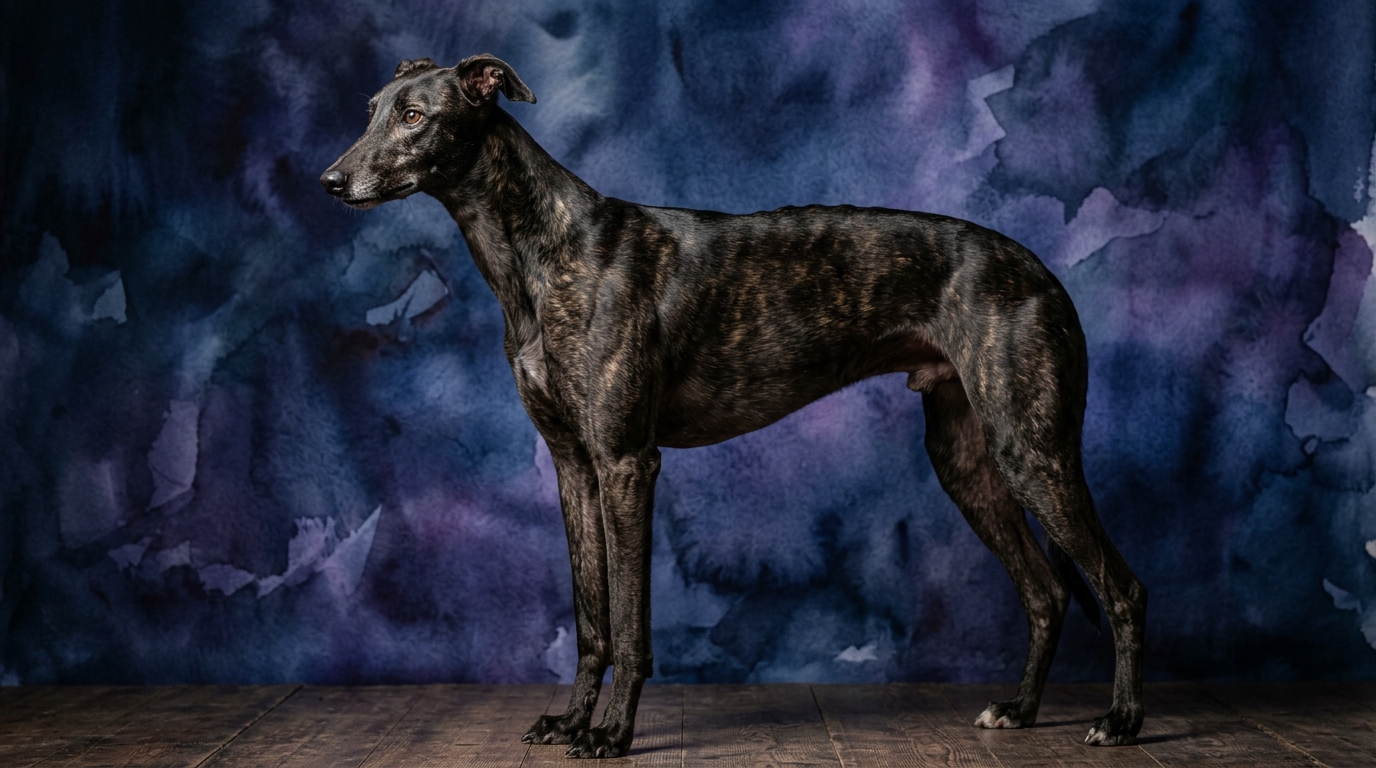
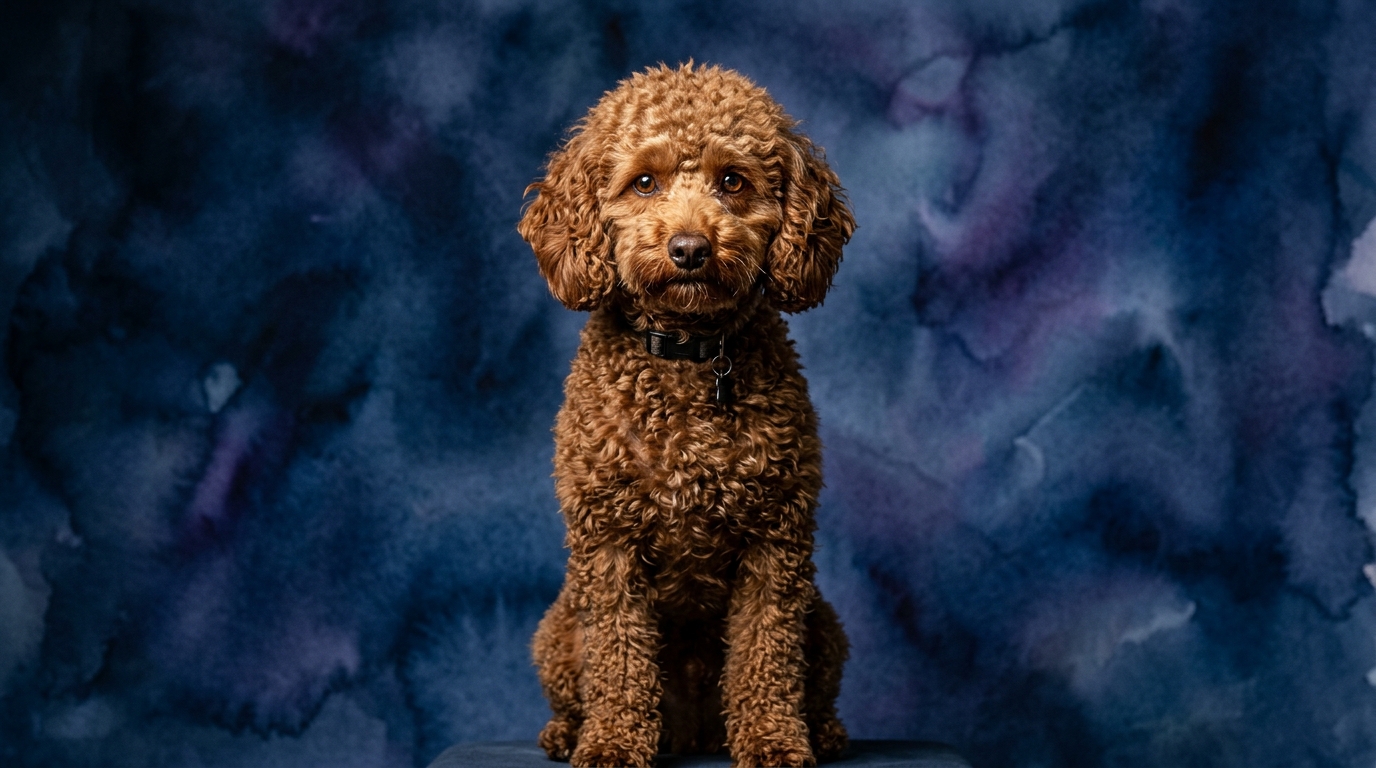
Side-by-Side IQ Profile: Greyhound vs. Miniature Poodle
To understand the cognitive differences between these breeds, we reference their Coren rankings and specific IQ dimensions. The Greyhound holds a Coren rank of #46, indicating a moderate working and obedience intelligence, while the Miniature Poodle boasts a #2 ranking, placing it among breeds with the quickest understanding of new commands.
For the Greyhound, its problem-solving ability scores 3/5. This breed exhibits moderate aptitude for navigating physical obstacles and learning routines, often relying on learned patterns or acute senses rather than complex abstract reasoning. Intricate puzzles requiring multi-step logical deduction might not be their primary strength, with solutions often direct and efficient towards a tangible outcome. Training speed is rated 2/5, suggesting they require more repetitions and consistent reinforcement to solidify new commands, reflecting an independent nature and strong focus on their immediate environment and innate drives. Social intelligence is 3/5; Greyhounds form deep bonds with family and read subtle cues but can be reserved with strangers. Instinctive drive is an exceptional 5/5, primarily manifesting as a powerful prey drive and inherent need to chase, dictating much of their behavior. Their memory scores 3/5, reliably recalling routines, people, and places, especially those associated with comfort.
The Miniature Poodle, in contrast, scores 5/5 in problem-solving. They are adept at figuring out complex puzzles, understanding cause-and-effect, and adapting strategies to new situations, showcasing remarkable cognitive flexibility. Their training speed is also 5/5, meaning they absorb new commands and behaviors with remarkable quickness, often needing few repetitions. Social intelligence for the Miniature Poodle is 3/5, similar to the Greyhound; they form strong attachments and are attuned to human moods but focus primarily on their immediate family unit. Instinctive drive is 3/5; while retaining some hunting instincts, these are generally less pronounced and more manageable than in specialized working breeds. Finally, their memory is an outstanding 5/5, retaining a vast repertoire of commands, tricks, and learned behaviors over long periods, even with infrequent practice.
Where the Greyhound Wins Cognitively
The Greyhound's cognitive strengths are deeply rooted in its evolutionary role as a pursuit predator, excelling in a highly specialized form of reactive intelligence. Their exceptional instinctive drive (5/5) means they possess an unparalleled ability to visually track and respond to moving objects with lightning speed and precision. This isn't merely physical agility; it's a profound cognitive processing advantage that allows for instantaneous decision-making in a high-stakes chase scenario. A Greyhound can assess the trajectory of a fleeing object, anticipate evasive maneuvers, and adjust its own course in fractions of a second, demonstrating a dynamic problem-solving capability (3/5) that few breeds can match. This acute sensory processing and reactive intelligence, while not abstract in the human sense, is a highly specialized cognitive triumph. Their memory (3/5) excels in recalling spatial layouts and routes relevant to their territory or common running paths, contributing to their efficiency in navigating familiar environments during their bursts of activity. This form of intelligence is about immediate, effective action in response to a tangible, moving stimulus.
Where the Miniature Poodle Wins Cognitively
The Miniature Poodle's cognitive prowess shines in areas demanding abstract thought, rapid learning, and robust retention. Their perfect score in problem-solving (5/5) means they excel at tasks requiring logical deduction, understanding complex cause-and-effect relationships, and adapting strategies when faced with novel challenges. They can quickly grasp intricate concepts, such as operating puzzle toys, opening latches, or figuring out how to manipulate objects to achieve a desired outcome through trial and error. Coupled with their exceptional training speed (5/5) and outstanding memory (5/5), Poodles demonstrate a remarkable capacity for acquiring and retaining a vast repertoire of behaviors and commands over long periods. This allows them to master advanced obedience, intricate agility courses, and even complex trick training with an efficiency and enthusiasm that few other breeds can rival. Their intelligence is characterized by cognitive flexibility, a strong capacity for associative learning, and a clear drive to engage with mental challenges presented by their human companions.
Which is Easier to Train and Why
The Miniature Poodle is demonstrably easier to train due to its superior training speed (5/5), outstanding memory (5/5), and high problem-solving ability (5/5). They are eager to learn and quickly connect actions with consequences, requiring fewer repetitions to master new commands. Their cognitive flexibility allows them to generalize learned behaviors to new situations, making training sessions efficient and rewarding. This breed genuinely enjoys the process of learning and performing tasks for their human companions, making them highly responsive to positive reinforcement.
Conversely, the Greyhound, with a training speed of 2/5 and memory of 3/5, requires more patience and consistency. Their strong instinctive drive (5/5) often means they are more focused on environmental stimuli, particularly movement, which can make sustained attention during training a challenge. While Greyhounds can certainly be trained, their independent nature and ingrained chase instincts mean that their motivation often needs to be more carefully managed. Training must be highly engaging and consistent to overcome their tendency to prioritize their innate drives over human directives, often requiring a deeper understanding of their sighthound mentality rather than expecting immediate compliance.
Which Suits Active Owners vs. Relaxed Owners
For owners seeking a highly engaged, mentally stimulating companion for active pursuits, the Miniature Poodle is an excellent fit. Their high problem-solving, training speed, and memory mean they thrive on mental challenges like puzzle toys, advanced obedience, agility, or even dog sports. They often enjoy regular, varied exercise but are equally content with indoor training sessions or learning new tricks, making them adaptable to different levels of physical activity as long as their minds are kept busy. A Miniature Poodle will actively seek out engagement and can become bored or mischievous if not provided with sufficient mental enrichment.
A relaxed owner, however, might find the Greyhound a surprisingly good match, provided they understand and respect the breed's unique needs. While Greyhounds are synonymous with speed, they are often described as '45 mph couch potatoes.' They require short bursts of intense exercise, ideally in a secure, fenced area where they can unleash their instinctive drive, but are otherwise content to lounge and nap for much of the day. A relaxed owner who can provide these specific exercise outlets without demanding constant mental engagement might find the Greyhound's calm, quiet indoor demeanor appealing. Their contentment often stems from comfort and routine, rather than a constant need for mental tasks.
The Verdict
Choose the Greyhound if you appreciate a calm, elegant companion that thrives on short, intense bursts of exercise and deep, quiet companionship, and you are prepared to manage their powerful instinctive drive with secure environments.
Opt for the Miniature Poodle if you seek an enthusiastic, highly trainable companion eager to engage in mental challenges, learn new skills rapidly, and participate in a wide range of activities from advanced obedience to dog sports.
🧠 Find Your Pet's IQ Score
Our Pet IQ Lab assessment covers 25+ tests across 5 cognitive dimensions — personalized to your breed.
Take the Full IQ Test →Frequently Asked Questions
Are Greyhounds difficult to train because of their lower training speed score?
Greyhounds aren't difficult, but they require a different approach. Their training speed (2/5) means they need more repetition and consistency than some breeds. Their independent nature and strong prey drive necessitate patient, positive reinforcement and engaging methods to hold their attention, focusing on building a strong bond and clear communication.
Do Miniature Poodles need constant mental stimulation given their high problem-solving ability?
Yes, Miniature Poodles thrive on regular mental engagement. Their high problem-solving (5/5) and memory (5/5) mean they can quickly become bored without sufficient mental outlets. Daily training sessions, puzzle toys, and opportunities to learn new tasks are crucial to keep them content and prevent undesirable behaviors stemming from under-stimulation.
How does the instinctive drive of these two breeds differ in daily life?
A Greyhound's instinctive drive (5/5) is primarily a powerful prey drive, manifesting as an urgent need to chase moving objects, requiring secure leash handling and fenced areas. A Miniature Poodle's moderate instinctive drive (3/5) might involve some chasing or retrieving, but it's typically more easily managed and redirected, not dominating their behavior in the same all-consuming way.