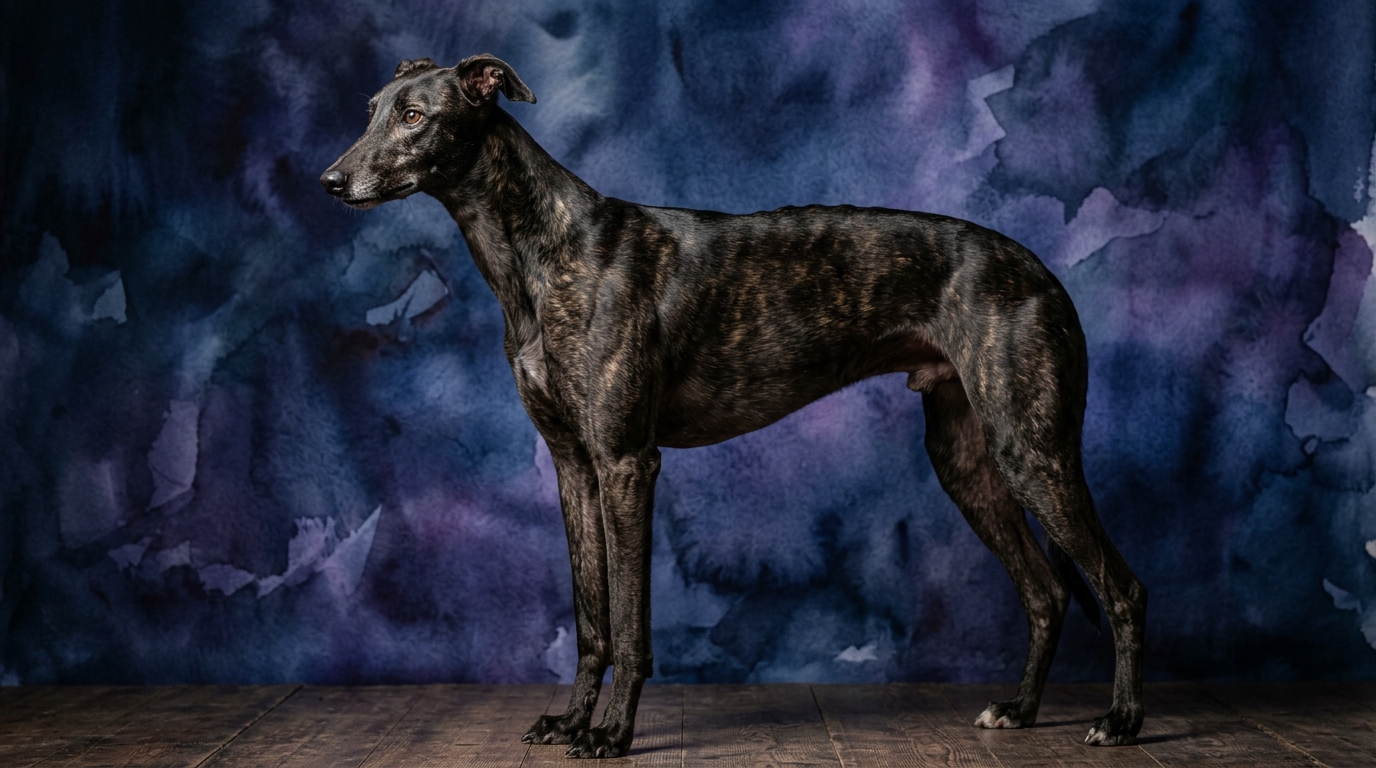
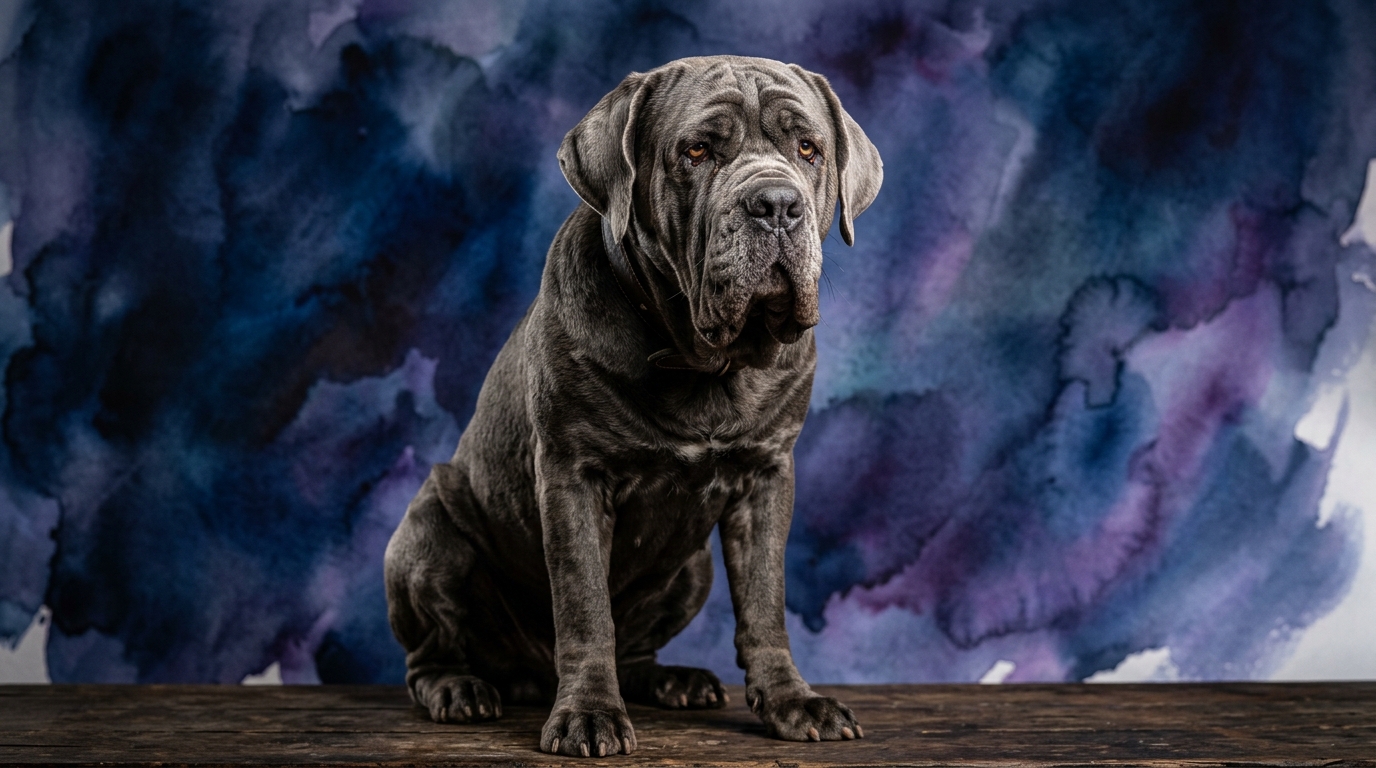
Side-by-Side Cognitive Profiles: Greyhound vs. Neapolitan Mastiff
The Greyhound, a sighthound refined over centuries for explosive speed and pursuit, presents a cognitive makeup meticulously tailored for its primary function. Its Problem Solving is rated 3/5, indicating an innate ability to navigate environments efficiently for a chase, swiftly identifying the optimal path, but not necessarily an inclination for complex, abstract puzzles requiring manipulation or intricate steps. Training Speed at 2/5 reflects a deeply independent spirit; while certainly capable of learning, they often require specific, high-value motivation and immense patience for rote obedience and commands that don't directly align with their natural drives. Social Intelligence, also 3/5, means they are observant of their human companions and can form deep bonds but often express affection with a reserved, quiet dignity rather than overt demonstrativeness. A striking 5/5 in Instinctive Drive highlights their profound, almost inescapable urge to chase, a core cognitive and physical imperative that defines much of their behavioral landscape. Their Memory, 3/5, supports recall for established routines and specific chase patterns, yet they might also tenaciously hold onto perceived negative experiences.
In contrast, the Neapolitan Mastiff, a formidable working breed steeped in a history of guardianship, exhibits a distinctly different intellectual blueprint. Their Problem Solving is 3/5, often manifesting as a discerning assessment of their immediate environment and social situations, prioritizing protective strategies and deterrent presence over intricate, active solutions. Training Speed is 3/5, suggesting a steady and deliberate learning pace that requires consistent, fair, and positive methods, without the quick uptake seen in some highly biddable working breeds. Social Intelligence, at 3/5, underscores their deep loyalty to their immediate family and a cautious, discerning approach to strangers, making them remarkably astute judges of character within their established social sphere. Instinctive Drive, 3/5, points to a strong, inherent protective impulse and territorial awareness rather than a high prey drive for small game. Their Memory, 3/5, allows them to retain knowledge of family members, established household routines, and the identification of potential threats over extended periods.
Where the Greyhound's Cognition Excels
The Greyhound's cognitive prowess is most evident in its unparalleled Instinctive Drive (5/5), which is far more than just physical speed. This represents a highly sophisticated system of visual processing, rapid spatial reasoning, and instantaneous decision-making under high-pressure conditions. They excel at identifying moving targets at long distances, assessing their trajectories, and instantly charting the most efficient interception course, often while adapting to varied terrain and unexpected obstacles at speeds exceeding 40 miles per hour. This “chase intelligence” involves a quick, almost unconscious read of environmental cues, a remarkable capacity for pattern recognition in movement, and the ability to maintain intense focus despite myriad distractions. While their general Problem Solving is rated 3/5, within the specialized context of pursuit, their capacity to navigate complex open fields and predict dynamic movement represents a highly refined form of cognitive agility and reactive intellect, making them masters of their specific domain.
Where the Neapolitan Mastiff's Cognition Shines
The Neapolitan Mastiff's cognitive strengths lie in its nuanced Social Intelligence (3/5) and discerning Problem Solving (3/5), particularly regarding their role as a steadfast protector. Unlike the Greyhound's focus on explosive speed, the Mastiff's intellect is geared towards patient observation, thorough assessment, and strategic guardianship. They demonstrate an acute, almost intuitive ability to differentiate between cherished family members, trusted friends, and potential threats, often making subtle, measured judgments before any overt action. Their problem-solving isn't about rapid physical intervention but about strategic presence: understanding precisely how to deter, when to issue a warning, and when to simply observe with an imposing quietude. This involves a steady, deep processing of social cues, body language, and subtle environmental changes, allowing them to act as a calm, formidable, and remarkably perceptive sentinel for their home and cherished family unit, embodying a profound sense of responsibility.
Training Dynamics: Greyhounds vs. Neapolitan Mastiffs
When considering ease of training, the Greyhound's Training Speed (2/5) presents a unique challenge. Their history as independent hunters means they are not inherently driven by a strong desire to please through rote obedience. They learn quickly what benefits them, especially if it involves chasing or comfort, but can be selective in responding to commands that seem arbitrary. Training a Greyhound often requires high-value rewards, short, engaging sessions, and immense patience, as their attention can easily drift towards perceived prey. Their strong instinctive drive means off-leash reliability, especially in unfenced areas, is a significant hurdle due to their powerful chase impulse.
The Neapolitan Mastiff, with a Training Speed of 3/5, offers a different experience. While not a breed known for lightning-fast obedience, they are generally more amenable to consistent training due to their strong bond with their family and inherent protective nature. They respond best to a confident, fair, and consistent leader who establishes clear boundaries. Their problem-solving (3/5) and social intelligence (3/5) contribute to their ability to understand and absorb rules, particularly those that maintain order within their family unit. However, their sheer size and potential for stubbornness mean that early and continuous socialization and obedience training are crucial, ensuring they become well-mannered giants rather than unmanageable behemoths.
Lifestyle Suitability: Active vs. Relaxed Owners
For active owners, the Greyhound, despite its reputation as a “45 mph couch potato,” can be a surprisingly good fit, provided their activity aligns with the breed's natural inclinations. These dogs thrive on bursts of intense, high-speed exercise—think secure off-leash running in a fenced area, lure coursing, or long, brisk walks. Their cognitive engagement often comes from these physical outlets, allowing them to fulfill their instinctive drive. An owner who enjoys providing opportunities for the Greyhound to stretch its legs and experience the joy of speed will find a wonderfully calm and affectionate companion for the rest of the day.
The Neapolitan Mastiff, on the other hand, is generally better suited for more relaxed owners. While they still require regular, moderate exercise, such as daily walks, they are not built for intense, sustained athletic endeavors. Their preference is often to be a calm, watchful presence within the home, content to observe their family from a comfortable spot. Owners who appreciate a steadfast, low-key companion, and who are prepared for the physical demands of managing a very large dog, will find a Neapolitan Mastiff’s temperament aligns well with a more sedate lifestyle. Their cognitive needs are met more through social interaction, guarding duties, and consistent routines than through high-octane physical challenges.
The Verdict
Choose a Greyhound for an owner seeking a swift, graceful companion who thrives on bursts of exhilarating speed and offers a uniquely independent, yet affectionate, presence. They are ideal for those who appreciate a dog with an intense, focused drive for pursuit and a calm demeanor indoors after proper exercise.
Opt for a Neapolitan Mastiff if you desire a steadfast, imposing guardian with a deep loyalty to their family and a calm, watchful temperament. They suit owners prepared for a massive, discerning companion whose cognitive strengths lie in protective discernment and steady companionship rather than athletic pursuits.
🧠 Find Your Pet's IQ Score
Our Pet IQ Lab assessment covers 25+ tests across 5 cognitive dimensions — personalized to your breed.
Take the Full IQ Test →Frequently Asked Questions
Are Greyhounds good at learning tricks?
Greyhounds can learn tricks, but their training speed (2/5) suggests it might require more patience and high-value rewards than with some other breeds. They often prefer practical tasks or activities that engage their chase instinct over complex, arbitrary commands.
How do Neapolitan Mastiffs show their social intelligence?
Neapolitan Mastiffs demonstrate social intelligence by forming strong, protective bonds with their immediate family, often being reserved or wary with strangers until trust is established. They are adept at reading family moods and will position themselves as a watchful, comforting presence.
Which breed is better for apartment living?
While both breeds can adapt to apartment living with proper exercise, the Greyhound often surprises owners with its "couch potato" nature indoors, provided it gets daily sprints. The Neapolitan Mastiff, despite its size, is also relatively calm indoors, but its sheer bulk requires ample space and consideration for its physical presence.