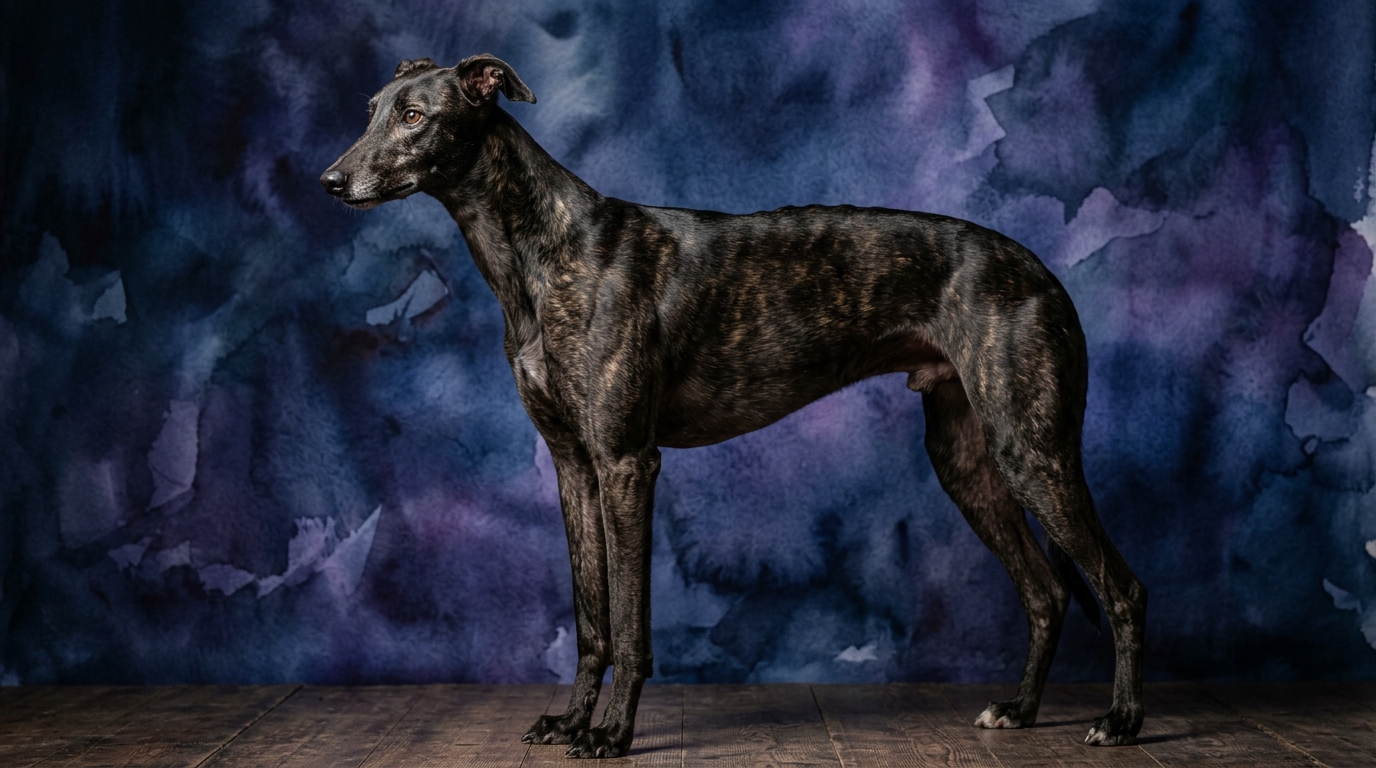
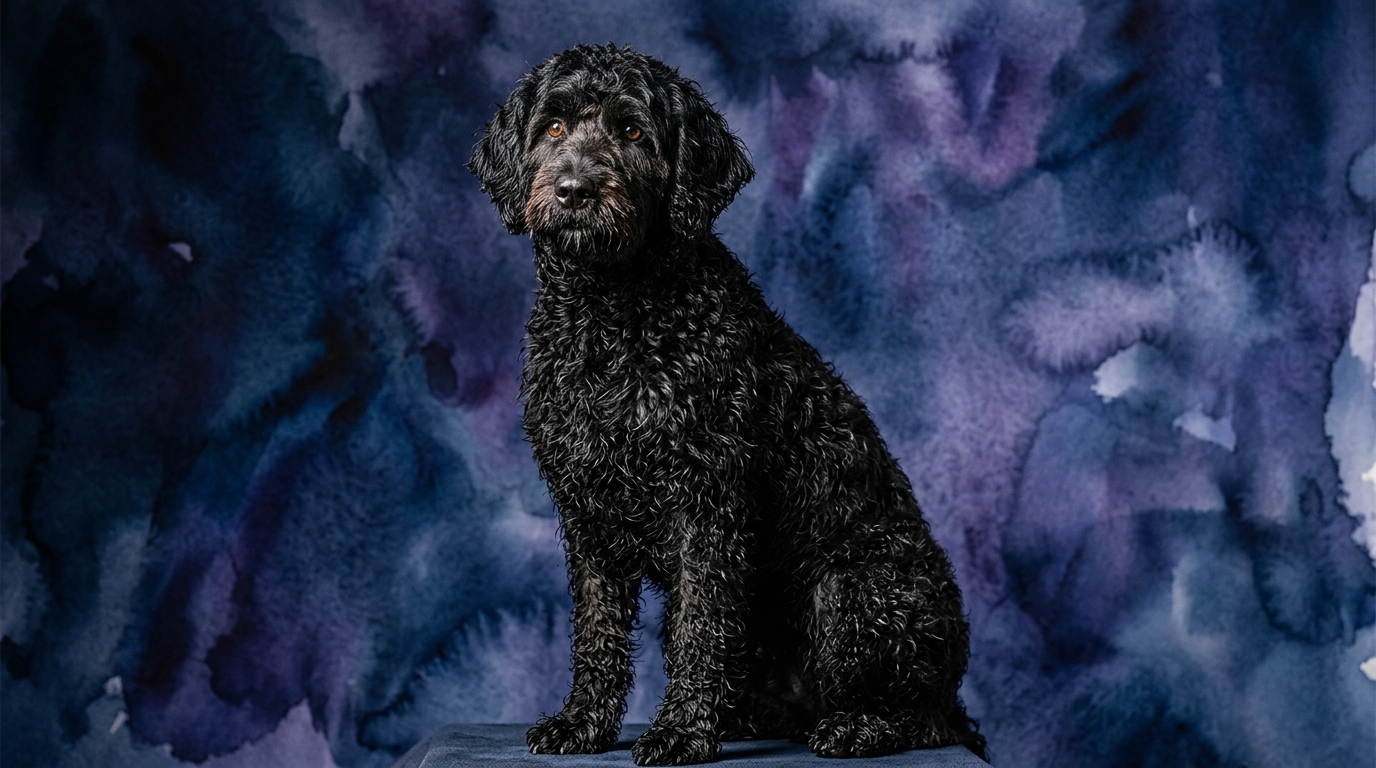
Side-by-Side IQ Profile: Greyhound vs. Portuguese Water Dog
**Greyhound (Coren Rank #46, Hound Group)**
**Problem Solving (3/5):** These dogs demonstrate practical problem-solving, particularly when navigating open spaces or identifying movement. Their solutions are often direct and efficient, geared towards their primary function of chase, requiring quick assessment of environmental cues. They excel at mapping out the most direct route to a visual target, a specialized form of cognitive efficiency.
**Training Speed (2/5):** Greyhounds learn at a moderate pace, but their independent nature often means they need strong motivation to comply rather than an inherent eagerness to please. Repetition, positive reinforcement, and understanding their sighthound independence are crucial. They might understand a command quickly but choose to execute it based on their own assessment of the situation.
**Social Intelligence (3/5):** Greyhounds are generally sensitive to human moods and social cues within their established pack, forming strong, quiet bonds. They can be reserved or aloof with strangers, showing a discerning social awareness rather than overt friendliness, often preferring to observe new people from a distance before engaging.
**Instinctive Drive (5/5):** This is their defining cognitive strength. Their prey drive is exceptionally high, manifesting as an intense focus on visual stimuli and an unparalleled burst of speed. This drive is a powerful motivator for specific behaviors but also a significant training consideration, as it can override other learned responses.
**Memory (3/5):** Greyhounds possess a good memory for routines, locations, and specific people. They can recall learned commands, though their application might be selective based on environmental distractions or their independent spirit, sometimes appearing to 'forget' a command when a more compelling visual stimulus is present.
**Portuguese Water Dog (Not Coren-Ranked, Working Group)**
**Problem Solving (3/5):** PWDs exhibit a versatile problem-solving ability, often applying their minds to tasks requiring manipulation, retrieval, or navigation in complex environments. They enjoy mental challenges and figuring things out, demonstrating a cognitive flexibility to adapt their approach based on the specific task. Their solutions are often creative and persistent, reflecting their working dog heritage.
**Training Speed (3/5):** These dogs show a commendable aptitude for learning new commands and behaviors quickly. Their desire to work alongside their handler makes them responsive and generally eager participants in training sessions, often picking up new concepts with fewer repetitions than some other breeds.
**Social Intelligence (3/5):** PWDs are typically gregarious and highly responsive to social cues, often seeking interaction and engagement with their human family. They integrate well into family dynamics and tend to be more outwardly expressive in their social interactions than Greyhounds, readily picking up on emotional tones and body language.
**Instinctive Drive (3/5):** Their instinctive drive is balanced, rooted in their heritage as working water dogs. This translates to an enthusiasm for retrieving, swimming, and physical tasks, driven by a desire to perform a function for their handler, but without the singular, intense focus of a sighthound's prey drive.
**Memory (3/5):** PWDs have a reliable memory for commands, people, and routines. They retain learned skills over time, making them consistent performers once a task is mastered, and they often remember complex sequences of behaviors for extended periods.
Where the Greyhound Wins Cognitively
The Greyhound's cognitive prowess shines brightest in domains directly tied to its sighthound heritage, particularly its extraordinary instinctive drive, rated at a 5/5. This isn't merely about speed; it's a sophisticated visual processing system that allows them to instantly identify and track moving objects at great distances with precision. Their problem-solving, though rated 3/5 like the PWD, is uniquely optimized for immediate, decisive action in pursuit. A Greyhound can calculate complex trajectories and anticipate a quarry's movements with an efficiency that reflects millennia of selective breeding for the chase, making them unparalleled in tasks requiring rapid visual discernment and explosive physical response.
Where the Portuguese Water Dog Wins Cognitively
The Portuguese Water Dog demonstrates a distinct cognitive advantage in its training speed, scoring 3/5 compared to the Greyhound's 2/5. This higher responsiveness stems from a deep-seated desire to collaborate and engage with their human partners. While Greyhounds are independent problem-solvers in their specific hunting context, PWDs excel at understanding and executing complex sequences of commands across varied scenarios, showcasing a more adaptable and handler-oriented form of cognitive flexibility. Their problem-solving (3/5) is less specialized than the Greyhound's, manifesting instead as a versatile capacity for learning diverse tasks, from retrieving objects to navigating intricate agility courses, driven by a strong impulse to work *with* their people.
Which Is Easier to Train and Why
Between these two breeds, the Portuguese Water Dog is generally easier to train, a difference rooted in their fundamental cognitive wiring and historical roles. The PWD's 3/5 training speed rating reflects their eagerness to please and their intrinsic motivation to work collaboratively with a handler. They absorb new commands readily and are often described as having a 'can-do' attitude, making them responsive to positive reinforcement and consistent guidance. In contrast, the Greyhound's 2/5 training speed is coupled with a strong independent streak and a formidable 5/5 instinctive drive. While they can certainly learn, their compliance often requires more persuasion and understanding of their sighthound nature. Their instinct to chase overrides other commands in high-distraction environments, demanding meticulous management and specialized training approaches to ensure safety and obedience, especially off-leash. A PWD's cognitive framework is built for partnership, while a Greyhound's is built for autonomous pursuit.
Which Suits Active Owners vs. Relaxed Owners
The choice between these breeds significantly depends on an owner's lifestyle and activity level. A Greyhound, despite its racing prowess, often surprises owners with its '45-mph couch potato' demeanor indoors. They are content with relatively relaxed home environments, enjoying long naps on soft surfaces. However, their 5/5 instinctive drive necessitates a specific type of 'active' ownership: access to a securely fenced area for short, intense bursts of running. They thrive with owners who appreciate calm companionship but can safely facilitate their need for explosive exercise, often preferring a quiet home to constant stimulation. In contrast, the Portuguese Water Dog is suited for genuinely active owners who can meet their substantial needs for both physical and mental engagement. Their working dog heritage means they require consistent exercise, like long walks, swimming, or running, coupled with regular mental challenges such as puzzle toys, training classes, or dog sports. Owners seeking a constant companion for outdoor adventures and structured activities will find the PWD an ideal match.
The Verdict
Choose a Greyhound if you appreciate a calm, independent companion who enjoys comfort and bursts of intense, albeit brief, exercise in a secure environment. Their unique cognitive strengths lie in rapid visual processing and direct problem-solving related to movement, making them ideal for owners who understand and manage their sighthound instincts.
Choose a Portuguese Water Dog if you are an active individual or family seeking a versatile, engaged partner for a variety of activities, from training and dog sports to outdoor adventures. Their higher training speed and cooperative nature make them a responsive and adaptable companion for owners willing to provide consistent mental and physical stimulation.
🧠 Find Your Pet's IQ Score
Our Pet IQ Lab assessment covers 25+ tests across 5 cognitive dimensions — personalized to your breed.
Take the Full IQ Test →Frequently Asked Questions
Is a Greyhound difficult to train due to its independent nature?
While Greyhounds can learn, their 2/5 training speed and strong 5/5 instinctive drive mean they often require patient, consistent training focused on positive reinforcement. Their independent problem-solving in pursuit situations makes off-leash reliability a significant challenge without specialized training and secure environments.
What kind of mental stimulation does a Portuguese Water Dog need?
Portuguese Water Dogs thrive on diverse mental stimulation, leveraging their 3/5 problem-solving and 3/5 training speed. This includes regular training sessions, puzzle toys, learning new tricks, and participating in dog sports like agility, obedience, or water work, which engage their working dog intellect.
Can a Greyhound live in an apartment?
Yes, Greyhounds can adapt well to apartment living due to their calm indoor demeanor. Despite their speed, they are not high-energy within the home, provided they receive daily opportunities for short, intense runs in a secure, fenced area to satisfy their instinctive drive.