Side-by-Side Cognitive Profiles
To truly understand the mental differences between the Greyhound and the Puli, we must examine their cognitive dimensions, each scored on a scale of 1 to 5.
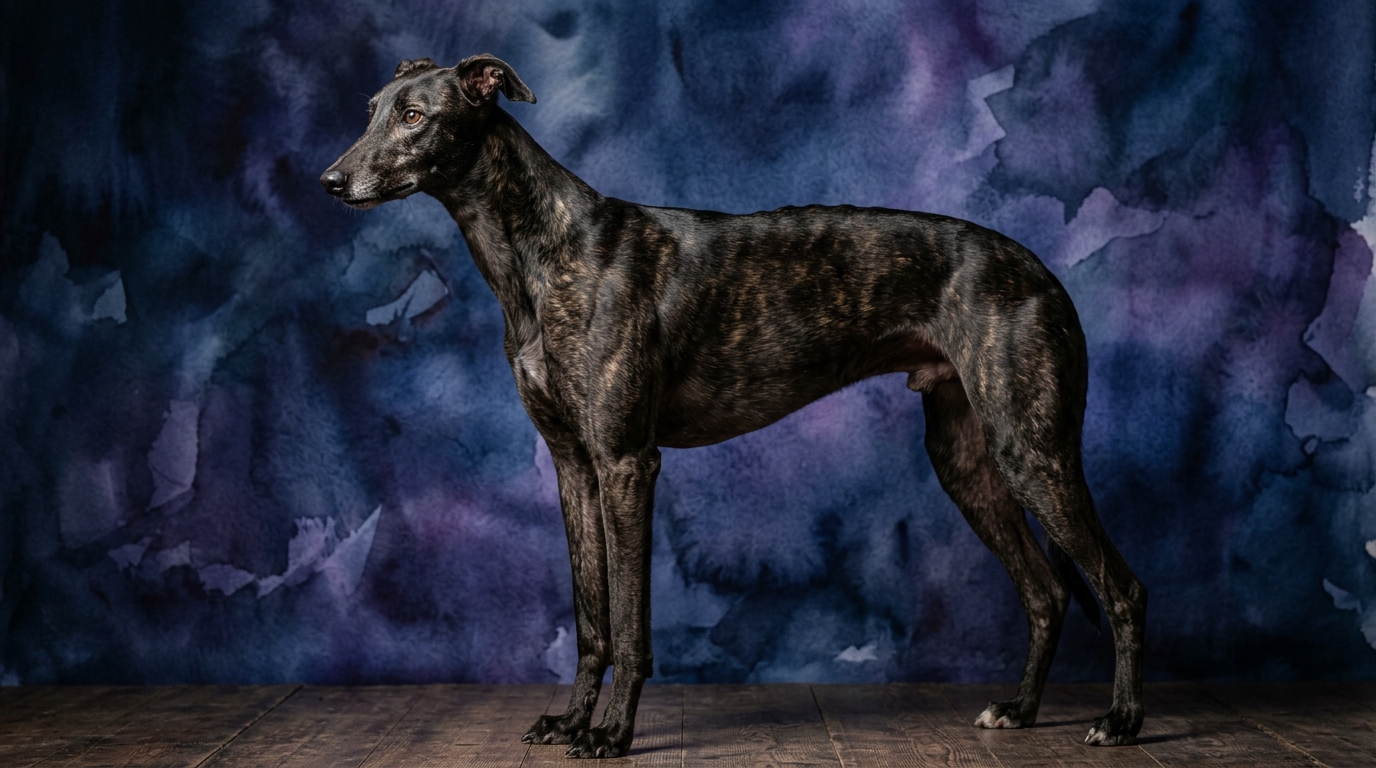
The Greyhound's cognitive blueprint reflects its heritage as a sighthound. Its Problem Solving is rated 3/5; this breed excels at direct, efficient solutions focused on pursuit, such as calculating the optimal trajectory to intercept a moving target, but may show less aptitude for abstract puzzles. Training Speed is 2/5; Greyhounds can learn, but their independent nature and focus on instinctual drives often require more patience and repetition, as they might prioritize a compelling scent or sight over a learned command. Their Social Intelligence scores 3/5; they are gentle and form deep, quiet bonds with their immediate family, often reserved with strangers, preferring calm interactions. The Instinctive Drive is a perfect 5/5, manifesting as an unparalleled and instantaneous urge to chase anything that moves quickly, a profound cognitive program prioritizing the hunt. Finally, their Memory is 3/5, adequate for routines and familiar environments, but perhaps not with the same depth or recall speed for complex, multi-layered sequences.
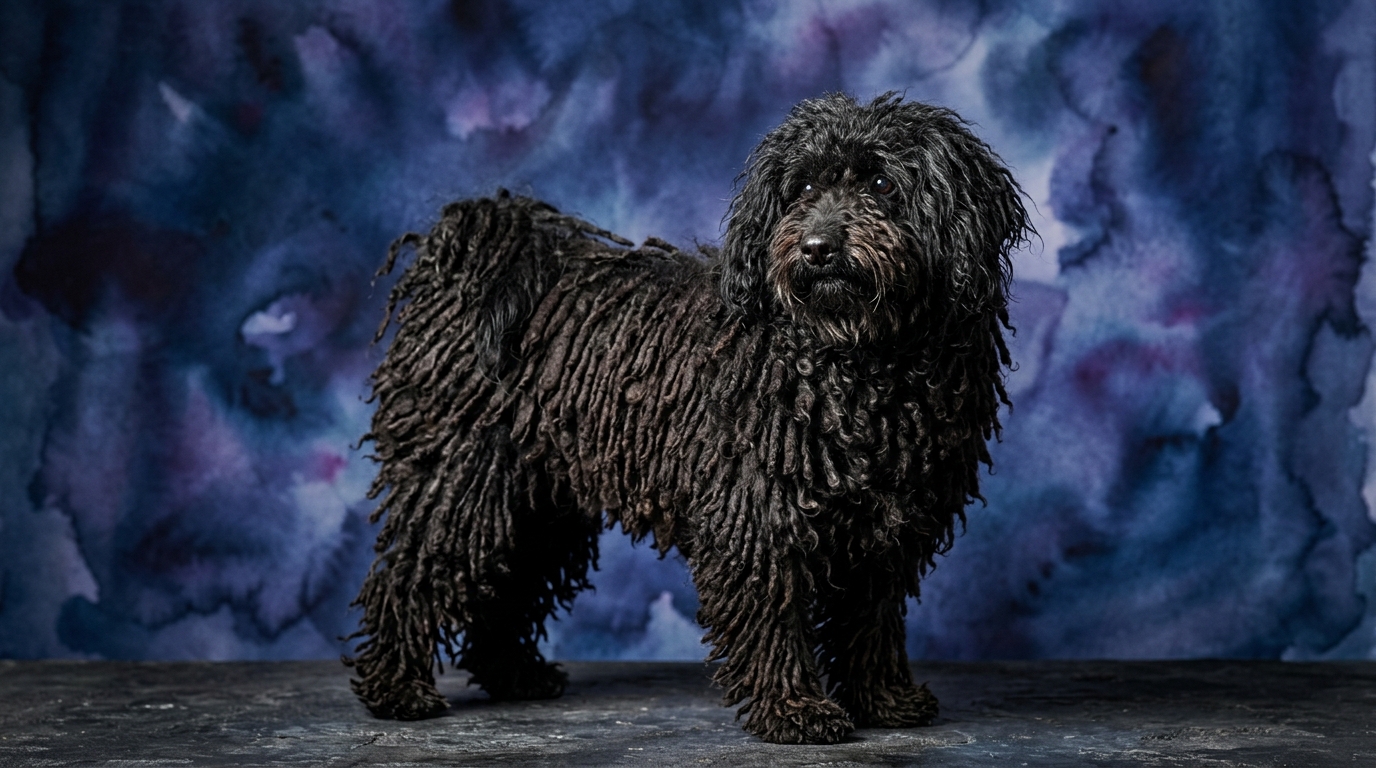
The Puli, a herding dog, presents a different cognitive makeup. Its Problem Solving is a strong 4/5; this breed exhibits a remarkable capacity for independent thought and adaptive solutions, crucial for managing livestock and navigating varied conditions. Training Speed is 4/5; Pulis are quick studies, eager to engage in learning and absorb new commands, demonstrating a keen understanding of cause and effect. Their Social Intelligence is 3/5, similar to Greyhounds in forming strong family attachments but often reserved or wary of strangers, reflecting their guardian instincts and observant nature. The Instinctive Drive is 3/5, primarily rooted in herding and guardianship, manifesting as a controlled urge to gather, protect, and manage, rather than a raw chase. Their Memory is 4/5, impressive for retaining complex sequences of commands, learned tasks, and environmental details, vital for their intricate herding duties.
Where the Greyhound Excels Cognitively
The Greyhound's cognitive strengths are profoundly rooted in its ancient purpose: the pursuit of fast-moving game. Their instinctive drive, rated a perfect 5/5, isn't just a physical attribute; it's a profound cognitive advantage in specific scenarios. This manifests as an extraordinary ability to process visual stimuli related to movement with unparalleled speed and accuracy, triggering an immediate, unhesitating chase response. Their problem-solving, while scoring 3/5 overall, shines intensely when the 'problem' is how to swiftly and efficiently intercept a moving target. They demonstrate a remarkable capacity for calculating optimal trajectories and adjusting their path in real-time, focusing all mental resources on the singular goal of pursuit. This narrow but potent cognitive specialization allows them to filter out irrelevant distractions, achieving a mental clarity and reactive speed that other breeds simply cannot match in their domain.
Where the Puli Excels Cognitively
In contrast, the Puli's cognitive prowess is a testament to its pastoral heritage, where independent thought and strategic action were paramount. Their 4/5 problem-solving ability allows them to navigate intricate situations, whether it's outsmarting a stubborn sheep or figuring out how to open a gate. This isn't just about speed; it's about flexibility and foresight, anticipating outcomes and adjusting tactics. Their training speed, also a 4/5, underscores a keen desire to learn and engage, coupled with a robust capacity for understanding complex sequences of commands. The Puli's memory, scoring 4/5, is particularly strong for retaining intricate tasks and routines, essential for managing livestock over varied terrain and remembering specific instructions. They exhibit a nuanced understanding of their environment and the ability to apply learned concepts to novel situations, demonstrating a versatile and adaptive intelligence.
Training Aptitude: Greyhound vs. Puli
When evaluating ease of training, the Puli clearly holds an advantage. Their 4/5 training speed is indicative of a breed that not only grasps concepts quickly but also possesses a strong desire to work collaboratively with their handler. Pulis are often characterized by their attentiveness and willingness to engage in structured learning, making them responsive to positive reinforcement methods. Their higher problem-solving score means they can often generalize learned behaviors to new contexts with minimal additional instruction. A Puli thrives on having a job to do and enjoys the mental stimulation that training provides, making them adaptable to various dog sports and advanced obedience tasks.
Conversely, the Greyhound, with a 2/5 training speed, can present a different set of challenges. While certainly capable of learning, their independent nature and powerful instinctive drive (5/5) can sometimes make them appear less 'eager to please' in traditional obedience settings. A Greyhound might understand a command perfectly but choose to prioritize a fleeting visual stimulus – a squirrel, a blowing leaf – over immediate compliance. Their training often requires more patience, consistency, and finding highly motivating rewards that can compete with their innate chase drive, focusing on channeling their energy rather than suppressing it. They excel in lure coursing or fast-paced games that tap into their natural inclinations, rather than long, repetitive obedience drills.
Matching Breeds to Lifestyles: Active vs. Relaxed Owners
The choice between a Greyhound and a Puli largely depends on an owner's lifestyle and preferred level of daily engagement. For those seeking a canine companion that thrives on consistent mental challenges and varied activities, the Puli is an excellent fit. Their cognitive profile, marked by high problem-solving and training speed, means they excel in dog sports like agility, obedience, and even herding trials. They require regular opportunities to use their minds and bodies in a structured, purposeful way, making them ideal for active owners who enjoy teaching new tricks, puzzle toys, and exploring different forms of enrichment. A Puli left without adequate mental stimulation can become bored and potentially develop undesirable behaviors out of ingenuity.
The Greyhound, while capable of incredible bursts of speed, is often described as a '45 mph couch potato.' Their peak physical requirements are intense but relatively short-lived, often satisfied by a secure off-leash sprint in a contained area. For owners who enjoy brisk outdoor activity followed by long periods of quiet companionship indoors, the Greyhound is surprisingly well-suited. Their lower scores in problem-solving and training speed, coupled with their generally calm indoor demeanor, mean they typically don't demand constant mental puzzles or complex training sessions to be content. They are excellent companions for relaxed owners who appreciate their quiet presence, gentle nature, and the joy of witnessing their magnificent speed during appropriate exercise, without the need for intricate daily mental work.
The Verdict
Choose a Greyhound if you admire unparalleled speed, appreciate a calm and quiet indoor companion, and are prepared to manage a strong pursuit instinct with secure environments and consistent, patient training.
Opt for a Puli if you desire a highly engaged, problem-solving partner for dog sports and diverse activities, valuing their quick learning and capacity for complex work.
🧠 Find Your Pet's IQ Score
Our Pet IQ Lab assessment covers 25+ tests across 5 cognitive dimensions — personalized to your breed.
Take the Full IQ Test →Frequently Asked Questions
Are Greyhounds difficult to train?
Greyhounds aren't inherently difficult, but their independent nature and strong chase drive mean training requires patience, consistency, and high-value rewards. They learn best when training is engaging and respects their natural instincts, such as lure coursing.
Do Pulis need a lot of exercise?
Pulis need regular physical activity, but more importantly, they thrive on mental stimulation. Daily walks and play are good, but they truly excel when given opportunities for problem-solving, advanced training, and engaging in dog sports to satisfy their cognitive needs.
Which breed is better with children?
Both breeds can be good with children, but their approaches differ. Greyhounds are generally gentle and tolerant, while Pulis can be protective and may attempt to 'herd' children, requiring supervision to ensure appropriate and safe interactions.