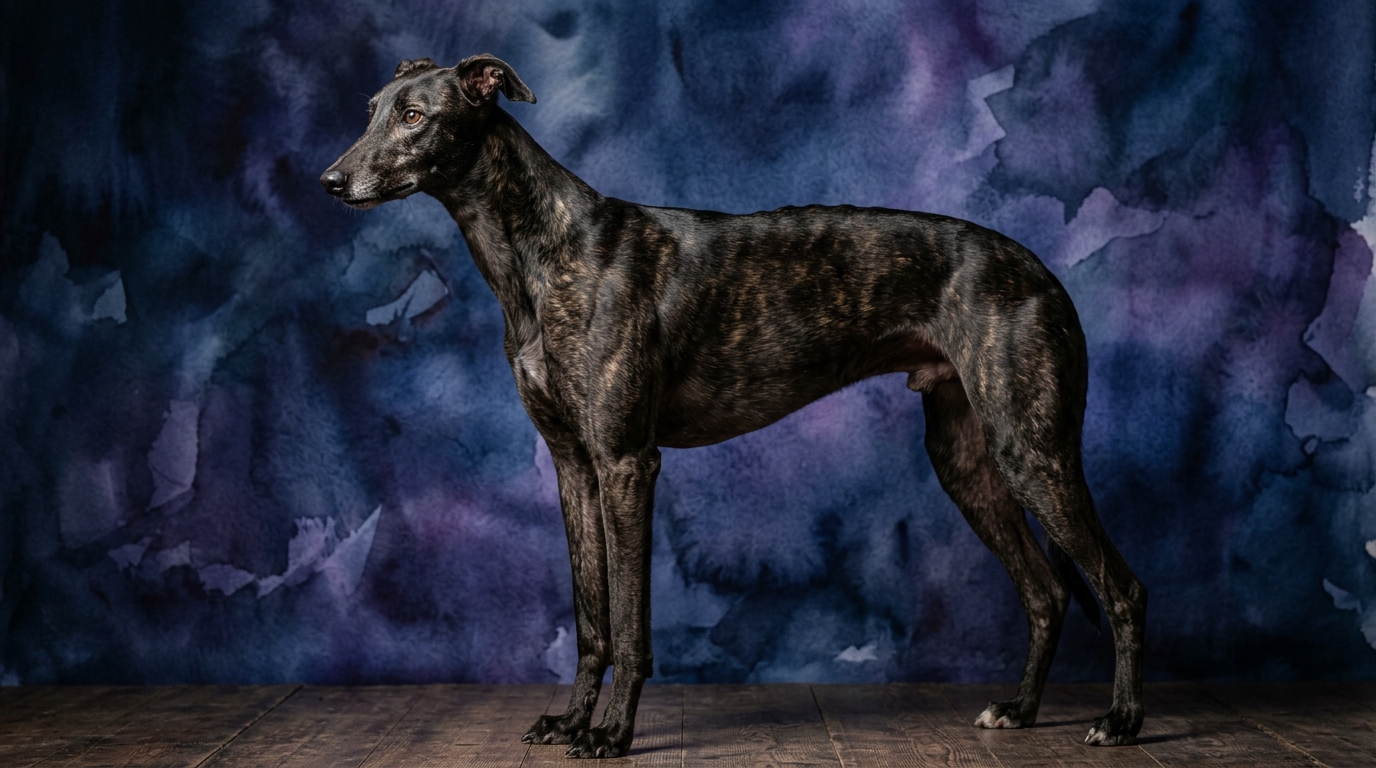
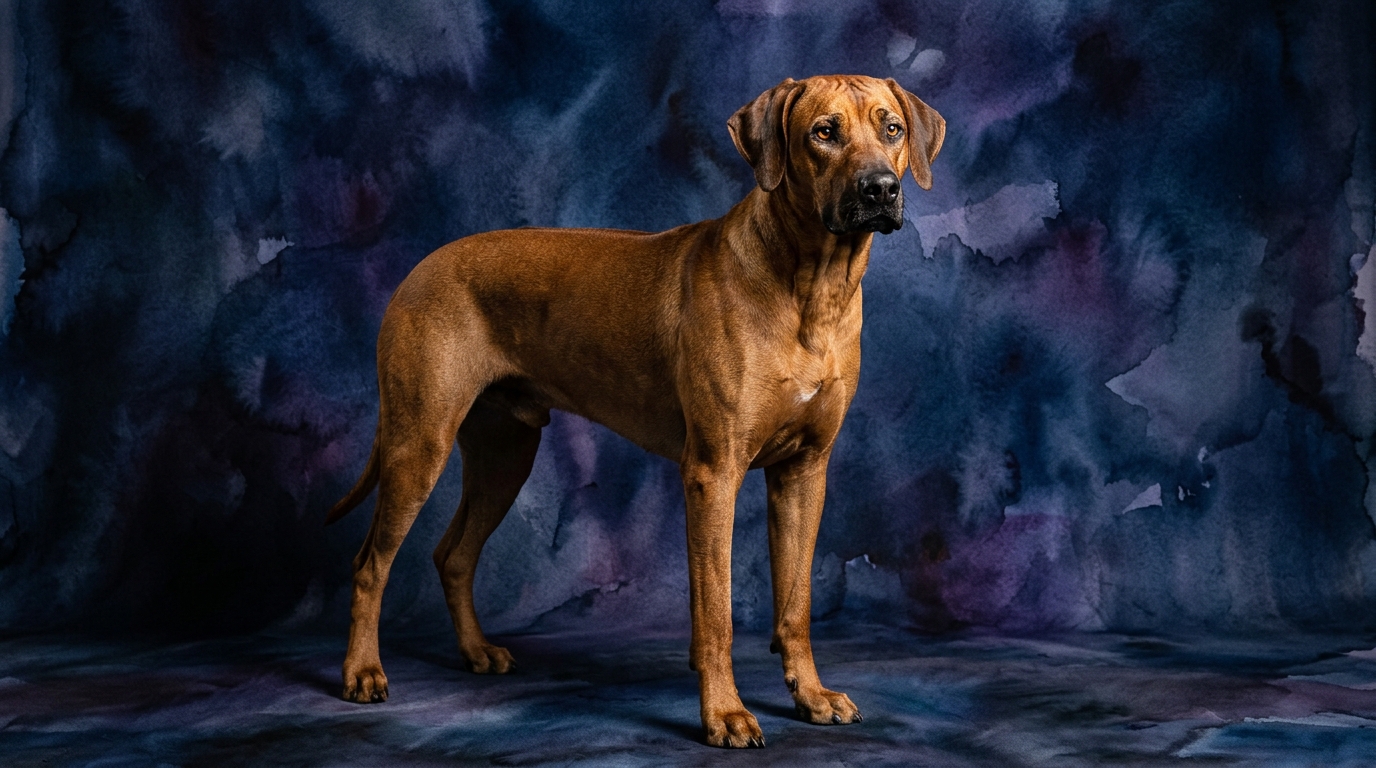
Side-by-Side Cognitive Profiles: Greyhound vs. Rhodesian Ridgeback
At The Cosmic Pet Pet IQ Lab, we evaluate canine intelligence across five key dimensions to provide a nuanced understanding of each breed's mental architecture. For the Greyhound, often recognized for its incredible speed, its cognitive profile reveals a problem-solving ability rated at 3/5, indicating a moderate capacity to navigate novel challenges and figure things out independently. Their training speed, at 2/5, suggests they learn new commands at a relatively deliberate pace, often requiring patient and consistent methods. Social intelligence stands at 3/5, showing a moderate ability to interpret and respond to human and canine social cues, while their instinctive drive is notably high at 5/5, reflecting a powerful, intrinsic motivation often tied to their sight-hunting heritage. Memory is assessed at 3/5, meaning they retain learned information and experiences with moderate recall.
The Rhodesian Ridgeback, a breed with a history rooted in tracking and holding large game, presents a slightly different cognitive blueprint. Like the Greyhound, their problem-solving ability is rated at 3/5, indicating a similar capacity for independent thought and navigating complex situations. However, where they diverge is in training speed, scoring 3/5, suggesting a quicker uptake of commands and a greater responsiveness to instruction compared to the Greyhound. Their social intelligence also registers at 3/5, showing an equivalent moderate understanding of social dynamics. The most significant difference lies in their instinctive drive, which is rated at 3/5, a moderate level that indicates a strong but more controllable inherent motivation. Their memory, like the Greyhound's, is rated at 3/5, reflecting a moderate ability to recall past events and training.
Where the Greyhound Excels Cognitively
The Greyhound's primary cognitive distinction lies in its exceptional instinctive drive, scoring a perfect 5/5. This isn't just about speed; it's a deeply ingrained focus on visual stimuli and the immediate, decisive action of pursuit. When a Greyhound spots something moving, its entire cognitive system is geared towards analysis of trajectory, acceleration, and the most efficient path to interception. This high drive means an unparalleled focus on the hunt, making them masters of the chase in a way few other breeds can match. This acute, specialized cognitive function allows them to react with lightning speed and precision in open spaces, demonstrating a remarkable efficiency of thought dedicated to their ancestral purpose. It's a mental agility perfectly synchronized with their physical prowess, allowing for split-second decisions during high-speed chases, a cognitive feat distinct from general problem-solving.
Where the Rhodesian Ridgeback Shows Cognitive Advantage
The Rhodesian Ridgeback demonstrates a notable cognitive advantage in its training speed, scoring 3/5 compared to the Greyhound's 2/5. This difference suggests a greater inherent willingness and capacity for structured learning and cooperative tasks. While both breeds exhibit independent thought, the Ridgeback's slightly higher training speed indicates they are generally more receptive to commands and can establish associations between cues and actions more readily. This cognitive trait is likely a legacy of their historical role, which demanded a degree of collaboration with human hunters to track and 'bay' dangerous game. Their `instinctive Drive` at 3/5, while still present, is more amenable to redirection and integration into a training framework, making them generally more biddable in a formal learning environment. This translates to quicker progress in obedience, agility, or other task-oriented training compared to the Greyhound.
Ease of Training: Behavioral Differences Unpacked
When considering ease of training, the Rhodesian Ridgeback, with its training speed of 3/5, generally proves to be a more responsive learner than the Greyhound, which scores 2/5. The Greyhound's lower training speed often stems from its independent nature and a strong intrinsic motivation that isn't always aligned with human-directed tasks. They learn at a moderate pace, but their primary drives are often self-serving—like the thrill of the chase—rather than a desire to please. This means owners must employ patient, positive reinforcement techniques, understanding that a Greyhound might interpret a command as a suggestion, especially if a more compelling visual stimulus is present. Their strong prey drive (instinctive drive 5/5) means off-leash reliability is frequently challenging, as their instinct to pursue can override learned commands in an instant, a direct consequence of their specialized cognitive architecture for speed and sight-hunting.
Conversely, the Rhodesian Ridgeback's training speed of 3/5 indicates a breed more inclined to engage in structured learning. While they possess an independent streak and can be strong-willed, their historical role required a degree of collaboration, fostering a cognitive disposition that is more receptive to human guidance. They tend to grasp commands more quickly and are often more motivated by praise, treats, or toys as positive reinforcement. However, their `problem Solving` at 3/5 means they are not simply automatons; they can think for themselves and may test boundaries, requiring a confident, consistent, and fair handler. Their `instinctive Drive` at 3/5, while present, is typically more manageable than a Greyhound's, meaning that with dedicated training, off-leash reliability is a more attainable goal, allowing for a broader range of shared activities.
Matching Breeds to Lifestyles: Active vs. Relaxed Owners
The Greyhound's cognitive profile, particularly its high instinctive drive (5/5) coupled with a moderate training speed (2/5), suggests a nuanced fit for owners. While they are renowned for their explosive speed, Greyhounds are often described as '45 mph couch potatoes,' requiring intense bursts of exercise in secure, fenced areas followed by long periods of rest. This pattern can surprisingly suit more relaxed owners who appreciate a calm, quiet companion indoors, provided they can consistently facilitate those crucial, safe sprint opportunities. Their moderate social intelligence and memory mean they integrate well into a calm household but may not be the type of dog to constantly seek out complex interactions or learn intricate tricks. An owner who values independence and a generally serene presence, but is committed to managing their powerful pursuit instinct, might find a Greyhound to be an ideal fit.
The Rhodesian Ridgeback, with its balanced instinctive drive (3/5) and higher training speed (3/5), generally aligns better with more active owners seeking an engaged partner. Their cognitive makeup suggests a need for consistent mental stimulation alongside physical activity. They thrive when given a 'job' or purpose, whether it's advanced obedience, hiking, or participating in dog sports. Their problem-solving ability (3/5) means they enjoy challenges and can become bored or destructive if under-stimulated. Owners who enjoy structured training, varied outdoor adventures, and can provide consistent leadership will find the Ridgeback a rewarding companion. This breed benefits from an owner who can channel their inherent drives into constructive activities, fostering a strong partnership rather than simply managing a pet.
The Verdict: When to Choose Each Breed
The Verdict
Choose a Greyhound if you appreciate a calm, independent companion that requires intense, short bursts of exercise in a secure environment, and you are prepared for a deliberate training pace focusing on managing their strong prey drive.
Choose a Rhodesian Ridgeback if you seek an engaged, trainable partner for varied activities, capable of independent thought but also eager for partnership and consistent mental and physical challenges.
🧠 Find Your Pet's IQ Score
Our Pet IQ Lab assessment covers 25+ tests across 5 cognitive dimensions — personalized to your breed.
Take the Full IQ Test →Frequently Asked Questions
Are Greyhounds good off-leash?
Due to their instinctive drive of 5/5, Greyhounds possess an incredibly strong prey drive and a profound instinct to chase anything that moves. For their safety, it is generally not recommended to allow Greyhounds off-leash outside of securely fenced areas, as their pursuit instinct often overrides recall commands.
Do Rhodesian Ridgebacks require a lot of exercise?
Yes, Rhodesian Ridgebacks have a moderate instinctive drive (3/5) and training speed (3/5), indicating they thrive on regular physical activity and mental engagement. Daily walks, runs, and opportunities for structured training or play are essential to keep them content and prevent boredom-related behaviors.
Which breed is better with other pets?
The Greyhound's instinctive drive of 5/5 means they can have a very high prey drive towards smaller animals, making careful introductions and supervision crucial with cats or small dogs. Rhodesian Ridgebacks, with an instinctive drive of 3/5 and moderate social intelligence, can often coexist peacefully with other pets if properly socialized from a young age, though individual temperaments vary.