
Side-by-Side IQ Profile: Unpacking Canine Cognition
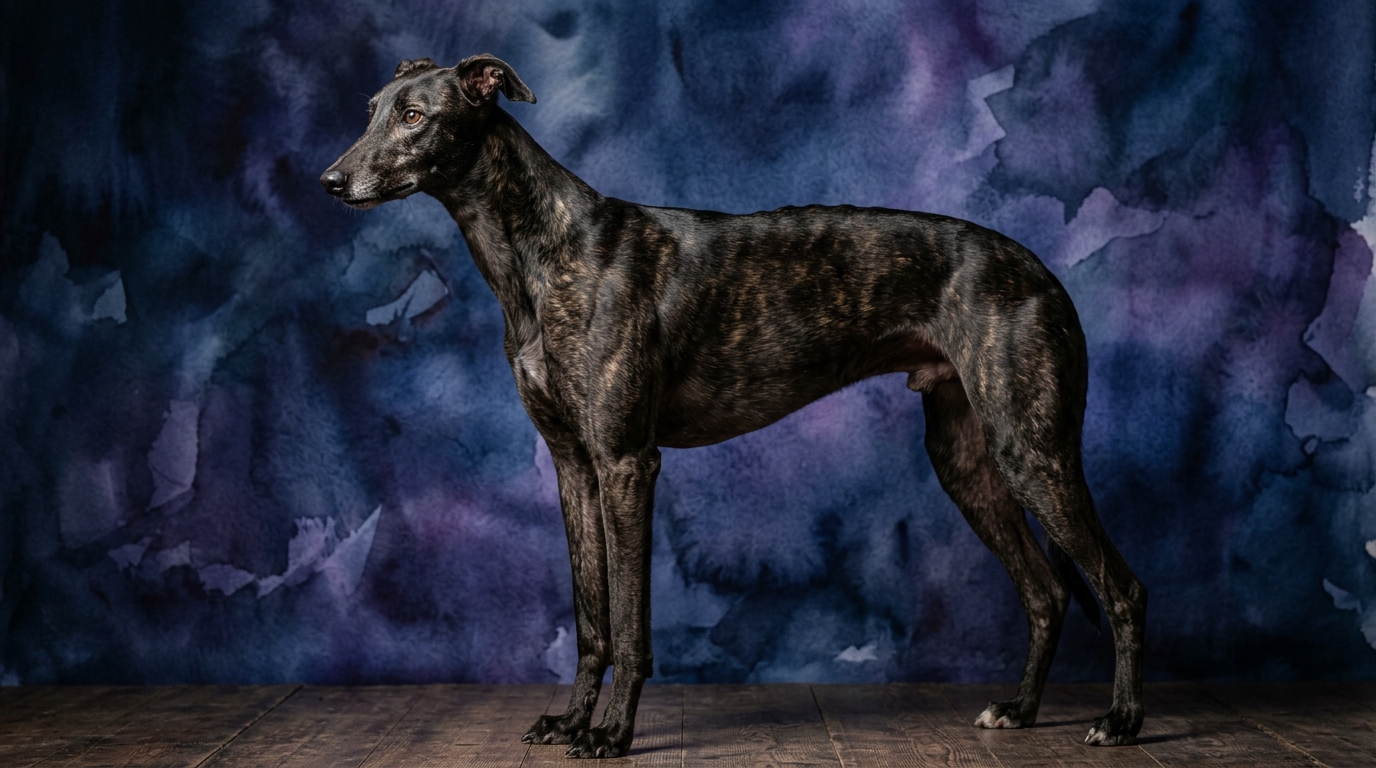
The Greyhound, a canine athlete, possesses a cognitive makeup finely tuned for its ancestral role. Its Problem Solving is rated 3/5, indicating practical intelligence focused on navigating physical challenges and efficient pursuit rather than abstract puzzles. Training Speed, at 2/5, reflects an independent spirit; while capable of learning, their natural inclinations often take precedence over rote commands, requiring patient, consistent motivation. Social Intelligence, also 3/5, highlights their capacity for deep, sensitive bonds with their chosen family, though they can be reserved with strangers. Their Instinctive Drive is an undeniable 5/5, a powerful, unwavering urge to chase anything that moves, defining much of their cognitive focus. Memory, at 3/5, allows them to retain routines and learned behaviors, but their recall may not be as robust in the face of overwhelming instinctual urges.
In contrast, the Russian Toy, a charming companion breed, presents a distinct cognitive blueprint. Its Problem Solving matches the Greyhound at 3/5, often manifesting as clever strategies to engage their human companions or navigate their immediate domestic environment. Training Speed, at 3/5, suggests a more eager-to-please disposition, making them generally more responsive to learning new commands and tricks. Social Intelligence, also 3/5, is a cornerstone of their personality, as they are highly attuned to human emotions and thrive on close interaction, often anticipating their owner's needs. Their Instinctive Drive, rated 3/5, is moderate, retaining some terrier-like curiosity and zest for exploration without the overwhelming predatory focus of a sighthound. Memory, 3/5, serves them well in remembering routines, social cues, and learned behaviors, contributing to their adaptability as household companions.
Where the Greyhound's Mind Excels
The Greyhound's cognitive strengths are profoundly rooted in its specialized evolutionary purpose: the chase. Their 5/5 Instinctive Drive isn't merely a physical urge; it represents a sophisticated cognitive process involving rapid visual processing, spatial reasoning at high velocities, and split-second decision-making to intercept a moving target. This unique form of problem-solving, though rated 3/5 generally, is exceptional within the context of their specific predatory sequence.
They exhibit a remarkable ability to filter out irrelevant sensory input, focusing intently on movement and distance, which is a testament to their specialized visual acuity and attention. This intense focus allows them to execute complex maneuvers with precision and efficiency, demonstrating a practical intelligence that prioritizes immediate, action-oriented outcomes. Their independence, often seen in their training speed rating, is not a lack of cognitive capacity but rather a cognitive trait that enables decisive action without constant human direction during their ancestral work.
Where the Russian Toy's Mind Shines
The Russian Toy's cognitive brilliance lies in its adaptability and profound social attunement, particularly its superior Training Speed (3/5) compared to the Greyhound's (2/5). This enhanced responsiveness stems from a deep-seated desire to engage and please its human companions, making them more amenable to formal instruction and eager to participate in shared activities. Their cognitive processing is geared towards understanding and interacting with their social environment.
While their Social Intelligence is rated 3/5, equivalent to the Greyhound, its manifestation is distinctly different. Russian Toys excel at reading subtle human cues, anticipating desires, and employing charming strategies to elicit attention and affection. This 'people-smarts' is a form of practical problem-solving that allows them to thrive as integral family members, often becoming highly intuitive companions. Their moderate Instinctive Drive (3/5) ensures their focus remains primarily on their human interactions rather than being constantly diverted by external environmental stimuli, allowing for a more consistent cognitive engagement with their owners.
Training Aptitude: Deciphering Ease and Challenge
When it comes to training, the Greyhound's 2/5 Training Speed presents a unique set of considerations. Their independent sighthound nature means they often need to perceive the value of a command before consistently complying, especially if it conflicts with their powerful prey drive. Recall, for instance, can be a significant challenge outdoors, requiring meticulous proofing and a secure environment. These sensitive souls respond best to gentle, positive reinforcement, as harsh methods can cause them to shut down or become anxious. Consistency and patience are paramount, as they learn specific tasks but may not always generalize behaviors across different contexts without deliberate practice.
The Russian Toy, with its 3/5 Training Speed, generally offers a more straightforward training experience. Their eagerness to please and strong bond with their owners make them receptive students, often picking up obedience commands and tricks with relative swiftness. Their small size makes them physically easier to manage during training sessions, which can be an advantage for novice owners. However, their intelligence can also manifest in clever ways to manipulate situations, sometimes leading to 'small dog syndrome' if boundaries aren't consistently maintained. Early socialization and consistent, positive reinforcement are essential to channel their cognitive abilities into well-mannered companionship.
Lifestyle Match: Active Pursuit vs. Relaxed Rapport
For active owners, the Greyhound offers a compelling choice, though their 'activity' is often misunderstood. While they require bursts of intense physical exertion, such as a full-speed sprint in a securely fenced area, they are equally content to spend long hours resting and observing their surroundings indoors. Owners must appreciate their powerful instinctive drive and provide safe outlets for it, like lure coursing or carefully managed off-leash opportunities where their recall is proven. They thrive with individuals who understand their sensitive, independent nature and can provide a calm, structured home environment that respects their need for both exhilarating freedom and profound tranquility.
Conversely, the Russian Toy is an ideal match for relaxed owners seeking a constant, interactive companion. Their moderate exercise requirements mean they are well-suited to apartment living and do not demand extensive outdoor adventures, though daily walks and engaging playtime are important for their physical and mental well-being. Their cognitive stimulation often comes from social engagement, learning new tricks, and being an integral part of daily household activities. They are best suited for owners who cherish a dog that wants to be involved in every aspect of their life, offering unwavering companionship and an adaptable, spirited presence.
The Verdict
Choose a Greyhound when you seek a graceful, independent companion who values routine and bursts of exhilarating speed, and you are prepared to manage a strong prey drive with secure environments and patient, positive training.
Choose a Russian Toy when you desire a spirited, highly interactive dog eager to be your constant shadow, responsive to training, and perfectly suited for a life of close companionship and adaptable living.
🧠 Find Your Pet's IQ Score
Our Pet IQ Lab assessment covers 25+ tests across 5 cognitive dimensions — personalized to your breed.
Take the Full IQ Test →Frequently Asked Questions
Are Greyhounds difficult to train because of their low training speed?
Greyhounds are not inherently difficult, but their independent nature and strong prey drive mean they require patient, positive reinforcement and an understanding of their sighthound instincts. They learn well when motivated, but may not always comply if an instinctual urge is stronger.
Does 'Not Coren-ranked' mean Russian Toys are less intelligent than Greyhounds?
Not at all; Coren's ranking primarily assesses working and obedience intelligence, often overlooking other forms of canine cognition like social aptitude or specialized drives. The Russian Toy's lack of a Coren rank simply means they haven't been evaluated under that specific framework, not that they lack cognitive abilities.
How do their social intelligence ratings of 3/5 compare in practice?
Both breeds possess respectable social intelligence, but express it differently; Greyhounds are often reserved and form deep bonds within their family, while Russian Toys are typically more outgoing and adept at engaging with and eliciting responses from their human companions.