Side-by-Side Cognitive Profiles
Delving into the specific cognitive dimensions for each breed offers a detailed understanding of their inherent mental architecture. The Cosmic Pet Pet IQ Lab's framework allows us to dissect their intellectual strengths and tendencies with precision.
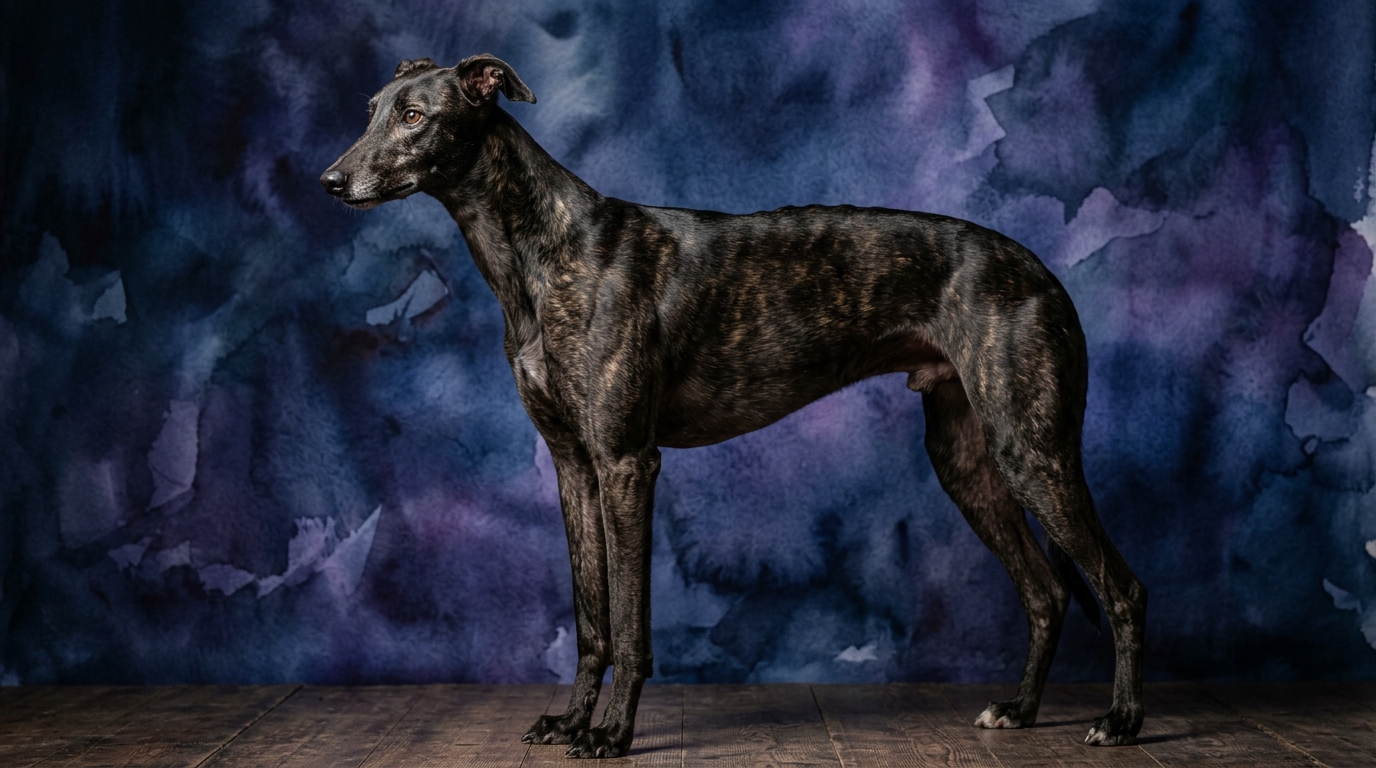
For the Greyhound, often recognized for their athletic prowess rather than their mental agility, we see a distinct pattern. Their Problem Solving is rated at 3/5, indicating an ability to navigate their environment effectively, such as finding the quickest route to a comfortable napping spot or strategizing during a lure course, but not necessarily excelling at complex, multi-step puzzles. Training Speed stands at 2/5, suggesting they require patience and consistent, positive reinforcement; they are not typically driven by an intense desire to please and can be quite independent in their learning pace. Social Intelligence is 3/5, meaning they are adept at reading human cues and forming strong, quiet bonds, yet they can be reserved with strangers and less overtly expressive than some other breeds. Their Instinctive Drive is a formidable 5/5, reflecting their profound sighthound heritage where visual tracking and the pursuit of moving objects are central to their being. Finally, Memory is scored at 3/5, allowing them to recall routines, specific commands learned through repetition, and past experiences with a moderate level of detail.
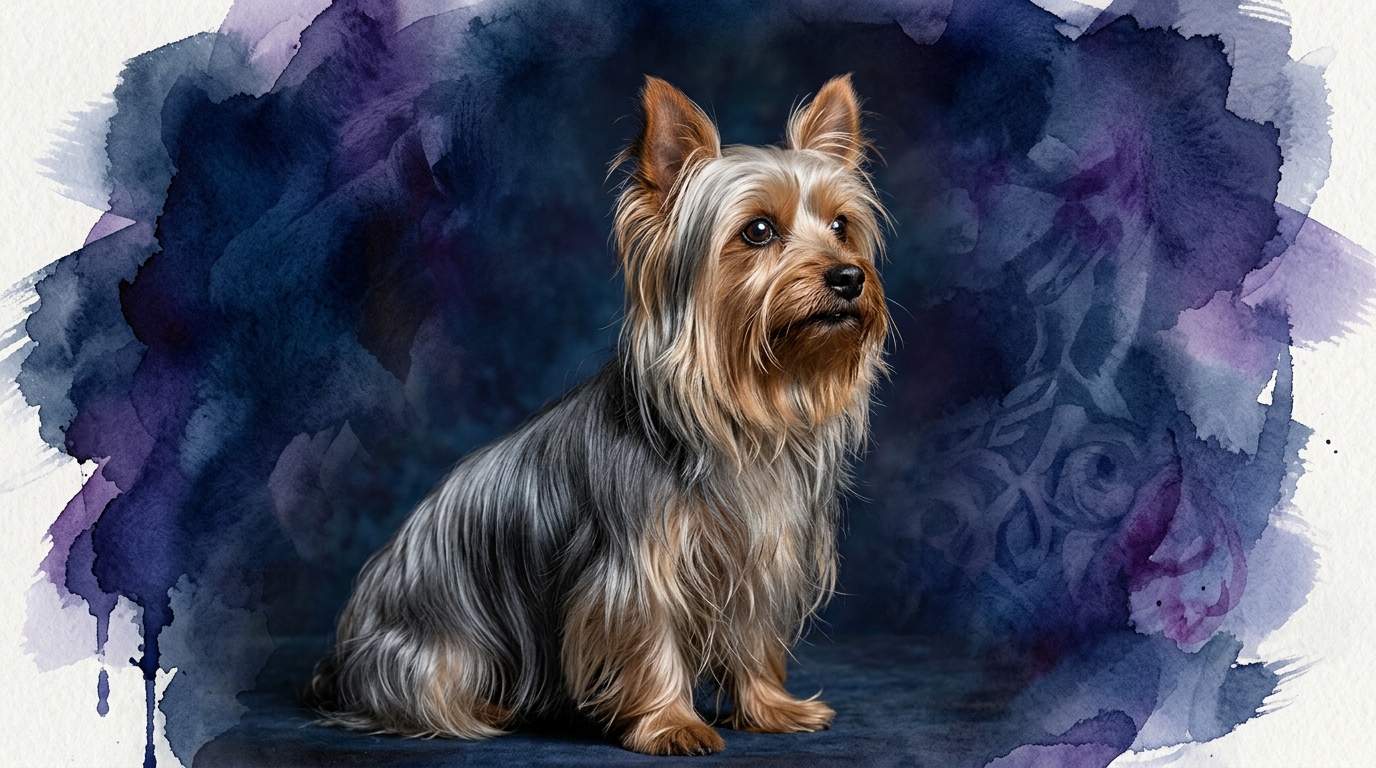
The Silky Terrier, while not having a Coren rank, presents a different cognitive blueprint, reflecting its terrier tenacity and companion nature. Their Problem Solving also rates 3/5; these small dogs are often quite clever at figuring out how to access desired items, like a treat on a high counter, or manipulating situations to their advantage, showcasing a resourceful intelligence. Training Speed is higher at 3/5, indicating a quicker grasp of new commands and a generally more enthusiastic approach to learning, often motivated by engagement and rewards. Social Intelligence matches the Greyhound at 3/5; Silky Terriers are typically very tuned into their family members' emotions and routines, though their vocal nature can sometimes be misinterpreted as a lack of social grace with unfamiliar individuals. Their Instinctive Drive is 3/5, characteristic of a terrier's drive for digging, barking, and chasing small prey, present but not as overwhelmingly focused as a sighthound's pursuit instinct. Memory also scores 3/5, allowing them to retain training, recall people, and remember established household rules and routines reliably.
Where the Greyhound Cognitively Excels
The Greyhound's primary cognitive advantage lies in its unparalleled Instinctive Drive, rated at a perfect 5/5. This isn't merely about physical speed; it represents a highly specialized visual processing system and an intrinsic motivation for pursuit. Their brains are wired to detect the slightest movement at a distance, process that information with incredible speed, and initiate a full-body response almost instantaneously. This visual acuity and rapid reaction time are cognitive marvels, making them exceptional at tasks requiring quick environmental assessment and physical execution, such as lure coursing or open field coursing where they must track, anticipate, and adapt to the unpredictable movement of a lure or live game.
Beyond the chase, their cognitive strengths also manifest in their efficiency and economy of energy. A Greyhound's problem-solving often leans towards optimization – how to expend the least effort for the greatest reward. This can be seen in their ability to quickly find the most comfortable, quiet, and warm spot in a room for napping, or their efficiency in navigating familiar environments. While their training speed is lower, their memory of established routines and positive associations is solid, allowing them to become incredibly reliable companions once a behavior is thoroughly ingrained. Their calm, observant nature indoors also speaks to a cognitive ability to conserve energy and process surroundings without constant overt engagement, a different form of mental efficiency.
Where the Silky Terrier Cognitively Shines
The Silky Terrier's cognitive strengths are rooted in its terrier heritage and its role as a spirited companion. Their superior Training Speed, rated 3/5 compared to the Greyhound's 2/5, means they generally pick up new commands and tricks more readily. This is often driven by a keen interest in engaging with their human companions and a desire for mental stimulation, making them responsive to positive reinforcement and varied training exercises. Their problem-solving, also 3/5, often manifests in clever, sometimes mischievous, ways to achieve their goals, whether it's figuring out how to open a cupboard or orchestrating a way to get extra attention.
Their Instinctive Drive, while not as singularly focused as the Greyhound's, is versatile. The Silky Terrier's 3/5 drive encompasses a range of behaviors like digging, barking at perceived intruders, and a moderate prey drive for small rodents. This indicates a cognitive framework that is alert to a broader spectrum of environmental stimuli and ready to engage with them, often with vocal and physical assertiveness. Their social intelligence, matching the Greyhound at 3/5, combined with their more pronounced eagerness to interact, makes them highly adaptable to various social settings, often charming their way into the hearts of new acquaintances once their initial wariness subsides. They process social cues effectively and respond with a vibrant, engaged demeanor.
Which is Easier to Train and Why?
When considering ease of training, the Silky Terrier generally holds an advantage over the Greyhound. The Silky's Training Speed of 3/5 indicates a quicker uptake of commands and a more pronounced willingness to engage in structured learning sessions. This is often linked to their desire for interaction and mental stimulation; they enjoy the process of learning and performing for their owners, especially when positive reinforcement and rewards are involved. Their moderate Instinctive Drive (3/5) is manageable, allowing them to focus on tasks without being overwhelmingly distracted by environmental triggers, though their terrier tenacity can introduce a stubborn streak that requires consistent boundaries.
The Greyhound, with a Training Speed of 2/5, can be more challenging. Their independent nature and lower drive to please mean they often need a stronger 'what's in it for me?' incentive. While perfectly capable of learning, their motivation is often internal rather than external. Their profound Instinctive Drive (5/5) means that in an environment with tempting moving objects, their focus can quickly shift from training to pursuit, making off-leash recall particularly difficult without extensive, dedicated training in secure areas. Their sensitivity also means harsh training methods are counterproductive, requiring patient, reward-based approaches that respect their sometimes reserved demeanor. Therefore, while both breeds can be trained effectively, the Silky Terrier typically offers a more straightforward and often faster training experience.
Suitability for Active vs. Relaxed Owners
The distinct cognitive profiles of the Greyhound and Silky Terrier directly influence their suitability for different owner lifestyles, particularly regarding activity levels. A Greyhound, despite its racing history, is often an ideal companion for a relaxed owner, especially one who appreciates quiet companionship and bursts of intense, short-duration exercise. Indoors, Greyhounds are typically calm, quiet, and content to lounge for hours, showcasing their cognitive efficiency in energy conservation. Their cognitive focus is not on constant interaction or mental games, but rather on comfort and occasional, exhilarating sprints in a safe, securely fenced area. Owners who enjoy a serene home environment and can provide opportunities for their dog to fully express its powerful instinctive drive through galloping, without the expectation of long, sustained jogs, will find a Greyhound deeply rewarding.
Conversely, the Silky Terrier is better suited for more active owners who relish consistent engagement and mental stimulation. Their higher training speed and versatile instinctive drive mean they thrive on interactive play, regular walks, and opportunities to use their problem-solving skills in various games or obedience work. While they don't require the vast open spaces of a Greyhound, they need owners who are prepared to channel their energetic terrier spirit and vocal tendencies into constructive activities. An owner who enjoys teaching tricks, participating in dog sports like agility or earthdog trials, or simply engaging in frequent, varied play sessions will find the Silky Terrier to be an enthusiastic and endlessly entertaining companion. They are active in a 'busy' rather than 'distance running' sense, always observant and ready for the next interaction.
The Verdict
Choose a Greyhound if you seek a calm, elegant indoor companion who thrives on quiet relaxation and requires specific, safe opportunities to express its powerful, instinctual need for speed.
Opt for a Silky Terrier if you desire a spirited, interactive companion who enjoys consistent engagement, varied training, and ample mental stimulation to channel its tenacious energy.
🧠 Find Your Pet's IQ Score
Our Pet IQ Lab assessment covers 25+ tests across 5 cognitive dimensions — personalized to your breed.
Take the Full IQ Test →Frequently Asked Questions
Do Greyhounds and Silky Terriers have similar social intelligence?
Both breeds score 3/5 in social intelligence, indicating they are capable of understanding human cues and forming bonds. However, Greyhounds tend to be more reserved and quiet, while Silky Terriers, though also capable of wariness, are often more overtly expressive and keen to engage once comfortable.
Which breed is better at problem-solving?
Both Greyhounds and Silky Terriers are rated 3/5 for problem-solving. Their approaches differ; Greyhounds excel at efficient navigation and strategic comfort-seeking, while Silky Terriers often display cleverness in manipulating situations or accessing desired items through inventive means.
How does instinctive drive impact daily life for these breeds?
A Greyhound's 5/5 instinctive drive means an overwhelming urge to chase anything moving quickly, requiring secure containment and careful management during walks. A Silky Terrier's 3/5 drive involves typical terrier behaviors like digging and barking at small critters, which are manageable with consistent training and appropriate outlets.